How to Ensure Your New Tires Perform at Their Best?
Professional Tips on What to Do After Changing Tires by George Tiresbid
After changing your tires, you might be eager to test them out by driving fast and taking sharp turns, right? Tiresbid strongly advises against this, as such actions can damage your tires and compromise your safety on the road.
First and foremost, when you leave the tire shop, check that the type of tires installed is correct. This is especially important for directional tires, which should have the arrows pointing forward. If they are installed in the wrong direction, their performance will not be optimal. Another type is asymmetrical tires, which will have markings indicating 'outside' and 'inside.' Make sure the 'outside' label is facing outward from the vehicle to achieve the best cornering performance.
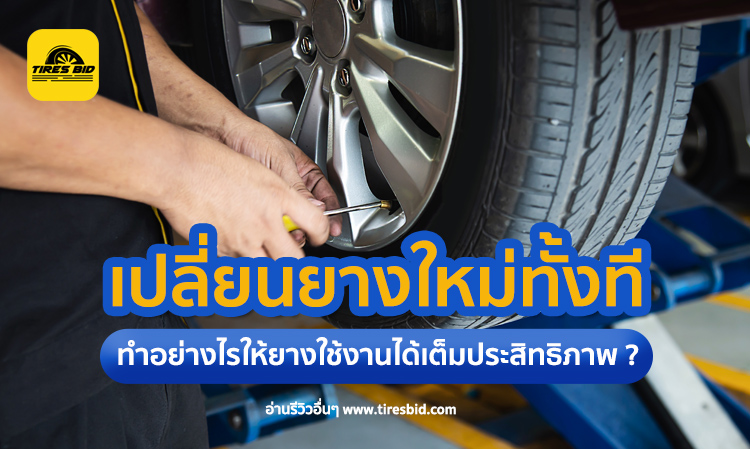
Next, check the valve stems. You might think this is a minor detail, but some tire shops overlook it. The valve stem is crucial because if it is not properly installed, dirt and debris can enter, causing air to slowly leak out, leading to flat tires and potential damage.
Finally, before leaving the shop, ask the technician how much air has been added to the tires. The ideal tire pressure can usually be found on a sticker inside the driver’s door. Once you’ve checked all three items, you’re ready to take your tires for a test drive.
After leaving the shop, pay attention to any vibrations in the tires. If the tire shop did not balance them properly, you might start to feel vibrations at speeds around 80 kilometers per hour. If you notice any shaking, I recommend returning to the shop for them to check the wheel balancing again to ensure a smooth ride.
The highlight here is that when you change your tires, you may not be able to test their full performance immediately. Why is that? Because new tires contain chemicals that need time to blend properly after production. Many manufacturers sell tires right after they are made, but ideally, tires should be left for about three months after production for the materials to set effectively. After installing them on your vehicle, you also need to warm them up to allow the heat to help them settle, making them ready for optimal use. This might be something you didn’t know.
Next, once the tires are on your vehicle, they need a break-in period, often referred to as a warm-up phase. When the tires heat up, the materials inside become more balanced. The break-in process is simple: drive at speeds of 80-120 kilometers per hour for about 800-1,000 kilometers. Avoid driving faster or taking sharp turns during this period, as it could damage the tire shoulders or prevent them from performing at their best, which may affect long-term driving. Therefore, be patient during the first 800-1,000 kilometers to ensure your tires are balanced and can deliver 100% performance. If you have any issues with your tires or need information on tire usage, you can find resources at www.tiresbid.com. We have all the answers regarding tire usage and are always available to provide guidance. I hope this article is helpful to you!


Thanks for the information from www.tiresbid.com