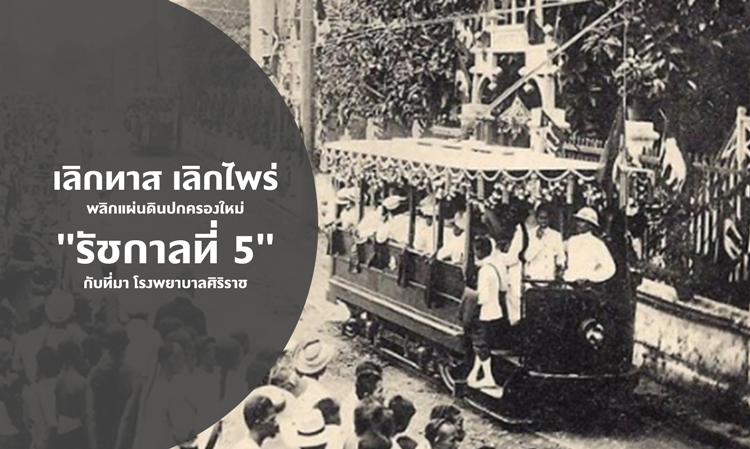
Abolishing Slavery and Serfdom: The Transformation of the Kingdom under "King Rama V" and the Origins of Siriraj Hospital
Throughout the governance of the "Chakri Dynasty" in Thailand, the monarchs, imbued with great majesty, have contributed to the nation's welfare. "King Rama V", or King Chulalongkorn, brought about significant changes in various aspects of the country, particularly with the announcement to abolish customs and practices for the prosperity and advancement of the nation.
We have compiled the royal biography of the kings of the Chakri Dynasty, focusing on King Rama V, with the aim of disseminating historical knowledge to the younger generation, so they may recognize his brilliance and the development of the nation for the benefit of the Thai people, allowing them to live in a land rich in stability and prosperity, passing down this legacy to future generations up to the present day.
Consensus on King Rama V's Suitability to Ascend the Throne after His Father
"King Chulalongkorn" was born on Tuesday, September 20, 1853, in the Year of the Ox, as the son of King Mongkut, King Rama IV, and Queen Debsirindra. He ascended the throne on Thursday, November 15, 1868, following the death of King Mongkut on October 1, 1868, after observing a solar eclipse on August 18, 1868. Before his passing, King Mongkut had left a royal letter stating:
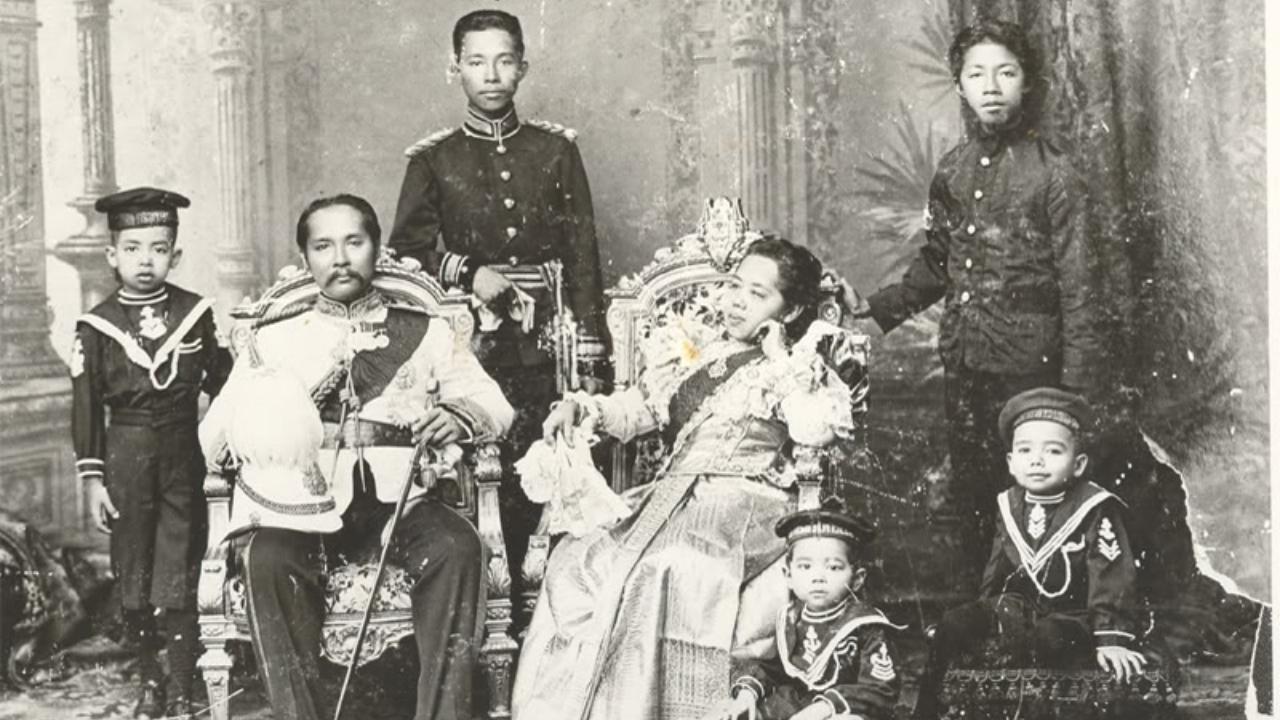
"The royal thought is that the princes who will succeed the throne in the future, whether they be younger brothers, sons, or grandsons, should consult together with the elders and decide as they see fit. Those who are wise should be chosen to govern the land accordingly."
Thus, when King Mongkut passed away, a meeting was convened to discuss the succession to the throne. This meeting included royal family members, senior officials, and monks. Prince Tevathiraj proposed that Prince Chulalongkorn, the eldest son of King Mongkut, be made king, and the meeting unanimously agreed. Therefore, he was invited to ascend the throne following his father's reign.
At that time, he was only 15 years old, so Prince Boromma Maha Sri Suriyawong (Chuang Bunnak) was appointed as regent until he reached the age of 20. He was first crowned on November 11, 1868, and was given the royal title King Chulalongkorn.
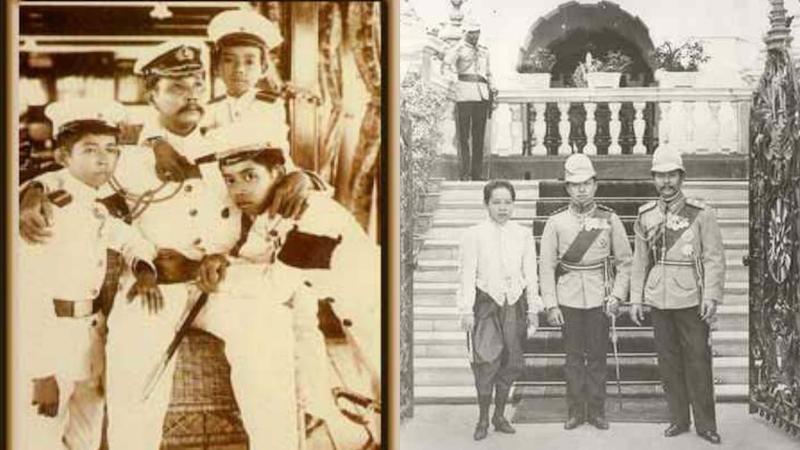
He had three siblings, including Princess Chandramonthon Soponphakdi, Prince Chaturonrasmi, and Prince Phanurangsi Sawangwong.
He Was Deeply Loved by His Father from a Young Age
When King Mongkut (King Rama IV) visited Samut Songkhram and Ratchaburi, the young prince (King Rama V) was only 4 years old and accompanied him. King Rama IV allowed the young prince to present a ceremonial robe, with a grand procession. It was well known that the young prince was the beloved son of his father, who had closely nurtured him since childhood, educating him in various subjects, especially English, which he mastered. At the same time, he studied history, archaeology, and governance, with King Rama IV personally teaching him.
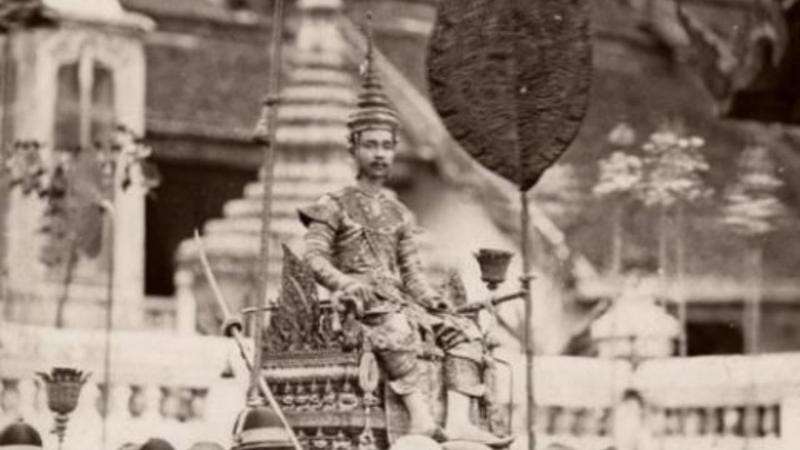
At the age of 8, King Rama IV appointed him as a prince in a different department, with a royal ceremony granting him the title "Prince Chulalongkorn, the Duke of Phikhaneswarasurakarn." In 1867, he was promoted to the title "Prince Chulalongkorn, the Duke of Pinith Prachanat" and performed royal duties in the Department of the Royal Household and the Department of the Treasury, gaining recognition and admiration internationally.
In August of the following year, he accompanied his father (King Rama IV) to observe a total solar eclipse, which his father had accurately predicted, at Wakao, Prachuap Khiri Khan. This was the last time he accompanied his father, as shortly after returning from Wakao, his father fell ill and passed away, leading to King Chulalongkorn ascending the throne as the fifth king of the Chakri Dynasty.
Abolishing Ancient Customs and Traditions
With his wisdom and foresight, King Chulalongkorn abolished five customs and practices that had contributed to the prosperity of Siam until today.
Abolishing Slavery
The "Slave Retirement Act" on August 21, 1874, revised the slave valuation, reducing the value of slaves from the age of 8 until they were free at 20. Upon reaching 21, they would be free. This applied to slaves born from 1871 onwards, and the buying and selling of individuals over 20 years old as slaves was prohibited.
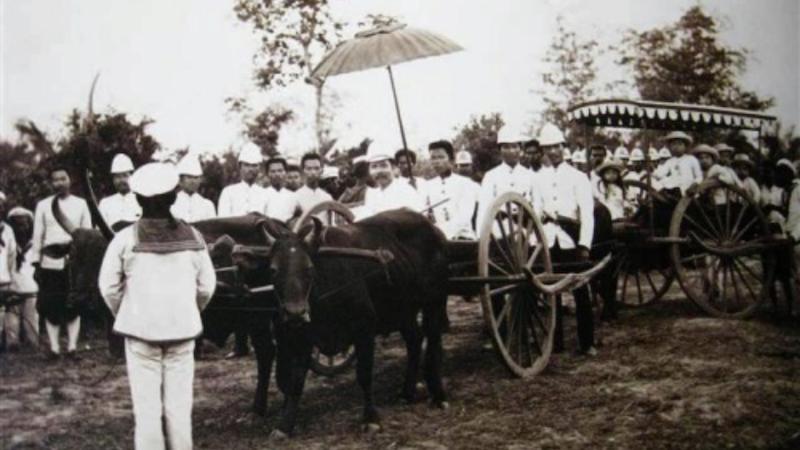
In 1905, the "Abolition of Slavery Act" declared all children of slaves free as of April 1, 1905, while other types of slaves were to have their value reduced by 4 baht per month starting from April 1905. Additionally, provisions were made to prevent those who had been freed from becoming slaves again, and when slaves changed owners, their value could not be increased.
Abolishing Serfdom
The abolition of serfdom was seen as a relief for the people across the kingdom, and it was considered more significant than the abolition of slavery, as it promoted the economic status of the populace, allowing them more time for their livelihoods. Under the serfdom system, individuals aged 15-16 to 70 were required to work for or pay tribute to the ruling class, divided into royal serfs, common serfs, and tribute serfs. Serfs were required to serve in government for six months a year during the Ayutthaya period, reduced to four months during the reign of King Rama I, and three months during King Rama II. If they did not want to serve, they had to pay a "government fee" of 6 baht per month.
Abolishing the Custom of Crawling to the King
He abolished the custom of crawling to the king, replacing it with standing or sitting in a chair, showing respect by bowing instead of prostrating. However, officials still used the crawling custom, and it remains in practice today as Thai citizens wish to honor the tradition.
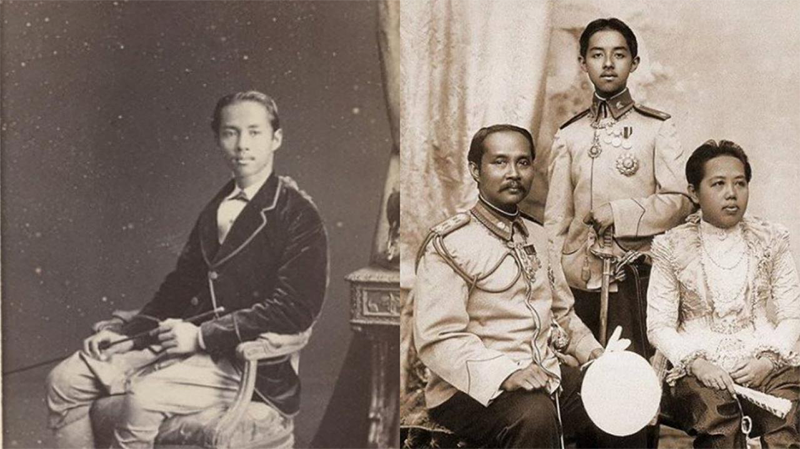
Abolishing the Custom of Shaving Hair in Mourning
Shaving hair was a traditional mourning practice to show respect. In the past, those who shaved their heads had to be under the patronage of the deceased, except for the death of the king, which required everyone to shave their heads. This practice was abolished due to King Chulalongkorn's desire not to cause distress to the people during their mourning for the king's death.
"According to ancient tradition, when the king passes away, the royal family and officials must shave their heads in mourning throughout the kingdom. However, King Chulalongkorn decreed that such mourning practices cause great distress and should be completely abolished."
Abolishing the Quadripartite Administration
Having observed the progress of other countries in Asia and Europe, he initiated a reform of governance, abolishing the quadripartite administration and transitioning to various ministries on April 1, 1892, clearly delineating the powers and responsibilities of each ministry without overlap.
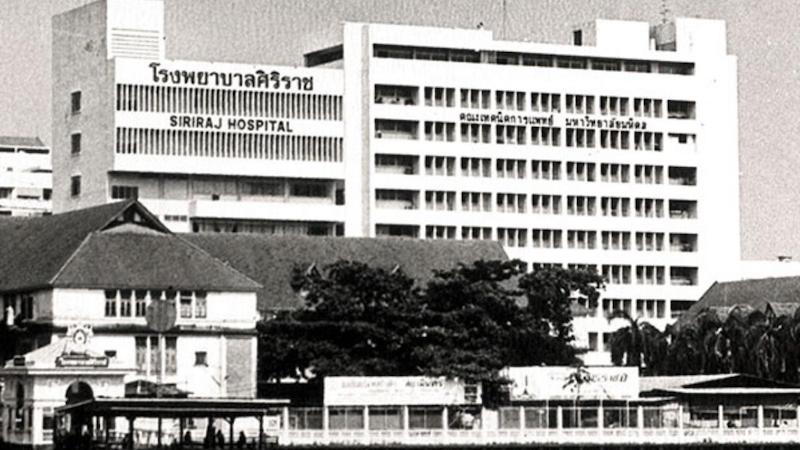
Siriraj Hospital: The Royal Initiative in Nursing and Public Health
He established a hospital to treat the people using modern medical methods, as traditional treatments were outdated and could not help people in time, leading to many deaths during epidemics. He organized the construction of a hospital along the Bangkoksai Canal, the site of the Borommaratchachonnani Palace, and donated 16,000 baht from his personal funds as initial capital for the hospital, naming it "Wang Lang Hospital," which opened to the public for the first time on April 26, 1888.
Later, he renamed the hospital "Siriraj Hospital" in memory of Princess Siriraj Kakuthap, his son who was born to Queen Saovabha Phongsri and passed away at just 1 year and 7 months old.
He also donated the royal crematorium and furnishings such as beds, chairs, and tables from the royal funeral for the hospital's use, along with 56,000 baht from the personal funds of Prince Siriraj Kakuthap for the hospital's operational expenses.
Electricity: An Important Energy Source Benefiting the Nation
He recognized that electricity was an important and beneficial energy source. After observing the electrical industry, he saw its immense potential. In 1890, Thailand began generating electricity, and in the same year, he established a power plant at Wat Liab or Wat Ratchaburana. By 1893, the electrical industry had advanced significantly, and the government transferred operations to an American company called Bangkok Electric City Syndicate.
In 1894, a Danish company established a power plant to supply electricity for tram services, having received a concession for tram operations in the Bangkok area. Both companies collaborated to take over operations from Phra Chao Waiworanat and founded the Siam Electric Company in 1901.
Outdated Laws: Foreign Exploitation and the Establishment of the First Law School
At that time, the laws were outdated, having been in use since the reign of King Rama I, allowing foreigners to exploit Thailand in treaty negotiations regarding court jurisdiction, preventing foreigners from being tried in Thai courts and establishing consular courts for foreign nationals, even in cases involving Thai citizens.
He graciously commissioned the creation of a criminal code to modernize it to be on par with civilized nations in 1897 and established the first law school in Thailand to produce knowledgeable and capable lawyers. Later, in 1908, he enacted the Criminal Procedure Code, the first criminal law code to be implemented. He also appointed a committee to draft a national criminal code and commercial code, as well as a civil procedure code and the Judiciary Act (though it was not completed before his reign ended). Once the new criminal code was established, traditional punitive measures were abolished during his reign, as the new laws provided better and more modern principles of adjudication.
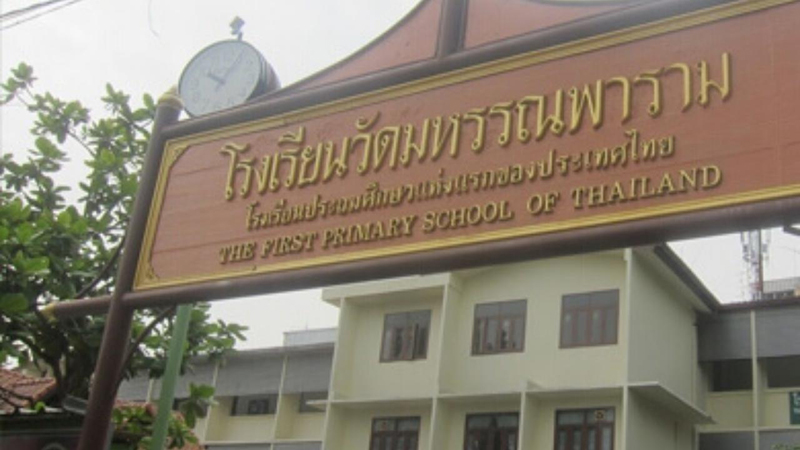
"Mahannoparam Temple": The First Royal School
He was interested in new forms of education and established schools to provide education to the people, as education at that time was primarily conducted in temples. The establishment of schools and the advancement of education indicated a cultural progress. Thus, he graciously established the first royal school in 1901.
He also instituted common education examinations to test the knowledge acquired. Additionally, he established several royal schools distributed across various temples in both central and regional areas. The first royal school established in a temple was Mahannoparam Temple, aimed at providing opportunities for the children of the general populace to gain knowledge.
Education expanded progressively due to the public's interest in acquiring more knowledge, leading him to place these schools under the Ministry of Education's control, with royal textbooks printed for use in teaching.
Issuing the First Banknotes in Five Denominations
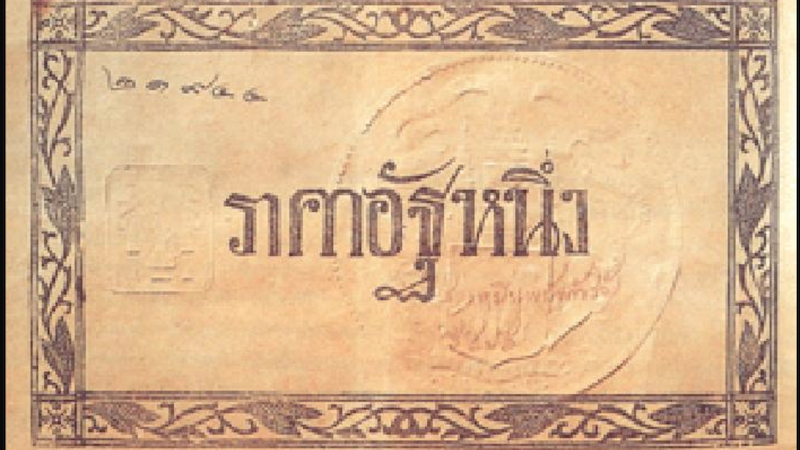
In 1874, he graciously ordered the creation of banknotes called "Atth" worth the equivalent of one copper coin, but they were discontinued after one year due to lack of popularity. Subsequently, he established the Department of Banknotes to produce promissory notes to replace currency, which began use on September 19, 1902, coinciding with the celebration of King Chulalongkorn's birthday.
In 1901, the first banknotes were issued in five denominations: 1,000 baht, 100 baht, 20 baht, 10 baht, and 5 baht. Later, a 1 baht note was also issued, and he graciously established the currency unit, defining the decimal unit as "satang," with 100 satang equaling 1 baht, along with the first issuance of satang coins called "satang coins" in five denominations: 20 satang, 10 satang, 4 satang, and 2.5 satang, used alongside fractional coins and atth.
In 1908, he announced the abolition of the use of podduang currency and enacted the Gold Standard Act, effective November 11, 1908, establishing gold as the currency standard instead of silver to stabilize Thailand's currency in line with international standards. The following year, he announced the discontinuation of the use of the fuang coin and copper coins.
Constructing the Railway from Bangkok to Chiang Mai
In 1888, he graciously ordered the ministers and the Department of Public Works to survey the route for constructing the railway from Bangkok to Chiang Mai, planning for this railway to connect major cities in the central region and branch out to the northeastern provinces, as it was the hub of business.
The route survey was completed in 1891, and on March 9, 1891, he presided over the groundbreaking ceremony for the first railway in Thailand, designating this railway as the first royal railway.
Thai Postal Service: Connecting to the Future
He graciously ordered the Ministry of Defense to construct the first telegraph line in the country, starting in 1874 from Bangkok to Samut Prakan, a distance of 55 kilometers, and laid an underwater line extending to the lighthouse at the mouth of the Chao Phraya River for notifying ships entering and leaving. Later, another telegraph line was established from Bangkok to Bang Pa-in, expanding widely.
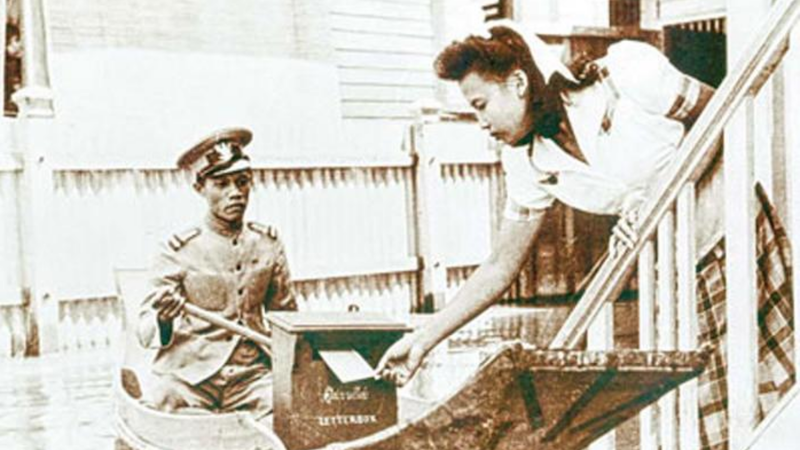
The postal service was first established on July 2, 1881, with an office called the "Postal Building" located along the Chao Phraya River, officially opening on August 4, 1883. Subsequently, he graciously merged the Telegraph Department with the Postal Department, naming it the Postal and Telegraph Department, which was first tested in 1881 from Bangkok to Samut Prakan. The telephone, a modern communication technology, was first tested in 1881 from Bangkok to Samut Prakan to notify ships entering and leaving the river. Later, the Telegraph Department took over the internal telephone line installation in Bangkok, which took three years to complete and was opened for public service, continuing to develop to this day.
Promoting Education for the Royal Offspring to Serve the Nation
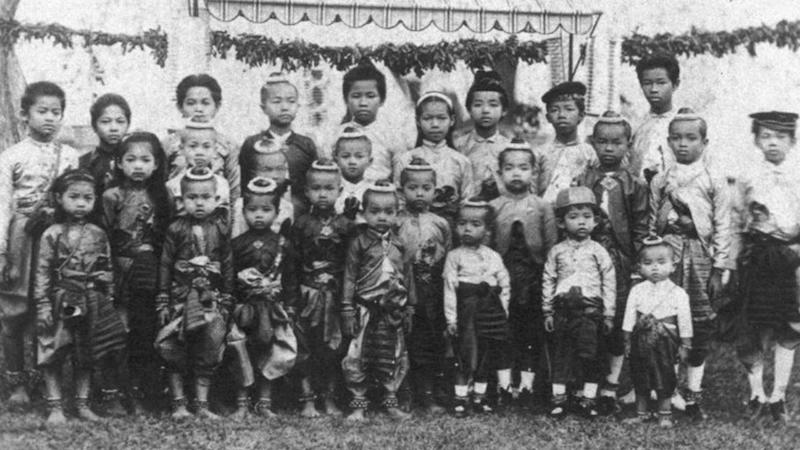
The royal biography states that King Rama V had several royal offspring and took a keen interest in their education. Notably, all 19 princes were sent abroad for studies and returned to serve the government, thereafter dedicating themselves to the nation with all their strength and capabilities.
1. Prince Kittiyakaraworaklarn, Duke of Chanthaburi Narunat (1854-1911) studied economics in England (likely at Cambridge University) and returned to serve as Minister of Finance and Minister of Commerce, also serving as President of the Finance Council and Prime Minister (during the reign of King Rama VII).
2. Prince Rapeepattanakorn, Duke of Ratchaburi Direkrit (1854-1920) studied law at Oxford University in England and received a B.A. degree, returning to serve as Minister of Justice and Minister of Agriculture.
3. Prince Prawit Wattanodham, Duke of Prachinakittibodi (1855-1919) studied (likely in literature) in England and France, returning to serve as Secretary of Foreign Affairs and Minister of the Royal Secretariat.
4. Prince Jiraprawat Worradech, Duke of Nakhon Chai Si Suradech (1856-1913) studied common subjects in England and military science in Denmark, returning to serve as Minister of Defense and holding the rank of Field Marshal.
5. Prince Apakorn Kiat Wong, Duke of Chumphon Khet Udomsak (1883-1923) studied naval science in England and returned to serve in the navy, attaining the rank of Admiral and serving as Chief of Naval Staff and Minister of the Navy.
6. Prince Mahavajiralongkorn, later King Vajiravudh (1881-1925) studied military science at Sandhurst and history at Oxford University in England.
7. Prince Boriphat Sukhumphan, Duke of Nakhon Sawan Warapinit (1881-1944) studied common subjects in England and then military science in Germany, returning to serve as Admiral and holding various ministerial positions.
8. Prince Burachat Chaiyakorn, Duke of Kamphaeng Phet Akra Yothin (1882-1944) studied at Harrow School and Cambridge University before studying military engineering in England. Upon returning, he held positions as a minor general, Chief of Engineers, Commander of the Royal Railway Department, and Minister of Commerce and Transportation, attaining the rank of General.
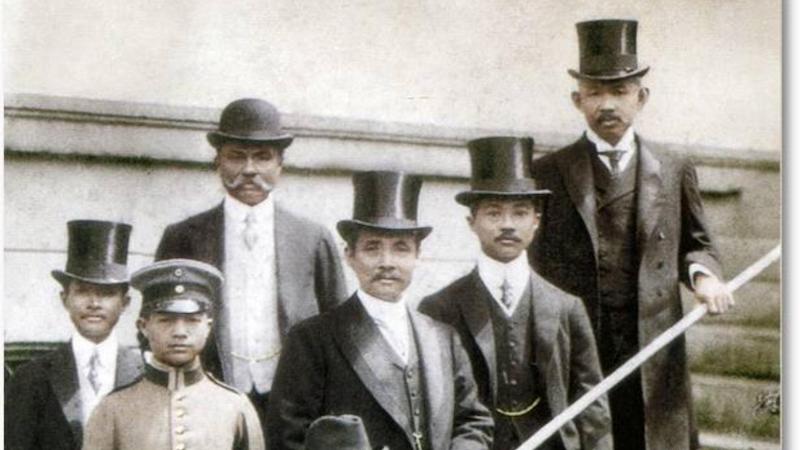
9. Prince Penpattanapong, Duke of Phichai Mahintharodom (1882-1910) studied in England and returned to serve as Assistant Minister of Agriculture.
10. Prince Chakrapong Phuwanat, Duke of Phitsanulok Prachanat (1883-1940) studied common subjects in England and military science in Russia, returning to serve as Army Staff Officer and attaining the rank of Field Marshal.
11. Prince Yuklathikhamphorn, Duke of Lopburi Rameshwar (1883-1950) studied at Harrow School and graduated with a B.A. from Cambridge University in England, returning to serve as Deputy Governor of the Southern Province and Minister of the Interior.
12. Prince Wutthichai Chalermlap, Duke of Singhawikrom Kriangkrai (1883-1963) studied naval science in England and returned to serve in the navy, attaining the rank of Admiral and serving as Minister of Defense.
13. Prince Diloknoprat, Duke of Sarakwit Nakhon (1884-1942) studied common subjects in England before going to study in Germany, graduating from the University of Tubingen with a Ph.D. in economics, returning to serve as Chief of the Department of Local Administration in the Ministry of the Interior.
14. Prince Suriyong Prayurapand, Duke of Chaiyasri Suriyobhas (1884-1940) studied at Cambridge University in England and returned to serve as Director of the Royal Mint, Inspector of the Fine Arts Department, and Assistant Minister of Finance.
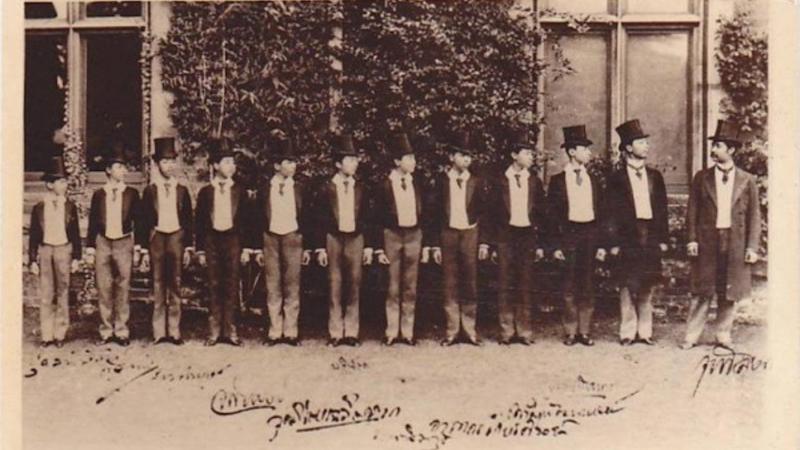
15. Prince Rangsit Prayurath, Duke of Chai Nat Narenthra (1881-1944) studied common subjects in England and Germany and later studied education at Heidelberg University in Germany. After graduating, he returned to serve as Director of the Department of Public Health, Director of the University Department, Assistant Minister of Education, Chairman of the Council of Regents, and Regent.
16. Prince Atsadang Dechawut, Duke of Nakhon Ratchasima (1889-1924) studied military science in England for a short period and returned to serve as Commander of a division, attaining the rank of Major General, and later served as Minister of the Navy, attaining the rank of Admiral.
17. Prince Mahidol Adulyadej, Duke of Songkhla Nakhon (Prince Mahidol Adulyadej) (1892-1929) studied common subjects at Harrow School in England and then studied military science and naval science in Germany, later studying public health and medicine at Harvard University in the United States.
October 23, 1910: The Passing of King Chulalongkorn
On October 23, 1910, King Chulalongkorn passed away from kidney disease at 2:45 AM at the Amphorn Sathan Throne Hall in Dusit Palace, at the age of 57. Historian Wiboon Wijitwatanakarn speculated that the possible causes of death included kidney stones, nephritis from infection, and chronic glomerulonephritis resulting from acute tonsillitis. However, it could not be definitively determined which type of kidney disease it was.
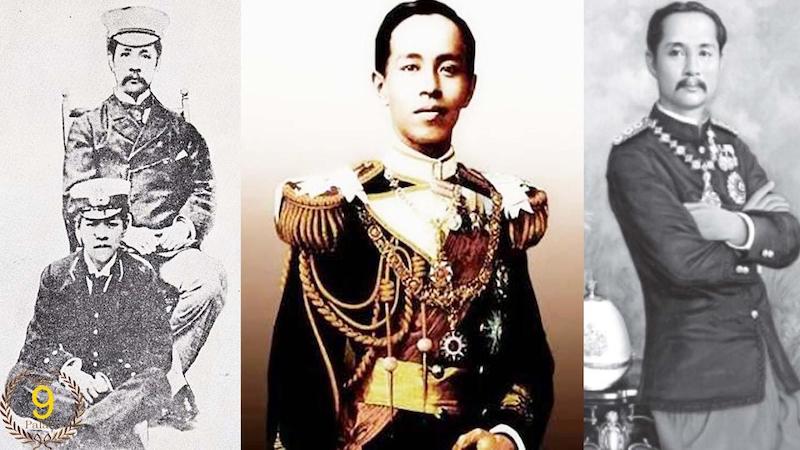
Before his passing, he had expressed in a royal letter the wish to cancel the grand royal cremation and instead have a modest cremation in the royal field as deemed appropriate. King Vajiravudh respected this wish and arranged accordingly. The Thai government has designated October 23 of every year as "Chulalongkorn Day" and a public holiday.
Wat Ratchabophit Sathit Maha Simaram: The Temple of King Rama V
Wat Ratchabophit Sathit Maha Simaram is a first-class royal temple established by King Chulalongkorn as his royal temple in 1869, marking the last royal temple built according to ancient royal tradition. Upon completion in 1870, monks from Wat Sommanat were invited to reside there, and the Phutthani Ratanaraj was enshrined in the main hall.
Later, King Chulalongkorn graciously named it "Wat Ratchabophit Sathit Maha Simaram", meaning the temple built by the king, featuring a grand stone pillar shaped like a Dharma wheel, surrounded by eight walls and a central stupa, with the main hall and vihara surrounding it, connected by a cloister. All buildings are adorned with Benjarong glazed tiles, and the interior of the main hall and vihara is decorated in a blend of Thai and Western architectural styles.
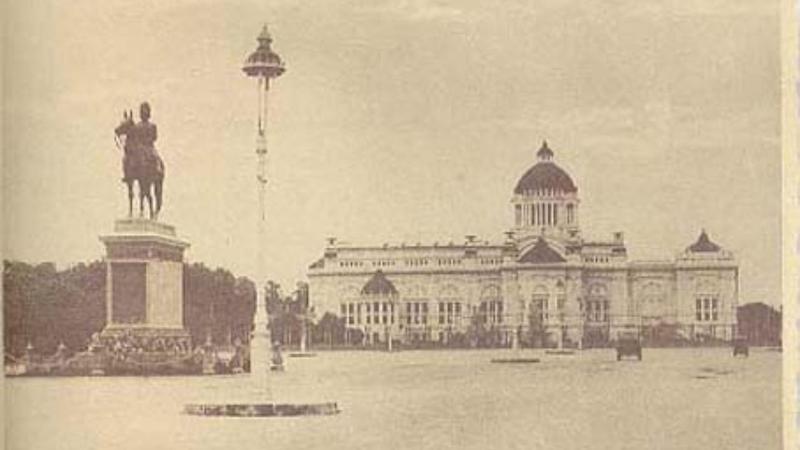
The Origin of the Equestrian Statue
Historical records indicate that the "Equestrian Statue" of King Chulalongkorn was personally selected by him, including the type of metal used, and he posed for the sculptor while in Paris, France. The statue is life-sized, depicting him seated on a horse, with the horse not being modeled after a real horse but rather a pre-prepared model.
On August 22, 1907, he posed for the sculptor Georges Saulo, and the completed statue arrived in Bangkok on November 11, 1908, coinciding with the 40th anniversary of his accession to the throne. The statue was ceremoniously unveiled by King Chulalongkorn himself.
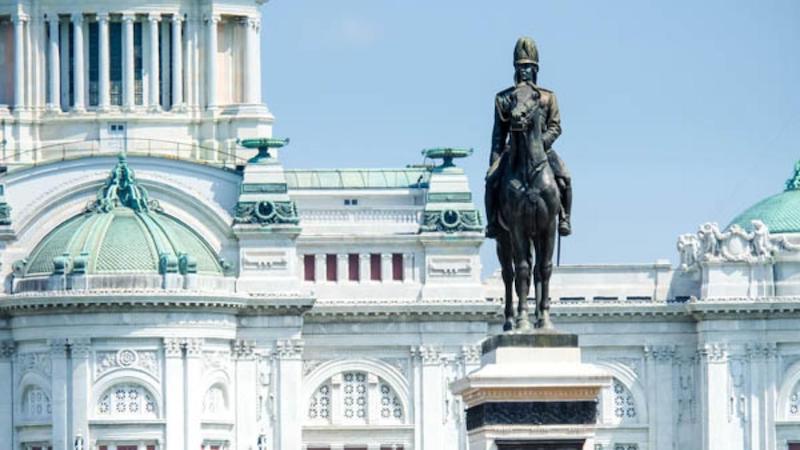
The equestrian statue is cast in bronze, mounted on a bronze pedestal, with the horse standing approximately 25 centimeters thick, set on a pedestal made of marble, 6 meters high, 2 meters wide, and 5 meters long, surrounded by a chain fence measuring 9 meters wide and 11 meters long. On the right side of the pedestal, there is a Roman inscription in French naming the sculptor and caster: C.MASSON SEULP 1908 and G.Paupg Statuare, while the left side bears the name of the company that cast the statue: SUSSE Fres FONDEURS. PARIS. The front of the pedestal features a metal plate inscribed in Thai, detailing the royal biography and accomplishments, concluding with a blessing for his long reign.
**King Chulalongkorn led the Kingdom of Siam towards progress, developing the nation by integrating and adopting Western culture, creating prosperity. He transformed the land for the better, ensuring the people had enough to live on, and established numerous historical sites that have become a legacy for future generations to remember his vast majesty from the past to the present, before handing over the beloved nation and its people to King Vajiravudh, his bloodline successor, to continue the legacy. The story of King Rama VI will be presented in the next installment.
(Thanks to the information from the Bureau of the Royal Household, Arts and Culture, Chaoprayanews, Wikipedia)
SOURCE: www.thairath.co.th