LGBT Diversity: A Powerful Force Part 2 - Why Chinese LGBT Individuals Are Buying Property in Thailand
In the previous article by Terrabkk Research, we discussed the growing LGBT community, both in terms of population and income, and how this group is increasingly playing a significant role in stimulating the Thai economy, particularly in tourism and condominium real estate.
The team at Terrabkk Research has delved into interesting statistics about this group. In 2016, the country with the largest LGBT population in the world was China, with an estimated 90 million LGBT individuals, accounting for 6.5% of China's total population of 1.378 billion (according to the Population Reference Bureau). The GDP or market value of goods and services for this group is over 938 billion USD, or approximately 32.83 trillion Thai Baht, which translates to about 364,780 Thai Baht per person (according to LGBT CAPITAL, a financial consulting firm primarily serving the LGBT community).
As mentioned in the first article, foreign buyers of condominiums in Bangkok through CBRE in 2017 showed that China was the leading country purchasing condominiums in Thailand, including many from the LGBT community. Most of these buyers preferred condominiums in Bangkok, particularly in the Silom-Sathorn-Bangrak area, Sukhumvit-Thonglor-Ekkamai, and Ratchada-Rama 9, as these areas are centrally located with convenient transportation, including BTS and MRT lines. They are also lifestyle hubs for the LGBT community, especially in Silom, Sathorn, and Sukhumvit, which feature numerous attractions for this group, such as Silom Soi 4, a famous entertainment and hangout spot on Ekkamai, Thonglor, and Sukhumvit. This makes these areas top choices for the LGBT community when purchasing condominiums.
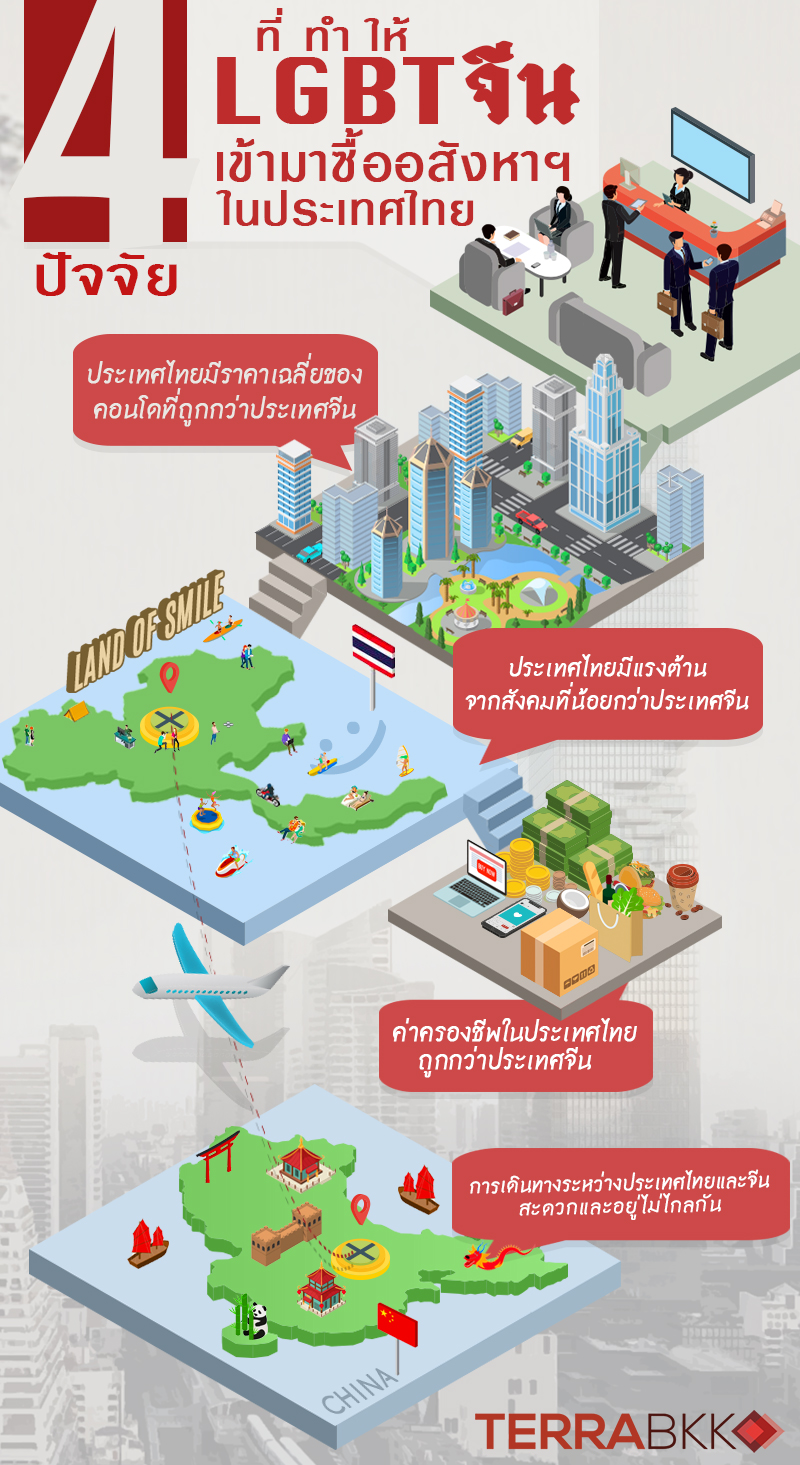
Regarding the Chinese LGBT community, Terrabkk Research believes there are additional factors beyond those mentioned that attract this group to purchase condominiums in Thailand:
1. Thailand has lower average condominium prices compared to China. According to statistics from Global Property Guide, the average price of residential property in China is 11,829 USD per square meter, or approximately 378,528 Thai Baht, with a preliminary rental yield of 10% per year. In contrast, Thailand's average residential property price is 3,952 USD per square meter, or about 126,464 Thai Baht, with a preliminary rental yield of 5.13% per year. This means that the average property price in China is nearly three times higher than in Thailand, which is another reason why Chinese buyers are choosing to invest in Thai real estate.
2. Thailand has less societal resistance compared to China. It is well-known that China has historically opposed the LGBT community. Although the situation has improved somewhat, it remains a country with significant prejudice and societal resistance compared to others. The United Nations Development Programme (UNDP) and USAID published an article titled Being LGBT in China: A National Survey on Social Attitudes towards SOGIE, stating that only 5% of third-gender individuals in China dare to reveal their identities publicly, and only 15% are willing to tell their families and friends. This drives many to seek residence or travel to places where they can be accepted for who they are. In Thailand, while legal recognition of LGBT rights is still lacking, the social acceptance, tourism, and business environment are more welcoming compared to some other countries in Asia and around the world.
Examples of societal resistance in China against the LGBT community:
An article from BBC News (15 November 2017) revealed 17 cases of gay conversion therapy in China, most of which involved electric shock treatment and the use of medications that patients were unaware of, posing potential dangers, all while showing pornographic films of same-sex couples.
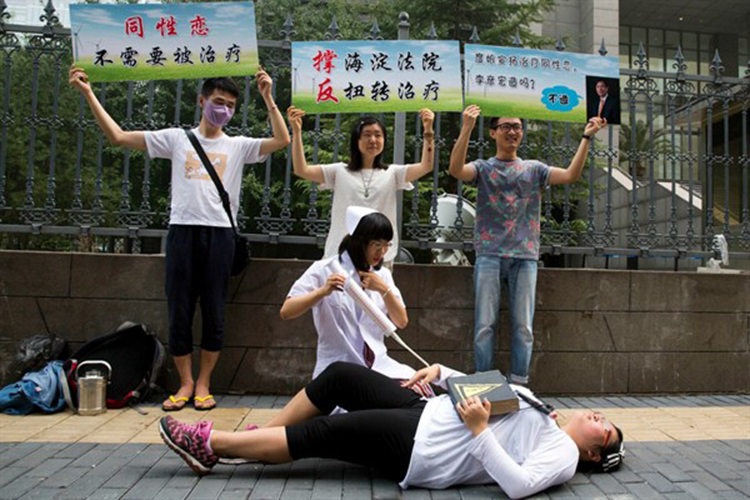
Source : Image AP by Ng Han Guan
Examples of societal acceptance in Thailand towards the LGBT community:
On November 25, 2018, at the Mambo Club in Rama III, reporters reported that the AHF (Aids Healthcare Foundation), a global organization for HIV patients, in collaboration with Bangkok Rainbow, held the Mr. Gay World Thailand 2019 contest, now in its third year, under the theme "Dare to Shine" to encourage gay individuals to showcase their potential and advocate for various social issues for the diverse sexual orientation community. This year, there were 31 contestants.

source: Thai Rath Online (Nat Chayodom wins Mr. Gay World Thailand 2019, preparing for the global stage in Africa)
3. Travel between Thailand and China is convenient and not far apart. Flights between the two countries take only a few hours, and Thailand has many areas with Chinese communities and culture, such as Yaowarat, Sampeng, Phahurat, or the Thonburi area, where we can see Chinese civilization spread throughout.
4. The cost of living in Thailand is lower than in China. According to statistics from worlddata.info , China ranks 49th out of 100 countries in terms of average cost of living, with a cost of living index of 61.1 and an average income of 724 USD or approximately 23,168 Thai Baht. In Thailand, the average cost of living ranks 60th, with a cost of living index of 54.0 and an average income of 497 USD or approximately 15,904 Thai Baht.
It is undeniable that the LGBT community significantly impacts various businesses, including tourism and real estate. It is time for marketers to seriously study the needs of this group. Terrabkk Research believes that this will be a new customer segment willing to spend if you develop products that resonate with the LGBT community.