In-Depth Look at China: Why is China Attracting Foreign Direct Investment (FDI)?
In-Depth Look at China: Why is China Attracting Foreign Direct Investment (FDI)?
With the size of China's economy, the demand for capital, technology, and foreign expertise remains essential for economic transformation to elevate the country. The Chinese government has been continuously working to develop the process of opening up the country and managing macroeconomic risks. Therefore, it is no surprise that today, China is one of the top destinations for Foreign Direct Investment (FDI). TerraBKK highlights some interesting points as follows:
Quality Labor, Transportation Networks, and a Large Consumer Market: The Key Factors Attracting FDI to China
China has transformed from being known for cheap labor to being recognized for “high-quality labor resources,” providing value for investments. As is well known, China places great importance on education, producing over 6.5 million university graduates each year since 2014, ranking second after Russia among BRICS economies, and is the 34th emerging market globally. This indicates that China has a human resource base that supports innovation and continuous human resource development.
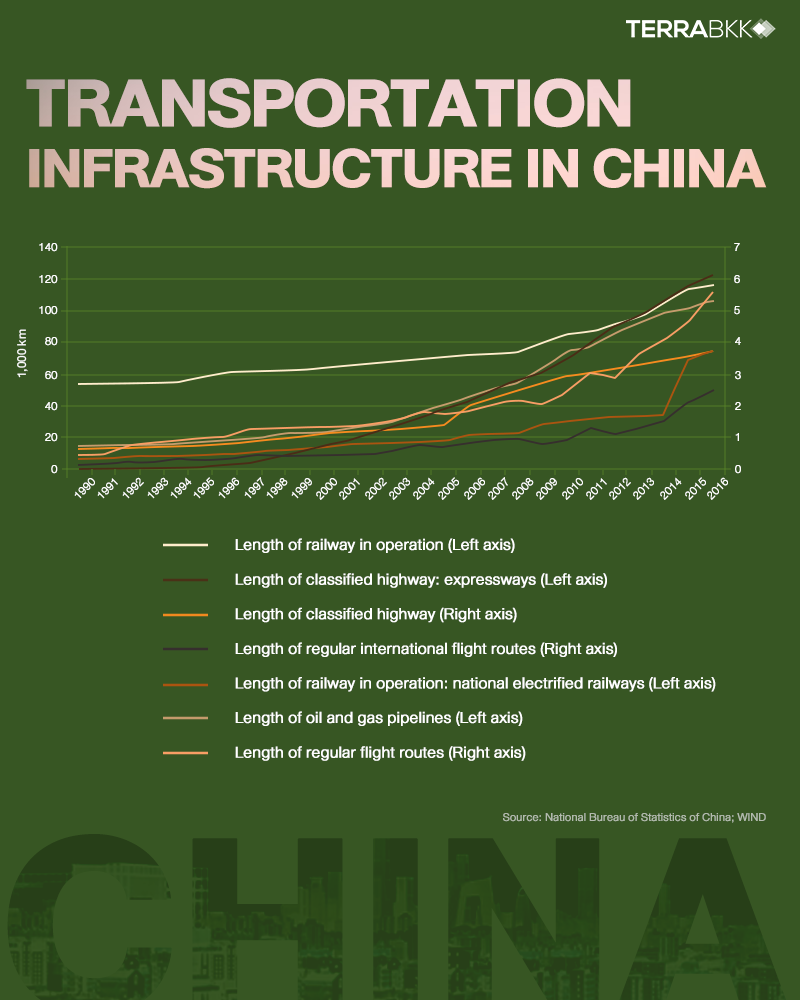
Ecological civilization drives China to become a pollution-reducing, environmentally friendly country. This is a commendable concept but poses significant challenges in its implementation. Additionally, China emphasizes “transportation infrastructure” and “the internet,” such as upgrading industrial park infrastructure.
Furthermore, with the advantage that China is the largest market for mid to high-end consumer goods in the world, it has become a significant opportunity that FDI sees in China, representing a proactive chance to grow in the mid and high-end markets.
Emerging Countries are Winning: They Prefer Investing FDI in China
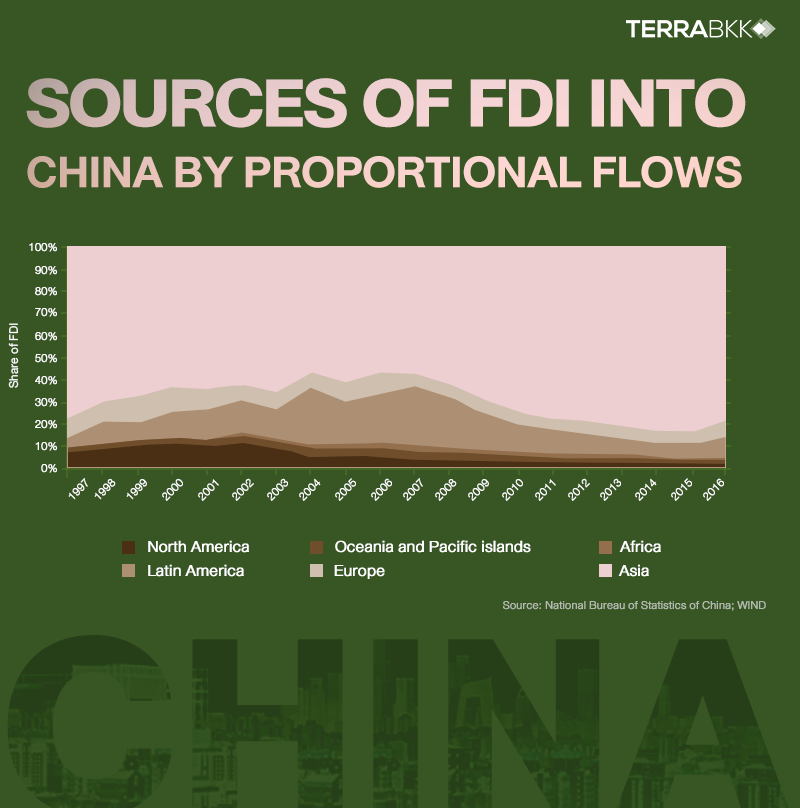
Since 2008, the share of Foreign Direct Investment (FDI) in China has been driven by emerging market countries, replacing investments from developed countries. Asian emerging markets have become a crucial tool for growth, compensating for the noticeable decline in investments from Latin American countries.
The FDI Trend is Shifting from “Traditional Manufacturing” to “Modern Technology and Service Production”
As is known, the Chinese government is promoting the development of modern service sectors and high-quality resource-based manufacturing to upgrade China's industrial structure. This industrial structural change leads to a shift in direct investment flows.
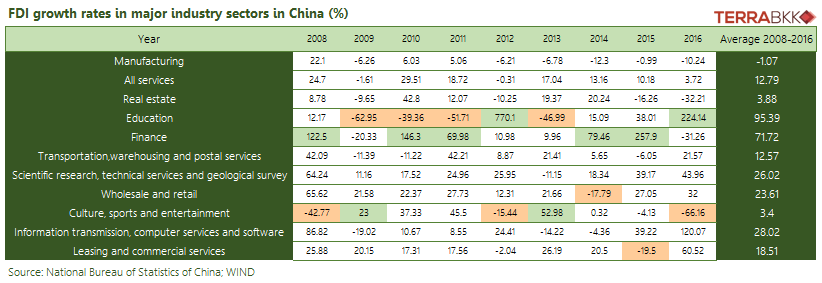
According to Chinese statistics, the growth of Foreign Direct Investment (FDI) in the “service sector” is significantly higher than in “manufacturing.” Notably, from 2008 to 2016, FDI in China's manufacturing sector experienced an average annual decline of -1.07%, while the service sector grew at an average of 12.79%. The industries with the highest average growth rates include Education at 95.39% and Finance at 71.72%. This reflects that the FDI trend in China is shifting from “traditional manufacturing” to “technology and modern service production,” expanding investments in value-added industries to enhance commercial potential, which is a key advantage of the Chinese market.
Lastly, beyond the traditional appealing factors for FDI in China, such as “low costs,” China is also striving to highlight the changes in “the overall economic structure of the country” to create a “new economic cycle,” allowing foreign companies to work closely with Chinese agencies to meet domestic market demands and shift production from 'Made in China' to 'Made with China.' This transformation not only reflects the reasons why China attracts foreign investment but also indicates the growth of quality investments that can create added value. Many global companies are choosing China as their regional headquarters. ---TerraBKK



Article by: TerraBKK Investment Tips
TerraBKK: Find Good Homes, Value for Money, Affordable Prices