LGBT: The Powerful Diversity - Part 1: When LGBT Becomes the New Voice of Your Business
LGBT: The Powerful Diversity - Part 1: When LGBT Becomes the New Voice of Your Business
Human rights, equality, and mutual respect are crucial issues in our society today. Everyone is constantly seeking equality, as evidenced by numerous protests around the world concerning financial, social, and housing equality. But did you know there is still one group waiting for society to accept, respect, and understand them? That group is LGBT, or individuals with diverse sexual orientations, who continuously advocate for their own equality. Although many countries have begun to accept these individuals more in recent years, legal equality still lags behind that of heterosexual individuals, whether in terms of marriage rights, tax benefits, or mental health recognition. However, you might not realize that the LGBT community could be one of the key factors driving many businesses forward. Today, TerraBKK Research wants everyone to get to know this group and understand why they could be a significant factor in your business's success.
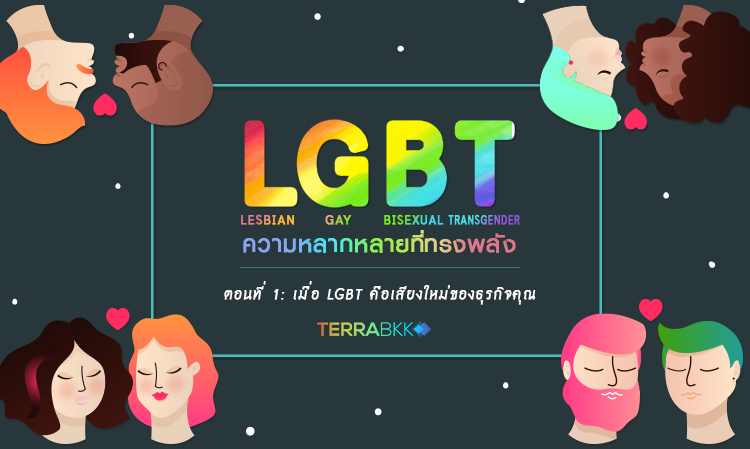
LGBT, or individuals with diverse sexual orientations, is derived from the first letters of the following terms:
- L – Lesbian refers to a woman who loves another woman, or in other words, a woman who loves someone of the same gender.
- G – Gay refers to a man who loves another man. In English, the term 'gay' can refer to both men and women who love someone of the same gender, but in Thailand, it is typically used to describe men loving men.
- B – Bisexual refers to a person who loves someone of the same gender or the opposite gender.
- T – Transgender means "cross-gender," referring to individuals who change their gender through medical processes such as surgery or hormone therapy.
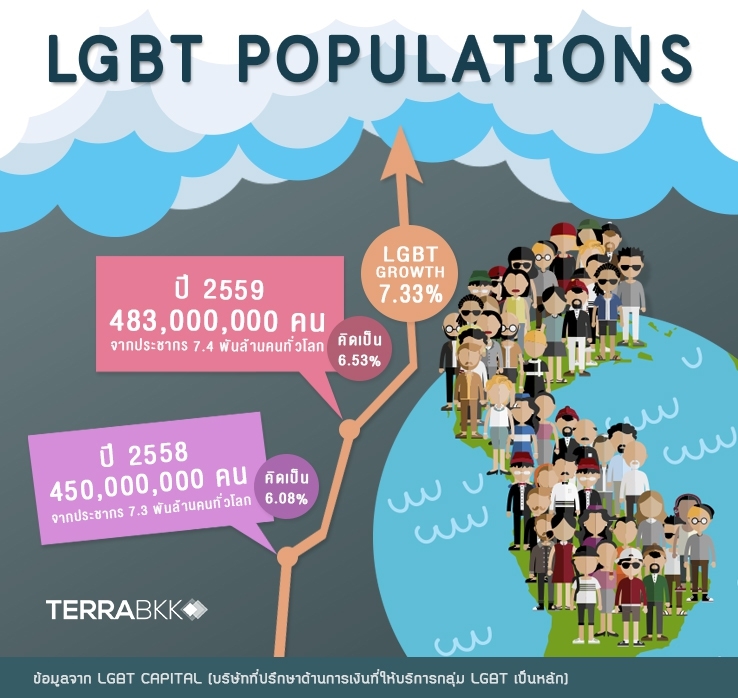
According to LGBT CAPITAL (a financial consulting firm primarily serving the LGBT community), data revealed that in 2016 (up to May), the global LGBT population was 483 million out of a total world population of 7.4 billion (according to the Population Reference Bureau), accounting for 6.53% of the global population. This represents an increase from 2015, when the LGBT population was approximately 450 million, or 6.08% of the global population of 7.3 billion. In terms of GDP (Gross Domestic Product) or market value of goods and services for the LGBT community, in 2016 it was valued at over $5.4 trillion, or about 189 trillion Thai Baht. This translates to a GDP per capita of approximately 391,300 Baht per person per year, making the LGBT community a rapidly growing niche market with a significant impact on the economy.
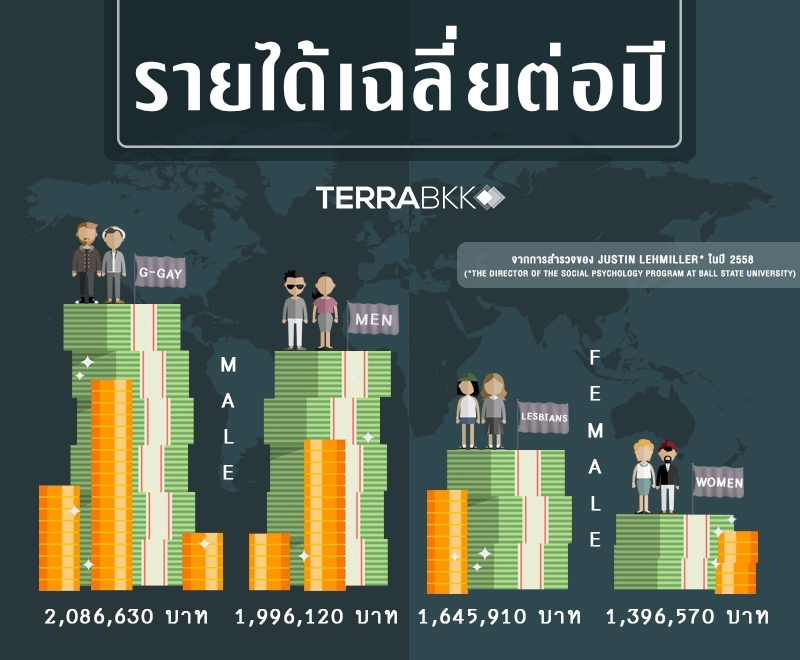
The Terra Research group believes that the high GDP or market value of goods and services for the LGBT community stems from their higher income levels. A survey conducted by Justin Lehmiller (the director of the social psychology program at Ball State University) in 2015 showed that the average income for the G-Gay community was $59,618, or about 2,086,630 Baht per year, while the average income for heterosexual men was $57,032, or about 1,996,120 Baht. For women, lesbians had an average income of $47,026, or about 1,645,910 Baht, while transgender individuals had an average income of $39,902, or about 1,396,570 Baht. This indicates that the LGBT community has a significantly higher average income compared to other groups, and couples within the LGBT community often double their income, known as the DINK (Double Income No Kids) group. It is no surprise that we see the LGBT community becoming a high purchasing power group. Their lifestyle, characterized by a love for travel, enjoyment of life, and a desire to prove their capabilities and equality, drives them to spend for a better life. Therefore, the team at TerraBKK Research believes that the LGBT community will be a key group for various businesses to focus on, including the real estate sector.
The LGBT market in Thailand has also seen significant growth, as evidenced by the many tourist attractions and businesses catering to this market. The website Travel Wire Asia reported that Thailand has been dubbed the capital of the LGBT community in Asia by many tourists, due to the friendly and accepting nature of Thai people towards LGBT travelers, with less resistance compared to some other countries in Asia or around the world.
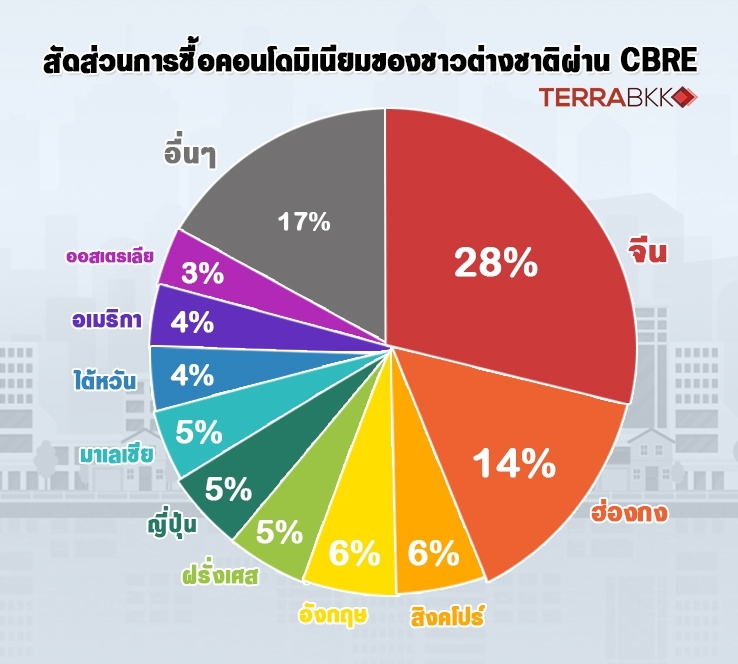
In the real estate sector, condominiums are one type of property that foreigners, including the LGBT community from various countries, can own. In 2017, a survey by CBRE (a global real estate consulting firm) showed that foreign buyers accounted for 25% of condominium purchases in Bangkok through CBRE. Delving deeper, among the foreign buyers, 28% were Chinese, 14% were Hong Kong residents, 8% were Singaporeans, 6% were British, 6% were French, 5% were Japanese, 5% were Malaysians, 4% were Taiwanese, 4% were Americans, 3% were Australians, and 17% were from other countries.
This makes Thailand a destination for relaxation or residence for various groups from around the world, including the LGBT community, particularly LGBT individuals from China. A survey by www.juwai.com, a well-known real estate website in China, found that the top five cities in Southeast Asia where the LGBT community prefers to buy condominiums for residence are:
- Bangkok – Thailand
- Phuket – Thailand
- Phnom Penh – Cambodia
- Manila – Philippines
- Ho Chi Minh – Vietnam
It is evident that Thailand is the only country with two cities on the list, both Bangkok and Phuket, which remain popular among all groups.
We can see that the LGBT community is a highly potential market, with a growing population each year, and society is increasingly accepting LGBT individuals. From the above article, we can also see that the LGBT community, especially those from China, plays a significant role in the Thai economy, particularly in tourism and condominium real estate. Therefore, we believe that the LGBT community is another group that businesses should pay attention to and respect their rights. In the next article, TerraBKK Research will elaborate on the factors that lead the Chinese LGBT community to purchase condominiums in Thailand and which locations are favored by this group.