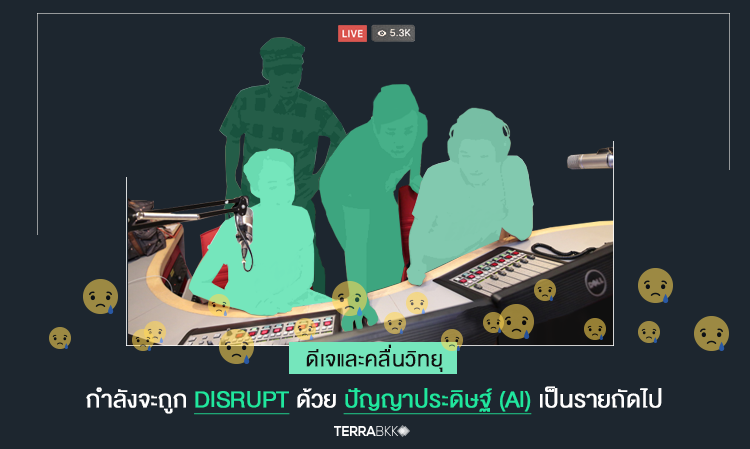
DJs and Radio Stations Are Next to Be Disrupted by Artificial Intelligence (AI)
Recently, there has been significant news in our music industry regarding the arrival of Spotify, an application that provides licensed online music streaming from Sweden, which began operations in 2008, just under 10 years ago.
Spotify operates on a “freemium” model, offering free basic features such as listening to music but not allowing downloads to devices, along with limitations on skipping tracks. Paying subscribers, however, can access all functions. As of June 2017, there were 140 million monthly active users, with 60 million paying subscribers (notably, this means that 43% of all users are paying, which is quite high).
It’s worth noting that Spotify is not the only service of its kind; there’s also Pandora, which offers similar online music streaming, and Apple iTunes. What makes Spotify popular compared to both direct and indirect competitors? The answer lies in its functions that help users select music based on their past listening behavior and similar user data, allowing it to recommend songs that listeners are likely to enjoy.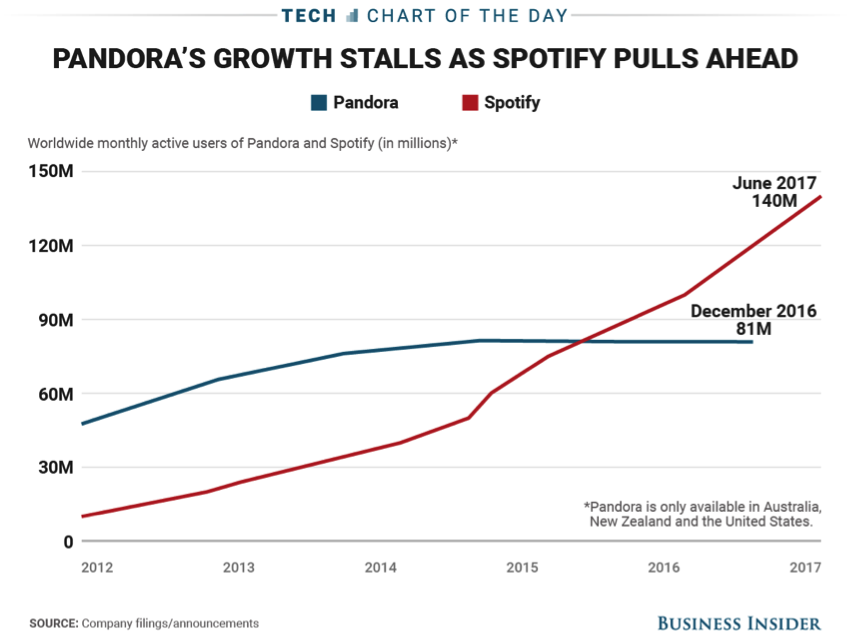
It can be seen that the number of Spotify users has surpassed Pandora and continues to widen the gap.
When considering the impact on the music industry, we find that CD sales have been steadily declining, with younger generations increasingly turning to online music. Consequently, artists' earnings are also decreasing, as evidenced by the famous singer Taylor Swift's announcement that her music would not be available on Spotify because she felt she was not being compensated fairly. Artists receive payment from Spotify based on the number of times their songs are played on the platform, averaging only $0.005 per play.
As younger generations listen to more music online, it’s inevitable that radio listenership will decline. The downside of listening to the radio is having to wait for DJs to play the songs we like, which can vary greatly from person to person. DJs cannot cater to everyone’s preferences, and the numerous advertisements can sometimes annoy listeners.
As radio stations lose significance, the next group to be affected will undoubtedly be the DJs who play the records. With the advent of personal DJs (referring to Spotify selecting songs for us), the need to listen to music from DJs seems outdated. The rise of Artificial Intelligence replacing humans in various industries is becoming a major trend in today’s world, including in the music industry.

Dr. Thanapoom Damraks, CFA.
Article by Terra BKK Dr. Thanapoom Damraks, CFA.
Email: tanapoom@uchicago.edu