6 Issues with Neighbors: How the Law Resolves Them
Conflicts with neighbors often arise from minor annoyances to serious disputes that can lead to lawsuits. TerraBkk has compiled 6 disputes that the law can help resolve as follows:
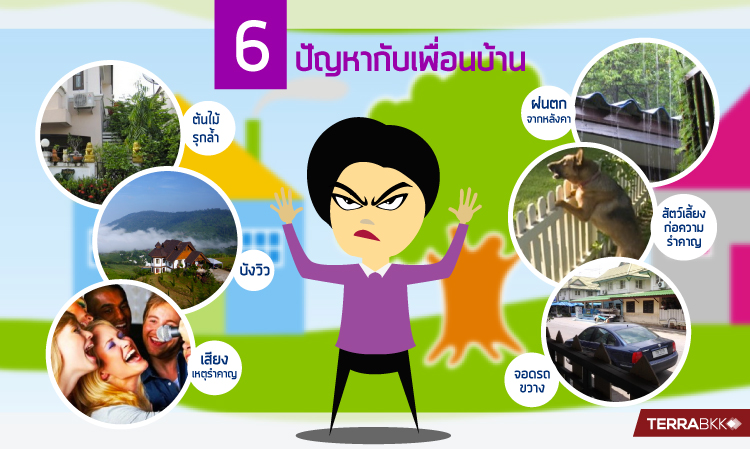
1. Trees If a tree encroaches on someone else's property, the owner must cut it down. However, if the roots encroach and cause structural damage, the affected party has the right to cut the tree down immediately. Additionally, any fruits that extend into another's property but have not fallen are still considered the property of the tree owner.
2. Views In some areas with natural sea or mountain views, laws often prohibit planting tall trees or constructing buildings that obstruct a neighbor's view. The law may grant the homeowner whose view is blocked the right to file a lawsuit to protect their right to enjoy the view.
3. Noise This includes disturbances caused by odors, light, radiation, sound, heat, toxic substances, vibrations, dust, and other factors that may harm health. Local authorities can be notified about such disturbances.
4. Rainwater from a Neighbor's Roof Homeowners can claim damages and file lawsuits for the removal of structures causing such issues.
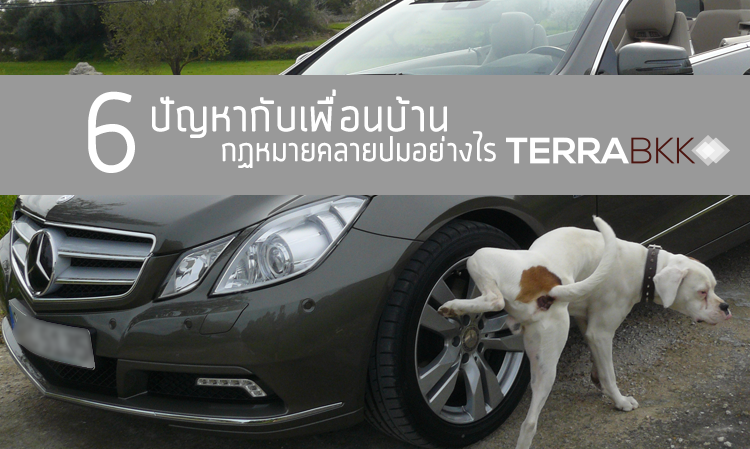
5. Pets If pets cause disturbances, the owner or caretaker can be held liable for damages.
6. Parking in Front of a House This is considered a nuisance under Section 397 of the Penal Code.
Trees
It is important to plant trees in a way that does not damage one's own or others' property. The law addresses issues related to tree planting, stating that planting trees near property boundaries can lead to encroachment issues, such as branches, leaves, fruits, and roots. The legal implications of tree encroachment are as follows:
1. If branches or fruits extend into another's property, the affected party must notify the tree owner to trim them before taking action themselves. If the tree owner fails to comply, the affected party can cut the tree and claim damages. Cutting the tree without prior notice may lead to criminal charges for property damage and trespassing.
2. If roots encroach and cause structural damage, the affected party has the right to cut the tree immediately. However, to avoid complications with criminal charges, it is advisable to inform the tree owner beforehand.
3. Regarding fruits, if they extend into another's property but have not fallen, they belong to the tree owner. If someone picks them, they may face theft charges.
3.1 If fruits fall onto another's property, taking them is not considered theft. Some lawyers suggest letting them fall to avoid legal issues, but this could also lead to charges for property damage or attempted theft.
Views
If a neighbor builds or plants trees that block a view, typically, individuals have no rights to sunlight, air, or views, as these are considered natural elements. However, if a neighbor intentionally builds to obstruct a view or if local laws prohibit such constructions, the affected homeowner may have the right to sue to protect their view.
Noise
The Public Health Act of 1992 includes provisions for managing, preventing, and addressing noise pollution. The following are key points:
Section 25 defines disturbances that may affect nearby residents, including actions causing odors, light, radiation, sound, heat, toxic substances, vibrations, dust, and other factors that may harm health.
Section 26 empowers local authorities to prevent disturbances in public or private areas and to manage public spaces to eliminate nuisances.
Section 27 allows local authorities to issue orders to individuals causing disturbances to cease their actions within a specified time. Failure to comply may lead to serious health risks, and the responsible party must bear the costs of resolving the issue.
Section 74 states that failure to comply with local authority orders without reasonable excuse may result in imprisonment for up to one month or a fine of up to 2,000 baht, or both.
The Penal Code includes provisions for punishing those who cause noise disturbances:
- Section 370 imposes a fine of up to 100 baht for causing unnecessary noise that disturbs the public.
- Section 372 penalizes public disturbances with fines of up to 500 baht.
- Section 376 prohibits the use of firearms or explosives in populated areas, with penalties of up to 10 days in jail or a fine of up to 500 baht.
Noise from parties or drunken disturbances is considered a criminal offense, and neighbors have the right to file complaints. If a neighbor's dog barks incessantly, assistance can be sought from animal control authorities. If they cannot resolve the issue, a lawsuit can be filed against the neighbor for judicial intervention.
Rainwater from a Neighbor's Roof
The law considers this a form of infringement of rights under the Civil and Commercial Code, allowing the affected party to seek damages and file for the removal of offending structures.
Neighbor's Pets Causing Disturbances
For instance, if dogs or cats enter and cause damage, the law allows the affected party to claim damages from the pet owner or caretaker. However, harming or killing the pet in retaliation is not permitted, as it may lead to charges for property damage and further legal action.
Parking in Front of a House
Parking in front of someone else's house is a nuisance, as it prevents access. Claiming that the road is public does not absolve the responsibility, as knowingly causing inconvenience constitutes a violation under Section 397 of the Penal Code.
Since this is a criminal offense, police cannot refuse to take complaints. Refusal may lead to charges for dereliction of duty, as mere behavior causing inconvenience is sufficient for criminal liability.