REITs: A New Investment Strategy in Real Estate for Converting Assets into Capital
While many are concerned about signs of a "downturn in real estate," whether due to high household debt or stricter lending policies from banks, in every 'crisis' there lies an 'opportunity' for those who can see the right tools.
TerraHint Brand Series 2025 | The Wellness Blueprint #LiveWellWithFormula is a major seminar organized by TerraBKK.com that presents solutions for entrepreneurs and investors, specifically the use of REITs as a source of funding and an investment mechanism that provides consistent returns in a volatile market.
The TerraHint Brand Series 2025 aims to elevate the perspective of the Thai real estate industry towards creating sustainable quality of life. One of the topics that particularly interests entrepreneurs and investors at this seminar is “The Direction of Real Estate for Attractive Investment,” presented by Ms. Aranong Chaitong, CEO of Prospek REIT Management Co., Ltd., who aims to create new opportunities to turn economic challenges into growth strategies for entrepreneurs and investors.

An important question raised during the lecture was, "How can existing real estate assets not become a burden, and what other methods are there for raising funds to sustainably grow new projects?"
Igniting Sustainable Investment
Ms. Aranong Chaitong illustrated that if we consider the proportion of the Stock Exchange of Thailand (SET), which has a total value of over 49 trillion baht, we find that real estate is a highly influential sector, accounting for about 9% of investments, ranking fourth after finance, energy, and ICT. Within the real estate sector itself, the role of Real Estate Investment Trusts (REITs) is prominent, holding a significant 11% share in the real estate market listed on the SET.

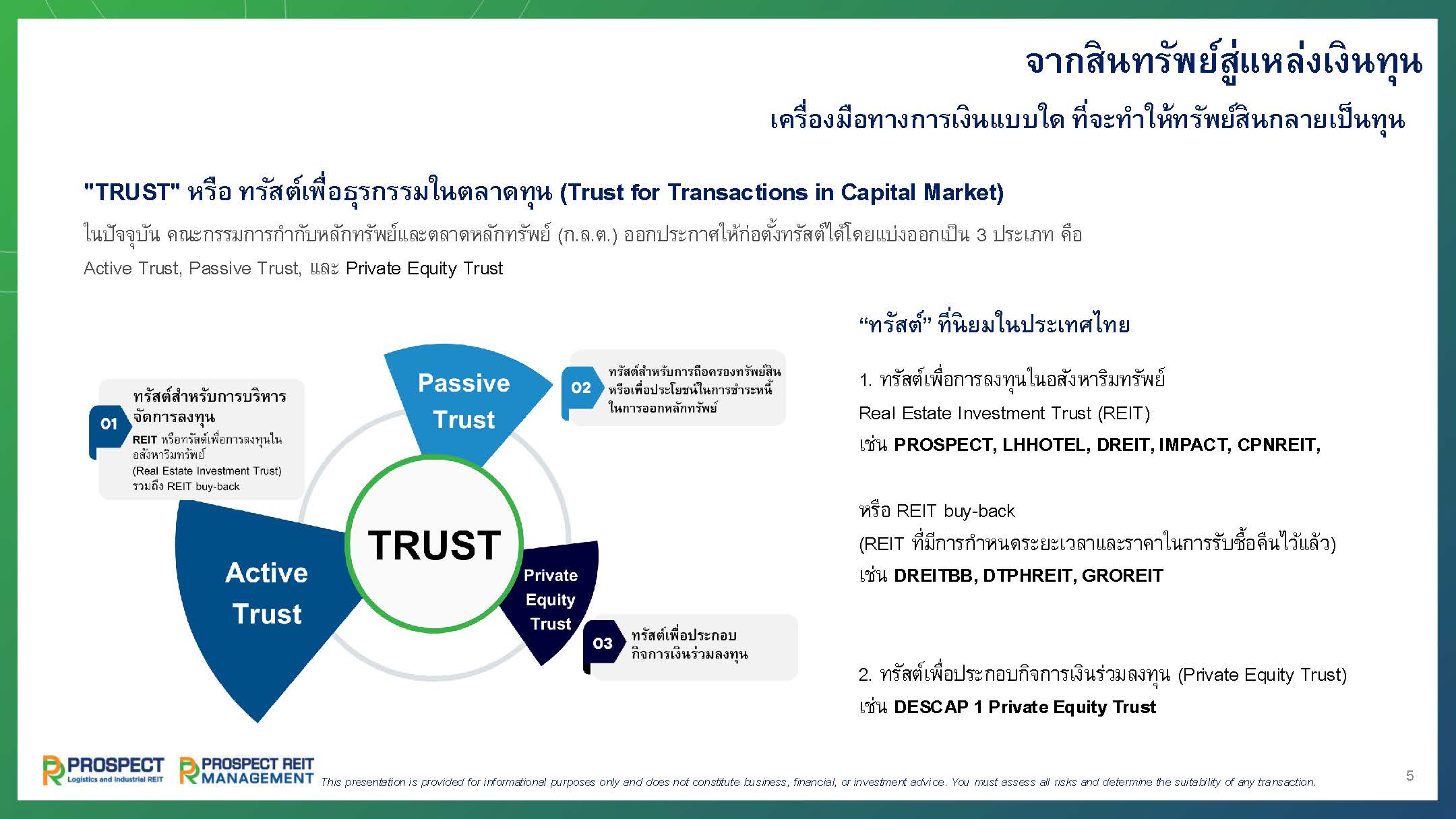
This marks the beginning of exploring more advanced approaches than traditional buying and selling or development, as REITs play a crucial role as a financial tool that allows real estate developers to diversify risks and raise funds for new projects effectively. Even though traditional real estate transactions may be sluggish, the REIT market continues to grow and raise capital consistently, creating recurring income that transforms "burdens" into "liquid assets," attracting stable funding from large investors and institutions without relying on traditional bank loans.
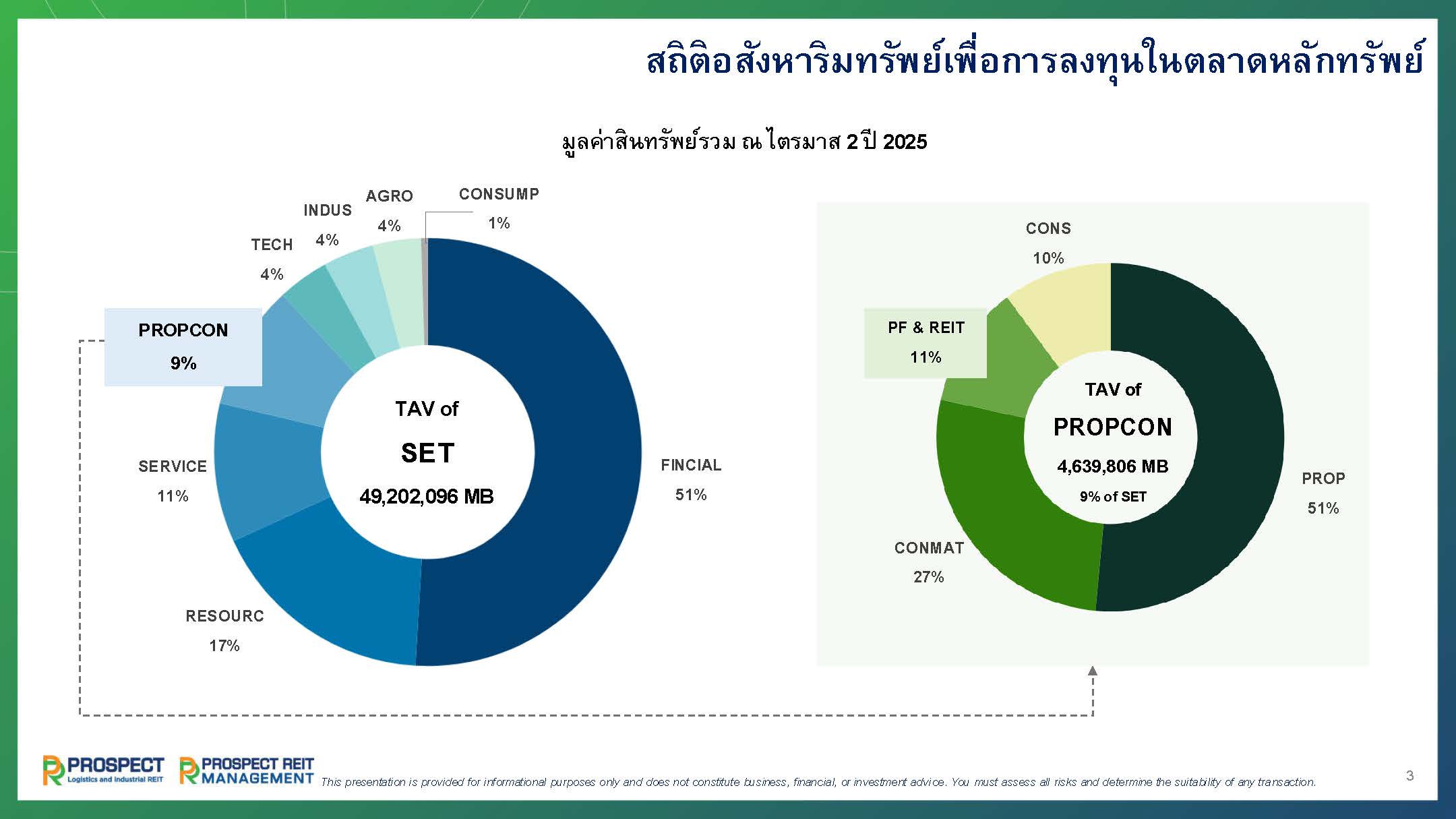
“This year is challenging across all sectors and products, and businesses need to find differentiators to continue operating. Real estate growth doesn’t have to rely solely on building and selling; incorporating REITs can propel the market forward, similar to real estate in Japan and Singapore, where 80% of hotels and serviced apartments are in REITs,” she stated.
REITs: A Funding Tool, Not Just an Option, But a Lifeline
The 11% share of REITs in the stock market reflects that REITs are increasingly gaining attention, as evidenced by many large developers starting to use REITs as a primary tool for risk diversification and effective fundraising. For example, CPN has CPNREIT, WHA Group has WHART and HREIT, and even Land & Houses, which operates in housing and condos, has LH Hotel REIT, along with Singha Estate, which has REITs for office buildings, factories, and warehouses.
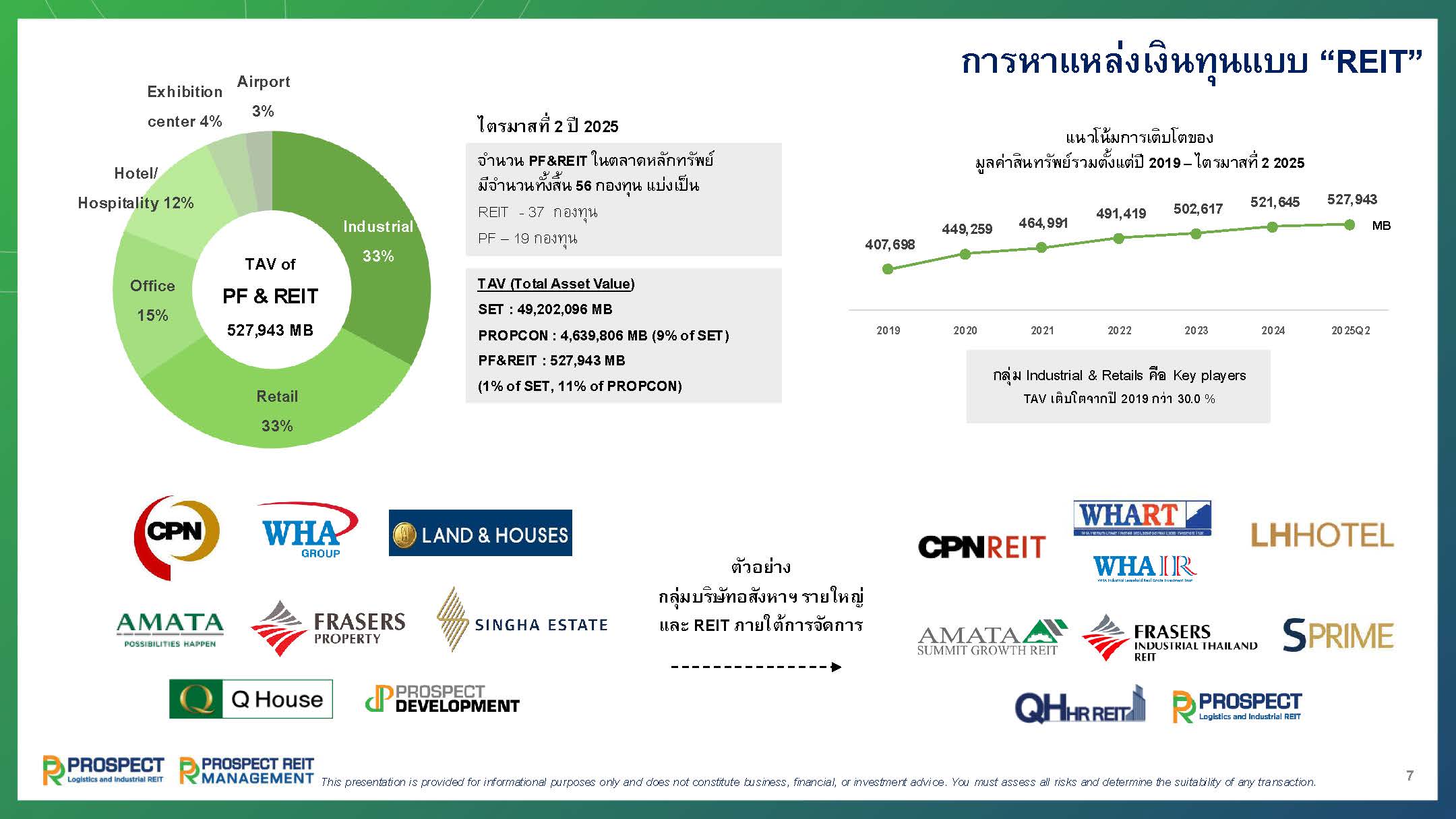
Despite having passed through the COVID-19 crisis, the REIT market has never stagnated, consistently increasing capital and growing. Statistics show that the total value of REITs in the market has grown from approximately 400 billion baht to over 500 billion baht. This growth reflects that a vast amount of investment capital is still waiting in the wings, and investors are ready to seize opportunities when there are tools that provide consistent returns.
Unlocking Capital: Accessing High Net Worth Individuals and Banks with REITs

There is a saying that "money is waiting in the air," but the truth is that this money has owners. Real estate developers must know how to attract capital from these owners, both from financial institutions and large investors.
Most capital comes from two main sources: banks and Ultra High Net Worth (UHNW) individuals, who are either private investors or institutions with deposits starting from 10 million baht.
According to data, there are currently approximately 16.18 trillion baht in deposits in major banks, and although banks are becoming stricter in lending, on the contrary, when REITs are established or capital is increased, many large banks are willing to offer loans.
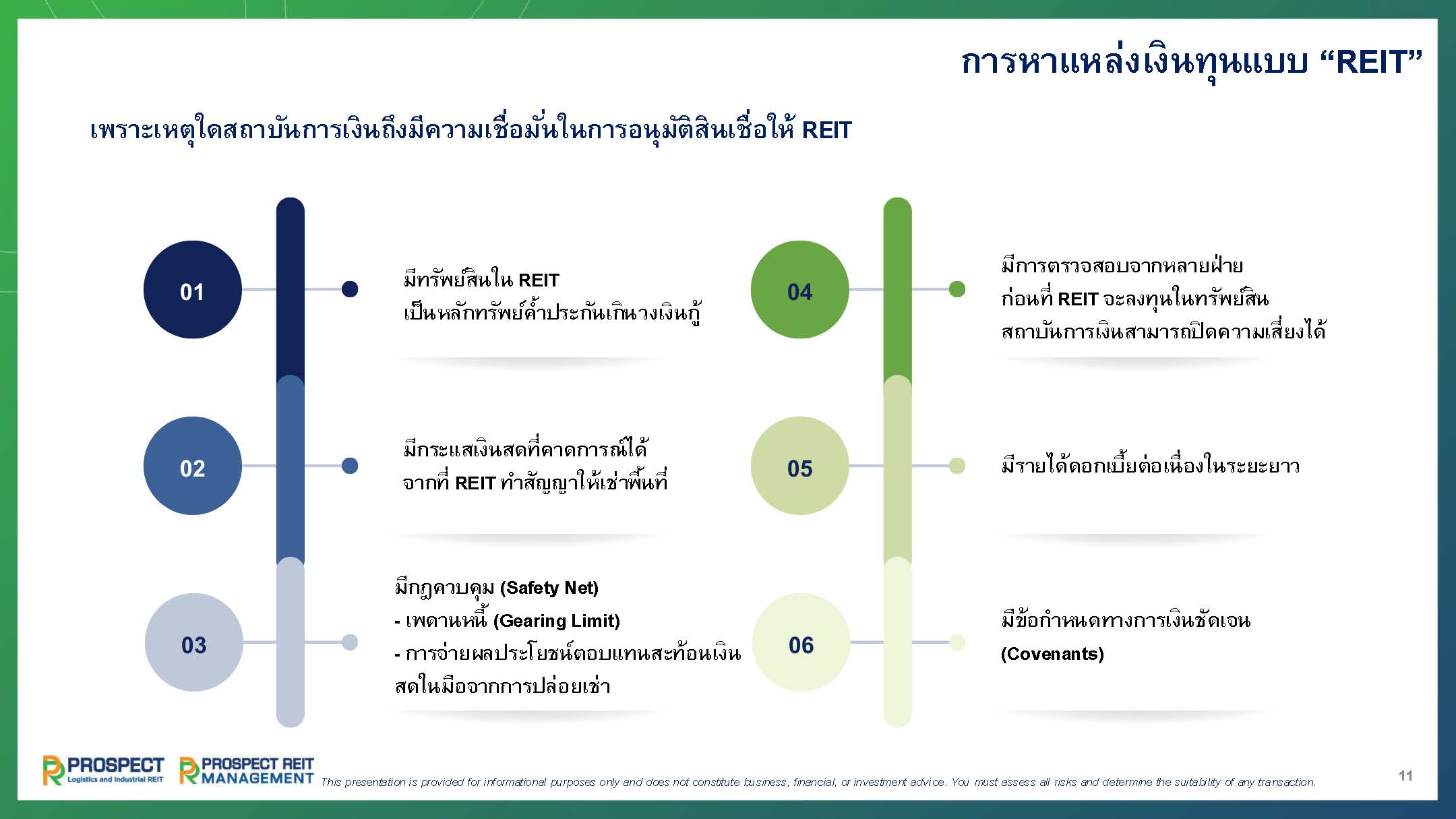
REITs are more appealing to banks than direct loans to regular companies for several reasons.
1. Clear and comprehensive collateral: Typically, REITs can borrow up to 35% (and up to 60% if they have a good credit rating), but banks receive 100% collateral from the value of the assets held by the REITs.
2. Intensive due diligence: Assets entering REITs undergo thorough checks from various parties, such as financial advisors, legal advisors, and oversight from the SEC and the stock exchange, making banks feel "safer".
3. Consistent cash flow: Most REITs derive income from rent, which provides clear and stable cash flow, allowing banks to easily predict repayment capabilities.
Advantages Over Traditional Loans
For example, when a real estate developer needs 5 billion baht for a new project, if they borrow from a regular bank, they might only receive 40-50% of the loan and must find the remaining funding themselves. However, if they sell assets to a REIT, they will receive 100% of the amount back, with the debt burden to the bank falling on the REIT itself.
Solutions for Small Entrepreneurs & Niche Markets
For property owners with recurring income assets but not large enough to establish their own REITs (minimum criteria is about 500 million baht per fund), Ms. Aranong proposed an interesting solution and opportunity for members of associations or medium-sized entrepreneurs, such as consolidating assets. Entrepreneurs can combine several recurring income properties to reach a total value of 500 million baht, such as combining hotels, serviced apartments, or 3-4 office rental spaces, and then bring them into an existing REIT (Acquire Asset) instead of establishing their own fund, saving both time and costs, with the REIT management company handling fundraising and loan applications from banks.
Key conditions for assets entering REITs:
- Must have consistent income and show consistent financial statements for at least 3 years.
- Asset valuation should primarily use the Income Approach, so lease agreements must be clear and include rent escalation (should not be fixed rate for 15 years) to enhance the assessed value.
REITs Buy Back: A Solution for "Cash-Strapped" Situations
Additionally, the typical IPO process for REITs may take 8-10 months, which is not suitable for entrepreneurs needing urgent funding. "REITs Buy Back" thus becomes an excellent alternative.
REITs Buy Back is a limited fundraising model, similar to pledging assets to large investors (Ultra High Net Worth or institutions), with a commitment to buy back within a specified period, offering guaranteed returns (e.g., 5% – 10% per year) that must exceed deposit interest rates.
- Advantages: Negotiation and decision-making are faster than banks, taking only 3-6 months (if well-prepared), and it is more flexible than setting up large REITs.
- Returns: The expected return rate for UHNW investors in the current market is no less than 8% (Yield Rate).
Ms. Aranong emphasized that designing REITs is about financial and legal design for the maximum benefit of the asset owners themselves. Some large companies have designed themselves to hold about 15% of REIT units and receive dividends that may reach up to 11%, which is sufficient to cover the interest burden on loans.
Do not let existing real estate become a burden... because it is an asset that can be converted into capital. Learning and utilizing financial mechanisms like REITs will help businesses raise funds again, just as Japan and Singapore have successfully done.

#TerraBkk #TERRAHINT #BrandSeries2025 #TerraHintBrandSeries2025
#LiveWellWithFormula #TheWellnessBlueprint #Wellness #Hospitality #REITs #RealEstateForInvestment