Public Parks in Bangkok: An Essential Breath of Fresh Air for City Dwellers
The urban landscape is carpeted with concrete, and real estate developments compete to reach towering heights. Often, the public parks in the heart of Bangkok are the last consideration for developers after completing various projects.
But what would happen if one day, Bangkok had no public parks at all?
Public parks in Bangkok are not just places to "rest" or "jog in the morning"; they play a much deeper role as green infrastructure that truly makes the city livable for all.
- Parks are the city's "natural air conditioners".
Bangkok is one of the cities with the highest levels of "Urban Heat Island" effect in Southeast Asia, where heat accumulates from concrete, roads, and tall buildings.
Parks in the city center help reduce surrounding temperatures by an average of 1-3 degrees Celsius, depending on the size and density of trees. For instance, Benjakitti Park, with over 300 rai of wetland, creates a microclimate that can be more effective than air conditioning in entire buildings.
- Parks are infrastructure for mental health.
Public parks in Bangkok are not just places for leisure; they also serve as quiet spaces for mental therapy.
In a country where mental health costs are skyrocketing, having green spaces within walking distance is an effective way to prevent depression and chronic stress.
Walking under the shade of trees, listening to birds chirping, or sitting quietly beneath a large tree has been shown by research worldwide to help reduce cortisol (the stress hormone).
- Parks balance the "city-people-water" relationship.
Many overlook the role of parks in terms of water ecosystems, but Bangkok is a city below sea level and frequently faces heavy rainfall.
Well-designed parks, such as the new phase of Benjakitti Park or King Rama IX Park, do not just plant trees; they act as "rainwater absorption systems" that help slow down water flow, reduce runoff, mitigate flooding, and filter water before it is released back into nature sustainably.
- Parks are free learning spaces.
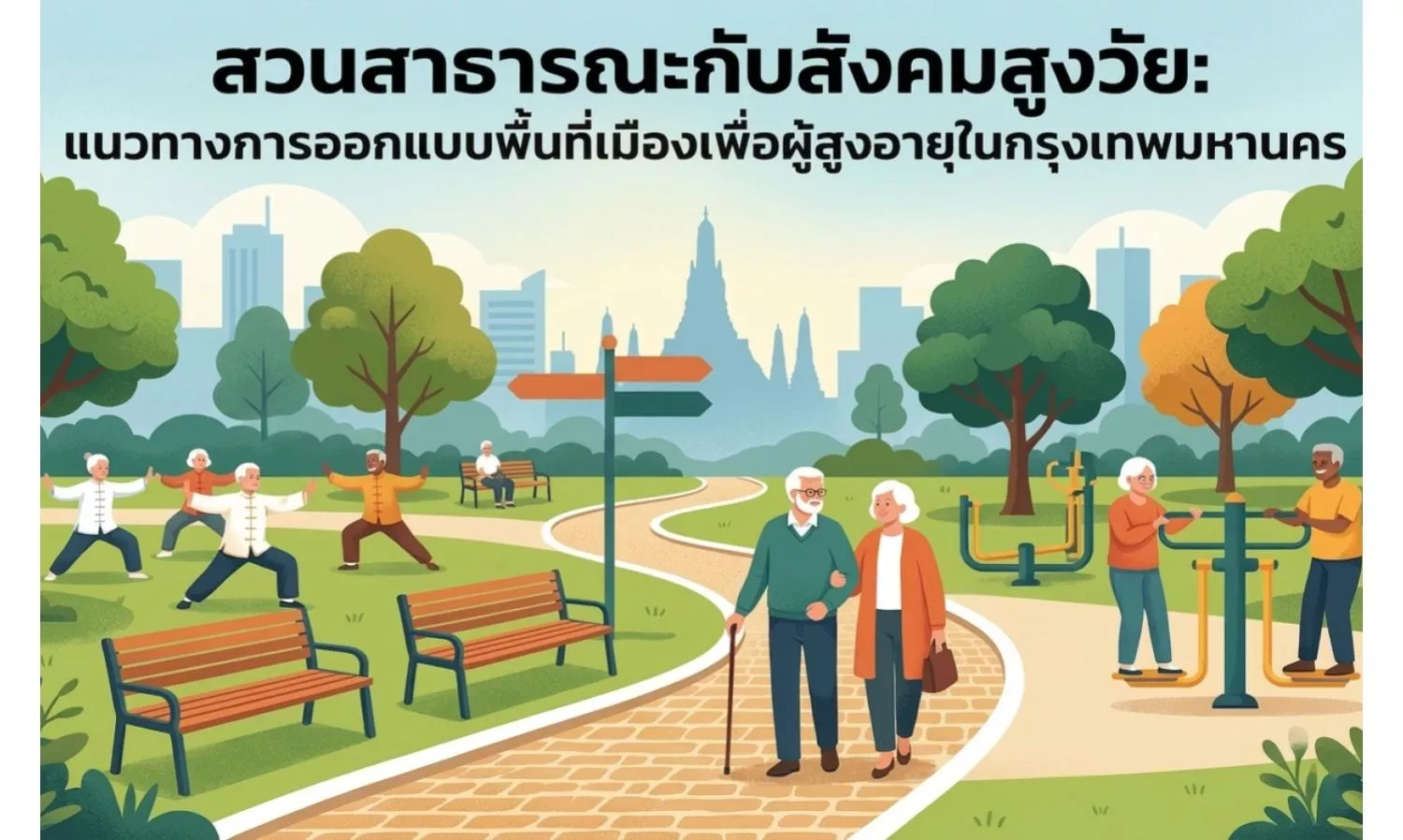
If you observe closely on weekends in various public parks across Bangkok, you will find groups of children to seniors engaging in outdoor activities without any cost.
Some parks have nature learning zones, safe playgrounds, exercise areas, and community workshops. These are "outdoor classrooms" that are open for free every day of the year, something that office buildings or shopping centers cannot replace.
If we still consider public parks as "luxuries" that should give way to the economy, the question we should ask ourselves is: what kind of economy thrives on the suffering, heat, and stress of the population?
Parks are not just trees or lawns; they are the infrastructure of humanity that should not be pushed out of the city simply because square meters are highly priced.
Therefore, public parks in Bangkok should be re-evaluated, not just as "recreation areas" but as the "foundation" of a city that aspires to be sustainable in the long run.