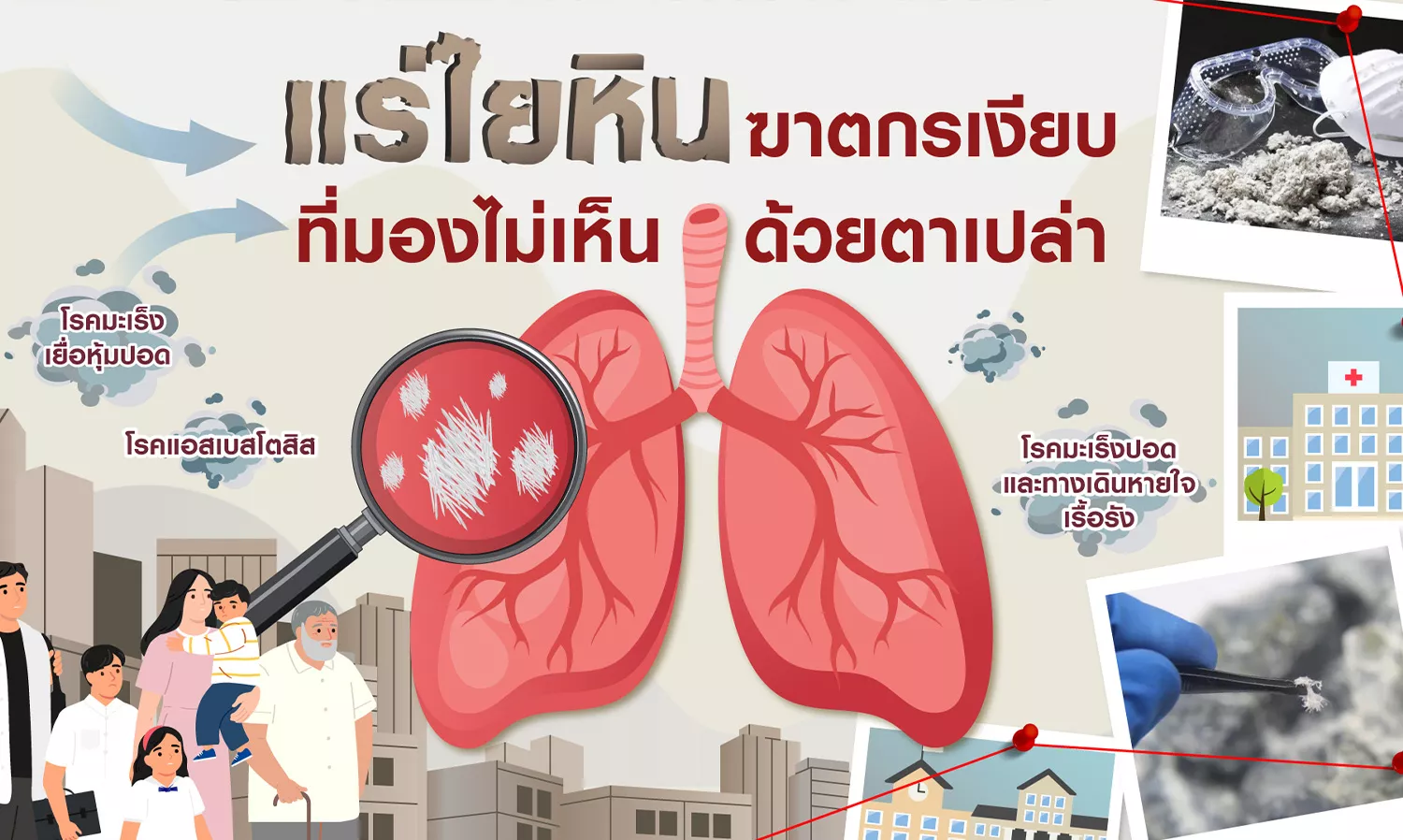
When Asbestos Dust is Near Children, Schools, and Hospitals: Unsafe Building Materials = A Risk That Should Not Be Overlooked
As we discuss advancements in construction materials, urban development, and improving the quality of life for people, one aspect that is often overlooked is “the hidden safety within buildings”. Particularly, the construction materials that must be safe for the health of those living in the buildings. It is hard to believe that many buildings in Thailand, including old schools, hospitals, government centers, and even some homes, still contain asbestos, a material hazardous to the health of those who come into contact with and inhale it. These materials may appear strong and functional in the short term, but they conceal a long-term health threat that gradually endangers lives.
When “safe spaces” become risk zones
Many people may understand that the dangers of asbestos occur only in construction sites or industrial factories. However, in reality, many old buildings still use materials containing asbestos, including schools, hospitals, daycare centers, and even government offices. If these materials deteriorate without proper inspection or maintenance, asbestos dust can spread into the respiratory systems of children, students, or patients who use these buildings daily.
Imagine kindergarten children playing under a decaying roof or patients with lung diseases waiting for treatment in a hospital with cracked tiles. In such environments, even a small breath could unknowingly introduce toxic dust into the lungs, and over time, the risk could become a reality that is too late to treat.
Asbestos... the silent killer invisible to the naked eye
Asbestos is a natural mineral fiber that is highly heat-resistant and has been used as a component in construction materials such as roofing tiles, floor tiles, wall panels, cement pipes, and fireproof materials. Due to its low cost and suitable properties for construction work, asbestos was popular in the past. However, problems arise when these materials deteriorate, crack, or are disturbed. The tiny fibers of asbestos can become airborne, turning into toxic dust that enters the body through breathing. The dangers of asbestos do not manifest immediately but often take decades to accumulate in the body before leading to severe diseases such as:
- Mesothelioma
- Asbestosis
- Lung cancer and chronic respiratory diseases
What is frightening is that even exposure to small amounts can lead to long-term diseases, especially in young children, pregnant women, the elderly, and vulnerable patients who have weaker immune systems and less ability to eliminate foreign substances from their bodies compared to healthy adults.
The world is phasing out asbestos, but Thailand is lagging behind
Many countries have completely banned the use of asbestos, including several countries in the European Union and others around the world, recognizing the long-term health impacts on the population and promoting the use of safer alternative materials such as synthetic fibers, fiber cement, or natural materials that do not release toxins.
In Thailand, despite efforts to limit the use of asbestos, it is still imported and used in certain products, particularly in industries that prioritize low costs over long-term safety. As a result, millions of Thais continue to live under the risk of asbestos exposure without realizing it.
It’s time to change for everyone’s future
We need to collectively raise awareness, whether among government agencies, the private sector, engineers, designers, or even the general public, all of whom play a crucial role in choosing safe construction materials free from asbestos, especially in areas with many vulnerable groups, such as schools, hospitals, elderly care centers, and residences.
SCG, as a leader in construction materials in Thailand, has always recognized this issue. We are committed to not using asbestos in our products and supporting consumers in choosing materials that are safe for health and environmentally friendly, to set a new standard for the Thai construction industry and enhance the quality of life for Thais, keeping them safe from this silent threat.
Because safe construction materials are not just an option; they are the foundation of a society that cares for everyone’s health. It is time for us to push for a Thailand free from asbestos for the safe future of our children and families.