Climate Finance & Thailand’s Taxonomy: Unlocking New Opportunities and Transforming the Real Estate Game
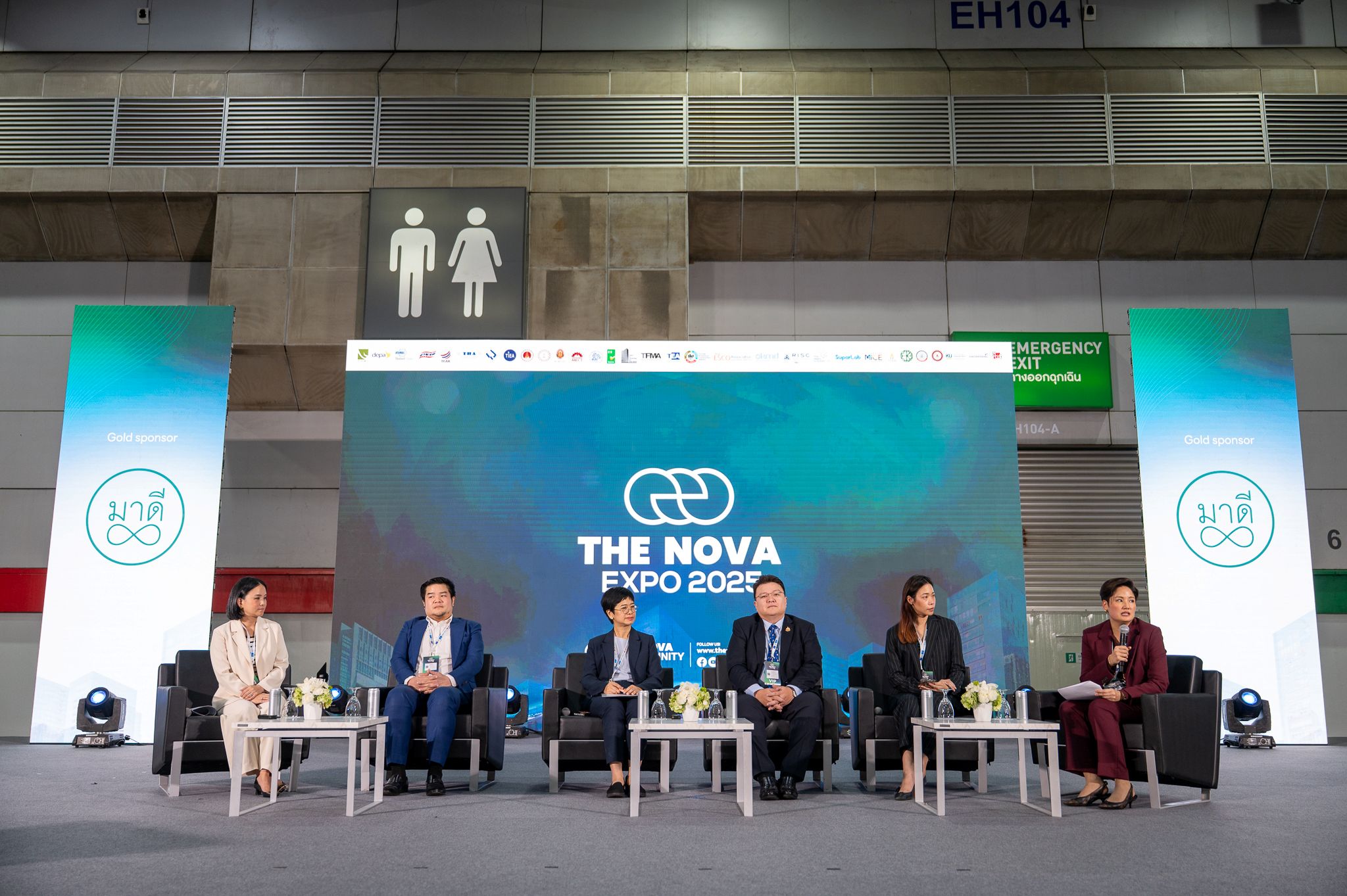
Amid the global shift towards Net Zero, Thailand's real estate and construction sectors must rapidly adapt for survival. At the event “The Nova Expo 2025: Green Innovations Changing the World”, the first and only event in Thailand providing knowledge and actionable guidelines for a green global society, organized by EEC Engineering Network Co., Ltd. (EEC Academy), a panel discussion was held on the crucial topic of environmental finance and Thailand's tax framework titled “Climate Finance & Thailand’s Taxonomy: Driving Sustainable Construction & Real Estate”. Representatives from the government and financial sectors shared valuable insights on the impacts of new legislation and practical approaches for operators in the real estate and construction sectors, including:
- Dr. Kittisak Prueksakanont, Director of the Strategy and International Cooperation Division, Department of Climate Change and Environmental Quality, Ministry of Natural Resources and Environment (DCCE)
- Chananan Suphadul, Director of Financial Institution Strategy, Bank of Thailand (BOT)
- Thayakorn Jitrakuldecha, Director of Debt Instruments, Securities and Exchange Commission (SEC)
- Dr. Charika Charnanantpipat, Scholar in Business Operations and Sustainable Development, Thailand Development Research Institute (TDRI)
- Panittra Wechachiva, Assistant Managing Director of Financial Institutions and ESG Solutions, UOB Thailand
Moderated by the Thai Energy Management Association
Impact of the New Climate Change Act
The discussion began with an important question for the construction and real estate sectors: How will the new Climate Change Act, which everyone is watching closely, impact them?
Dr. Kittisak Prueksakanont, Director of the Strategy and International Cooperation Division, DCCE, stated that the Climate Change Management Act, currently under Cabinet consideration, is not intended to burden businesses but to support them in adapting appropriately, particularly in terms of collecting and reporting data on greenhouse gas emissions, energy use, and energy efficiency operations. He advised that the real estate and construction sectors should prepare for the arrival of the Climate Change Act in the following areas:
- Reporting greenhouse gas emissions: Businesses involved in heavy industries must prioritize calculating and reporting relevant emissions data.
- Developing buildings and projects that comply with energy standards: Designing energy-efficient buildings and reducing environmental impacts will help access funding sources and government support measures.
- Developing environmentally friendly technologies and products: Adapting to international standards such as EU CBAM and US CBAM will enable businesses to compete globally.
The government has measures to support the real estate, construction, and related industries in complying with the Act, including the Climate Finance Fund, which is under consideration to allocate funding to operators who conduct business in an environmentally friendly manner, and the development of Thailand’s Taxonomy, a system categorizing environmentally friendly economic activities that will incentivize businesses to adapt.
Additionally, the Bank of Thailand will play a role in the systematic transition to a green economy that is appropriate for Thailand's context, creating financial mechanisms that help businesses adapt appropriately and compete globally. Five key strategies have been established:
1. Encourage financial institutions to integrate environmental factors into their risk management and business opportunity processes.
2. Support the development of financial products that facilitate the transition to sustainability.
3. Establish regulatory guidelines that consider the sustainability of financial institutions.
4. Support the development of environmental data and reporting systems.
5. Promote the use of Thailand’s Taxonomy to create environmentally friendly economic standards.
From Brown to Green: BOT Advocates Thailand’s Taxonomy to Lead Thai Businesses into a Green Future
The Bank of Thailand (BOT), one of the key agencies that will play an important role in pushing the private sector towards this sustainability transition, Chananan Suphadul, Director of Financial Institution Strategy, BOT, began by explaining the context of Thailand that must consider three main issues:
Issue 1. Thailand's economy remains highly dependent on fossil fuels and has greenhouse gas emissions in the industrial and tourism sectors that exceed the global average, resulting in the country being classified as having a high brown economy (an economy that is not environmentally friendly due to the heavy reliance on fossil fuels).
Issue 2. Thailand is vulnerable to natural disasters, as climate change directly impacts livelihoods and the economy.
Issue 3. Small and medium-sized enterprises (SMEs), which make up 70%, are still unable to fully adapt to the changing trends.
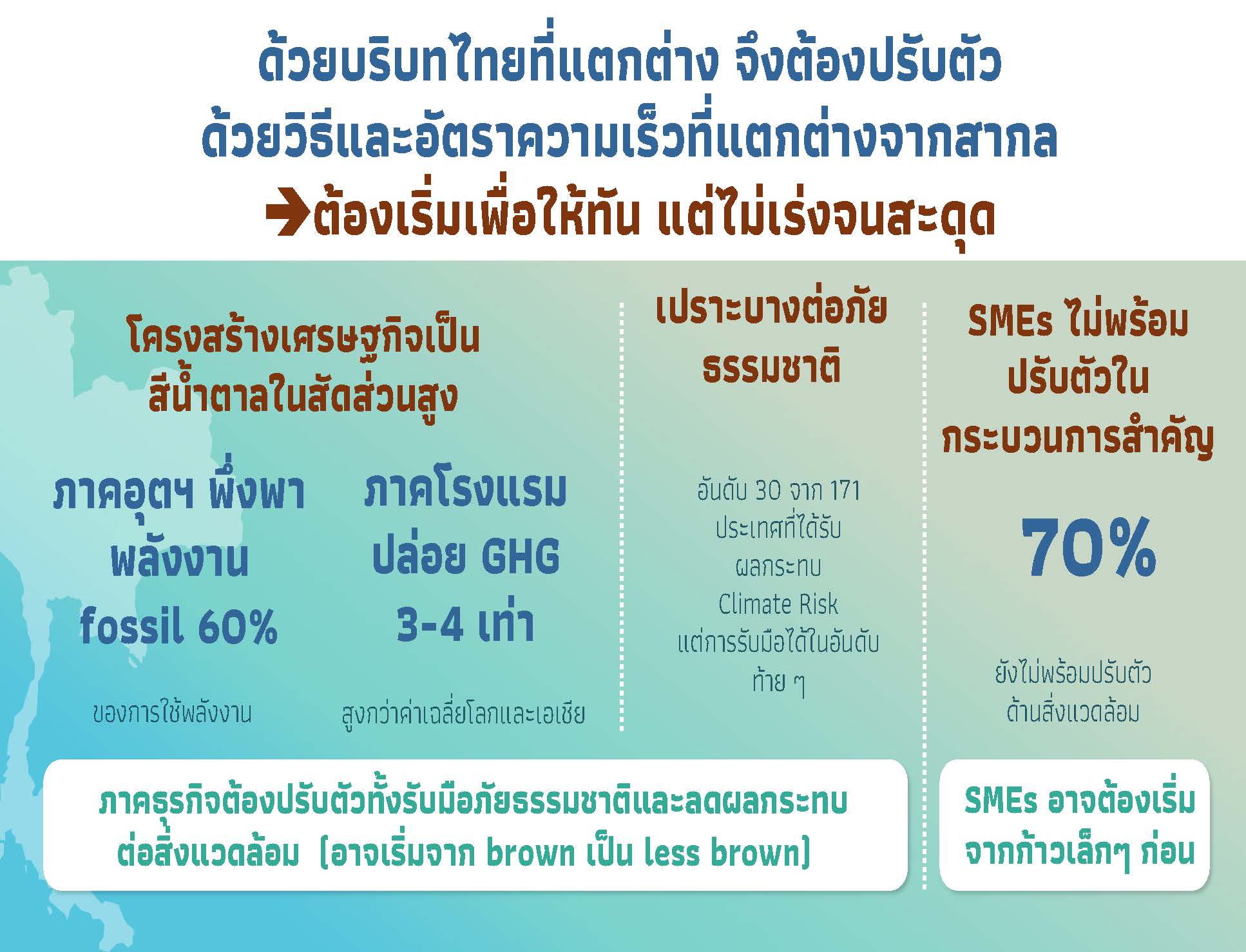
For this reason, the Bank of Thailand emphasizes that the transition must be "smooth"—not too fast to cause turmoil, and not too slow to fall behind the world. The transition may need to occur step by step, from "Brown" to "Red Brown" before reaching "Green." The Bank of Thailand has set two important strategies to support this transition:
1. Promoting the stability of financial institutions by integrating environmental issues into risk management and opportunities.
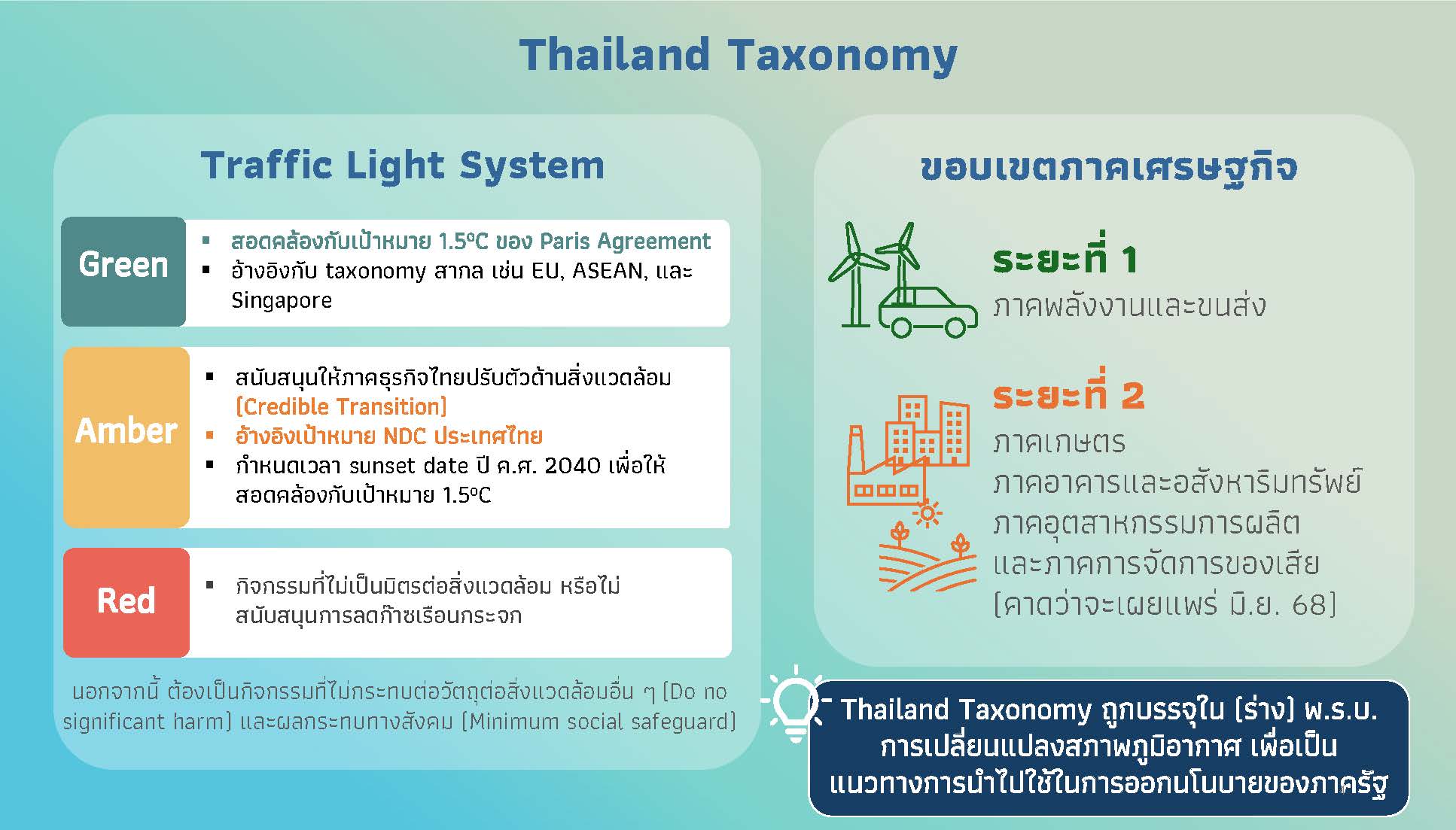
2. Developing financial tools to support the transition to a green economy. One of the key tools is Thailand’s Taxonomy, which sets standards for the environmental friendliness of economic activities, categorized into three levels: Green (friendly), Yellow (in transition), and Red (unfriendly), helping both the business and financial sectors use it as a guideline for development and investment.
Although Thailand’s Taxonomy is currently voluntary, early adoption will enhance competitiveness and build trust with investors and financial institutions. Businesses that can adapt to these guidelines sooner will receive more funding support and benefits. For the construction and real estate sectors, which are among the highest energy consumers, adaptation strategies should include using green building standards (e.g., TREES and LEED) or restructuring buildings to reduce energy consumption according to the Taxonomy criteria.
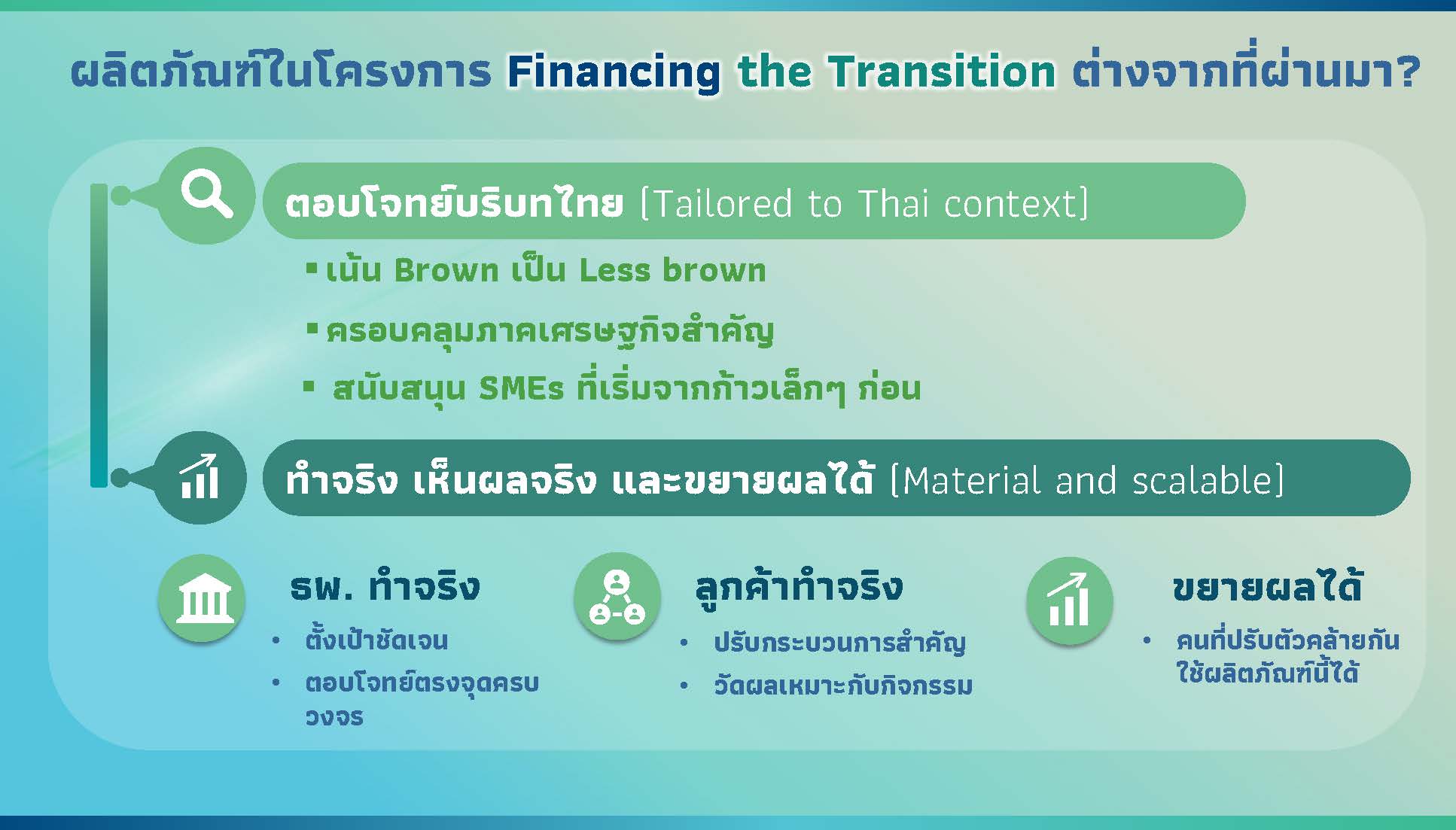
Additionally, the Bank of Thailand has standards to support the private sector through the "Financing the Transition" project, a collaboration between the Bank of Thailand and eight commercial banks, aiming to provide loans supporting environmental transitions amounting to 100 billion baht by 2025. As of the end of 2024, halfway through, 50 billion baht has already been allocated. This project not only provides loans but also emphasizes knowledge building, understanding, and technology development to help businesses reduce greenhouse gas emissions effectively.
Green Bonds to SLBs: New Financial Tools for ESG-focused Businesses
Thayakorn Jitrakuldecha, Director of Debt Instruments from the Securities and Exchange Commission (SEC), shared information about financial instruments that promote sustainability projects, explaining four types of sustainability-related debt instruments: Green Bonds for environmentally friendly projects such as energy-efficient buildings and clean energy; Social Bonds to support projects that reduce inequality; Sustainability Bonds that combine environmental and social aspects; and Sustainability-linked Bonds (SLBs) that are tied to an organization’s sustainability metrics, attracting investors who want to support ESG-focused businesses.
These debt instruments benefit businesses in various ways, such as enhancing their image, expanding their investor base, and increasing fundraising opportunities, especially in a sluggish general bond market.
Additionally, the SEC has supportive measures, such as waiving fees for issuing sustainability-related debt instruments and subsidizing fees for External Reviewers who verify project transparency.
For small businesses, the SEC provides access to funding through Crowdfunding Platforms, enabling small projects to raise funds from general investors without needing substantial capital.
However, even though Thailand’s Taxonomy is not yet mandatory in the capital market, it can help enhance the credibility of real estate and construction projects seeking sustainable funding.
Monitoring 5 Themes to Enhance Competitiveness and Opportunities on the Green Road
Meanwhile, Dr. Charika Charnanantpipat from TDRI provided in-depth insights into regulatory changes regarding the environment and their impacts on Thailand's real estate and construction sectors.
One of the key issues raised was Thailand’s Taxonomy, a framework developed by the government and private sector, in collaboration with financial institutions and regulatory agencies, to set standards for environmentally friendly businesses recognized internationally. Businesses that can adapt to these standards will benefit in terms of increased competitiveness and financial opportunities, while those that neglect them may face trade restrictions and increased costs from carbon tax laws and other environmental measures. Five important themes that businesses need to monitor were summarized:
1. Carbon Pricing & Climate Finance: Setting carbon prices and green finance are key factors driving businesses to reduce greenhouse gas emissions. Failure to adapt may impact access to funding and operational costs.
2. Supply Chain Regulation: Laws related to the supply chain, especially measures from the European Union, such as CBAM and CSDDD, will require companies to assess and disclose environmental information of their suppliers.
3. Biodiversity: Land use must consider impacts on biodiversity, which may lead to stricter laws in the future.
4. Data Disclosure & ESG Reporting: Companies must prepare to disclose environmental and social data, which will directly affect investment and credibility in the market.
5. Greenwashing Regulation: Advertising or communicating exaggerated claims about the environmental friendliness of products or businesses will be scrutinized more closely. Although Thailand currently lacks clear laws on greenwashing, it is a significant issue for businesses to consider, as it is a concern for NGOs and civil society, which may impact Thailand in the future.
In conclusion, the future perspective of the real estate sector is that implementing Thailand’s Taxonomy will elevate the construction and real estate industries in Thailand to higher standards, aligning with international requirements. Businesses that prepare in advance by collecting environmental data, measuring outcomes, and formulating strategies for adaptation will create new business opportunities, while companies that view this merely as a cost may lose their competitive edge in the long run.
A Sustainable Financial Framework for the Real Estate Sector
To conclude, Panittra Wechachiva from UOB shared insights on financial approaches for sustainable real estate and construction development, stating that transitioning to green measures is not a cost burden but an "investment opportunity". Currently, over 145 countries worldwide have committed to Net Zero, leading to environmental laws and standards, such as Carbon Tax and ESG standards, impacting profits, losses, and the survival of Thai businesses. This change is also driven by investors who increasingly prioritize ESG, with some large funds having policies to invest only in companies with Net Zero targets by 2030, including supply chains that aim to reduce carbon emissions, compelling operators to disclose environmental data and plan to reduce greenhouse gas emissions to maintain competitiveness.
Therefore, UOB has developed financial solutions aligned with sustainability guidelines to support real estate, construction, and energy businesses, including:

- Sustainability-Linked Instruments – Focused on improving sustainability management and achieving challenging goals.
- Green Instruments – Funding allocated for projects with clear environmental benefits.
- Transition Finance – Supporting high-energy industries that find it challenging to reduce carbon emissions.
- Sustainable Trade Finance – Funding focused on supporting the trade of sustainable goods or services.
UOB has developed 7 Sustainable Finance Frameworks to help businesses move towards a green economy, including the Smart City Framework and Green Building Framework, supporting real estate projects and smart city development, aiming for investments to meet international standards such as LEED, TREES, EDGE, and BCA Green Mark.
Additionally, UOB offers U-Series Solutions such as U-Solar, U-Energy, and U-Drive, which help businesses access clean energy solutions and carbon reduction through certified partners, facilitating their journey towards sustainability.
Ultimately, adapting to green standards is not just about image or social responsibility; it is about conducting business for survival and growth in a rapidly changing world. This is not something that can be done alone but requires collaboration between the banking sector, project developers, and the supply chain, which is key to transitioning to a fair and sustainable green economy.