Monitoring Cooling as a Service: A New Trend in Energy Business Towards Sustainable Value
In an era where energy costs are rising and sustainability has become a core aspect of building development, cooling systems play a significant role in the energy consumption of buildings, especially large ones such as industrial factories, hospitals, shopping malls, and data centers, as cooling systems account for more than half of a building's energy use.
Cooling as a Service (CaaS) has emerged as a new business model that allows building owners and project developers to utilize cooling systems without having to invest fully themselves.
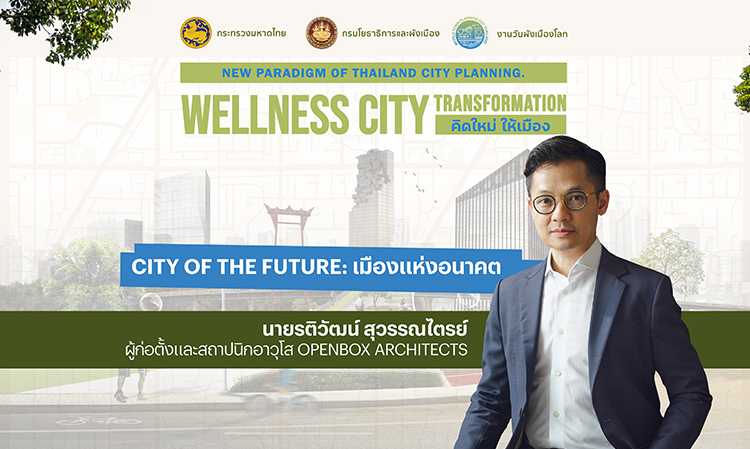
At the event “The Nova Expo 2025: Green Innovations Changing the World,” the first and only event in Thailand providing knowledge and practical guidelines for a green global society, organized by EEC Engineering Network Co., Ltd. (EEC Academy), the trend of CaaS in energy management for cooling systems was highlighted. A lecture titled “Cooling as a Service: A New Energy Business Model Benefiting All Sectors” featured industry experts in CaaS sharing insights on the trends and opportunities for CaaS in Thailand, including:
- Pichapat Kitkertsang, CEO of BNSP Smart Tech Co., Ltd., managing central cooling systems (District Cooling System: DCS)
- Keppel Maggie Tan, CEO of Cool Connext Co., Ltd., a cooling system business
- Kamal Tanpipat, CEO of Unisus Green Energy, an expert in designing and implementing public utilities for private sector projects in Thailand
- Moderated by Mr. Peerasut Thirakomen from Thai ESCO

Why is CaaS becoming an important trend for buildings and the industrial sector?
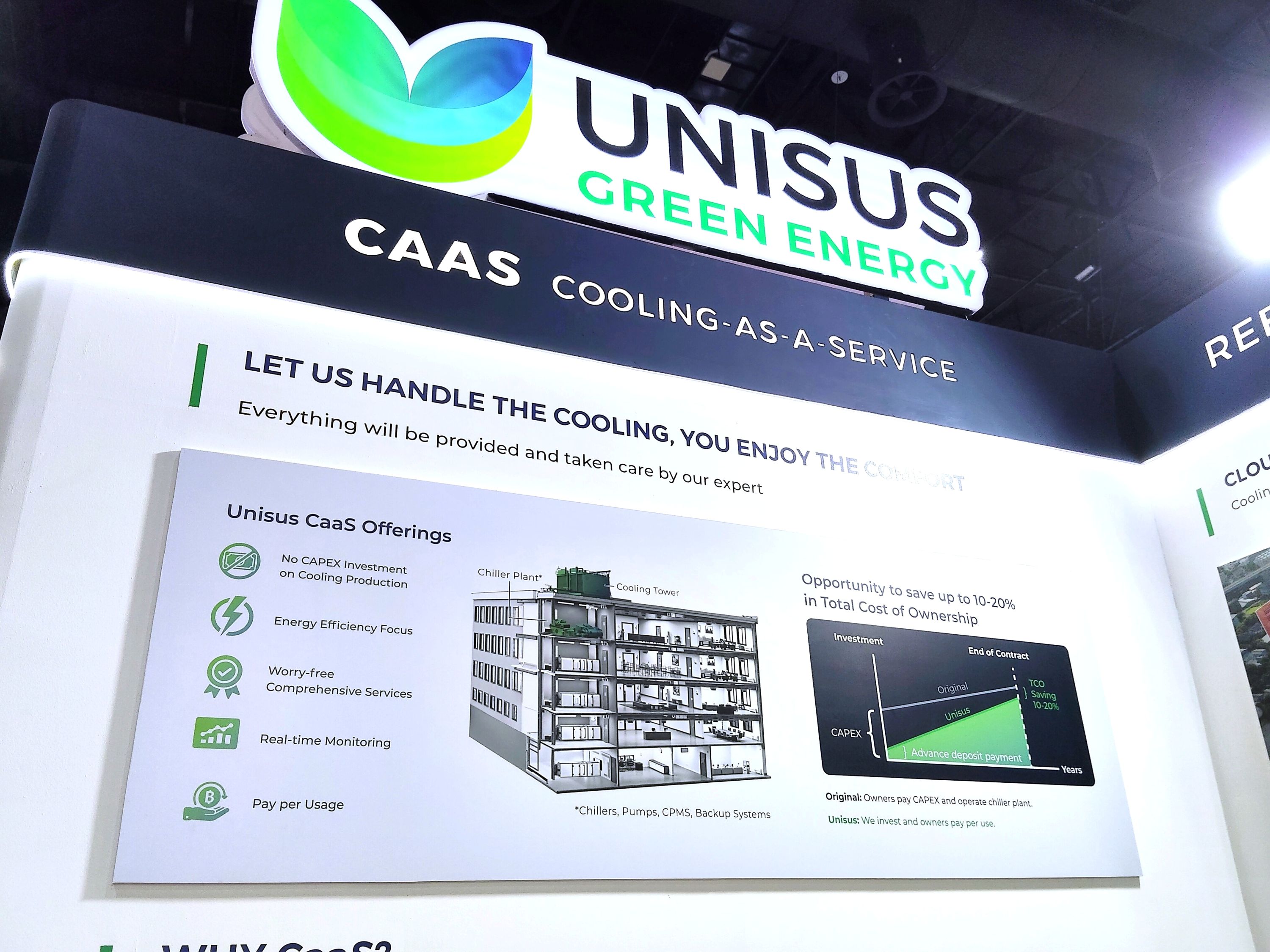
From the lecture, the key takeaway is that CaaS is becoming a new business model that allows building owners and project developers to use cooling systems without having to invest fully themselves. In the past, instead of purchasing and maintaining chillers and cooling towers, CaaS providers install, maintain, and manage the entire energy system, with customers paying for services based on actual usage. This reduces investment burdens, minimizes maintenance risks, and ensures long-term efficiency of cooling systems, helping to save energy and reduce costs. Buildings using chiller systems can reduce energy consumption by more than 60% compared to traditional systems, while also lowering electricity and maintenance costs in the long run.
Additionally, using CaaS helps reduce greenhouse gas emissions, aligning with the Net Zero Carbon goals that large organizations worldwide are prioritizing.
Challenges and Growth Opportunities for the CaaS Business Model
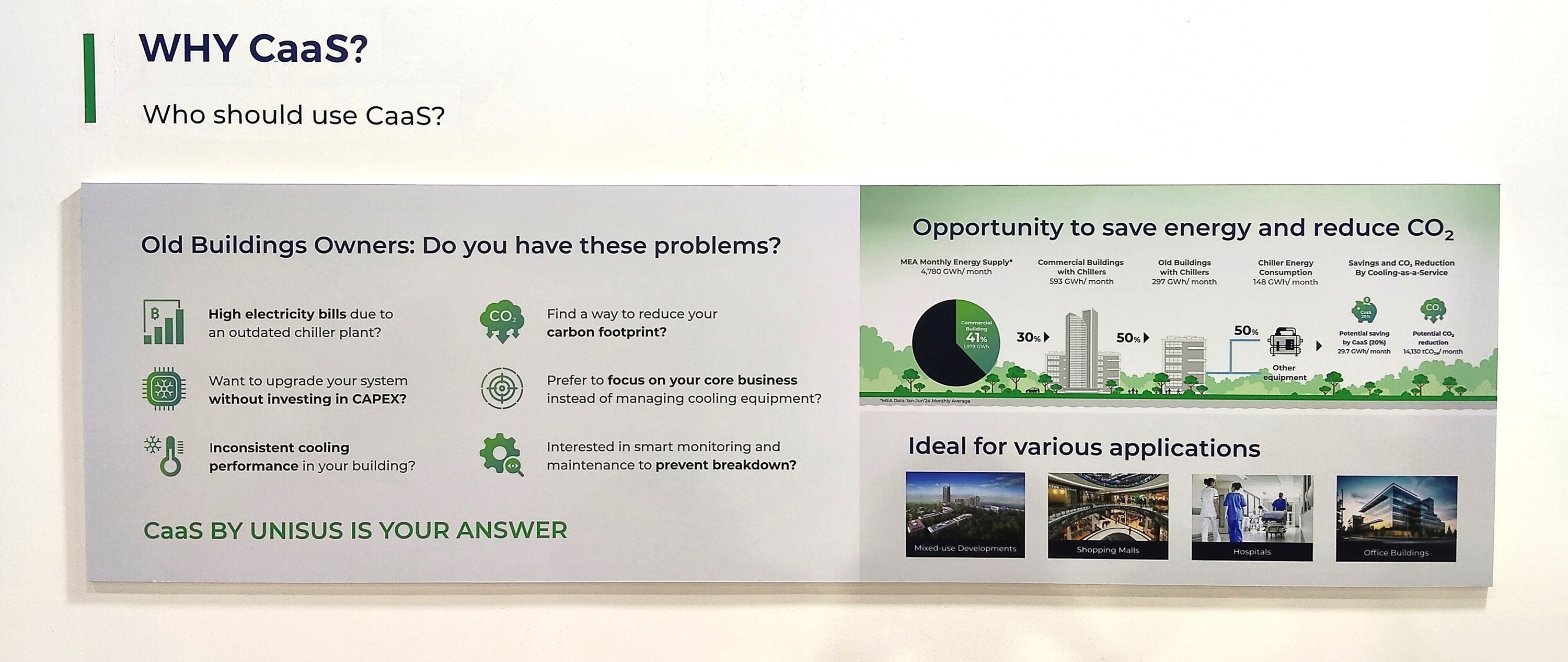
Currently, there are over 4,000-5,000 large buildings in Thailand using chiller systems, with more than 50% being older buildings where the cooling systems are deteriorating and outdated. Some of these buildings utilize old technologies that are not efficient in energy savings and need to transition to new systems, making the CaaS model an attractive option for consulting and upgrading systems without significant investment.
Moreover, the trend of energy regulations may lead organizations to face stricter rules regarding energy use and carbon emissions, such as Carbon Tax or standards for environmentally friendly refrigerants. CaaS thus serves as a solution that helps buildings comply with these requirements more easily.
However, despite CaaS being an interesting trend, it still faces challenges, such as building trust with property owners who are more accustomed to investing in their own cooling systems rather than using external services. Therefore, CaaS providers must assure that their organization and systems can deliver effective service throughout the long-term contracts, which typically last 15-20 years.
Additionally, establishing appropriate pricing structures and service contracts between providers and customers is crucial, along with defining penalties for system failures, which may involve additional insurance to cover risks.
Experts at the lecture also predicted that in the next five years, cooling systems will advance significantly, which may require the CaaS service model to adapt accordingly.
How Should Building Owners and Project Developers Consider Using CaaS?
Experts also provided guidelines for selecting CaaS providers, suggesting that the following factors should be considered:
1. Experience and Standards: Providers should have experience in managing cooling systems and be certified in energy and environmental standards such as LEED or ISO 50001.
2. Technical Capability: Check the equipment, sensor systems, and software used for energy control and management.
3. Cost and Contract Structure: Compare service pricing models and assess long-term value.
4. Review Past Performance: Determine whether the CaaS provider has expertise or experience in servicing or consulting for specific types of buildings.
Therefore, for building owners and real estate developers in the modern era, if they aim to reduce costs and energy consumption in buildings, opting for new business models like CaaS is a choice that should not be overlooked, provided they conduct thorough research to ensure value and suitability for their needs.