Decoding the Global Steel Industry: A Roadmap to Sustainability
The steel industry is crucial for the economic and social development of countries, as steel is a fundamental material used across various sectors, including infrastructure such as buildings, bridges, roads, real estate projects, and many related industries. It is projected that global steel production will rise to 1.4 billion tons by 2050, up from the current 1.1 billion tons.
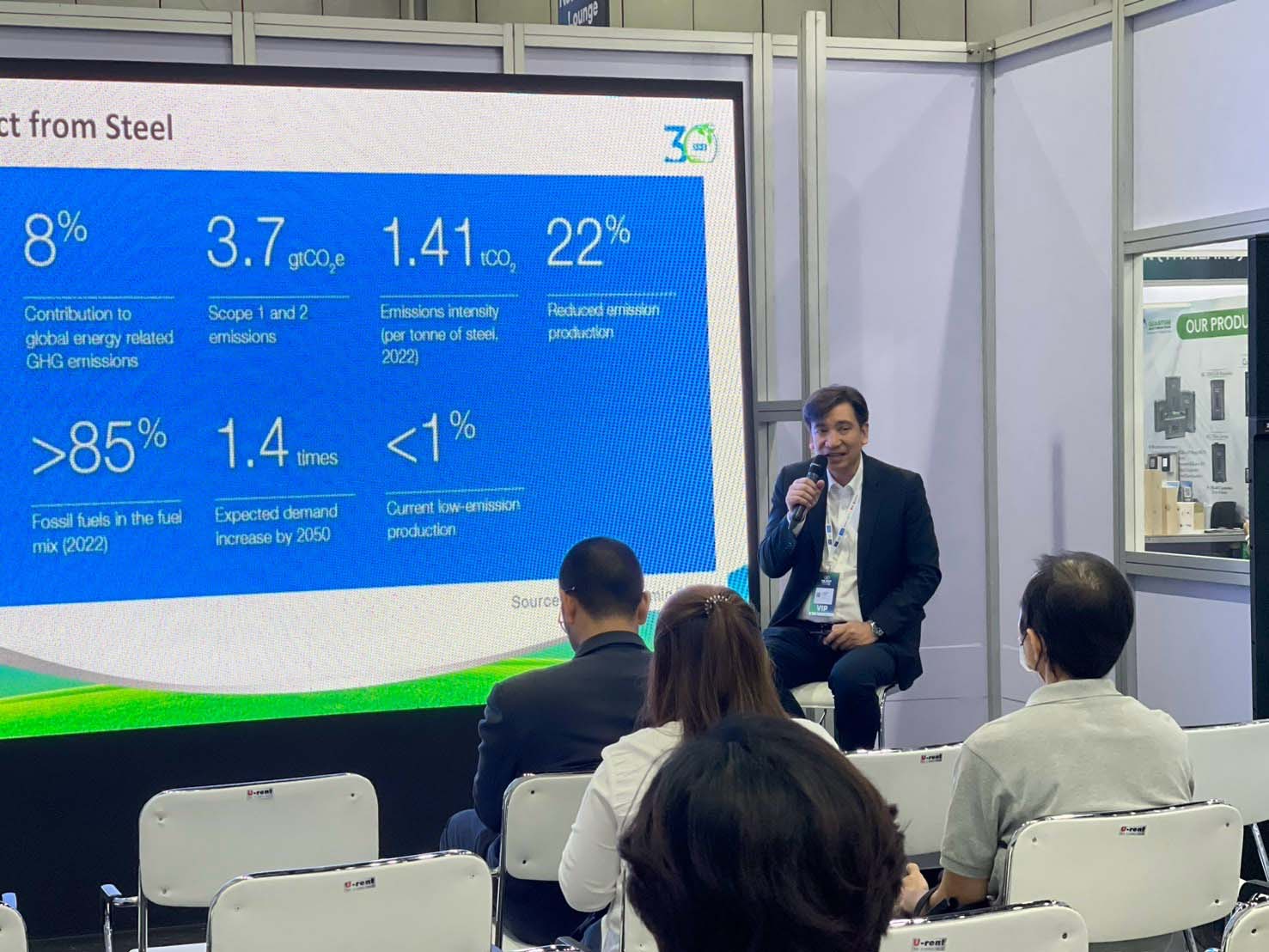
However, traditional steel production processes still heavily rely on fossil fuels, making steel one of the highest greenhouse gas-emitting industries, accounting for about 8% of global greenhouse gas emissions.
As the steel industry grows in a direction contrary to the global trend prioritizing sustainability and environmental issues, pushing for a more environmentally friendly steel industry has become an urgent agenda of global interest. Achieving this goal is not easy due to various limitations, especially concerning the costs of technologies that lead to Green Metal.
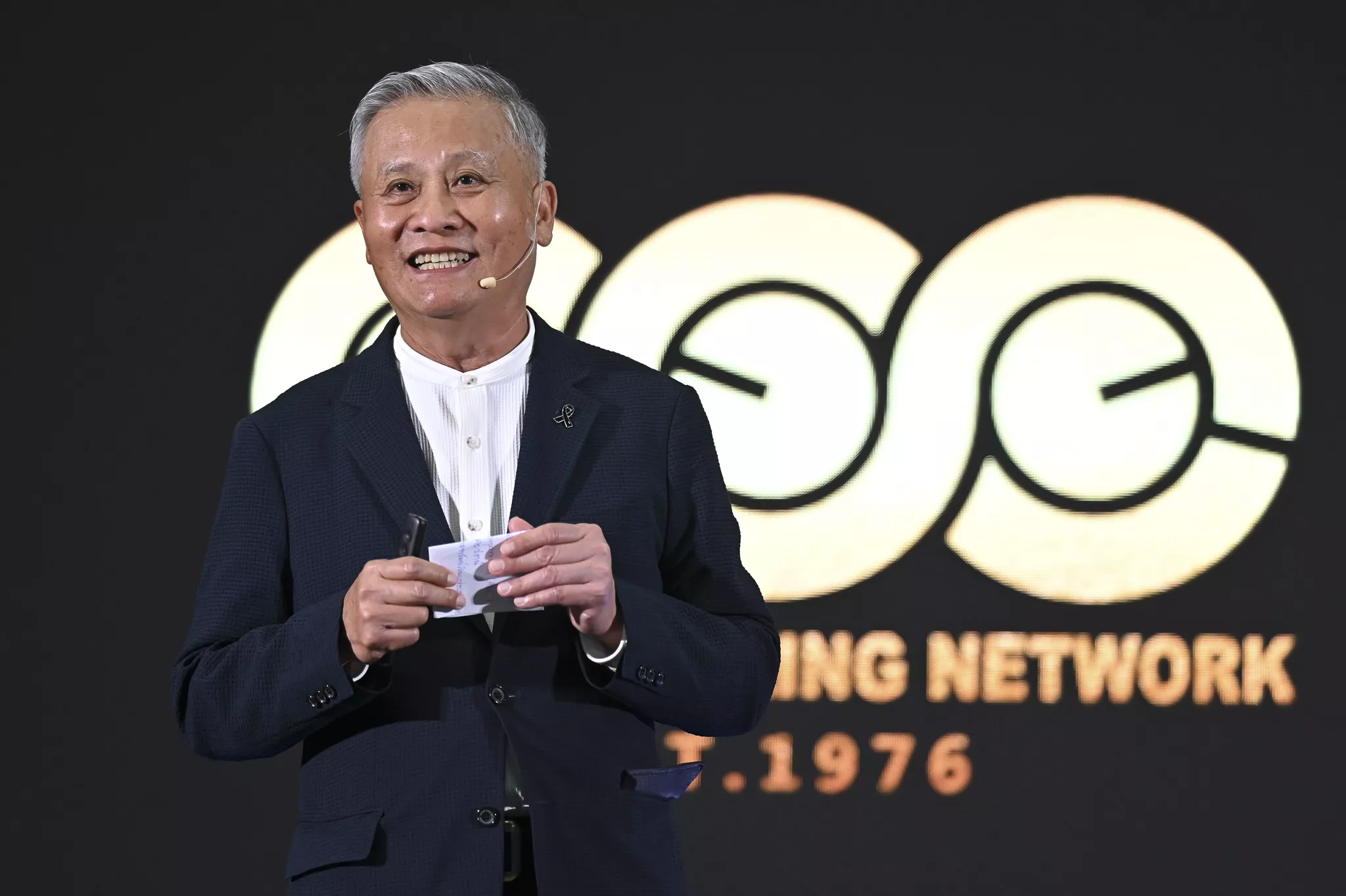
To illustrate the challenges of transforming the steel business towards sustainability, The Nova Expo 2025, an exhibition of building innovations, designs, and products related to construction, hosted a special lecture titled “A Green Transformation in Building Main Structure” by Chatthapop Porntham, Sustainability Manager at Siam Yamato Steel Co., Ltd. (SYS), a joint venture between Yamato Kogyo Co., Ltd., Siam Cement Group Public Company Limited, Sumitomo Corporation (Thailand) Co., Ltd., and Mitsui & Co. (Thailand) Co., Ltd.
Exploring the Possibility of a Green Steel Industry
Chatthapop began with an intriguing question: Is it possible to achieve net-zero greenhouse gas emissions in the steel industry today, and how much investment would be required?
The answer is yes, but it may require an investment of up to $2.6 trillion or about 90 trillion baht. This is because, in addition to generating clean energy without emissions (Clean Power Generation), there needs to be a shift to using hydrogen produced from clean energy (Green Hydrogen Production) instead of fossil fuels, along with carbon capture and storage processes. Current technologies may not fully meet these needs and may not be cost-effective for investment.

Given that extreme methods require massive investments, the approach to reducing carbon dioxide emissions from the steel industry has shifted towards adjusting current production processes. Chatthapop illustrated the CO₂ emissions from current steel production methods, which fall into three categories. The first is the Blast Furnace (BF) method, which converts iron ore in the form of iron oxide into molten steel, a method that has been in use since the 14th century and remains popular, accounting for 70.6% of production.
The downside of the BF method is its high CO₂ emissions rate of 2.32 tons per ton of steel produced. In contrast, the Electric Arc Furnace (EAF) method, which melts scrap steel using electric arcs, emits about 0.70 tons of CO₂ per ton of steel produced. However, its current usage is limited to only 20.4% due to the durable nature of steel, which typically has a lifespan of 40-50 years before being dismantled, resulting in a limited supply of scrap steel worldwide. The most feasible increase in EAF production is estimated to be 40%.

To find a more environmentally friendly steel production solution, a third method called DRI-EAF has emerged, which incorporates Green Hydrogen in the production of sponge iron (Direct Reduced Iron: DRI) and then melts it with scrap steel in an Electric Arc Furnace (EAF) powered by renewable energy throughout the production process, resulting in Fossil-free steel that can reduce CO₂ emissions to 1.43 tons per ton of steel produced. Currently, DRI-EAF production accounts for about 8%.
In the future, the trend of EAF steel production is expected to continue to rise. The good news is that, despite ASEAN producing only 50 million tons of crude steel, most of the production processes utilize EAF, which is environmentally friendly. However, a concern arises that as major players, especially China, shift towards EAF production, existing BF plants in China may relocate their production to ASEAN.

Looking at the data from 2022, China produced 1,018 million tons of crude steel, with 921 million tons produced via BF and only 97 million tons via EAF. This means that the projected increase in ASEAN's steel production to 170 million tons by 2026 may partly result from the relocation of BF producers, potentially turning the ASEAN steel industry, which is on a path to sustainability, into a significant CO₂ emitter.
Another important question is whether the available scrap steel will be sufficient as market players shift towards EAF production.
Chatthapop posed an interesting thought: Amidst the insufficient supply of scrap steel to meet demand, 43 countries worldwide have begun to restrict scrap steel exports, which is expected to impact 77% of global crude steel production, or about 1.5 billion tons, as many countries adopt stringent measures to limit scrap steel exports or impose additional complexities such as taxes, licensing requirements, and quotas.
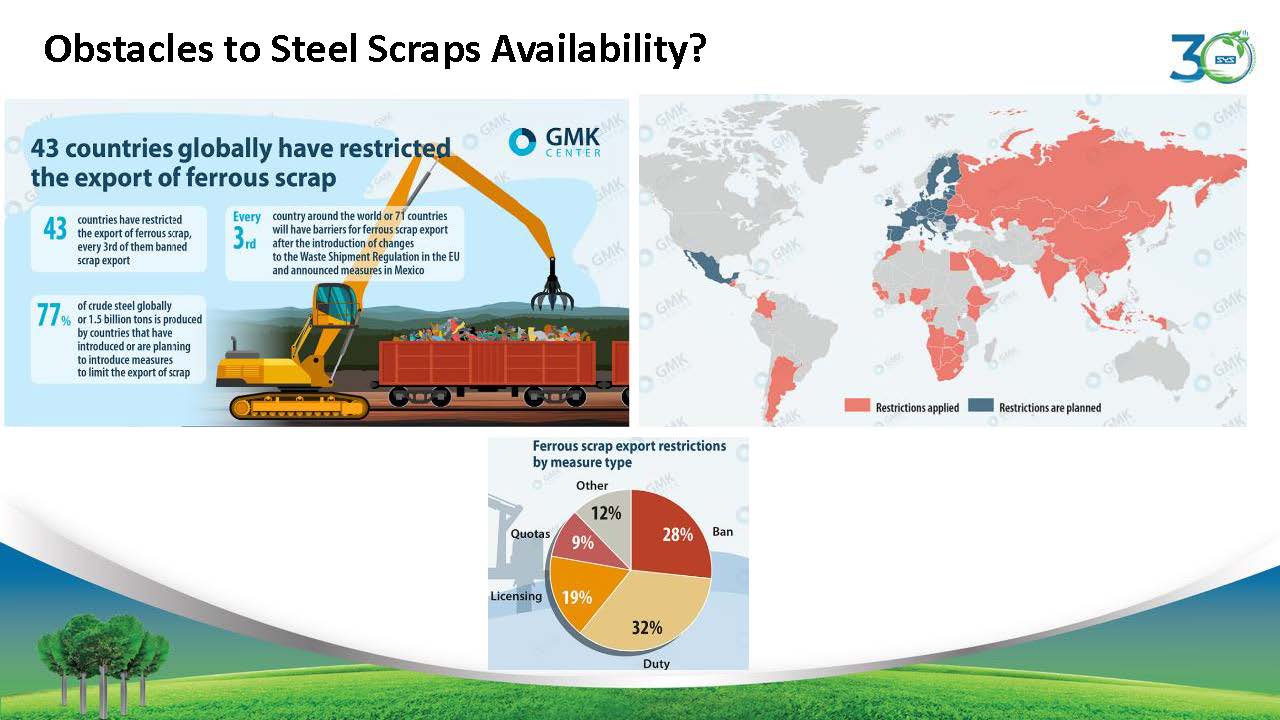
“What’s interesting is that looking at the world map, many countries are starting to restrict scrap steel exports, especially neighboring countries around Thailand, which have already implemented measures. However, Thailand has yet to adopt such measures and exports about 400,000 tons of scrap steel annually.”
Opening the Roadmap to a Green Steel Industry
As the technologies leading to a sustainable steel industry still have limitations, and adjusting production processes is not yet the light at the end of the tunnel, the next big question is how developed countries and global producers plan to address these issues.
Chatthapop revealed that while there has been talk of Green Steel, there has yet to be a universally accepted definition, as it depends on how major steel producers define it. In Europe, there is government support for promoting the green steel industry.
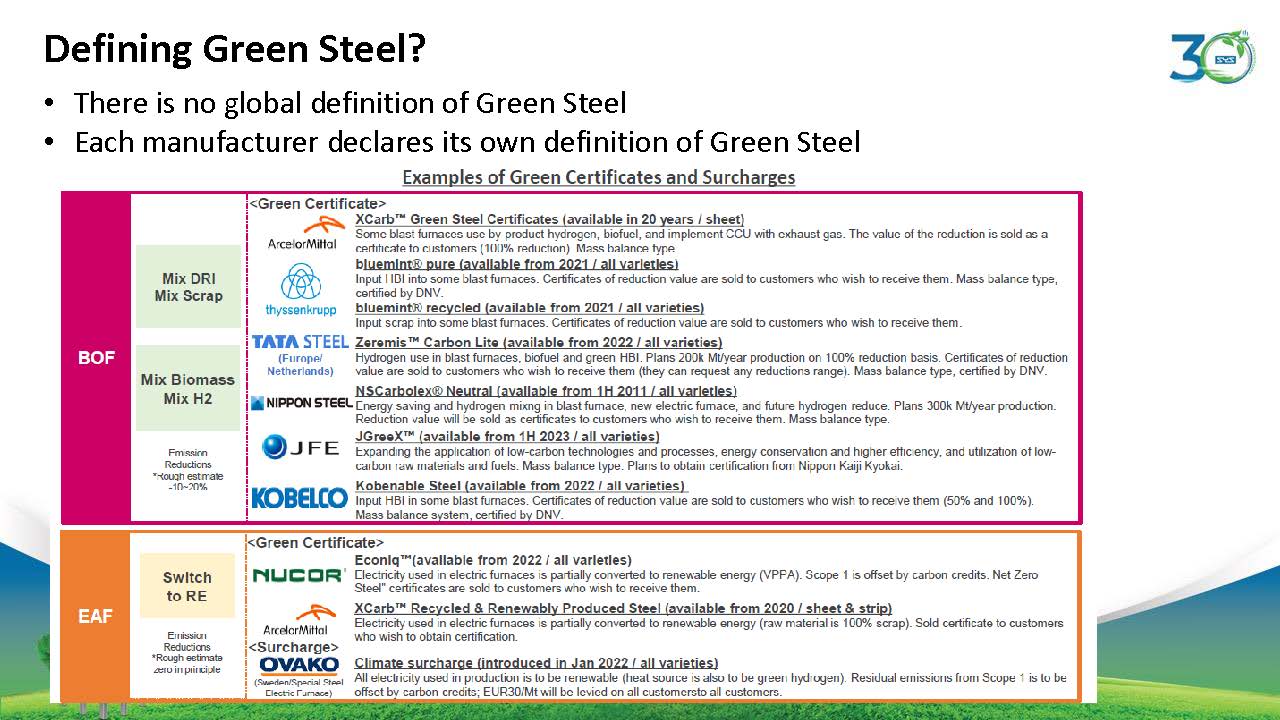
For example, Thyssenkrupp Steel, a German steel company, invested 3 billion euros to build a DRI plant and received 2 billion euros in funding from the European Commission. Additionally, H2 Green Steel (H2GS), a Swedish company, aims to be the first producer of steel with net-zero greenhouse gas emissions in the world.
The interesting aspect of this plant, located in Boden, Sweden, is that it will produce Green Steel at a scale of 5.0 million tons per year (Mtpa) using a 740-megawatt (MW) electric water-splitting technology to produce green hydrogen, which is the primary energy source for steel production, resulting in approximately 95% lower CO2 emissions compared to traditional steel production methods. Phase 1 production of 2.5 million tons per year is set to begin in 2027, with Phase 2 reaching 5.0 million tons per year by 2030.
At the same time, there are efforts from various sectors to drive demand for Green Steel, with the automotive industry expected to be one of the first to adopt it, as it uses about 1.5 tons of steel to produce one vehicle, making it a high-value product that can absorb increased costs.
In the construction industry, support is likely to come from “LEED,” a widely recognized environmental standard worldwide, which has recently upgraded to version V5, adding criteria to specify “Embodied Carbon,” or the carbon emissions released throughout the lifecycle of materials, shifting focus from just Operational Carbon, which relates to emissions from energy use in buildings or infrastructure, including emissions from various activities such as heating, cooling, lighting, and powering electrical appliances.
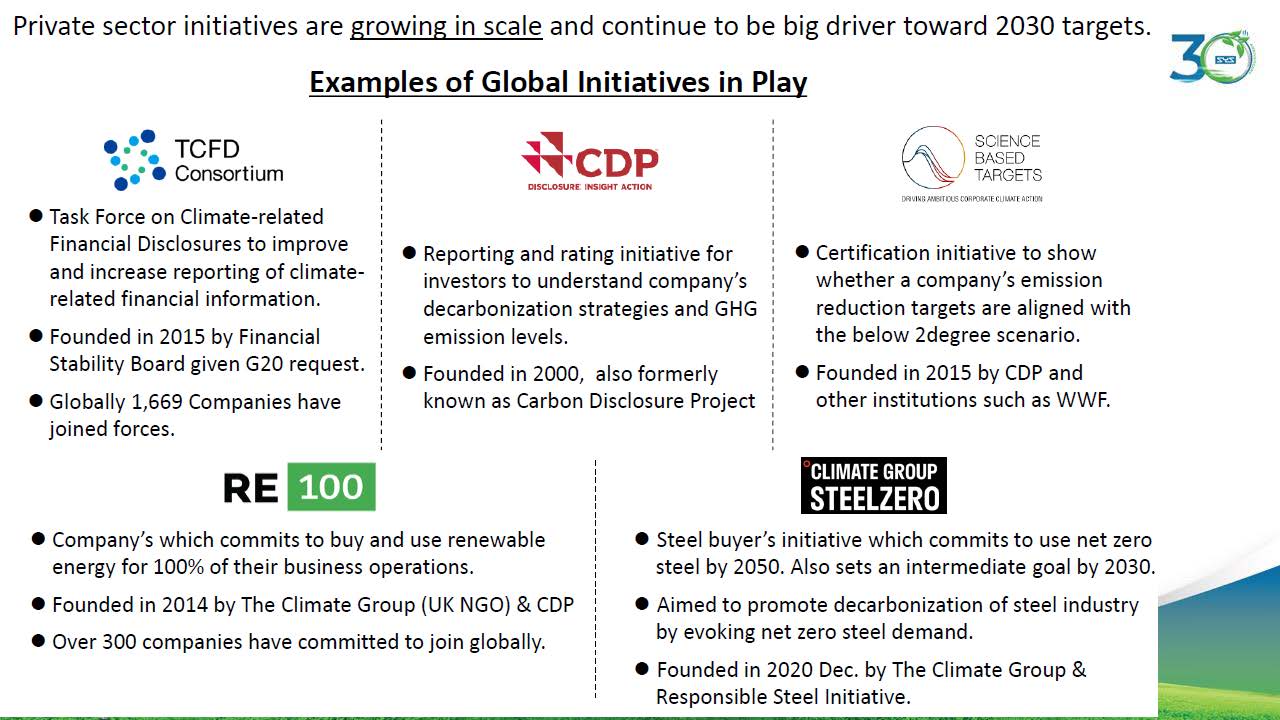
Moreover, major global steel producers are committed to reducing greenhouse gas (GHG) emissions and aiming for carbon neutrality (CN) by 2050 or earlier, using various technologies and approaches to create a sustainable steel industry.
Thailand's Path Towards Sustainability
Chatthapop concluded by discussing the situation in Thailand's steel industry, noting that Thailand has a Power Development Plan (PDP) for 2024-2037, aiming to significantly increase the share of renewable energy in electricity production from 20% of total electricity generation in 2023 to 51% by the end of 2037. Additionally, there are goals to reduce the use of natural gas and coal, targeting a decrease in natural gas use for electricity generation from 57% to 41% and coal use from 20% to 7%.
There are also plans to incorporate nuclear energy, particularly small modular reactors (SMRs), while considering the implementation of green labels for construction steel.
All of this outlines the global steel industry landscape and the efforts of various sectors to push the steel industry, often viewed as harmful to the planet, towards a path of sustainability, which requires collaboration from multiple sectors alongside the development of efficient and cost-effective technologies.