What is ESG?
In the past 2-3 years, we have increasingly heard the term ESG, especially among large companies that have begun to prioritize ESG. Even in the investment sector, companies are now required to produce annual ESG reports alongside their annual reports. ESG is an acronym for three words: Environment (E), Social (S), and Governance (G). The concept originated from a time when companies focused primarily on management for profit and revenue, paying little attention to other impacts. Thus, guidelines were established to encourage companies to consider other dimensions more seriously.
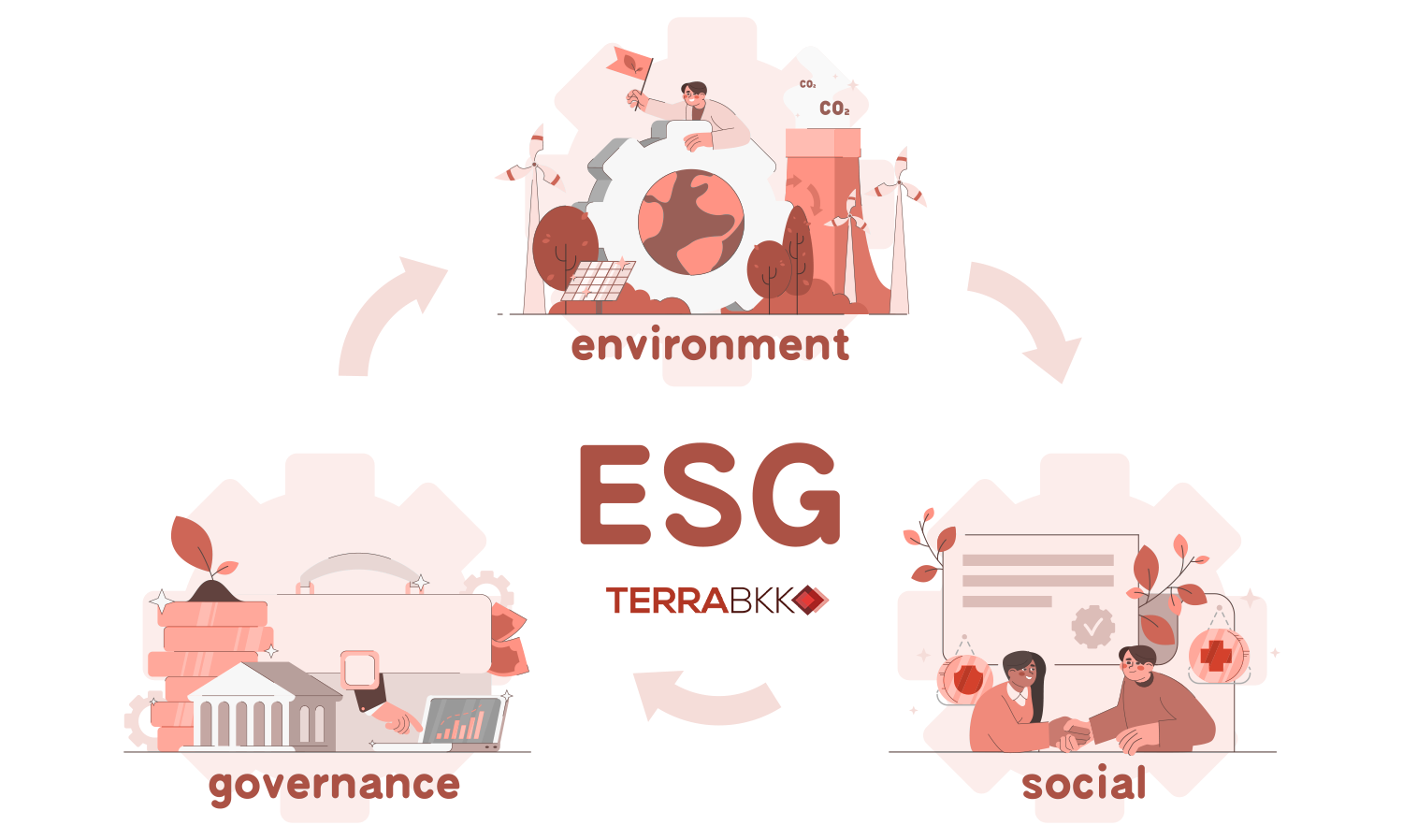
ESG is divided into three dimensions: the environmental aspect (E-Environment), which focuses on the impacts of business operations that may affect the world and the environment, such as energy use, waste disposal, and carbon emissions reduction. This not only helps reduce pollution but can also contribute to cost savings.
The social dimension (S-Social) emphasizes the business operations that impact society, such as employee care, customer care, human rights, community involvement, and community support and development. This helps in taking care of employees, retaining them within the organization, and fostering good relationships with the community and stakeholders.
The governance dimension (G-Governance) focuses on the management and policies of the company to ensure transparency, ethics, and preparedness for various risks, promoting good corporate governance. This can build trust with the organization and investors.
Currently, information on sustainable stock assessments of registered companies can be found from the Stock Exchange of Thailand (https://setsustainability.com/libraries/1282/item/set-esg-ratings). In 2023, a total of 193 companies were assessed, categorized as follows: 34 companies at AAA level, 70 at AA level, 64 at A level, and 25 at BBB level.
Companies that can report these matters comprehensively will gain greater recognition and achieve higher sustainability standards. Prioritizing ESG reflects another aspect of business stability, indicating that the organization is not only efficient in revenue management but also effective in managing other areas.