When Supalai Dares to Prove That Real Estate Can Build a Sustainable Future! Through Supalai Self-Proved
The real estate industry is one of the leading sectors globally that contributes significantly to pollution and environmental impact. With the growing awareness of sustainability, society is increasingly paying attention to environmental issues, prompting many real estate companies to prioritize environmental concerns to varying degrees. Numerous campaigns promoting eco-friendliness have emerged from various firms.
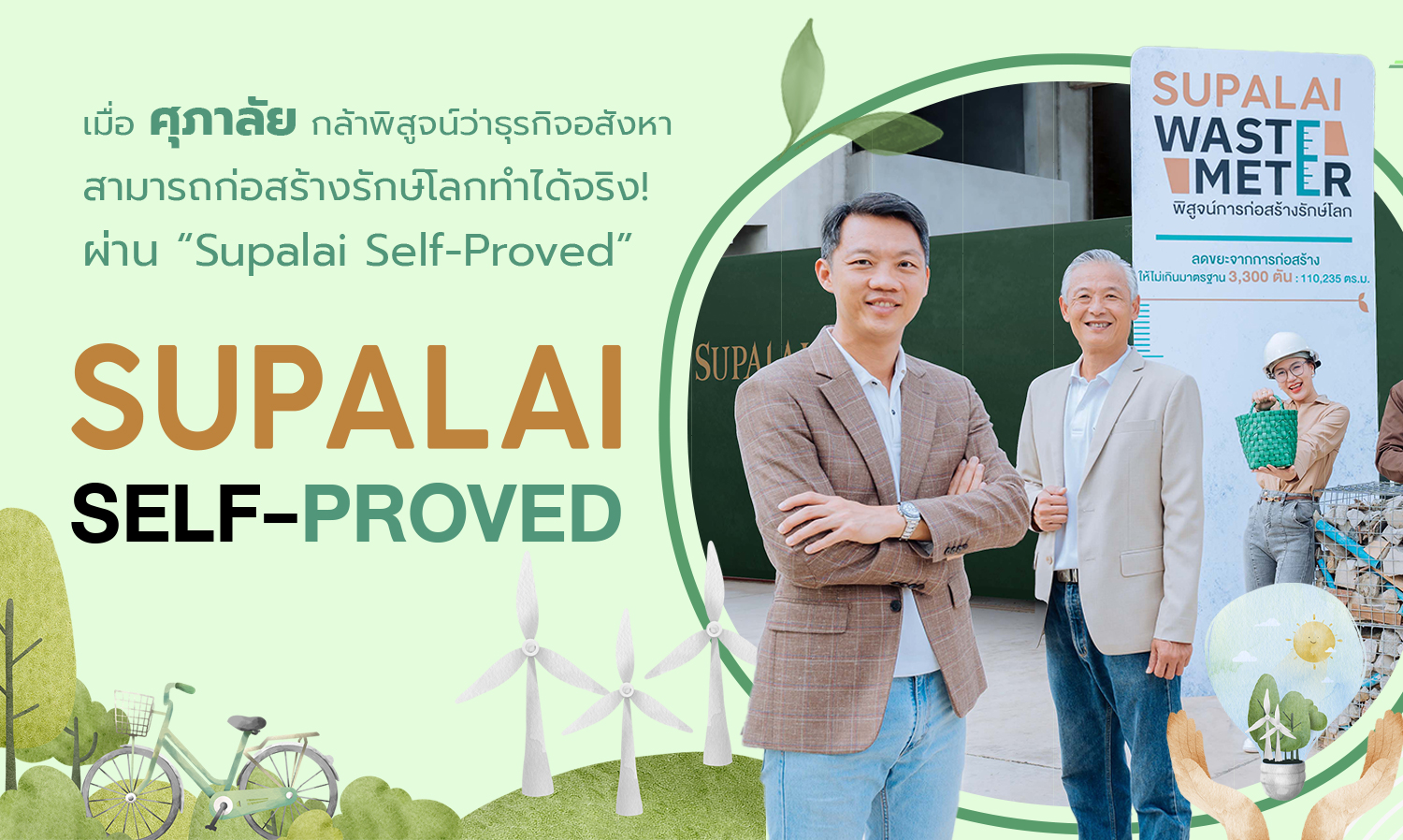
One such company is Supalai Public Company Limited, a real estate firm with over 28 years of experience, which recently launched a sustainability campaign called “Supalai Self-Proved”, emphasizing environmental and social responsibility. This campaign not only showcases creative communication ideas but also differentiates itself from other environmental initiatives in the real estate sector.
Supalai is bold enough to invite everyone to ‘prove’ its environmental sustainability policies, demonstrating that they can ‘truly be achieved’ and lead to tangible changes. This is not just a one-off campaign; it lays a serious policy foundation that leads to numerous environmental activities aimed at transitioning towards a low-carbon organization.
From Policy to Real Action
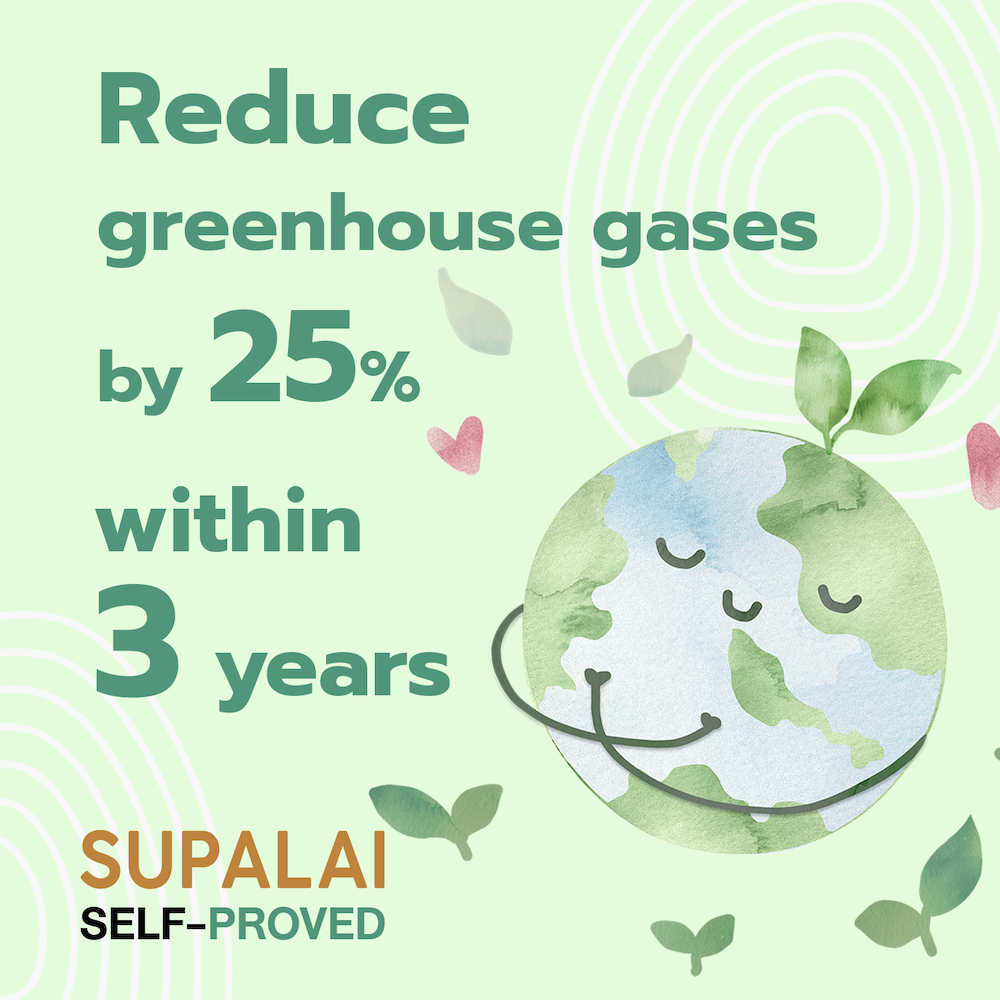
Before diving into the details of the Supalai Self-Proved campaign, it’s important to note that this is not Supalai's first foray into sustainability efforts. The company has been implementing sustainability policies for quite some time, aiming to operate sustainably while considering both direct and indirect environmental impacts. They have set a goal to reduce greenhouse gas emissions by 25% within three years and are ready to transition into a low-carbon organization.
One of the company's key missions is waste management and the handling of construction materials, which has led Supalai to collaborate with business partners to innovate and develop construction processes that minimize environmental impact, reduce material waste, and maximize the value and benefits of construction debris. This is accompanied by community support activities through various projects to drive change across three dimensions: creating a better environment, providing quality education, and fostering a sustainable society. Supalai believes that good living conditions must be built on these three components.

This commitment has resulted in various tangible projects that have been ongoing for a long time, such as the “Save the Sea Project”, where Supalai collaborates with the Ministry of Natural Resources and Environment and the Faculty of Veterinary Science at Chulalongkorn University to restore the richness of Thailand's seas. This involves using leftover concrete from construction pressure tests to create new cement structures through CPAC 3D Printing Solutions, enabling the printing of coral reef homes. The project has been piloted in areas such as Koh Racha Yai in Phuket, Koh Tao in Surat Thani, Koh Si Chang in Chonburi, Khao Lak in Phang Nga, and Koh Sam Sarn in Chonburi.

Additionally, the establishment of “Supalai Creates Good” aims to change the world together by developing society, creating jobs, providing educational opportunities, and fostering a sustainable environment. This initiative uses the principles of creating quality housing as a guideline for generating good outcomes, marking the beginning of various creative environmental and social projects.

These initiatives include the use of environmentally friendly construction materials certified by SCG Green Choice, which help reduce global warming and lower carbon dioxide emissions by over 564 tons, equivalent to the carbon absorption of 47,000 trees in one year. Other activities include the “Happy Glasses” initiative in collaboration with the Optical Group to provide eyeglasses for construction workers, the use of clean energy from solar power to reduce greenhouse gas emissions, and partnerships with AIS to promote proper electronic waste disposal, as well as collaborating with KBank to install solar roofs for Supalai residents at no cost.
Furthermore, Supalai has innovated energy-saving housing solutions that have been implemented in several residential projects, earning awards for energy conservation from the Ministry of Energy.
Supalai Self-Proved: A Creative Communication Campaign
Now, let's talk about the latest campaign, Supalai Self-Proved, which conveys the story of innovative construction and waste management to reduce environmental waste. Supalai has consistently focused on this through the advertisement titled Greta vs The World, featuring a fictional character named Greta Thunberg, an environmental activist representing the younger generation concerned about environmental issues. She questions the sustainability efforts of real estate companies, while a ‘four-way pipe’ symbolizes Supalai, responding to Greta's inquiries about how Supalai thinks and implements sustainability in its construction processes.
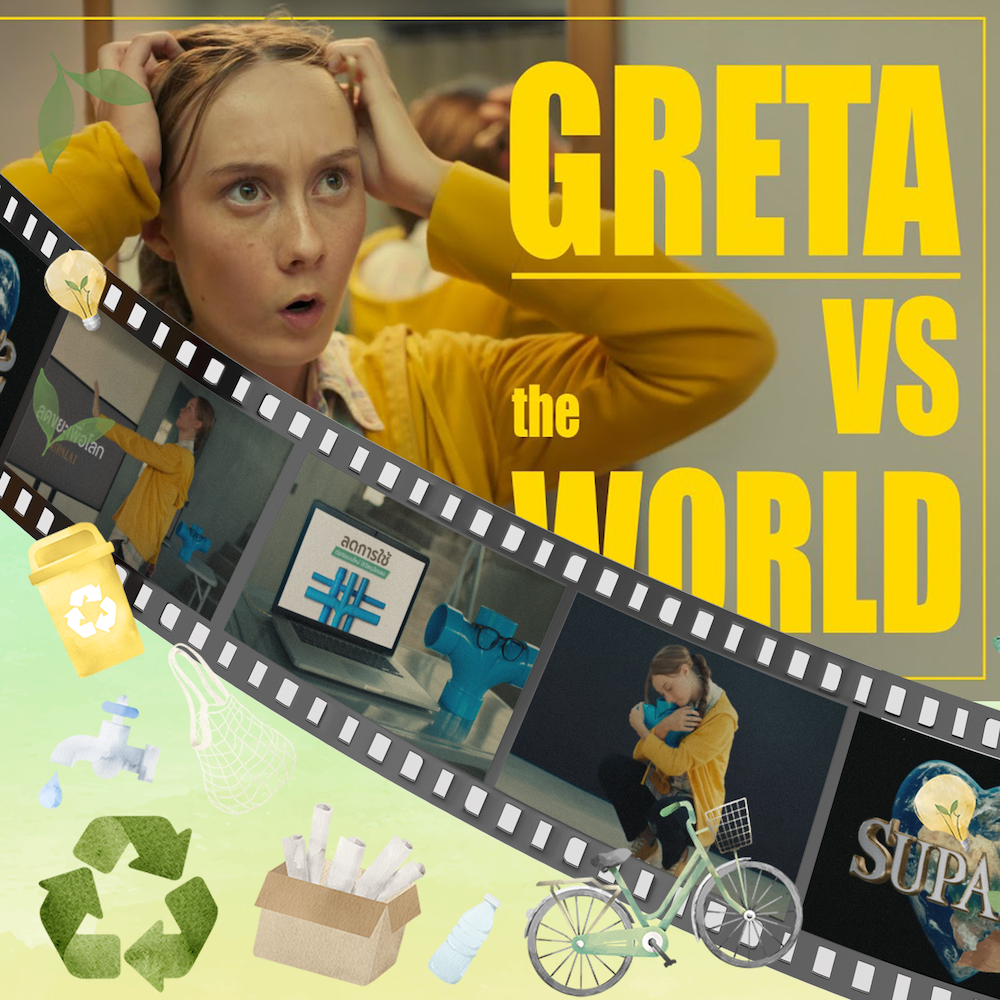
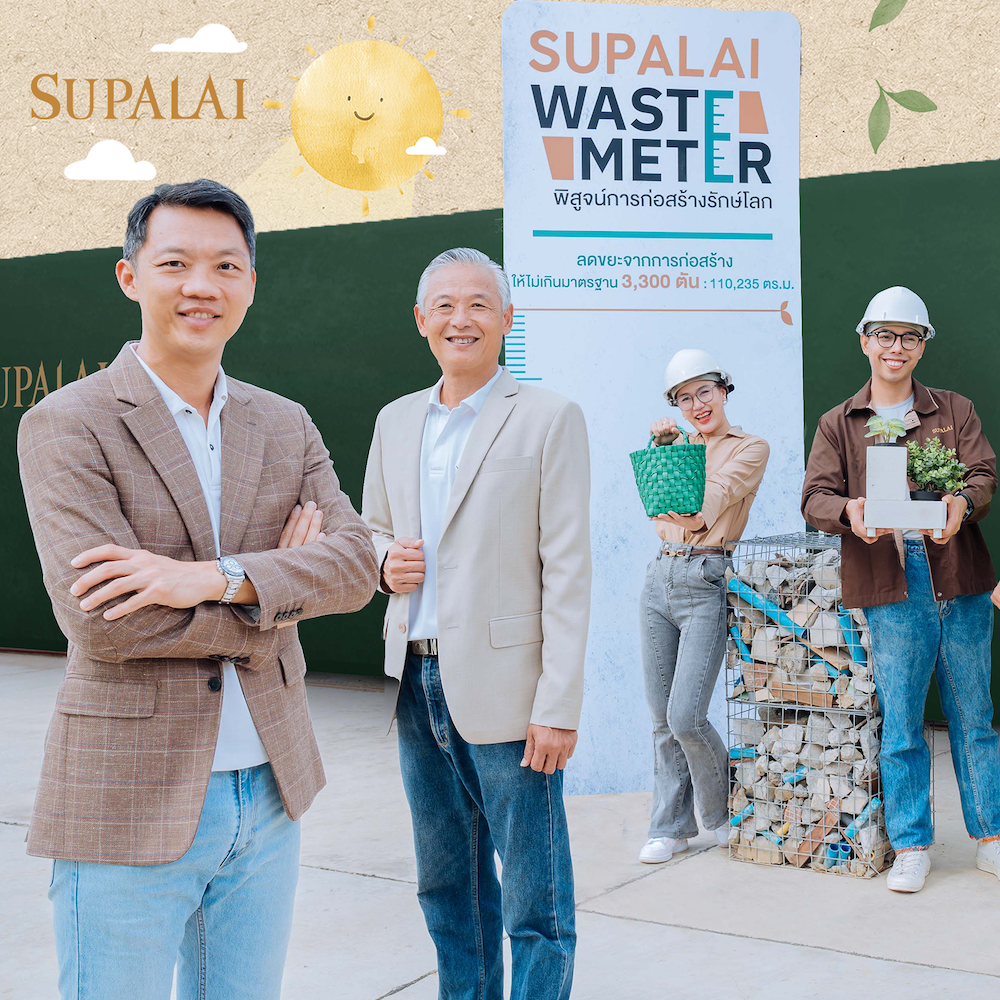
The advertisement creatively engages consumers with its humorous storytelling and understanding of today's skeptical audience. Thus, Supalai uses ‘Greta’ as a voice for consumers, inviting them to witness the results of eco-friendly construction innovations through the Supalai Waste Meter, which measures construction waste across Supalai projects, ensuring it remains below the established standards. Supalai dares to let everyone measure whether construction sites can genuinely reduce waste and commits to not exceeding construction waste standards, starting with the first project site at Supalai Park Ekkamai-Phatthanakan.
For those who think deeply, you might wonder where the construction site waste goes? The character ‘four-way pipe’ addresses this concern in the advertisement.
Supalai employs a strategy of developing innovative and environmentally friendly housing technologies sustainably, using three principles to manage construction waste generated during production to minimize disposal, known as Waste Management:

- Reducing Usage: Implementing new pipe connections that use less material by calculating pipe quantities during the Shop Drawing phase, using Made to Order pipes for precise fitting, innovating new pipe connections with four-way pipes, and using seamless fire protection pipes. All these methods help reduce unnecessary material usage and minimize pipe waste equivalent to hundreds of kilometers, and this same approach is applied to design spaces to fit tile sizes, minimizing tile waste.
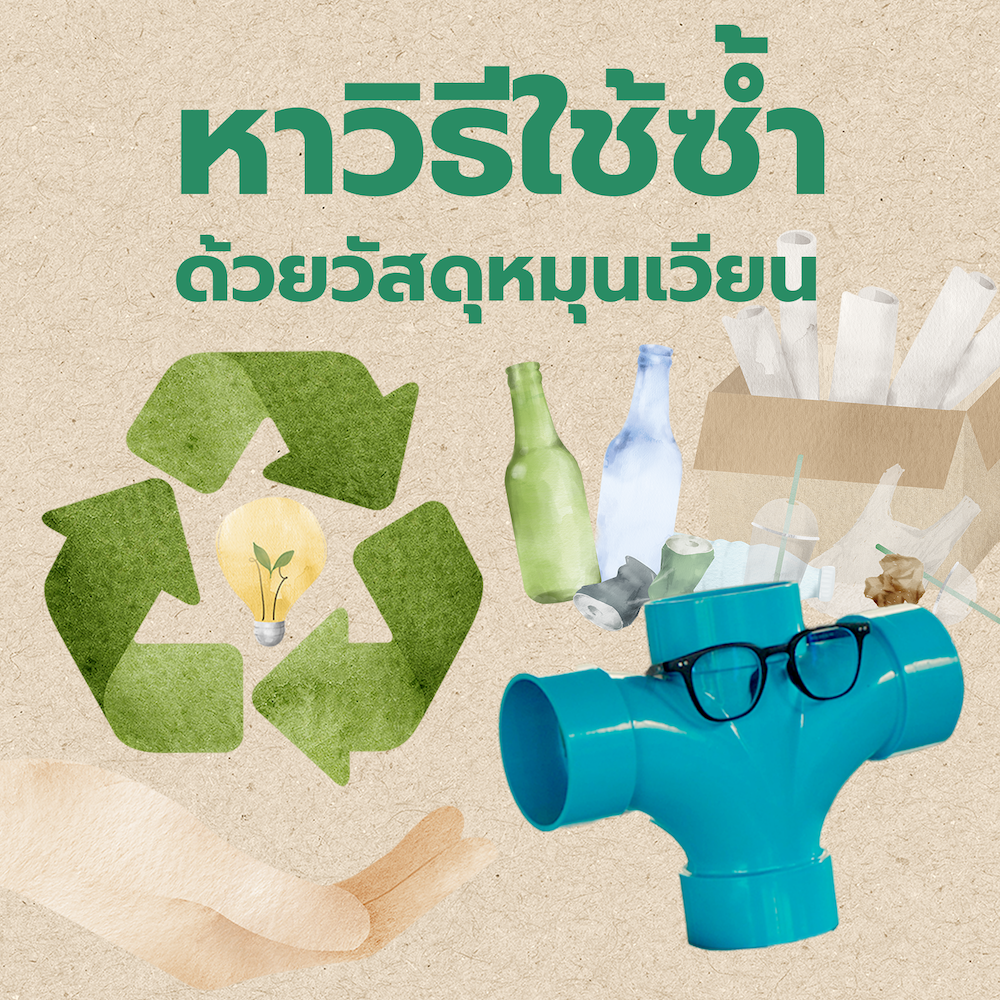
- Finding Ways to Reuse with Recycled Materials: Switching from wooden pallets to reusable plastic pallets that can be used up to 100 times. While this may seem minor, it significantly reduces wooden pallet waste equivalent to 18,157 trees. Additionally, leftover lightweight bricks from house construction are repurposed into water-saving pots or woven into construction material straps for use as baskets or bags.

- Reusing Materials: Utilizing leftover concrete to create subbases for roads or recycling waste materials into new products through various projects that Supalai has long collaborated on with partners.
All of these activities are just a glimpse of the sustainability efforts that demonstrate that real estate brands can also contribute to environmental and social sustainability. However, improving our world cannot rely on just one person; it requires collective cooperation from everyone willing to create a better sustainable future together.
You can watch the advertisement “Supalai Self-Proved” at https://youtu.be/IiQWsHHeFuA and follow additional information and good activities for society at https://srangdee.supalai.com/selfproved/.