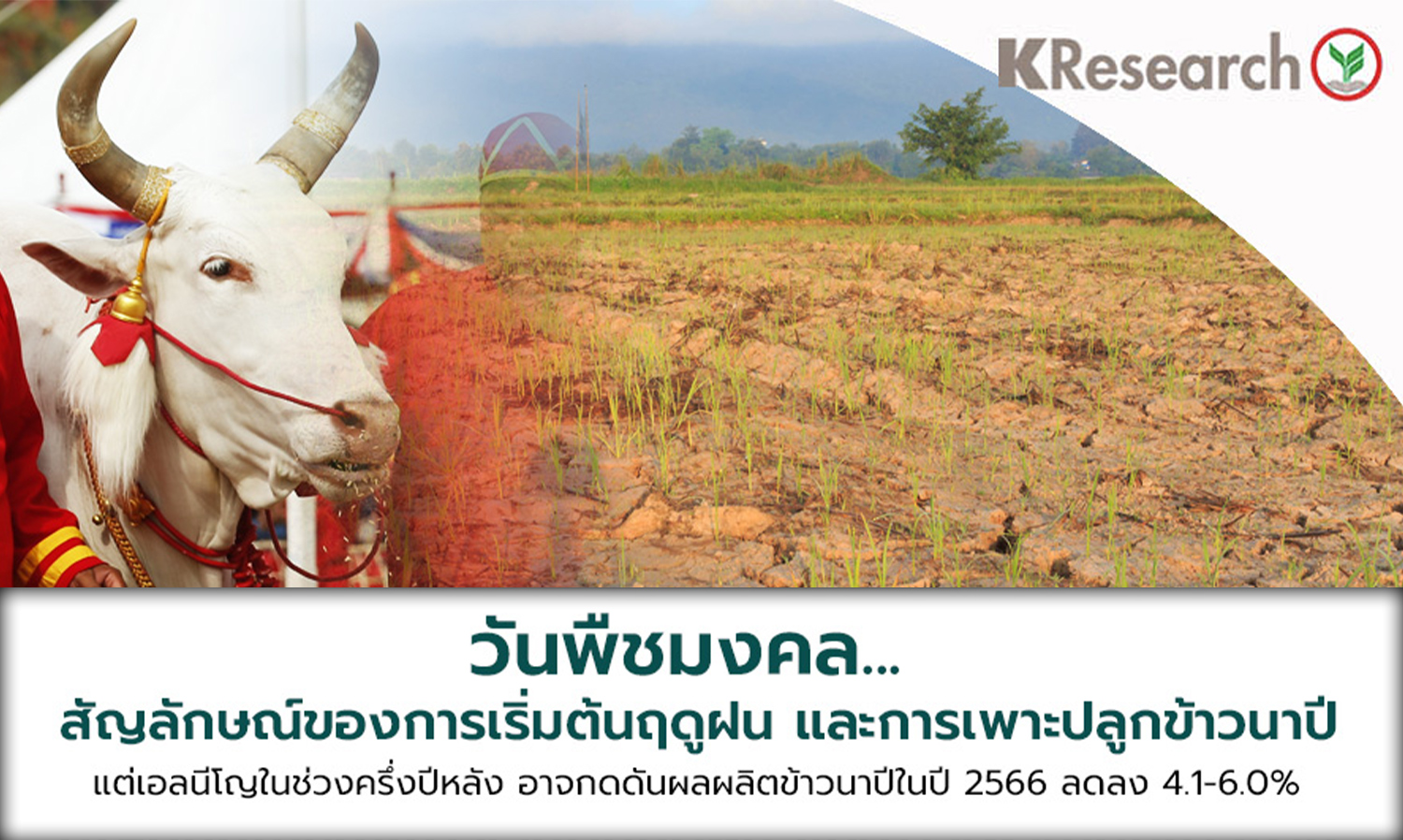
Phitsanulok Day ... A Symbol of the Start of the Rainy Season and Rice Planting, but El Niño in the Second Half of the Year May Pressure Rice Production to Decrease by 4.1-6.0% (Kasikorn Research Center)

Every year, Phitsanulok Day marks the beginning of the rainy season and the start of the rice planting season for Thai farmers. With rice prices remaining high, most farmers are encouraged to continue planting rice despite high production costs. The sustained high global rice prices are driven by strong demand in the global market to cope with food security crises, influenced by the conflict between Russia and Ukraine, which has pushed up global grain prices. Additionally, India's rice export restrictions due to reduced stock levels, along with adverse weather conditions damaging rice production in major producers and large consumers like China, which has increased demand following its reopening, contribute to this situation.
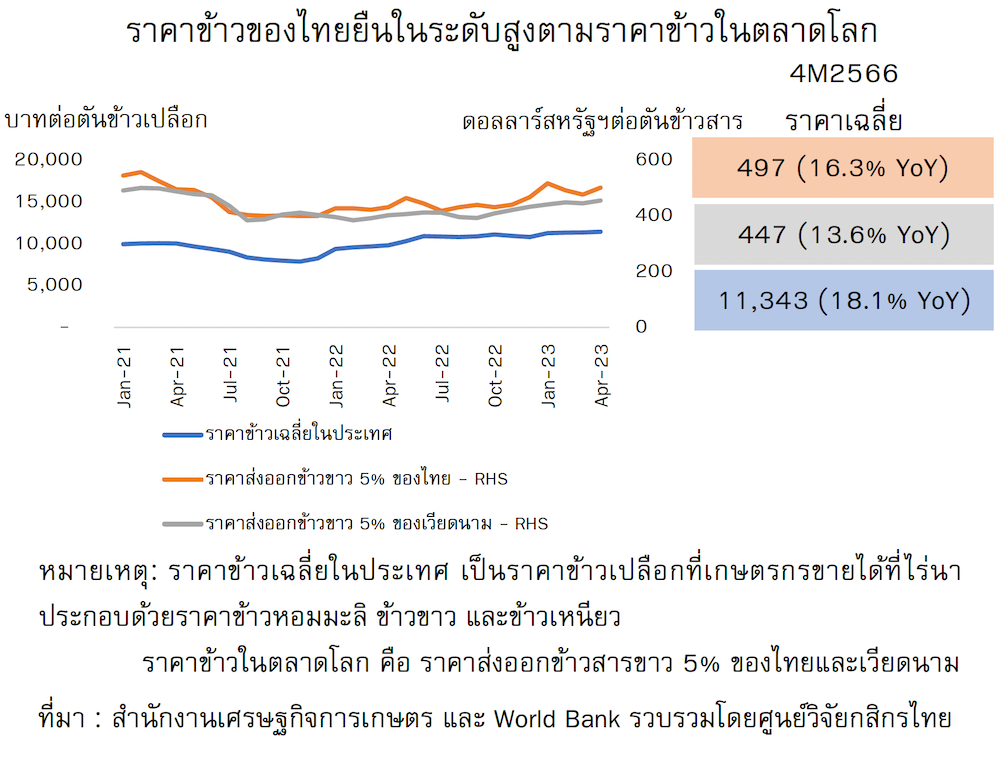
As global rice demand remains high, Thailand's readiness in production compared to its competitors presents an opportunity for increased rice exports, supporting Thai rice export prices and consequently keeping the prices that farmers receive at a high level. In the first four months of 2023, the average export price of Thai rice increased by 16.3% (YoY), while the average price of paddy rice that farmers received domestically rose by 18.1% (YoY). This serves as an incentive for most farmers to continue planting and taking good care of their rice crops, even while facing high production costs (including prices for chemical fertilizers, pesticides, and energy) and reduced rainfall at the start of the planting season. Data on the average accumulated rainfall across Thailand from January 1 to May 14, 2023, shows that the accumulated rainfall is about 57% lower than the same period last year and 28% below the average.
However, there is a high possibility that Thailand will experience the El Niño phenomenon in the second half of 2023, which poses a risk of increased damage to rice production compared to the previous year. This is because, after the planting period in May, rice plants will require more water for growth before they are ready for harvest. Therefore, monitoring rainfall and the occurrence of dry spells for the remainder of the year is essential. The Meteorological Department predicts that the total rainfall across the country during the 2023 rainy season will be lower than last year and about 5% below the average.
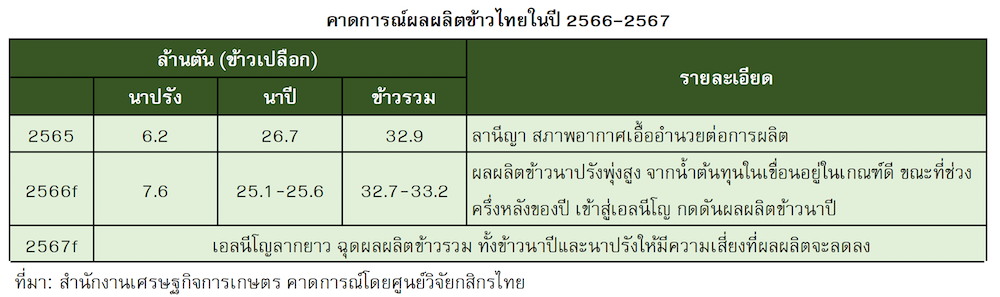
- The Kasikorn Research Center suggests that if the initial phase of the El Niño phenomenon in 2023 is not too severe and the dry spell does not last long, rice production for the year may decrease by about 4.1-6.0%, equating to 25.1-25.6 million tons. Most of this rice production will come from areas outside irrigation zones.
- When combined with the off-season rice production of about 7.6 million tons, which is an increase of 23.4% (YoY), Thailand's total rice production in 2023 may be around 32.7-33.2 million tons, showing a slight growth of 0.3% (YoY). This amount is expected to be sufficient for domestic consumption and exports, which are anticipated to increase from last year. However, if severe drought occurs or dry spells last for an extended period, it could lead to greater damage to the main rice crop and potentially lower total rice production below the estimated range.
- Moreover, the El Niño phenomenon will affect the amount of water stored in reservoirs by the end of 2023, which is crucial for planting off-season rice in 2024. Given that El Niño is expected to last for an extended period, there is a risk that both off-season and main-season rice production in Thailand in 2024 will decrease.
Strategies for coping with this situation are urgently needed, particularly in terms of systematic water management planning. All sectors, especially the government, must prepare to manage agricultural water effectively, including securing backup water sources and providing tools/machinery to support irrigation, such as water pumps and water trucks. This will help reduce damage to agricultural products and mitigate risks to Thailand's food security in the future. Farmers may also adapt by reducing production costs by increasingly using organic fertilizers instead of chemical ones. Additionally, they might consider shifting some agricultural areas to grow less water-intensive crops like cassava and sugarcane, which are economic crops with rising prices in the global market. This could be an alternative for farmers to maintain income amid increasing risks of water shortages for agriculture in the future.
[1] Royal Irrigation Department (Data as of May 14, 2023)