
Hotels and Restaurants: A Vulnerable Service Business Facing Cost Challenges
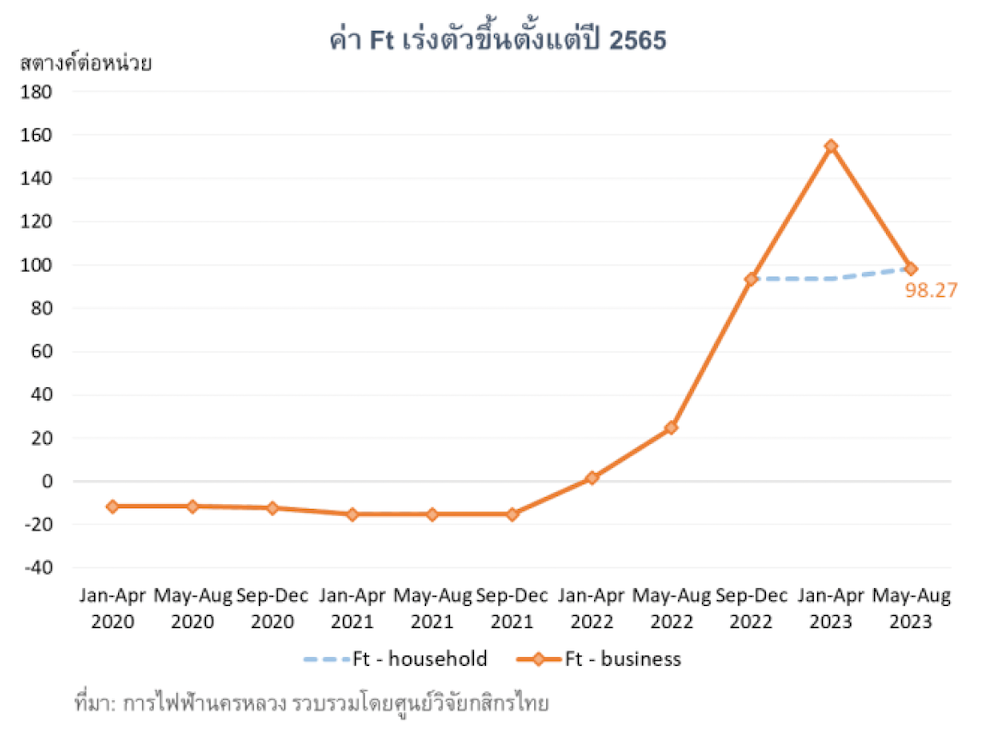
The recent increase in electricity costs, driven by the adjustment of the automatic variable electricity tariff (Ft) since 2022, has significantly impacted the electricity expenses of all sectors, including households, industrial production, and service businesses, especially during the extreme heat conditions.
Looking ahead, while the reduction in temperatures after the summer and the decline in fuel prices may alleviate electricity costs to some extent, the private sector still faces ongoing high cost challenges across various items amidst an uncertain revenue recovery path.
In addition to the industrial production for export being affected by the slowing global economy, the service sector, which is seen as a key driver for Thailand's economic growth in 2023, is also under considerable pressure. The Kasikorn Research Center has outlined the vulnerabilities of the service sector as follows:
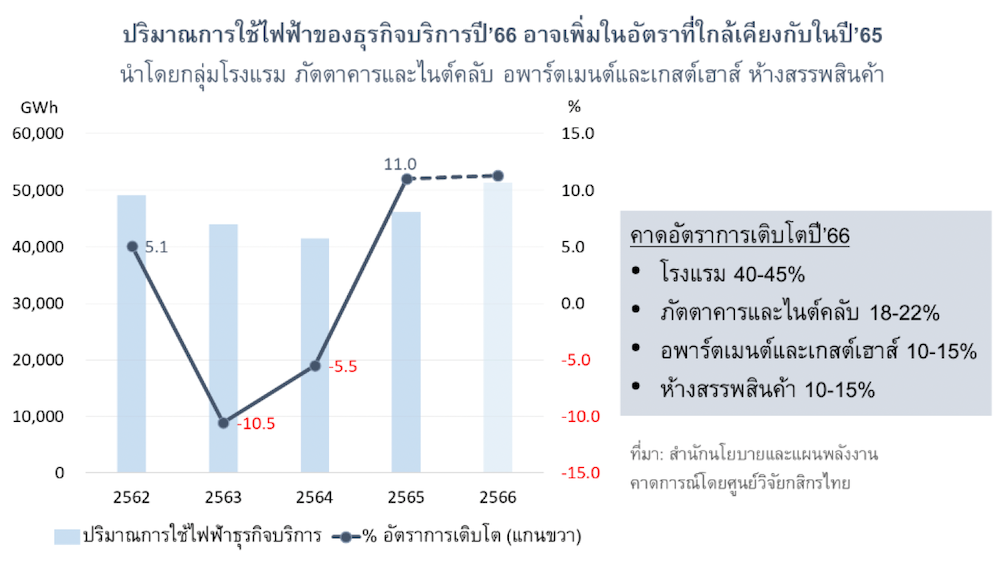
- The electricity costs for service businesses are expected to rise in 2023 due to an increase in average electricity rates and continuous growth in electricity demand. Although the electricity rates for the business sector (both industrial and service) from May to August 2023 have decreased compared to the first period of the year, and may further decrease in the final period of the year if fuel prices, especially natural gas, continue to decline, it is anticipated that the average electricity rate for the business sector in 2023 will still increase by about 12-17% compared to the average of 2022. Coupled with the expected increase in electricity consumption in the service sector this year, which is projected to be similar to 2022, driven by the continuous recovery of activities in hotels, restaurants, nightclubs, apartments, guesthouses, and shopping malls, the electricity costs for service operators are likely to rise (the more electricity used, the more they pay according to the progressive rate).
- Service operators also face challenges from rising water costs and food raw material prices due to the risk of drought, which may be more severe than expected. While the water rates are not expected to change in the near term, the onset of a super El Niño or drought in the latter half of this year poses risks of a prolonged and severe situation, leading to increased cost challenges for service businesses. This includes high or potentially rising prices for food raw materials such as rice, vegetables, fruits, and various meats, as agricultural production is at risk of being affected by insufficient water supply, especially in non-irrigated areas (even though prices may still be relatively favorable for farmers). Additionally, the demand for water is expected to grow alongside the recovery of economic activities.
- Moreover, other costs are also rising, such as labor wages, partly due to labor shortages following the return of workers to their hometowns or changing professions during COVID-19, and the transition to a fully aging society. Financial costs are increasing in line with rising interest rates in the financial system, as well as rental costs due to the increase in land appraisal prices nationwide and the gradual return of land and property tax collection to normal.
- Amidst these cost pressures, the service sector, particularly those related to tourism, still faces vulnerabilities from the recovery of revenues that are unlikely to return to normal. Despite clear signs of improvement, uncertainties remain regarding various events that could impact the recovery path, such as high living costs that may limit spending by tourists/consumers, changing travel and spending behaviors, competitive capabilities among tourist destinations, geopolitical conflicts that may affect confidence and travel costs, climate change and sustainability issues, labor shortages, or other obstacles that may impact service readiness.
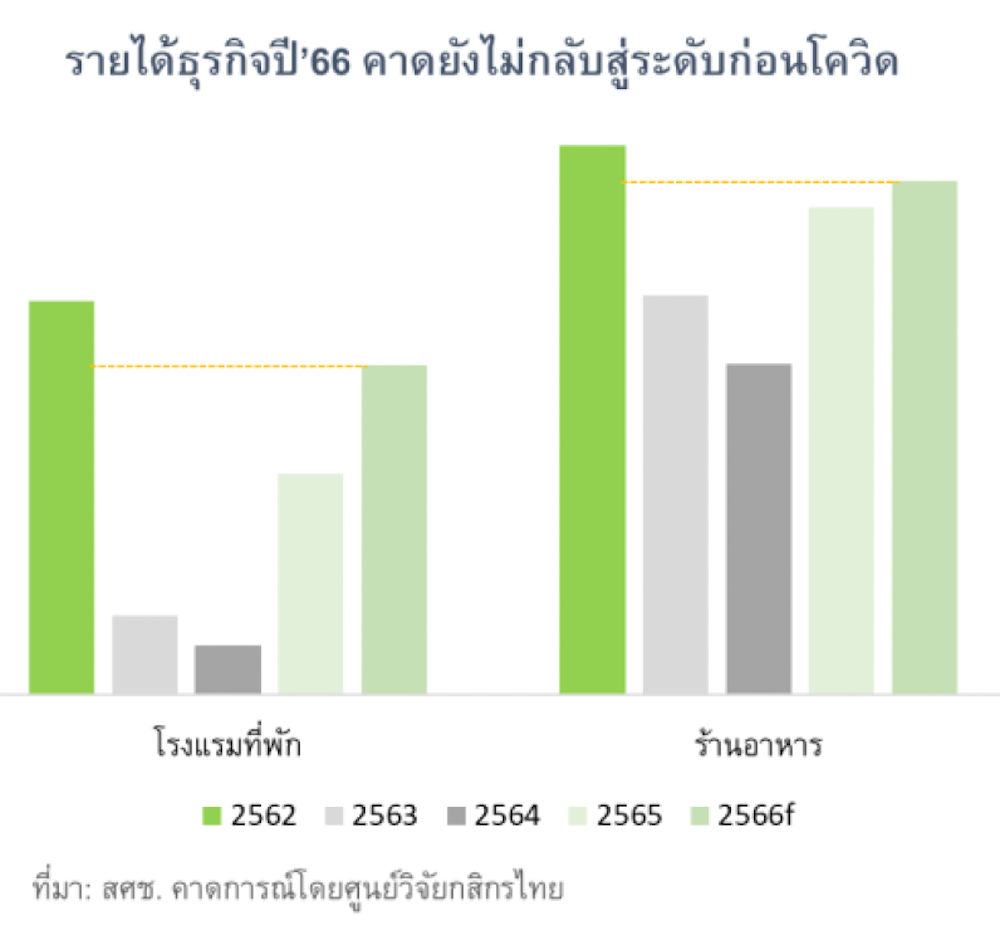
 The Kasikorn Research Center estimates that hotels and restaurants are among the service businesses most likely to be affected by rising utility costs (electricity and water) and food raw material costs, while their revenues are still not fully recovering. This is reflected in the forecast that revenues or market values in 2023 will not return to pre-COVID levels, with hotels having electricity and water costs accounting for over 18% of total costs, while restaurants have a similar proportion of about 3%, higher than the average of most business sectors, which is around 2.6%. Additionally, restaurants will face rising food raw material costs due to the potential impact of drought that may be more severe than expected.
- When combined with other cost items, it is expected that the overall costs for both hotels and restaurants may increase by another 9-16% in 2023, resulting in hotel and restaurant businesses with low adaptability or limited flexibility in adjusting service fees or selling prices, especially those located in areas where the customer base may not grow significantly and already have high existing debts, will face higher pressures than other groups. Most of these are likely to be small and medium-sized enterprises (SMEs), as data from the Bank of Thailand shows that by the end of 2022, the outstanding SME loans for accommodation and food service businesses amounted to over 316 billion baht).