September Inflation Rate Slows to 6.41%, Expected to Remain Above 5% for the Remainder of the Year
Key Highlights
- The general inflation rate for September decreased to 6.41% (YoY) due to a slowdown in energy prices, following a decline in global crude oil prices amid concerns over a weakening global economy, and the impact of a higher base from the previous year. However, fresh food prices increased due to heavy rainfall affecting vegetable and fruit prices. The core inflation rate remained stable from the previous month at 3.12% (YoY).
- Krungthai COMPASS predicts that inflation for the remainder of the year will likely slow down but will still remain above 5%. This is due to persistently high core inflation, particularly in the ready-to-eat food category, which is difficult to reduce in price. Additionally, there will be an impact from the increase in electricity rates from September to December, along with pressure from flooding issues that may affect fresh food prices, leading to sustained high inflation rates for some time.
The general inflation rate for September decreased to 6.41% due to a drop in energy prices compared to the previous month.
The general inflation rate for September stands at 6.41% (YoY), down from 7.86% (YoY) in the previous month, lower than analysts' expectations of 6.6%. The main factor was the slowdown in energy inflation to 16.1% (YoY) compared to 30.5% (YoY) in August, due to continuous declines in global crude oil prices amid concerns over a weakening global economy, and the impact of a higher base from the previous year related to retail oil prices and the government's previous energy cost relief measures that have now ended. However, fresh food prices saw a slight increase to 10.97% (YoY) compared to 10.32% (YoY) in August due to heavy rainfall and flooding in agricultural areas, which raised vegetable and fruit prices. Additionally, high raw material costs have led to ongoing increases in egg and meat prices.
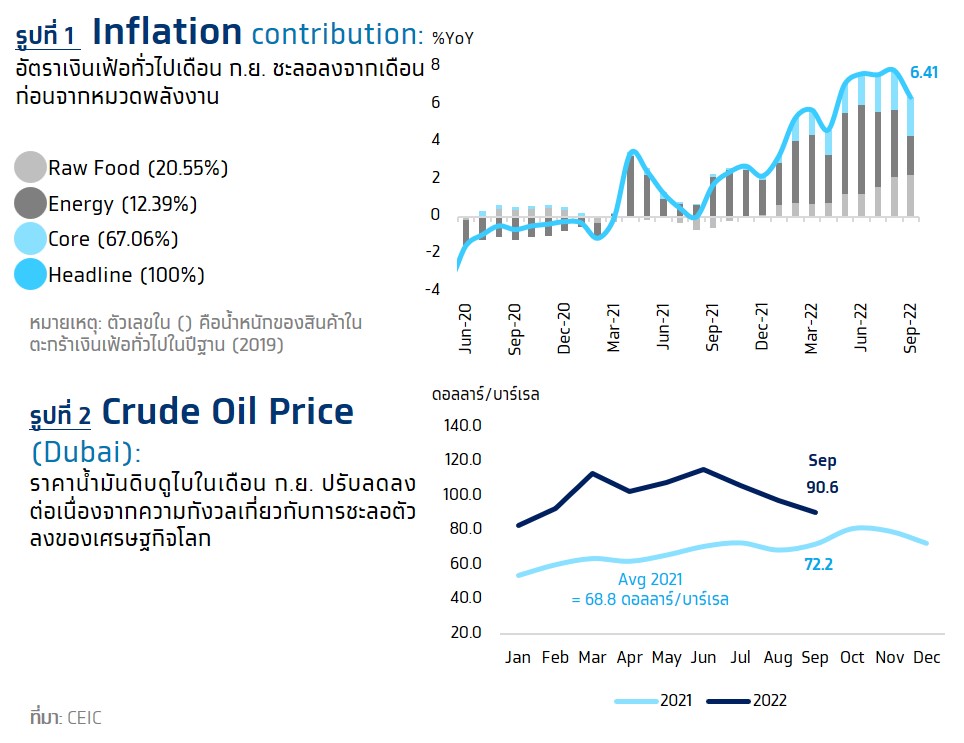
The core inflation rate (excluding fresh food and energy) remained stable from the previous month at 3.12% (YoY), with ready-to-eat food prices increasing while cooking ingredient prices slowed down. The average general inflation rate for the first nine months of the year is 6.17%, while the core inflation rate is at 2.26%.
Implication:
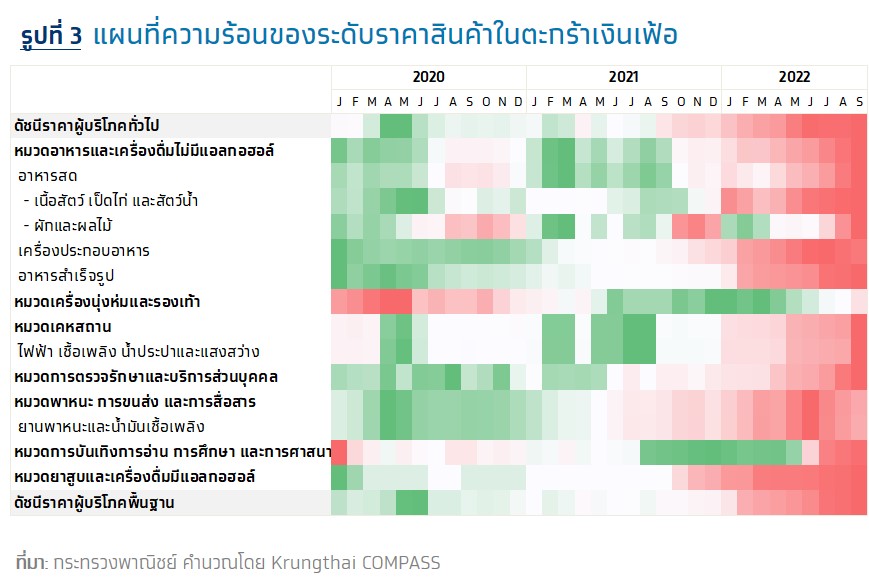
- Krungthai COMPASS expects that inflation for the remainder of the year will likely slow down but will still remain above 5%. Although inflation is showing signs of slowing down and is expected to have passed its peak, this is due to the impact of a higher base from the previous year related to rising energy prices and the end of government water and electricity cost relief measures. However, inflation for the remainder of the year is expected to remain above 5% due to core inflation (excluding fresh food and energy) which remains high, particularly in the ready-to-eat food category (accounting for 15.4% of the inflation basket) that continues to increase and is difficult to reduce in price. Additionally, there will be an increase in electricity rates from September to December from 4.03 baht per unit to 4.72 baht per unit due to rising production costs linked to natural gas prices. Furthermore, there are pressures from flooding issues that may affect fresh food prices, which are highly volatile, leading to sustained high inflation rates for some time.