
Thai Inflation: Moving Forward… or Is This It?
Thai inflation shows signs of stabilizing. The latest inflation rate for Thailand in August expanded to 7.9% year-on-year (YOY), up slightly from 7.6% YOY in the previous month, with a month-on-month (MOM) increase of +0.05% compared to -0.16% MOM in July against June. The main reason for this was the slowing growth in energy prices, reflecting that Thai inflation may have reached its peak. However, when considering the components of inflation, core inflation (excluding energy and fresh food prices) continues to rise, partly due to the gradual price increases of various food items and goods as producers pass on higher costs during the economic recovery. This aligns with the findings of the EIC study, which indicates that demand-side inflation has started to rise gradually in recent times.
EIC predicts gradual reduction in inflation in the near future, but it will remain high due to several factors. In the near term, EIC expects inflation to gradually decrease, approaching the Bank of Thailand's target range next year due to the trend of commodity prices that have started to slow down recently. However, inflation will decelerate slowly because energy prices remain high, and the cost pass-through from producers will increase as the economy recovers. Additionally, agricultural prices, such as rice, are expected to be affected by rising fertilizer costs, India's rice export restrictions, and the ongoing increase in LPG and electricity prices. The shortage of foreign labor and the planned increase in the minimum wage at the end of this year will further pressure production costs. EIC estimates that the average minimum wage increase of 5% nationwide starting this October will result in an approximate 0.2% increase in Thailand's inflation next year.
Rising costs are impacting household purchasing power, especially for low-income groups. The high prices of energy and food are expected to keep real income (income adjusted for inflation) down, directly affecting household purchasing power, particularly for low-income individuals who have just begun to recover from the COVID-19 crisis and spend 53% of their total expenses on food and energy. This is consistent with the EIC consumer survey results, which found that about 60% of respondents face insufficient income to cover expenses, 77% experience reduced savings or are unable to save at all, and 44% believe that expenses will increase at a rate higher than income over the next six months. As a result, some households may need to cut back or delay spending, tap into existing liquidity, or incur new debt, which will impact the economy and pressure overall consumption in the country. Therefore, the government should play a crucial role in providing assistance.
Recent inflation situation
Global inflation, particularly in the United States and Europe, has surged to its highest levels in decades due to the recovery of economies following the COVID-19 pandemic, leading to a rapid increase in demand for goods and energy. This, combined with supply chain disruptions, a tight labor market, and the ongoing Russia-Ukraine war, has exacerbated inflation issues due to the imbalance between supply and demand.
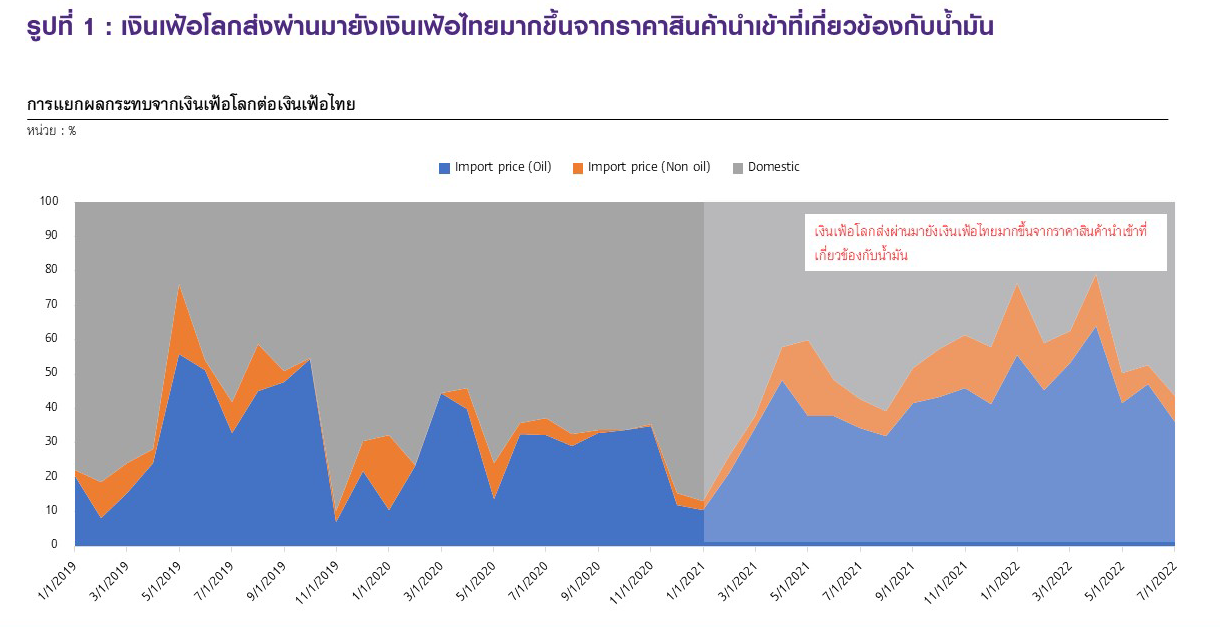
Thai inflation, along with other developing economies, has also risen quickly, primarily due to supply-side factors, while domestic demand has only just begun to recover. However, global inflation has a relatively limited impact on Thai inflation compared to other countries because a significant portion of Thailand's imports are produced for export rather than for domestic consumption. Additionally, although Thailand is a net oil importer, domestic oil prices have not fully reflected the significant increases in global energy prices due to government support measures, particularly energy price stabilization policies, which have kept Thai inflation less sensitive to import prices. EIC found that since 2021, Thai inflation has begun to rise and has been passed on from oil-related import prices, accounting for 52%, non-oil imports at 18%, and domestic factors and other factors at 30%.
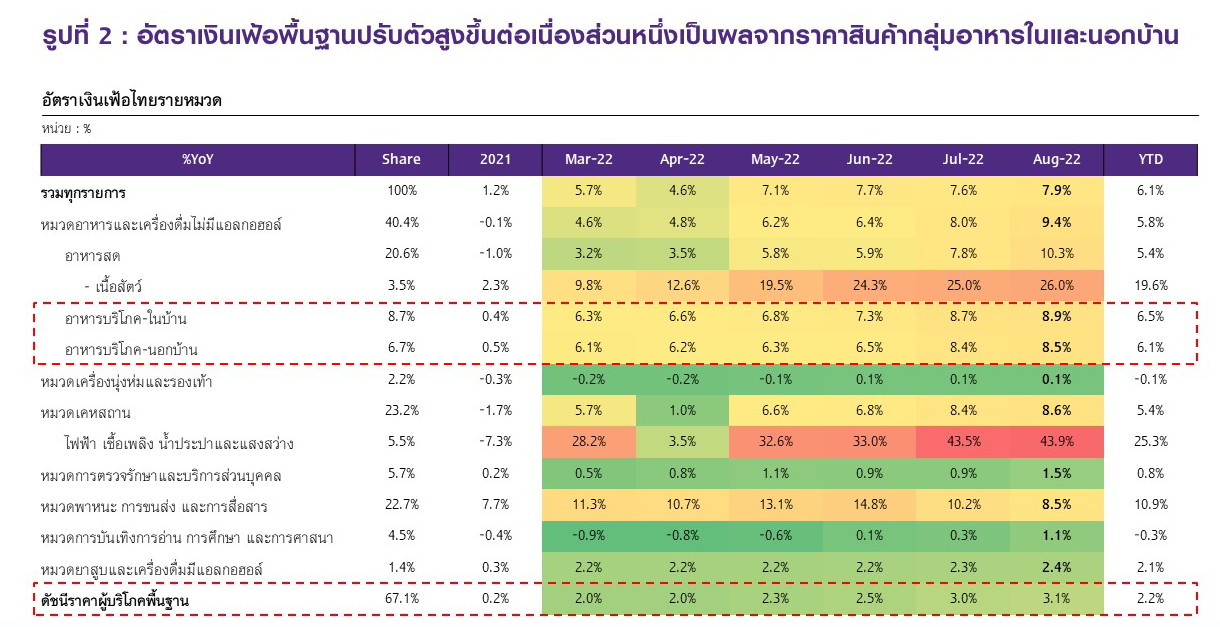
The Commerce Ministry's inflation report for August indicates that Thai inflation has slightly increased to 7.9%, primarily due to the continuous rise in energy prices at 30.5% YOY, while core inflation has risen significantly by 3.1% due to food prices both at home and outside (see Figure 2). However, compared to the previous month, inflation in August began to stabilize at +0.05% MOM after a decrease of -0.16% MOM in the prior month (which marked the first slowdown in seven months), mainly due to the slowing growth in energy prices, with the energy price index in August decreasing by -2.7% MOM for the second consecutive month, reflecting a trend in global energy prices and indicating that Thai inflation may be easing and has passed its peak.
Thai inflation outlook
Although Thai inflation has begun to stabilize in July and August and may start to slow down further in the future due to the declining trend in commodity prices and high base factors, several factors will continue to pressure inflation not to slow down quickly, including:
- Energy and commodity prices in the country remain high.
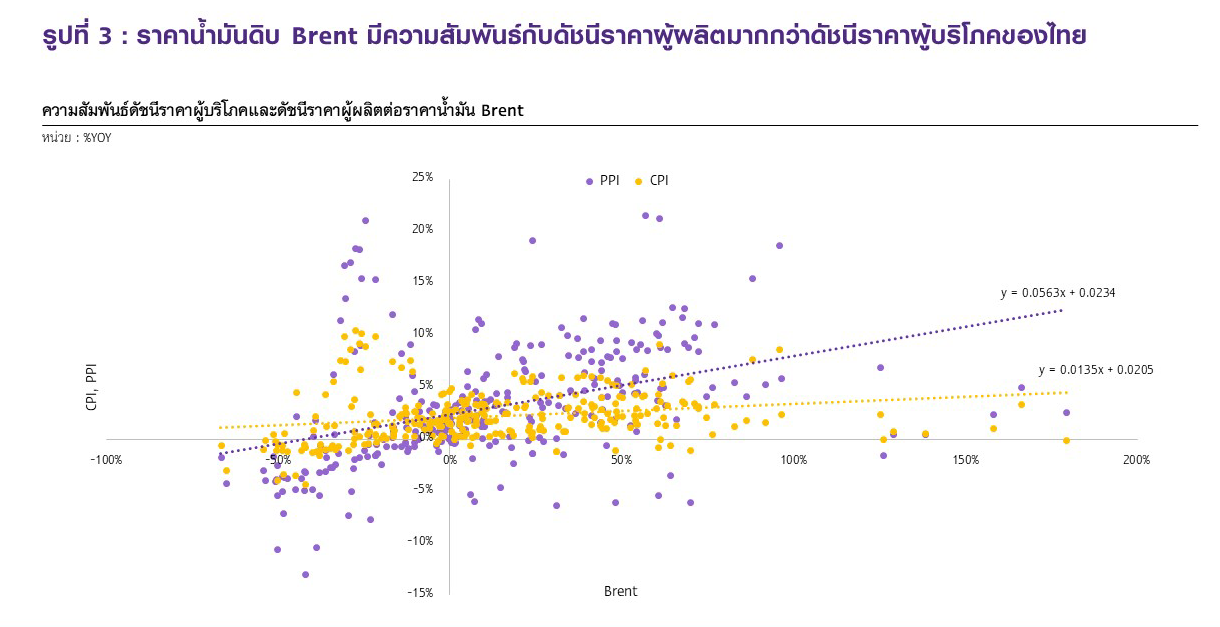
Recently, domestic energy prices have not risen significantly in line with global prices due to government measures to stabilize prices to mitigate the impact of global prices on domestic consumers. EIC's study found that Brent crude oil prices are more closely related to the producer price index than to Thailand's consumer price index because of past energy price controls (see Figure 3), reflecting the limited ability to pass on energy costs to product prices. Therefore, even though global energy prices may have peaked, domestic energy prices are likely to remain high and may not decrease significantly. Additionally, the depreciation of the Thai baht has resulted in high production costs for domestic oil, and the FT rate has been gradually increasing due to rising electricity production costs in line with tight global LNG prices, especially in Europe, where Thailand has had to rely more on LNG imports due to declining domestic natural gas production. Besides energy price factors, global prices for various commodities, such as wheat, soybeans, as well as steel prices from China and cement in Thailand, are also expected to decline from their peaks, but they are still anticipated to remain higher than in 2021. Furthermore, rice prices, which have contracted recently, are expected to rise towards the end of the year due to increasing fertilizer costs, coupled with India's recent announcement of a ban on rice exports and a 20% export tax on all types of white and brown rice, which will push Thai rice prices higher in the future and create cost pressures for related businesses, such as consumer goods, food, construction, and real estate.
2. The Thai labor market is starting to recover, and the minimum wage is set to increase.
The Thai labor market, which was sluggish during the pandemic, has shown signs of improvement since early 2022 due to the relaxation of disease control measures and the reopening to foreign tourists, especially in the service sector. However, some foreign workers who left Thailand in mid-2021 due to the outbreak and the closure of worker camps have not fully returned. Many sectors, particularly construction, have had to rely more on Thai labor, resulting in increased labor costs. Additionally, the government's plan to raise the minimum wage by an average of about 5% nationwide in early October, increasing the minimum wage by an average of 16.2 baht/day to 328 – 354 baht/day, will further increase cost pressures on businesses, especially in industries with a high proportion of employees who must adjust wages according to the minimum wage. EIC estimates that the average minimum wage increase of 5% will have a limited impact on inflation in 2022 but will significantly affect overall inflation in 2023 by 0.16%.
3. Increased price pass-through from producers to consumers.
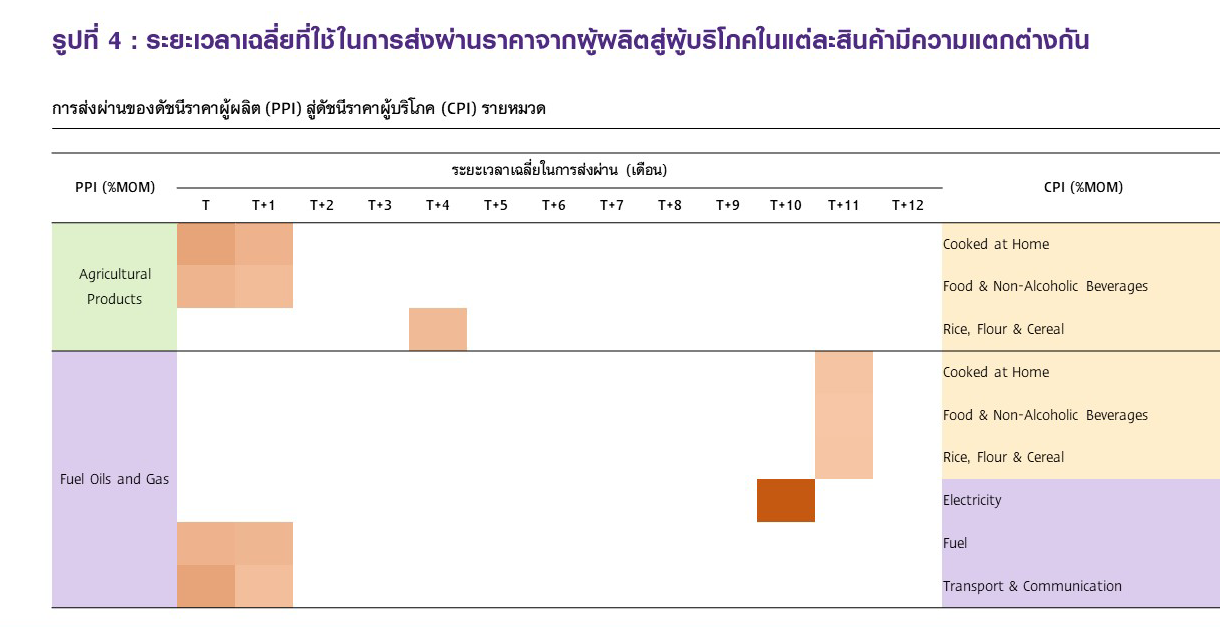
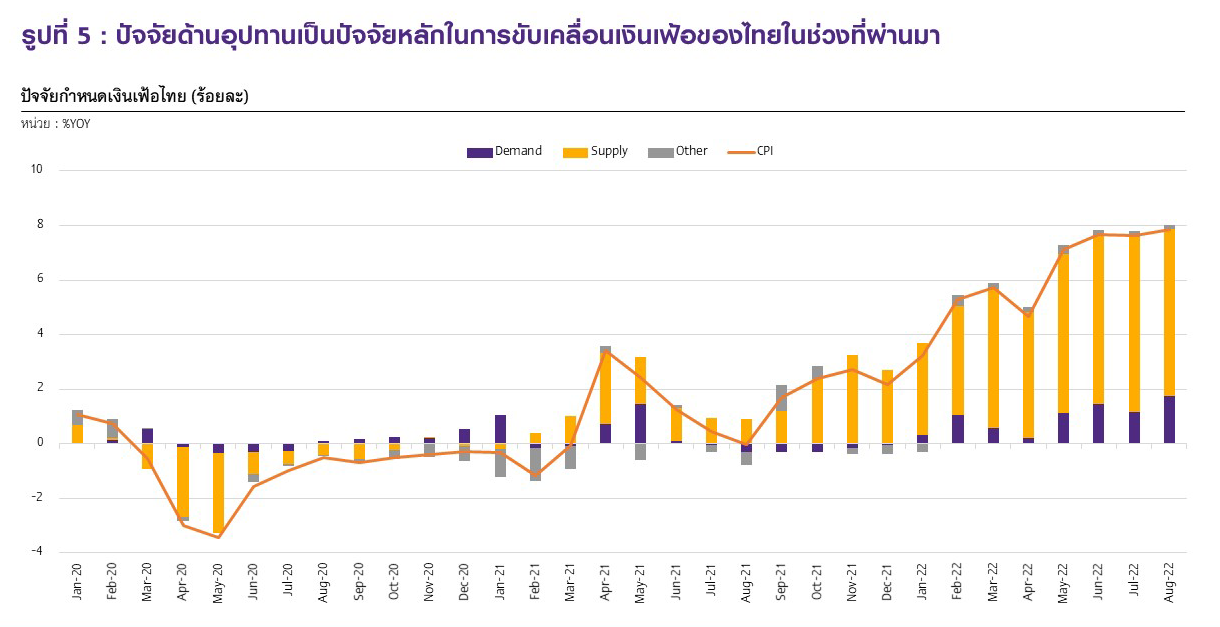
Persistently high inflation in recent times has directly impacted production costs, and many producers have not been able to pass on the increased costs to consumers effectively due to the slow recovery of the economy and consumer purchasing power from the pandemic. EIC's analysis found that the time taken to pass on prices from producers to consumers varies by product; in some cases, producers can pass on costs quickly, while in others, especially those controlled by the state, passing on prices is more challenging (see Figure 4). The increase in food and beverage prices this month is a result of agricultural product costs from the previous and current months. In contrast, the increase in fuel prices and transport & communication costs this month is due to energy product costs from the previous and current months, indicating that producers are passing on product costs to prices quickly. Conversely, the increase in electricity prices is a result of energy product costs over the past 11 months, reflecting that producers have been slow to pass on product costs due to government price support policies in the past. Therefore, in the future, if producer costs remain high due to energy and food prices as mentioned above, concerns will arise regarding the increased and quicker price pass-through as government price support measures are reduced. Additionally, the recent surge in global energy prices has driven Thai inflation primarily due to supply-side factors, while demand-side inflation remains relatively low but is trending upward as domestic purchasing power recovers.
Analysis using a Generalized additive model found that supply-side factors have been the main driver of Thai inflation from January to August 2022, accounting for 86.5% of the inflation that occurred, primarily due to the pass-through of energy production costs. However, demand-side inflation has started to accelerate due to the recovery of domestic consumption. In January, demand-side inflation accounted for only 9.9% of the inflation that occurred, but by August, demand-side inflation had accelerated to 22.2% of the inflation that occurred, indicating that in the future, price pass-through will increase as demand recovers (see Figure 5).
In the near future, EIC estimates that producers are preparing to gradually raise product prices to pass on the cost burden to consumers more effectively due to simultaneous increases in production costs across various areas, including energy, raw materials, packaging, transportation, and labor costs. Additionally, the Thai economy is gradually recovering. From December 2021 to July 2022, 116 companies submitted requests to raise product prices 127 times, totaling 936 items across 11 product categories, including 1. Paper and products, 2. Transport equipment, 3. Agricultural factors, 4. Petroleum products, 5. Pharmaceuticals and medical supplies, 6. Construction materials, 7. Major agricultural products, 8. Consumer goods, 9. Food, 10. Others, and 11. Services. However, the Ministry of Commerce has not yet allowed price adjustments before starting to permit gradual price increases from July, and it is expected that producers will continue to raise prices in line with the high cost burden they have been bearing for a long time in the future.
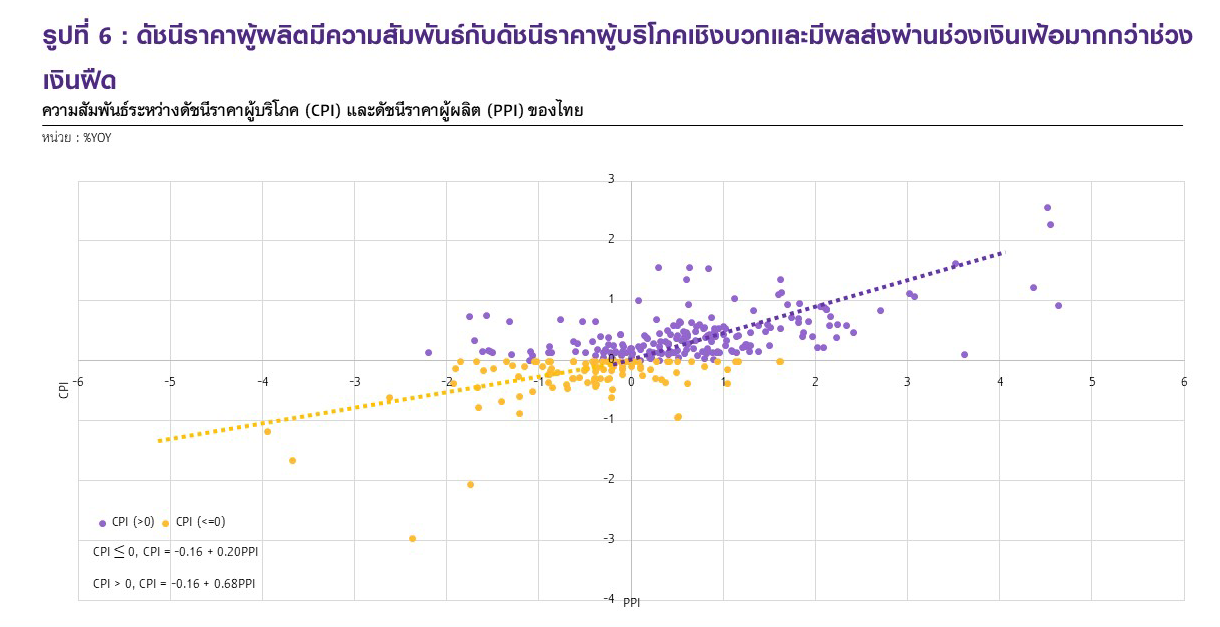
According to EIC's study, the producer price index is positively correlated with the consumer price index and has a greater pass-through effect during inflation than during deflation. If the consumer price index increases, the impact of the producer price index on the consumer price index will be greater than in cases where the consumer price index decreases. This means that when costs increase, product prices tend to rise, but if producer costs decrease, product prices tend to decrease more slowly. Therefore, in the future, even if the situation regarding energy prices and producer costs begins to ease, the prices consumers have to pay are unlikely to decrease quickly (see Figure 6).
Impact on households
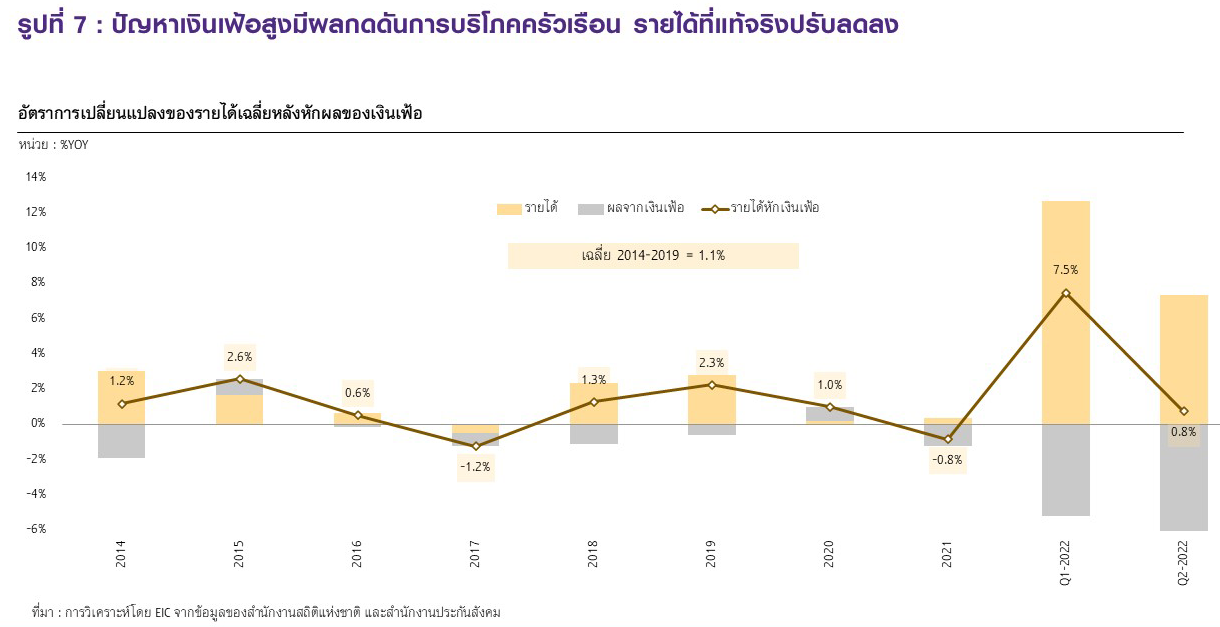
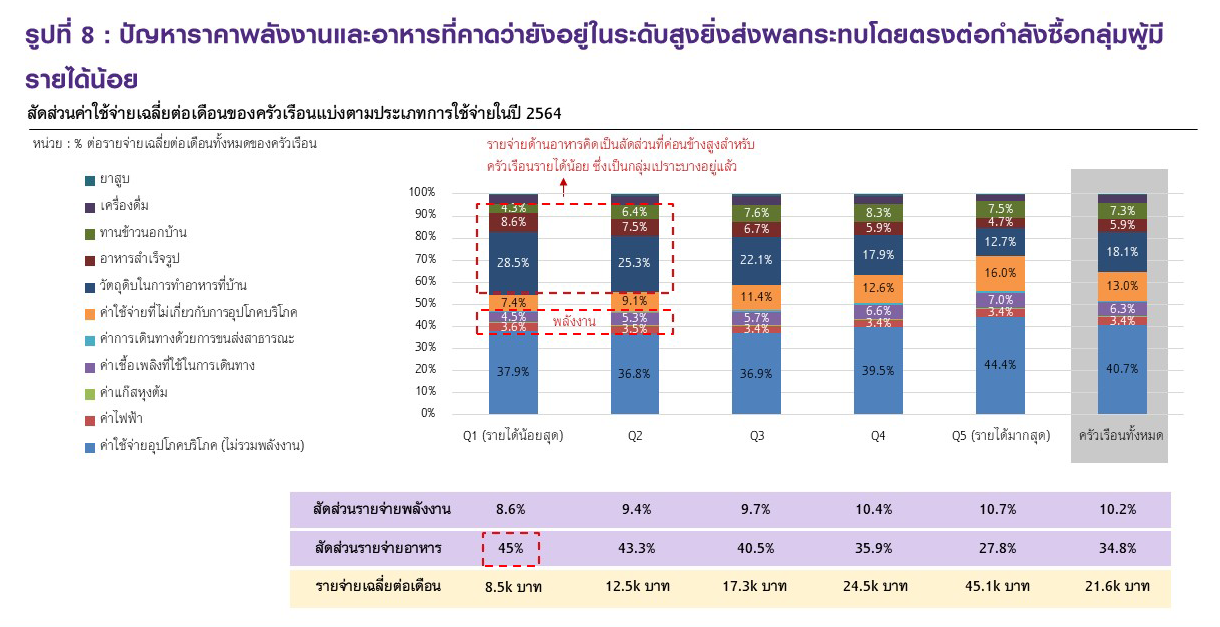
The issue of high inflation pressures household consumption, leading to a decrease in real income (see Figure 7), reinforcing the problem of "high prices, low wages" in Thai society. This has caused some households to reduce or delay spending, utilize existing liquidity, or incur new debt, particularly due to the high prices of energy and food, which are expected to remain elevated, directly impacting the purchasing power of low-income groups, who spend 53% of their total expenses on food and energy (see Figure 8). This is consistent with the EIC consumer survey results, which found that about 60% of respondents face insufficient income to cover expenses, 77% experience reduced savings or are unable to save at all, and 44% believe that expenses will increase at a rate higher than income over the next six months, reflecting the macroeconomic recovery pressures from lost private consumption, increasingly fragile financial status, and exacerbating the household debt problem, which was already high at nearly 90% of GDP at the end of the first quarter of 2022.
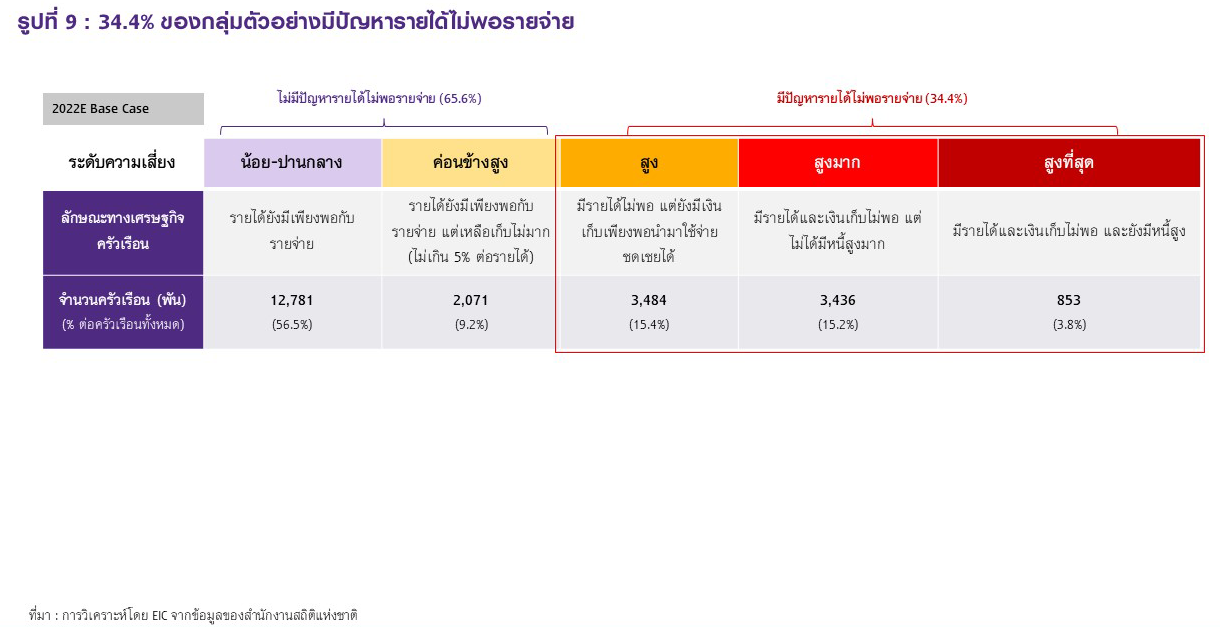
EIC assesses the risks of the cost of living burden for all households based on income levels, expenses, savings, and debt, finding that (1) 56.5% have sufficient income to cover expenses, representing a low to moderate risk group; (2) 9.2% have sufficient income to cover expenses but have savings of no more than 5% of income, representing a relatively high-risk group; (3) 15.4% have insufficient income to cover expenses but still have enough savings to compensate, representing a high-risk group; (4) 15.2% have insufficient income and savings but have low debt, representing a very high-risk group; and (5) 3.8% have insufficient income and savings and also have high debt. Additionally, the rising cost of living is a problem faced at all income levels of households, particularly low-income households. It is noteworthy that non-agricultural households have seen a more significant reduction in savings than households with agricultural income, as they benefit from rising agricultural product prices, but they still face risks from potentially high production costs in the next round (see Figure 9).
Therefore, in a situation where the cost of living continues to rise rapidly, the government should implement targeted assistance measures for households, especially vulnerable groups. This includes urgent and specific measures such as debt reduction, financial aid, increasing welfare rights, and enhancing income-generating capabilities, along with liquidity support measures such as low-interest loans with repayment conditions aligned with income levels, reducing the cost of living for essential goods and services, and providing assistance in the form of cash transfers. Additionally, measures to stimulate purchasing power for higher-income groups should focus on spending with small domestic businesses. Furthermore, the government should introduce additional policies regarding the resolution of informal debt, both to prevent citizens from relying more on informal debt and to bring informal debt back into the formal system, where interest burdens are lower, to help Thai households sustainably reduce their debt.
In summary, the Thai economy will continue to face the problem of high prices for some time, and EIC estimates that inflation may not return to the Bank of Thailand's target range anytime soon due to persistently high energy and food prices and increased cost pass-through from producers, which pressures the economic recovery through consumption and investment. This presents a challenge for policymakers to control Thai inflation in the future, given the ongoing supply-side factors and gradually increasing demand, reflecting that we may have just realized how little we understand inflation, as stated by Jerome Powell, Chairman of the U.S. Federal Reserve, at the European Central Bank (ECB) Forum last June: "we now understand better how little we understand about inflation."
Analysis by... https://www.scbeic.com/th/detail/product/inflation-120922