Consumer Trends in 2022: How to Adapt in Times of Rising Costs
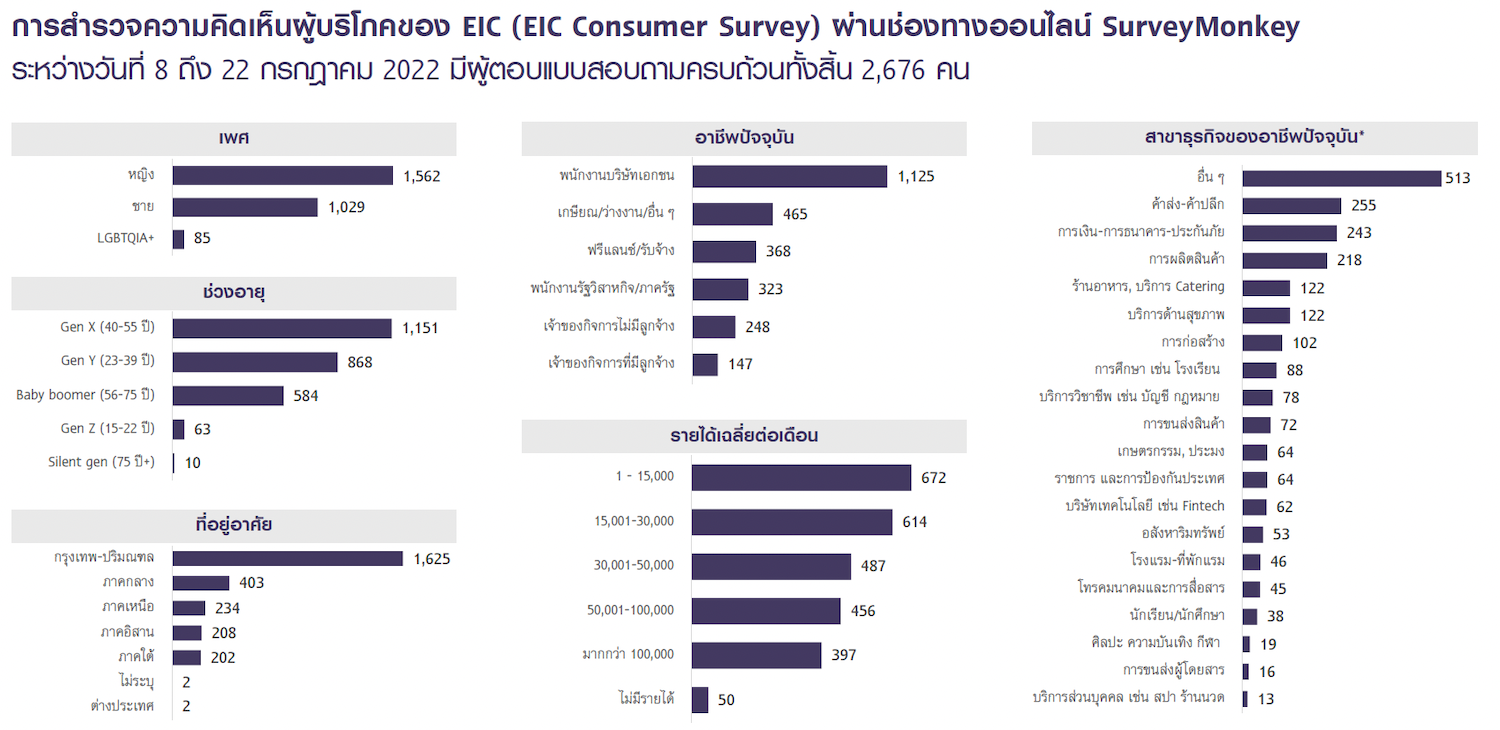
The EIC conducted a survey of 2,676 Thai consumers from July 8 to 22, 2022, regarding economic changes and behaviors during a period of rising prices for goods and services. The survey results can be summarized into four key points as follows:
Point One: “Most consumers' incomes have not increased in the past six months, contrary to the rising cost of living, with low-income groups being more affected.”
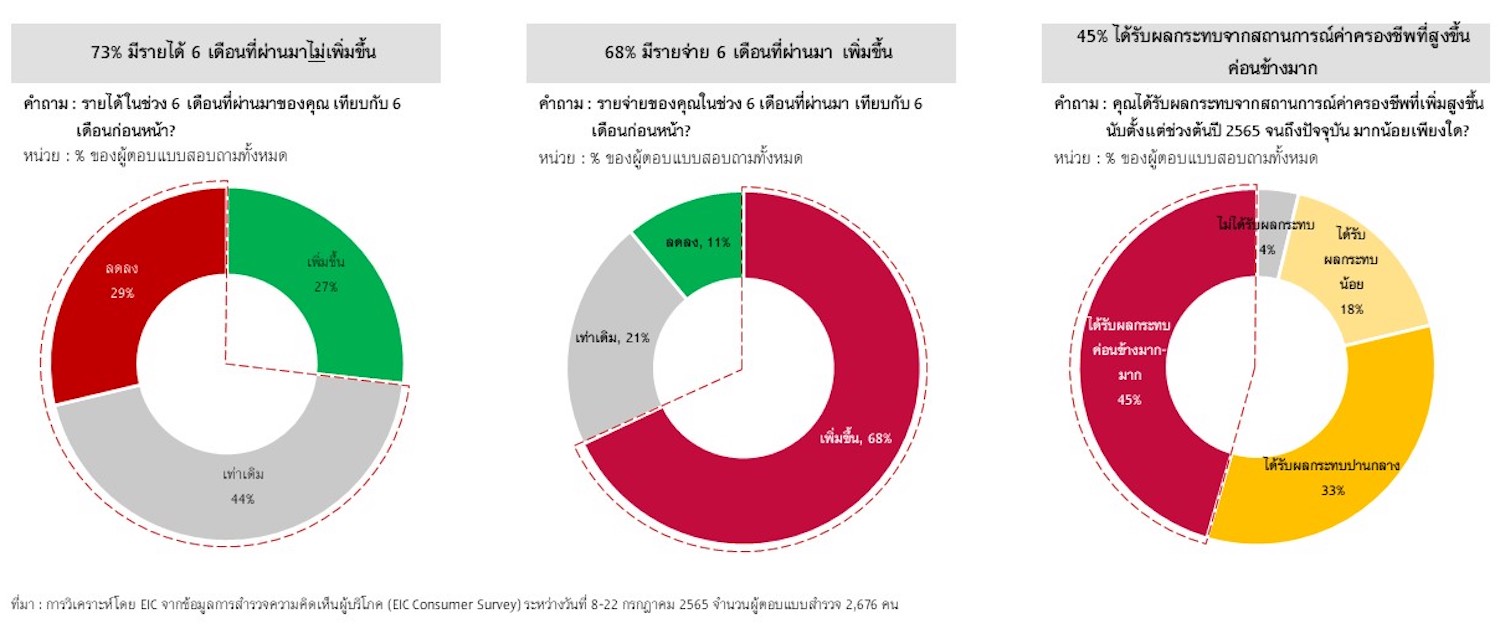
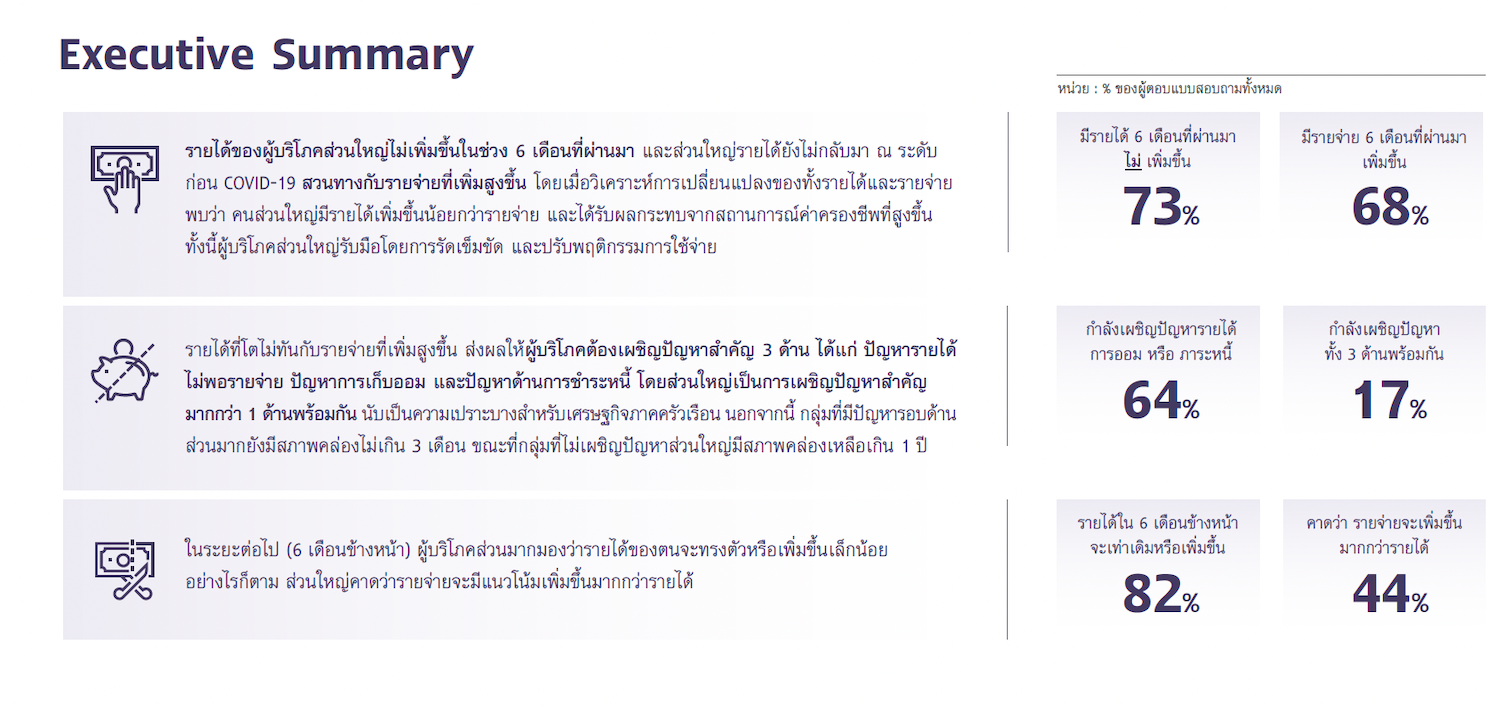
- Although consumer income trends over the past six months have improved compared to the previous year's survey, the majority of respondents reported their income remained stable. 73% of respondents indicated that their income had not increased in the past six months, with the lowest income group (earning no more than 15,000 baht per month) showing the highest proportion of those whose income did not increase.
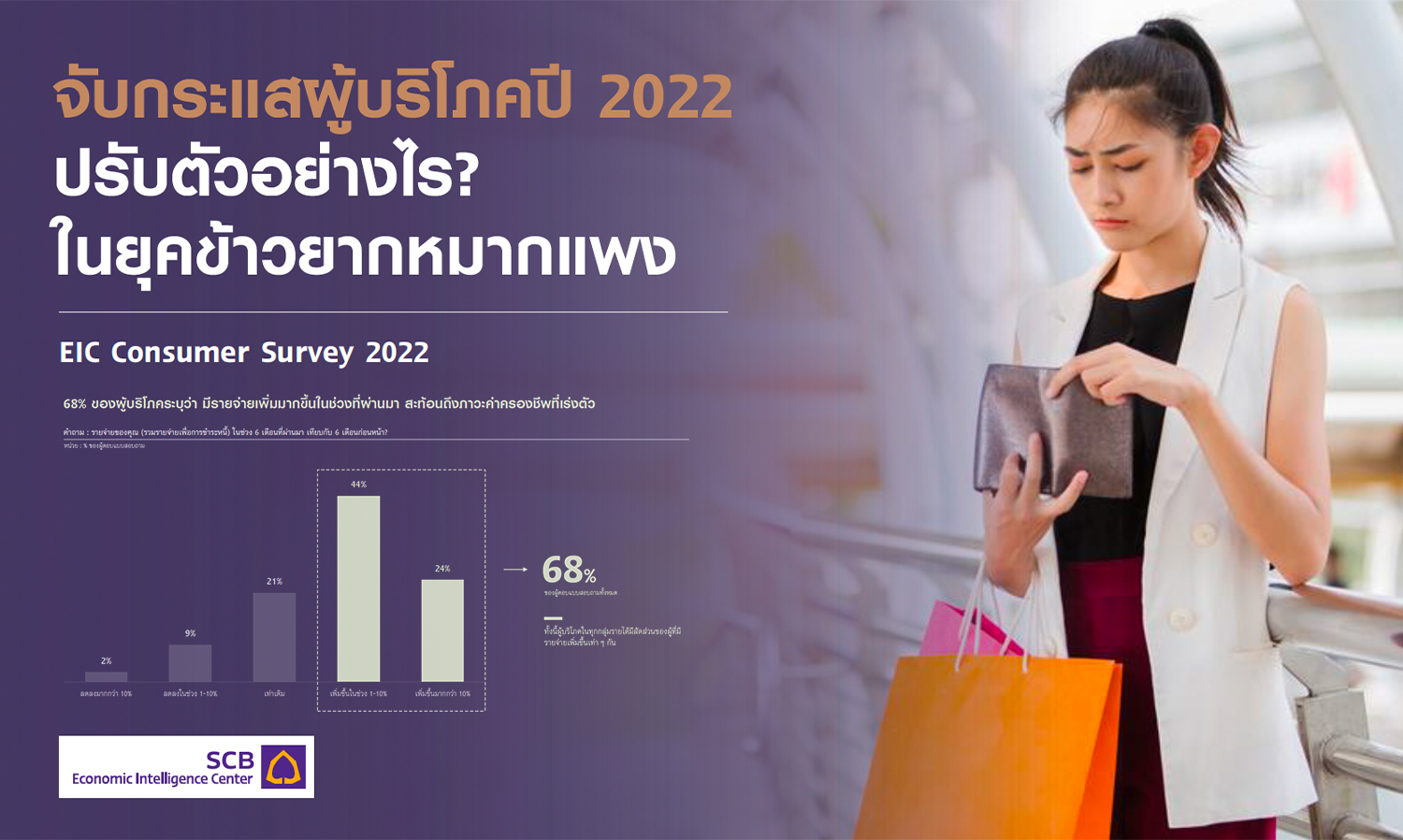
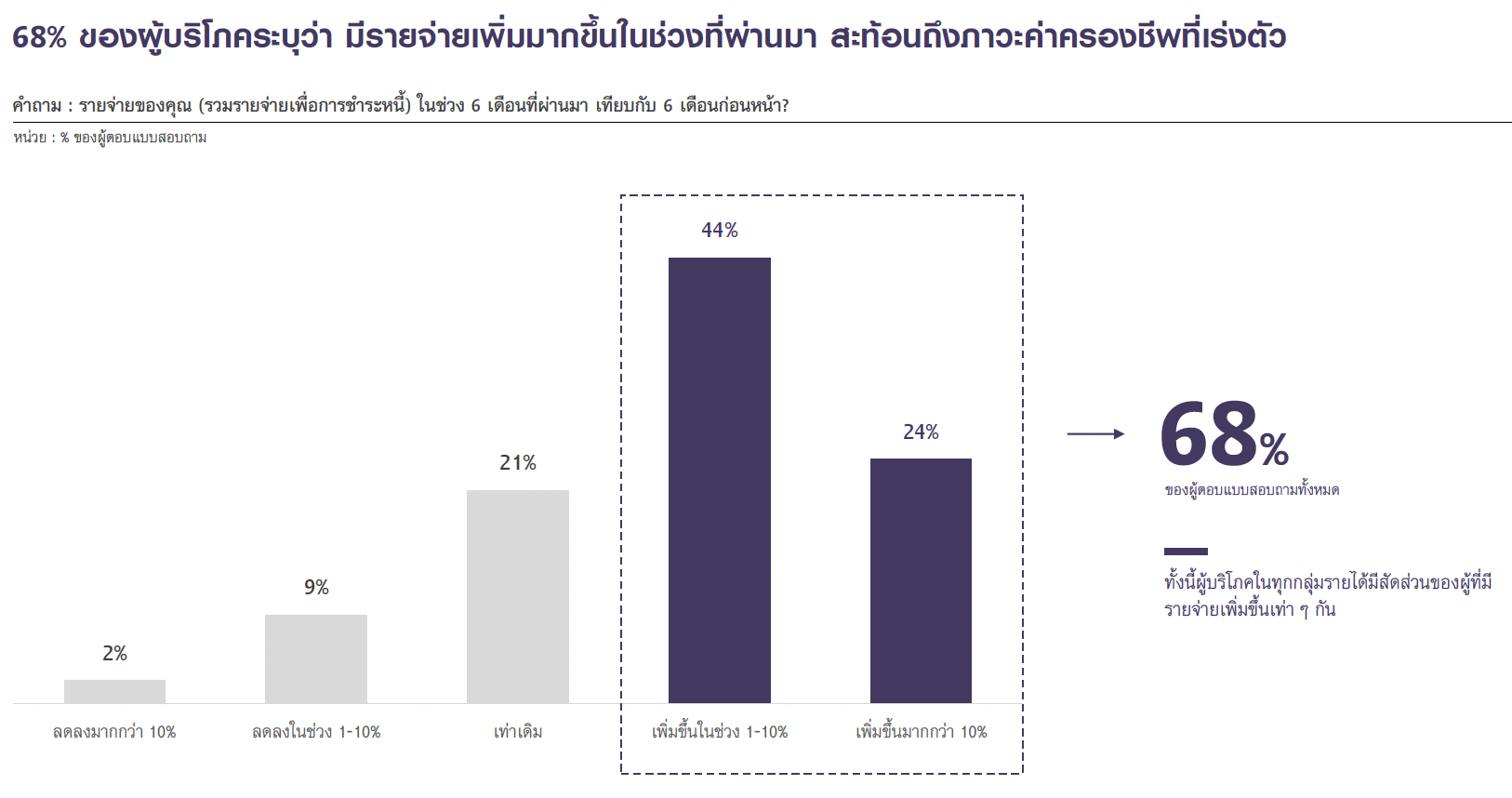
- Meanwhile, most consumers have seen an increase in their expenses, reflecting the accelerating cost of living. Over 68% of respondents reported that their expenses had increased in the past six months, with nearly one in four stating their expenses had risen by more than 10%. This increase in expenses was observed across all income groups in similar proportions.
- When analyzing changes in both income and expenses, it was found that 60% of people experienced income growth at a rate lower than their expenses. Additionally, 45% of consumers reported being significantly affected by the rising cost of living, particularly among low-income groups, where the proportion of those affected was higher than in other income groups, further emphasizing that rising living costs impact low-income individuals more severely.
Point Two: “Income growth has not kept pace with rising expenses, leading to most people facing income issues over the past six months, which has resulted in decreased savings and nearly half experiencing debt repayment problems.”
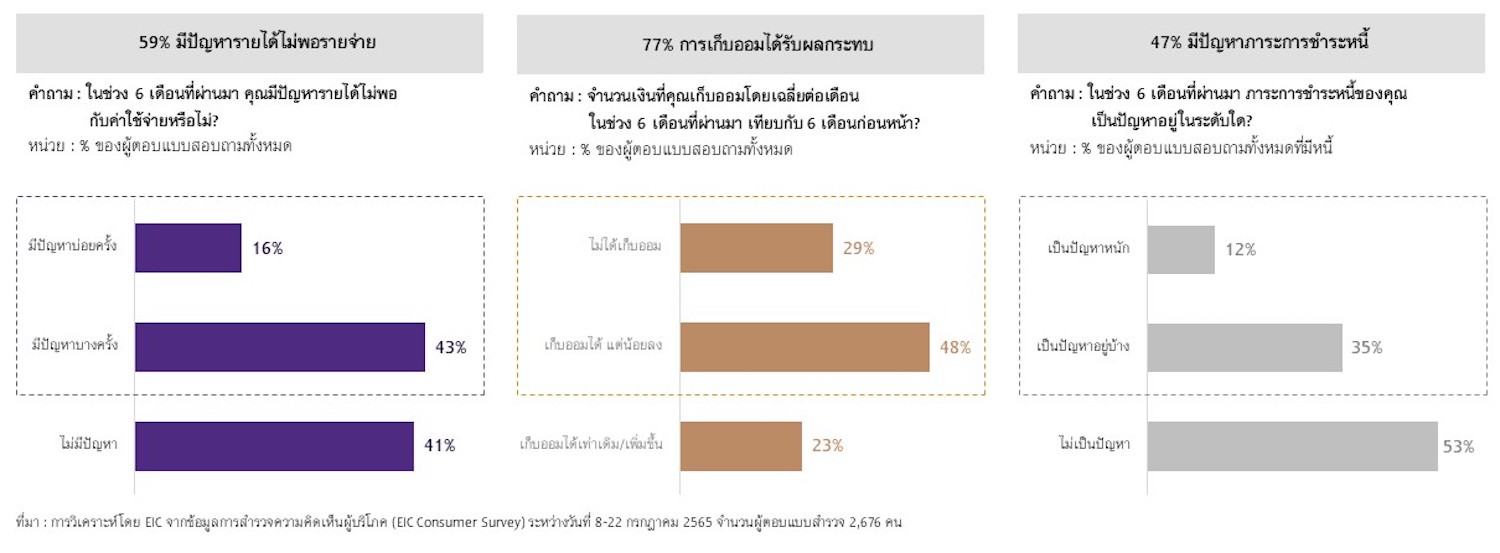
- The fact that income has not kept pace with expenses over the past six months may be one of the reasons why most consumers are facing three significant economic issues: 1) Insufficient income to cover expenses, 2) Problems with saving, and 3) Debt repayment issues. 59% of consumers are facing insufficient income to cover expenses, while 77% reported decreased savings or no savings at all during this period. Additionally, nearly half of consumers indicated they are facing debt repayment issues.
- Considering all three issues together, it was found that 64% of consumers are facing at least one of these issues, and about 42% are experiencing more than one economic problem simultaneously. This reflects a high level of vulnerability in household economies. Those facing multiple issues typically have limited financial liquidity, with most having liquidity of less than three months, contrasting sharply with those not facing problems, who mostly have liquidity exceeding one year.
- In the future, most consumers still expect expenses to increase at a rate greater than their income, which may further increase the proportion of consumers facing these three issues and reinforce household vulnerability.
Point Three: “The accelerating prices of goods and services have led consumers to change their purchasing behaviors in different ways to alleviate the burden of living costs.”
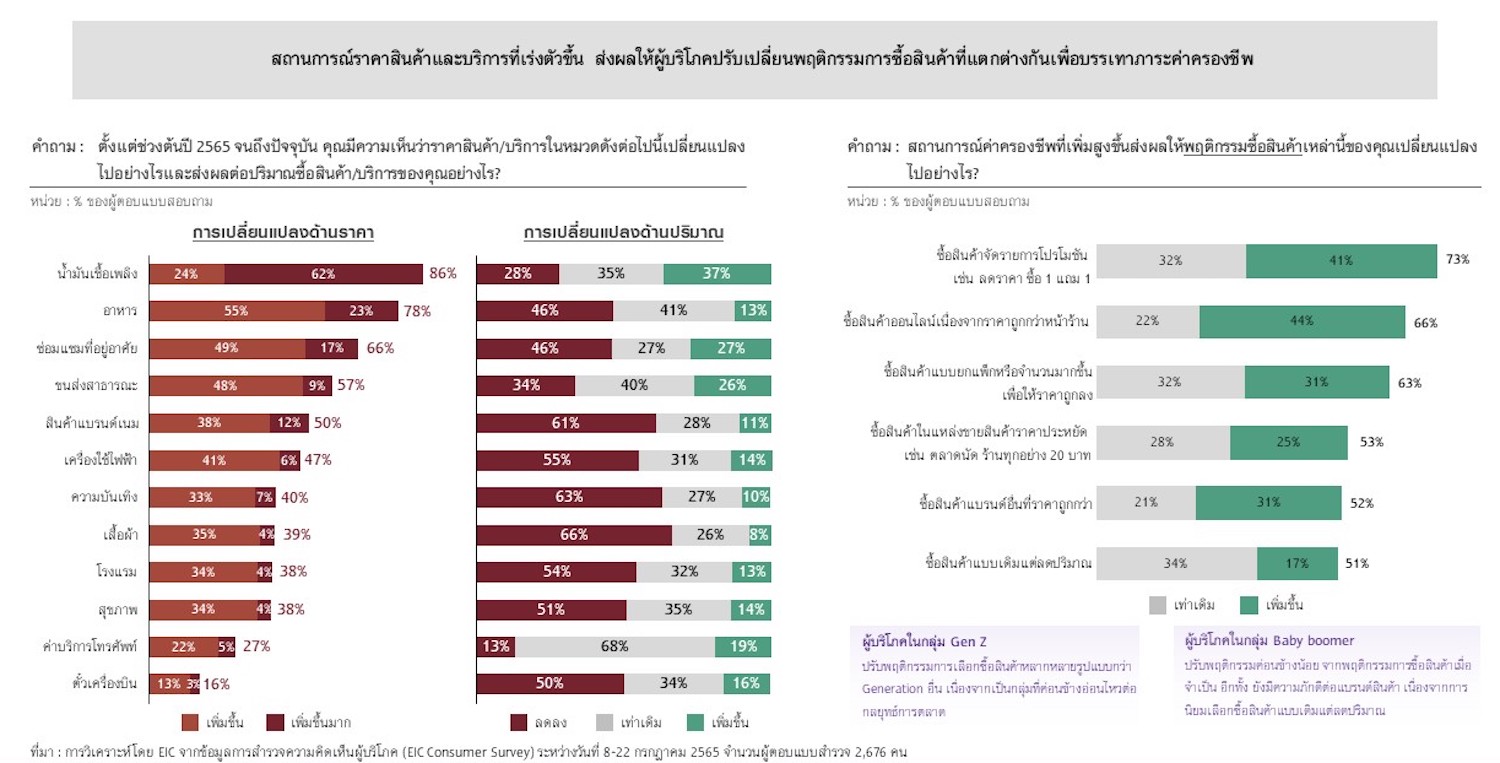
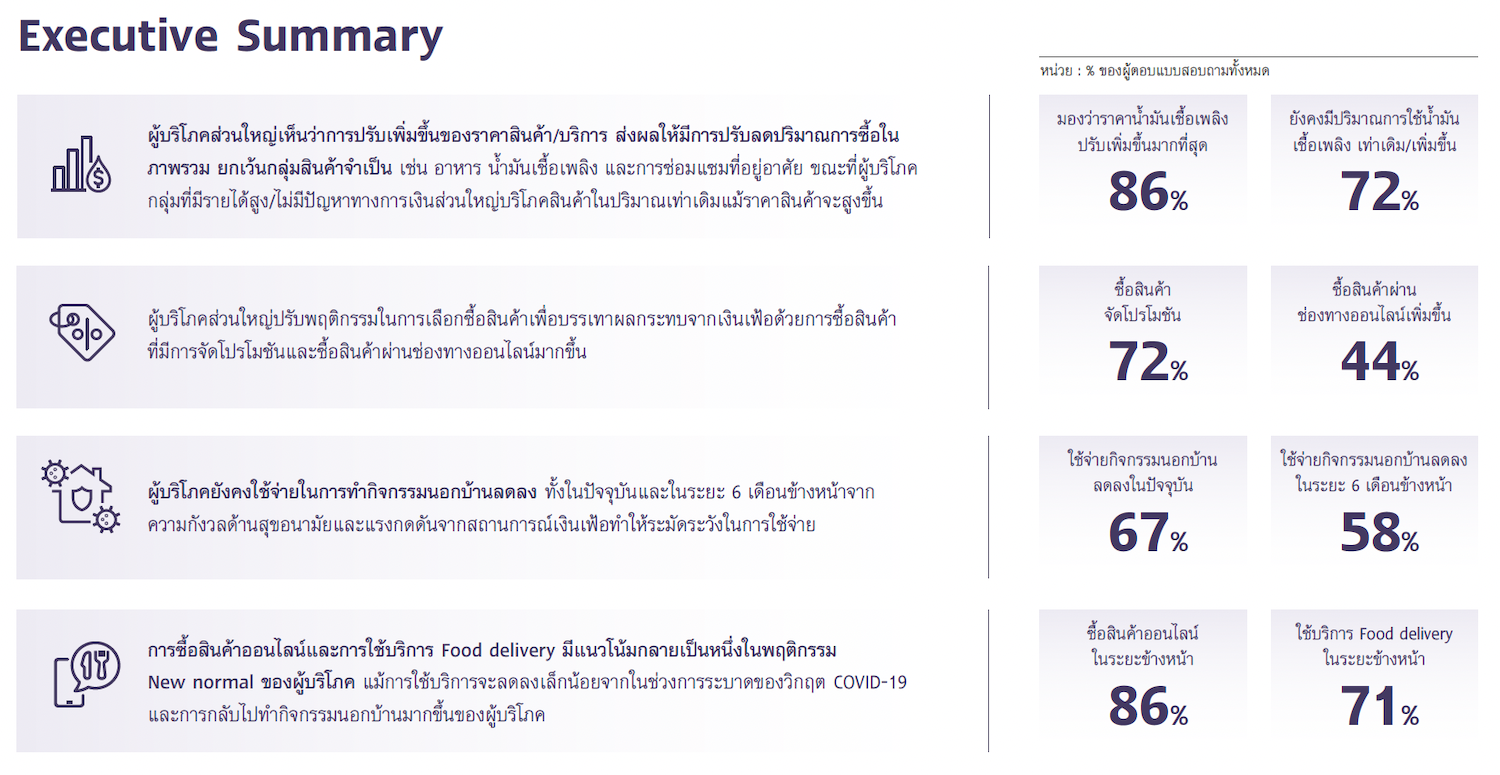
- The impact of rising prices has caused most consumers to reduce their overall purchasing volume, especially among those with insufficient income to cover expenses. However, spending on essential goods, such as fuel and food, remains unchanged or has even increased, despite consumers acknowledging the rising prices.
- Choosing promotional items and shopping online has become a popular method for consumers to adjust their purchasing behavior. Gen Z consumers are particularly sensitive to marketing strategies, as they exhibit a wider variety of purchasing behaviors compared to other generations, while Baby Boomers show less behavioral adjustment and maintain higher brand loyalty by primarily reducing quantities of their usual purchases.
Point Four: “Consumers remain cautious about spending on outdoor activities, which is likely to continue in the future. However, online shopping and food delivery services are becoming part of the new normal as consumers continue to use them even as the COVID-19 situation improves.”
- In the next six months, most consumers are expected to continue reducing spending on outdoor activities due to health concerns and the impact of inflation. However, consumers without financial issues are likely to maintain or increase their spending on outdoor activities due to pent-up demand from restricted spending during strict disease control measures. Therefore, businesses related to outdoor activities may need to ensure health safety and conduct marketing activities to stimulate consumer spending.
- Consumers are likely to continue using online shopping and food delivery services in the future due to the convenience and pricing promotions on online platforms. Some consumers without financial issues may reduce their use of these services as they engage more in outdoor activities, such as dining out or shopping at malls, indicating that an omni-channel marketing strategy that connects online and offline channels is crucial for providing diverse options for consumers to access products more conveniently.
In summary, the findings from the EIC consumer survey indicate the impact of rising prices for goods and services against stagnant incomes. Most consumers have adjusted their behaviors to alleviate the burden of higher living costs by changing their purchasing habits. Additionally, consumers are cautious about spending on outdoor activities, and these behaviors are likely to continue in the future as they anticipate their expenses will increase at a rate greater than their income, coupled with various economic challenges they are facing, necessitating continued financial restraint. (For the full analysis, visit https://www.scbeic.com/th/detail/product/consumer-survey-240822)