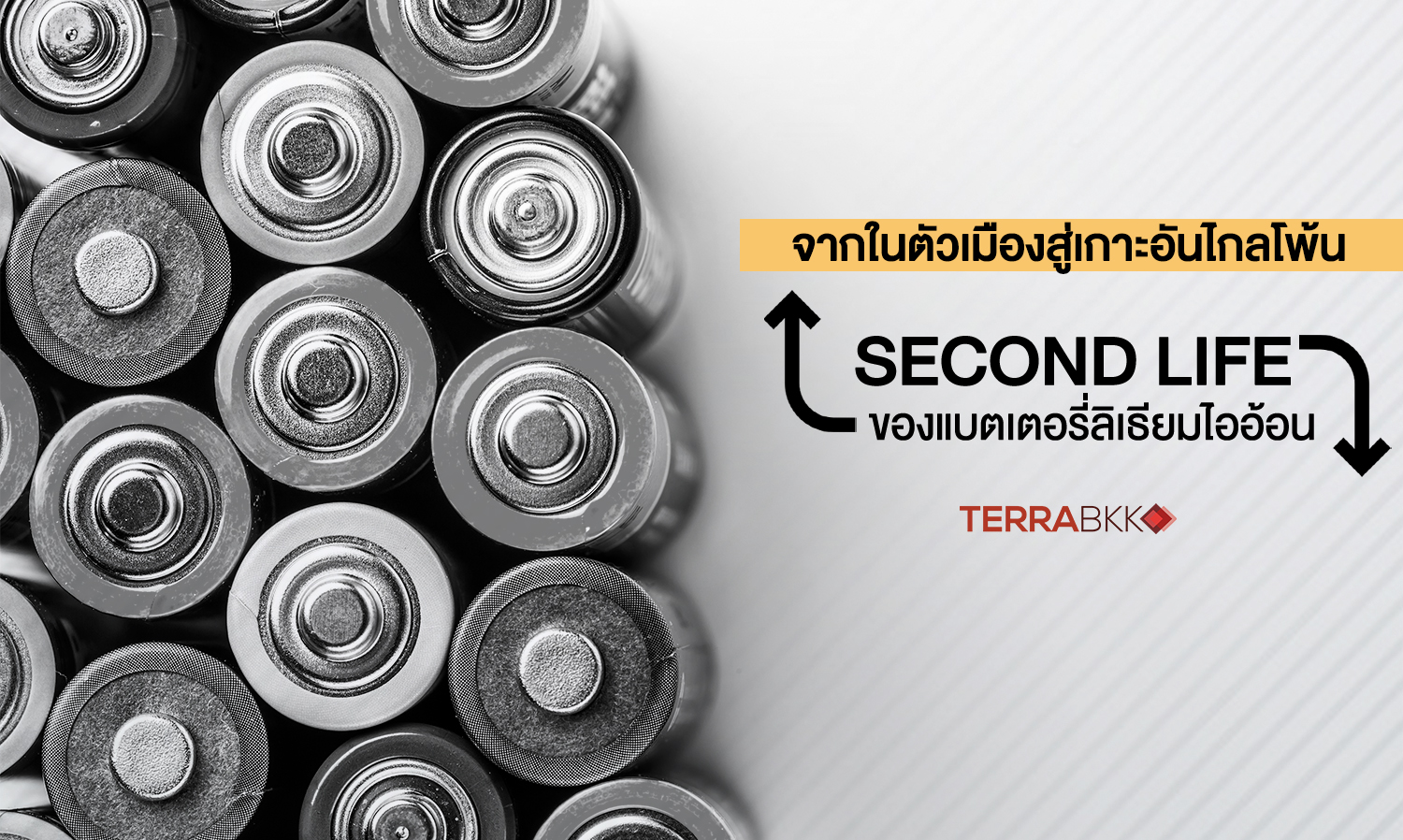
From the City to Distant Islands: The Second Life of Lithium-Ion Batteries
As the world focuses on developing technology, manufacturing electric vehicles, and promoting their use to reduce greenhouse gas emissions, another environmental issue arises: the disposal of electric vehicle components. One of the key components of electric vehicles is the lithium-ion battery. It is predicted that after the COVID-19 crisis, the demand for lithium-ion batteries will significantly increase. Coupled with the decreasing cost of these batteries, there is a tendency for more lithium-ion batteries to enter the market. However, when the day comes that lithium-ion batteries from electric vehicles reach the end of their lifespan, they must be disposed of, disassembled, or recycled. Currently, recycling lithium-ion batteries is a cost-effective and environmentally friendly approach.

When electric vehicles are no longer usable, the lithium batteries still have not completely reached the end of their life. These lithium batteries can retain about 80% of their charge capacity, which can still be utilized for other forms of energy storage, extending the life of lithium-ion batteries. There are several ways to repurpose used lithium-ion batteries, including:
- Using them as backup power sources in various locations. For example, at the Amsterdam Arena in the Netherlands, Nissan has integrated lithium-ion batteries from the Nissan Leaf with Eaton's technology to serve as backup power storage during major events at the stadium. Similarly, General Motors has repurposed batteries from Chevrolet Volt vehicles to provide backup power for their data centers.
- Using them to store energy from other renewable sources. In the project The Reborn Light, Nissan uses lithium batteries from Nissan Leaf vehicles to store energy from solar panels attached to light poles, providing power for lighting at night. Additionally, Renault has utilized batteries from its electric vehicles to store energy from wind and solar power on the remote island of Porto Santo in Portugal, which is 900 kilometers away from the capital city of Lisbon.
As the production of electric vehicles grows, the business sector focused on repurposing old lithium-ion batteries from electric vehicles will also expand. This presents another business opportunity that aligns with the growth of the electric vehicle industry in Thailand. However, the challenge for this business lies in the lack of standardized regulations for used lithium-ion batteries and the differences in battery sizes, which means that this business will still need to rely on electric vehicle manufacturers to supply the used batteries for further use.