‘Chinese Ghost Festival’: The Meaning of ‘Auspicious’ Offerings and What to Offer
Exploring the Meaning of ‘Auspicious’ Offerings on the ‘Chinese Ghost Festival’ including savory dishes, sweets, and fruits according to Chinese beliefs, and what should be offered on this day.
In a year, the Chinese have a tradition of making major offerings 8 times. This year, on Tuesday, September 2, which coincides with the 15th day of the 7th lunar month according to the Chinese lunar calendar, is another important offering day for the Chinese, officially named Zhongyuan Jie (Zhongyuan Festival). Commonly, people in mainland China refer to it as “Gui Jie” or “Ghost Day,” while Thai people of Chinese descent call it Chinese Ghost Festival.
Taoism believes that “Ghost Day” or “Chinese Ghost Festival” is the day when the gates of hell open, allowing spirits to receive offerings. Therefore, Chinese descendants consider this day significant as it is an opportunity to make large offerings to the ‘spirits of the land’ and, importantly, to express gratitude to ancestors as well as to perform good deeds for wandering spirits (those without relatives).
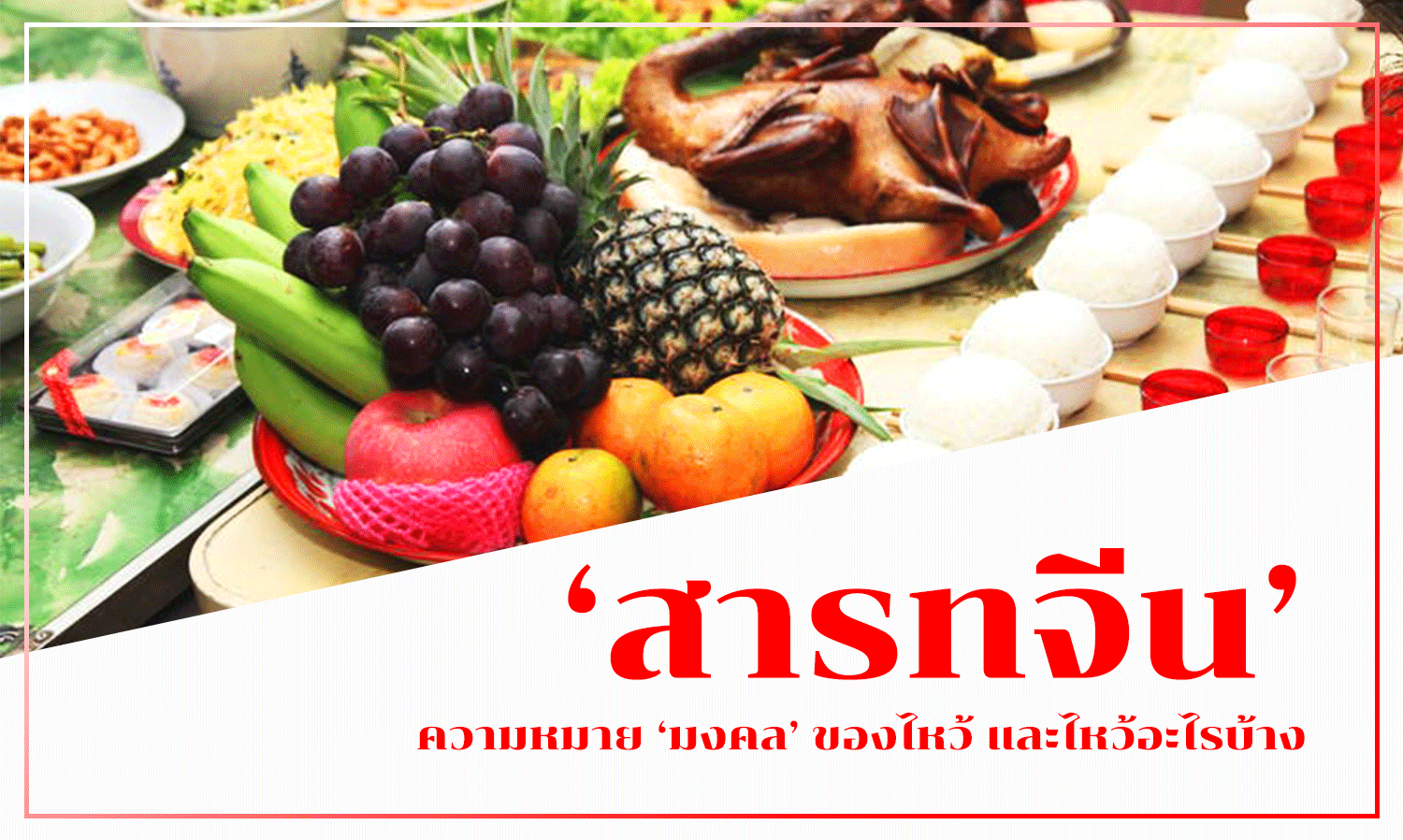
The practice on the Chinese Ghost Festival involves preparing offerings that consist of savory dishes, sweets, and fruits.
Savory Dishes
If preparing 3 savory dishes, it is called San Sai, and if preparing 5 dishes, it is called Wu Sai. It is common to use “meat” that has auspicious meanings in the offerings, such as:
- Chicken: Must be whole, with no broken wings, beautiful skin (not torn), and all internal organs intact, symbolizing prosperity and advancement in one’s career, especially the liver, which resembles a Chinese official's hat, representing power and fortune.
- Duck: Typically boiled whole, ducks can live both on land and in water, symbolizing versatility and purity.
- Pork: Pork belly or ‘braised pork leg’ signifies abundance and sustenance. The ‘braised pork leg’ is often chosen because it resembles a ‘block of gold,’ enhancing its auspiciousness.
- Fish: In Hokkien, fish is called ‘Hoo,’ which sounds like the word for ‘abundance.’ Therefore, fish symbolizes abundance, good fortune, and success.
- Shrimp: When boiled, it turns red, symbolizing auspiciousness and enhancing one’s fortune.
- Crab: Represents fame and prestige due to its high price, likened to the food of emperors.
- Squid: Symbolizes abundance and sufficiency.
Sweets
If preparing 3 sweets, it is called San Bian, and if preparing 5 sweets, it is called Wu Bian. The popular sweets for offerings include:
- Sticky Rice Cake: Symbolizes a bright and prosperous life, akin to the light of a candle, representing smooth sailing in life and sweetness.
- Steamed Rice Cake: The sweet flavor symbolizes sweetness in life, smoothness, and abundance.
- Chive Cake: Represents longevity and good fortune.
- Fluffy Cup Cake: With beautiful colors and a light, fluffy texture, it symbolizes a flourishing and prosperous life.
- Bun (or Mantou): The word ‘bao’ means ‘wrap,’ symbolizing the wrapping of good fortune or wealth for descendants.
- Mooncake: Symbolizes abundance, completeness, and fulfillment of wishes.
- Jian Aob: Made from grains and sugar, symbolizing sweetness and prosperity in life.
- Gao Cake: Often used in auspicious ceremonies, with smooth dough and sweet flavor, symbolizing improved living conditions and wealth.
Fruits
If preparing 3 fruits, it is called San Guo, and if preparing 5 fruits, it is called Wu Guo. The fruits chosen for offerings, which are considered auspicious according to Chinese beliefs, include:
- Oranges: Symbolize good luck and wealth. In Chinese, oranges are called “Daiji,” where ‘Da’ means big and ‘Ji’ means auspicious, thus representing ‘great auspiciousness.’
- Bananas: Easily split into clusters, symbolizing success and good descendants.
- Pineapple: In Hokkien, it is called “Ong Lai,” where ‘Ong’ means red and ‘Lai’ means to come, symbolizing the inviting of good fortune.
- Red Grapes: The color signifies wealth, and the name sounds similar to “Pu Tao,” meaning prosperity and longevity.
- Persimmons: Symbolize stability and strength, representing overcoming obstacles smoothly and achieving sustainability and prosperity.
- Dragon Fruit: The name and color have good meanings; in Chinese, it is “Hua Long Guo,” containing the word “Long” (dragon), which symbolizes abundance, and red signifies auspiciousness.
- Red Apples: In Mandarin, pronounced “Ping Guo,” where ‘Ping’ means peace, thus symbolizing a peaceful life free from illness.
- Pears: Symbolize good fortune, stability, and encountering good things in life.
- Pomegranates: Symbolize having good children and many sons.
What Offerings to Prepare
For the ‘Chinese Ghost Festival,’ it is customary to prepare 3 sets of offerings.
1. Set for Offering to the Spirits of the Land
Offerings should be made in the morning, no later than noon. Special offerings that must be included, as per the tradition of the Chinese Ghost Festival, are Sticky Rice Cake, Steamed Rice Cake, and a red dot must be placed in the center, as red is considered an auspicious color. Additionally, tea or Chinese liquor and paper money should also be included.
2. Set for Offering to Ancestors
Similar to the offerings for the spirits of the land, but with additional dishes that the ancestors favored. According to tradition, there must be broth or clear sweet desserts placed beside the bowl of rice, and tea should be prepared according to the number of ancestors. Essential items include Sticky Rice Cake, Steamed Rice Cake, and paper money, offered in the morning, no later than noon as well.
3. Set for Offering to Wandering Spirits
Wandering spirits or those without relatives are referred to as “Samphehsi” or “Bai Ho He Ti,” meaning ‘offering to good siblings.’ This reflects the politeness and respect of the Chinese, referring to “wandering spirits” as our good siblings.
Offering to ‘wandering spirits’ must be done outside the house. The offerings can include savory dishes, sweets, and fruits as desired. Special items include traditional Chinese fragrant rice, garlic fried rice, steamed taro cut into wedges, large wrapped noodles, liquor, tea, and paper money. The host should light a large number of incense sticks for the offering and place one stick in each dish or container. Others may use just one stick for their offerings. When the incense runs out, firecrackers should be lit to drive away the spirits that come to partake in the food and to ward off evil spirits, allowing auspiciousness to enter instead.
SOURCE: www.bangkokbiznews.com