Demand for Real Estate After the Covid-19 Crisis
Following the outbreak of the Covid-19 virus, which impacted all sectors of the economy, the real estate sector was among the hardest hit. Research from the Research and Communication Department of Colliers International Thailand indicates that the real estate business faced significant challenges in 2020. In the first quarter alone, only 16 new condominium projects were launched, totaling 5,880 units, marking the lowest new supply in eight years. Furthermore, the research reported that the overall sales rate of newly launched condominiums in the first quarter averaged only about 31%, the lowest average sales rate in the past decade or over 40 quarters.
This has led developers in Thailand to question whether there is still real purchasing power in the market and whether it will return after the situation improves. This uncertainty prompted Terrabkk to conduct a survey regarding the decision-making process for purchasing real estate after the Covid-19 crisis, aiming to understand how many potential buyers remain interested in the Thai real estate market once the situation improves.
According to the survey, a total of 124 respondents indicated that
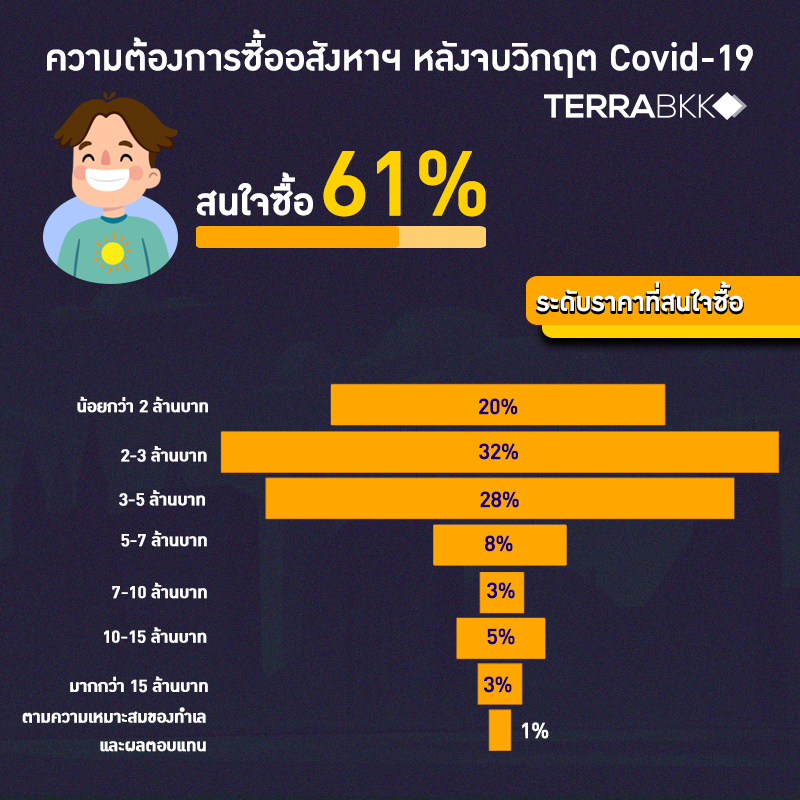
Interest in purchasing real estate after the Covid-19 crisis: 61% are interested in buying, while 39% are not interested in purchasing real estate.
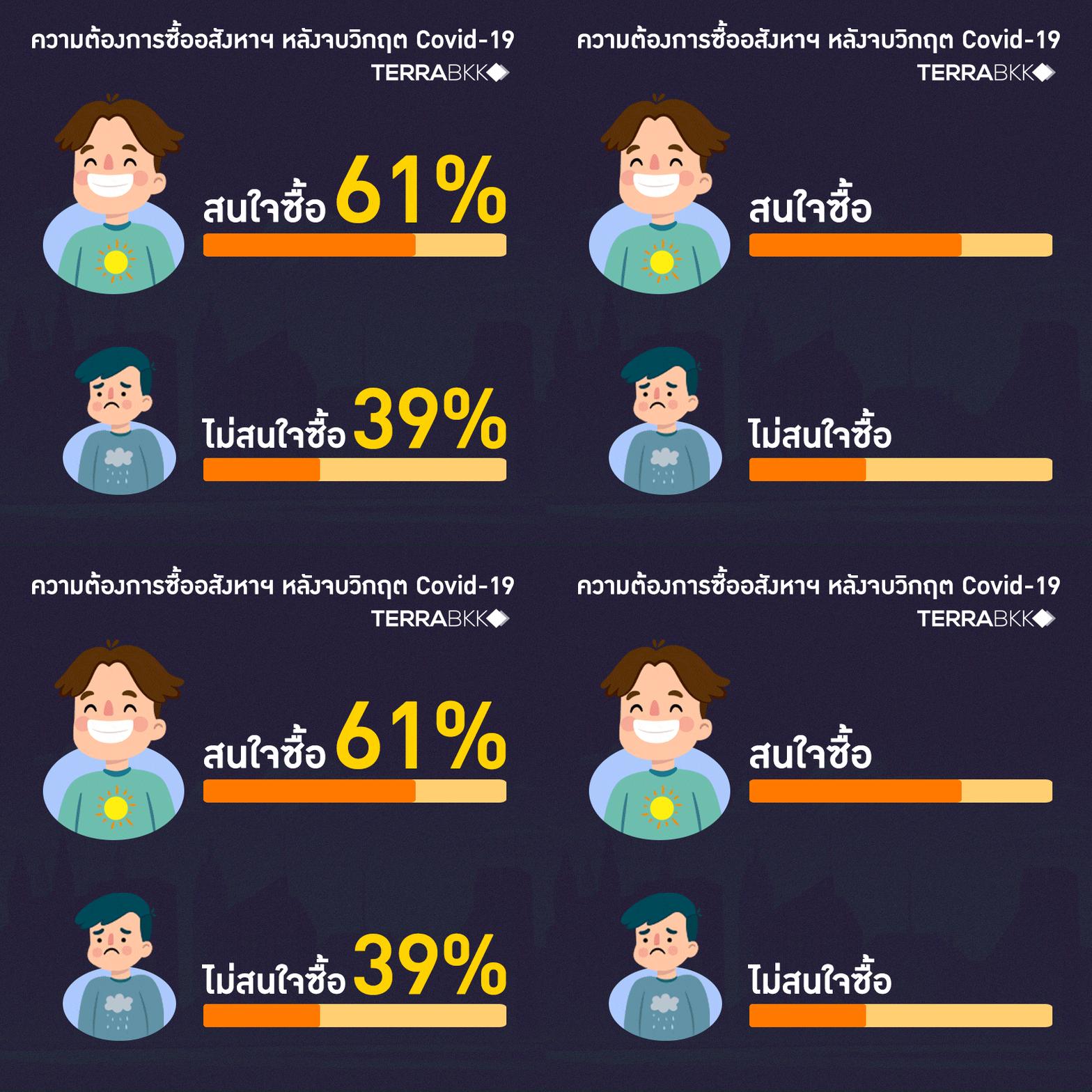
The top reason consumers are interested in purchasing real estate is a 20% decrease in property prices. The second reason is attractive promotions at 16%, and the third reason is good locations that meet customer needs at 15%.

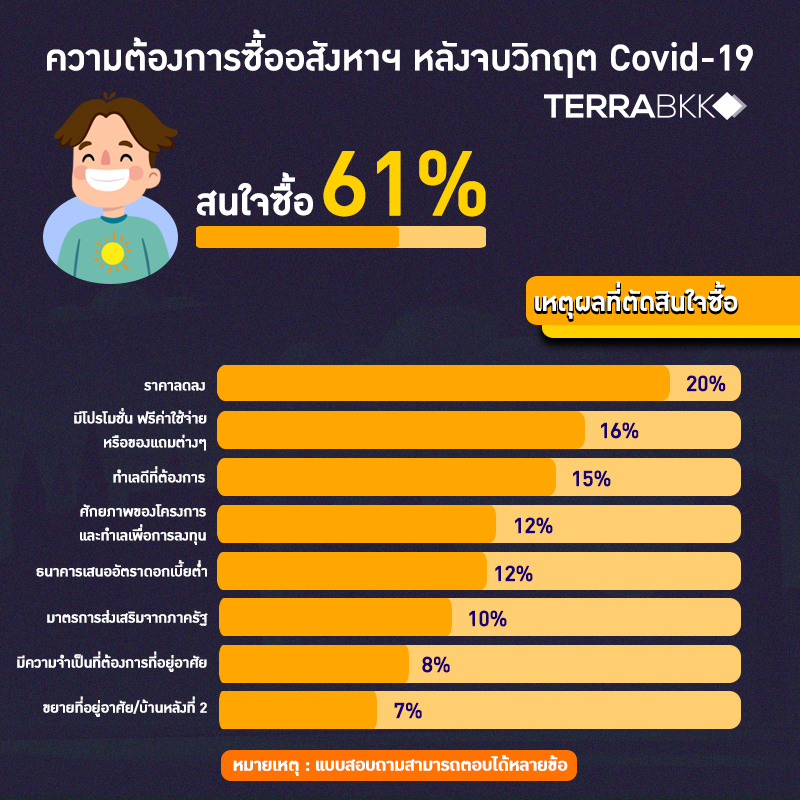
The type of real estate that consumers are most interested in purchasing is condominiums at 33%, followed by single-family homes at 24%, and land at 20%.

Regarding the budget for purchasing real estate, the top choice is properties valued at 2-3 million baht at 32%, followed by properties valued at 3-5 million baht at 28%, and properties under 2 million baht at 20%.

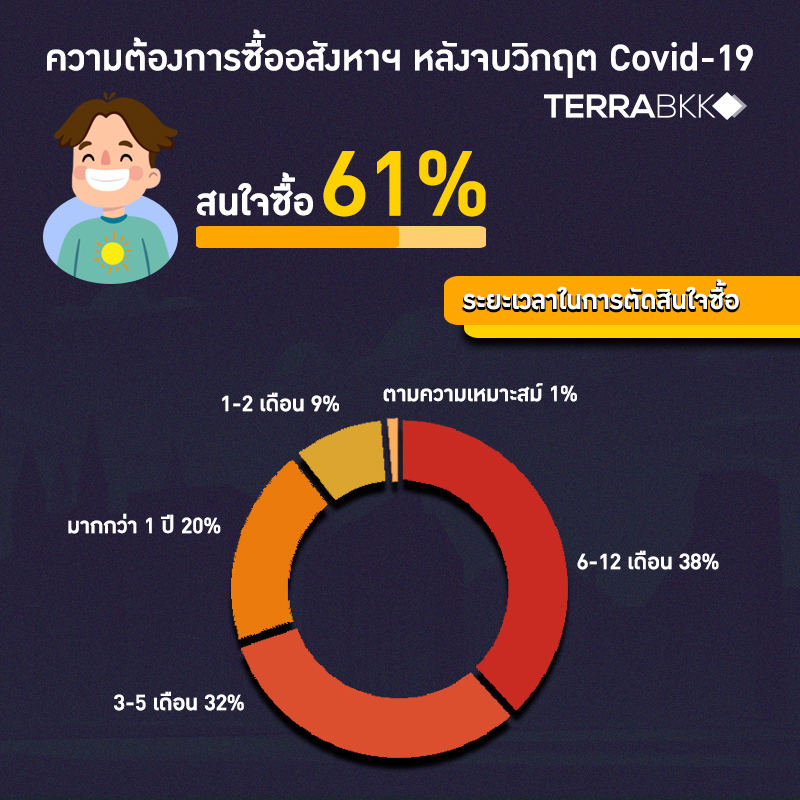
As for the time frame for consumers to decide on a purchase, the top choice is a decision period of 6-12 months at 38%, followed by 3-5 months at 32%, and more than 1 year at 20%.

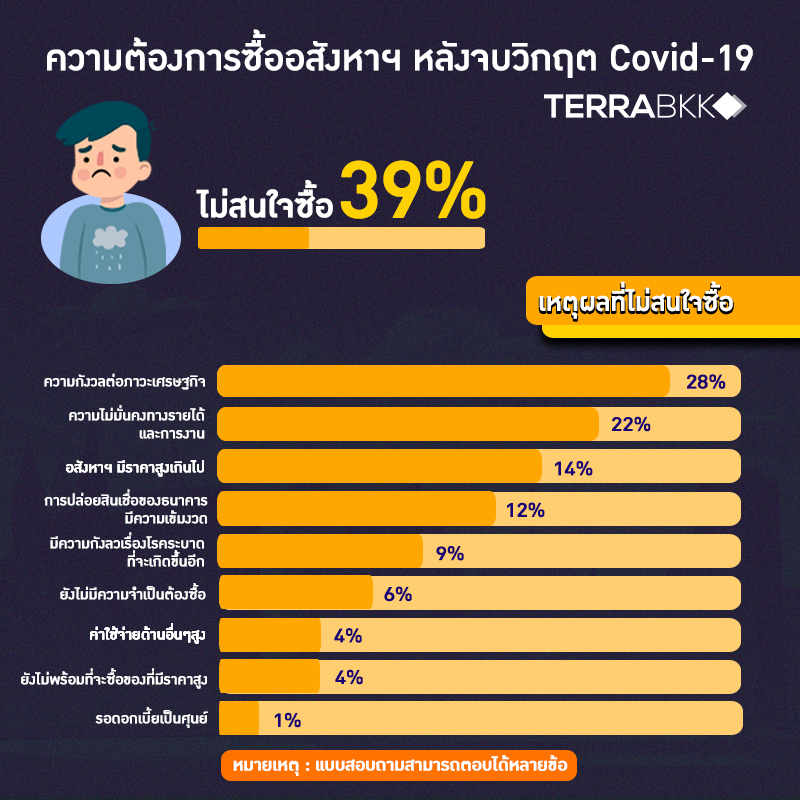
Now, let’s look at the opinions of those who are not interested in purchasing real estate. The top reason for this group is concerns about the economic situation at 66%, followed by income and job insecurity at 54%, and real estate prices being too high at 32%.

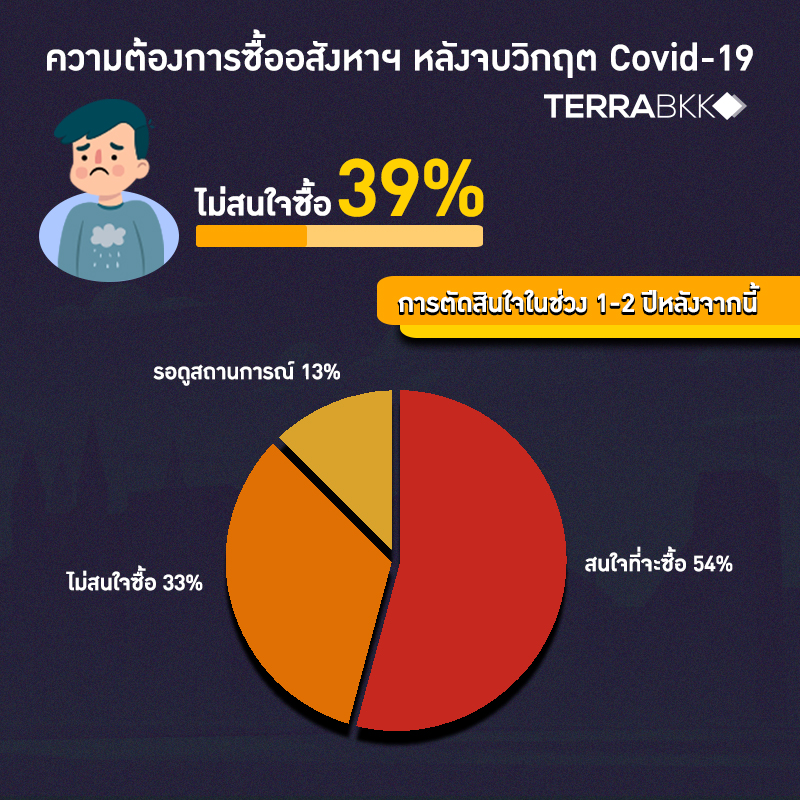
Additionally, Terrabkk asked whether, in the next 1-2 years, if the economy improves, would respondents be interested in purchasing real estate. The results showed that 54% are interested in buying real estate, 33% are not interested at all, and 13% are waiting to see the situation.

In summary, the data indicates that there is still considerable demand for purchasing homes. The reasons for this demand stem from the decrease in property prices, and many developers are offering various promotions to stimulate purchasing power. The price segment that consumers are interested in is the middle to lower segment, or properties valued under 5 million baht. For those not interested in purchasing real estate at this time, the main concerns revolve around economic uncertainty and job security. If the government and private sectors collaborate to stimulate and revive the economy, providing citizens with jobs and income security, the real estate sector can recover as well.