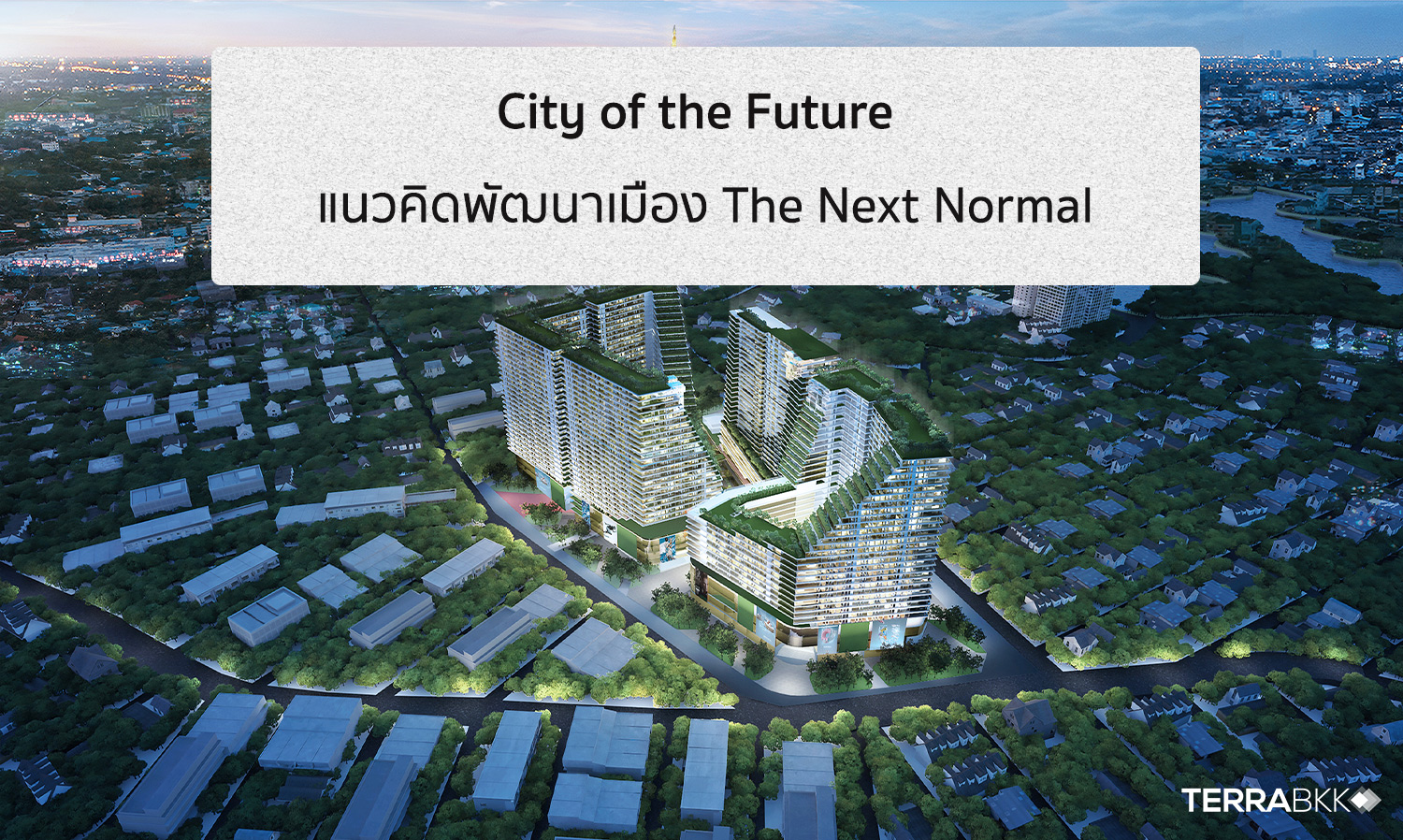
City of the Future: Developing the Next Normal
COVID-19 has led us to believe that the normal way of life we are accustomed to is about to transform into a new model, referred to as "The Next Normal." It is clear that The Next Normal may bring changes to cities and the lives of people, leading to solutions for the development of future cities (City of Future).
Architect Ratiwat Suwantrai, founder of OPENBOX GROUP states that the City of Future solution will serve as a "recipe" for designing urban development that aligns with The Next Normal. This not only addresses the challenges of living in a COVID-19 world for the foreseeable future but also responds to the new lifestyle that has been forced to change due to Digital Disruption, aligning with the contemporary global trend of sustainable coexistence with nature. The City of the Future is envisioned as a creative city that integrates various design aspects and includes transportation and innovations for living as two additional factors that will enhance the city's completeness.
Design concepts for urban development under the S-E-N-S-E framework include 5 solutions for a sustainable City of the Future.
S - Space Efficiency: Maximizing space management efficiency.
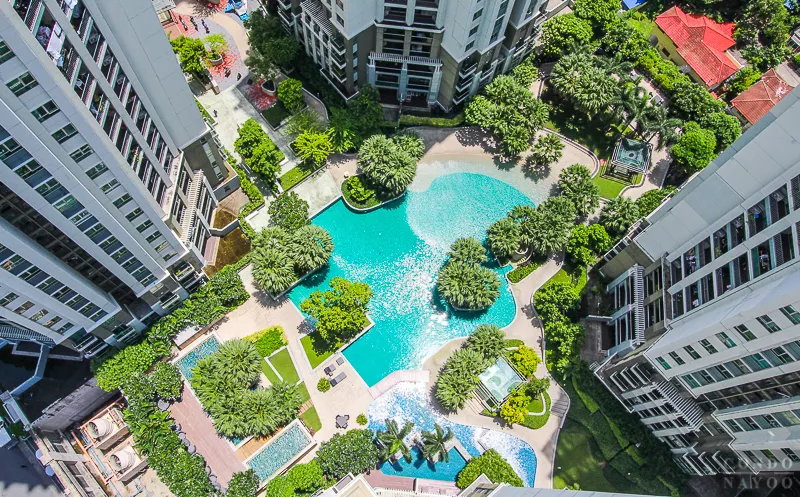
The concept of space management aims to address new living arrangements to enhance the quality of life for residents. One solution that addresses this concept is high-rise buildings, such as condominiums, which can solve the problem of limited space and resources effectively. By shifting from a horizontally dispersed layout to vertical high-rise structures, more space can be allocated for other uses, especially green areas or economic spaces. Additionally, high-rise buildings cater to living in the COVID era, allowing residents to be separated by floors, receive ample sunlight, and avoid shared air, providing a greater sense of safety compared to horizontal housing.
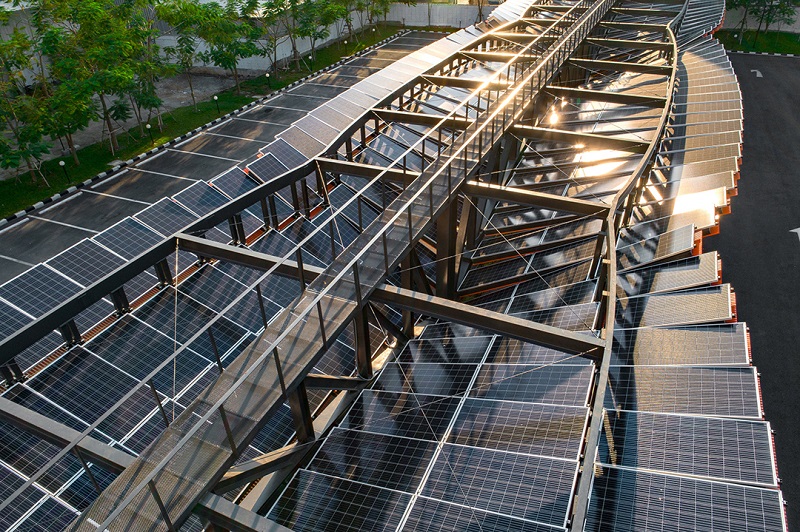
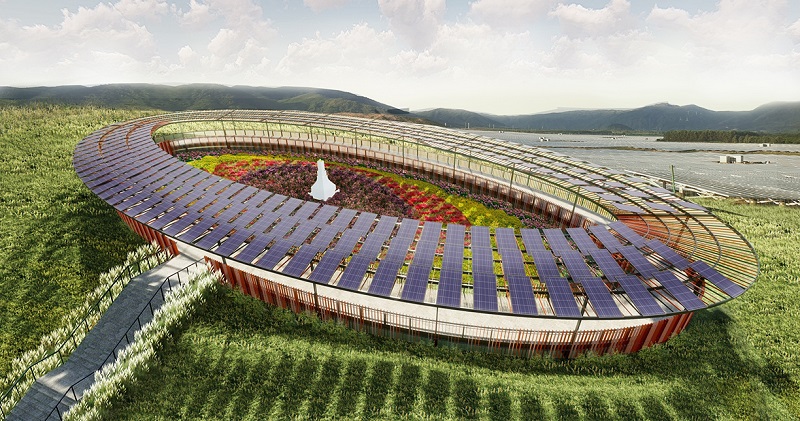
E - Energy Sharing: Designing for efficient energy sharing.
Currently, condominiums tend to have peak energy usage at night, while during the day, energy consumption decreases. In contrast, office buildings use the most energy during the day and reduce usage at night. Each of these buildings installs their own energy management devices, which do not operate at full efficiency, leading to excess energy. This gives rise to a new concept called Energy Blockchain or Digital Energy, where surplus energy can be sold to nearby buildings that operate at staggered times. Another interesting concept is District Cooling, a centralized air conditioning system that can send cool air to nearby homes, office buildings, malls, and condominiums, representing a way to reduce energy use and unnecessary equipment.
N - Nature & Green: Emphasizing nature and green spaces.
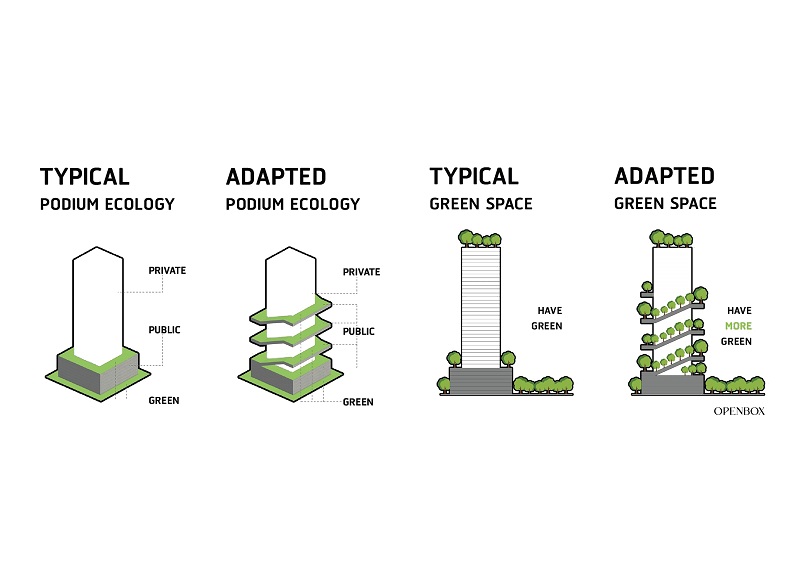
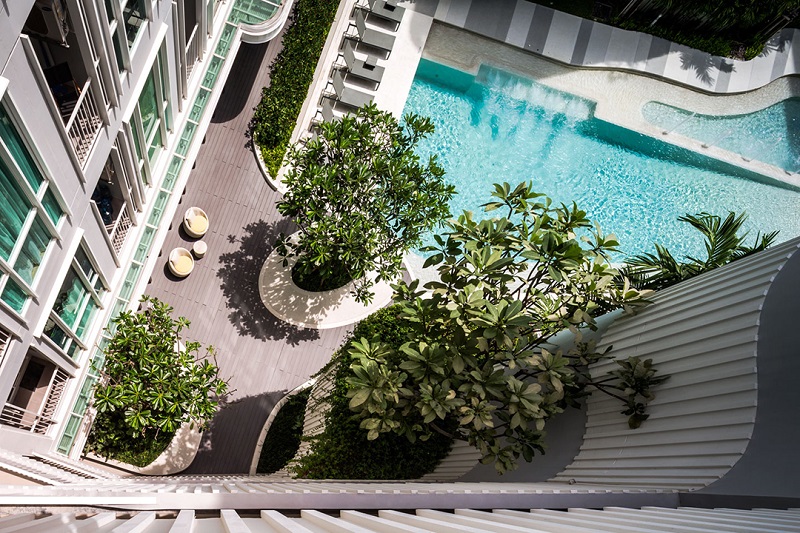
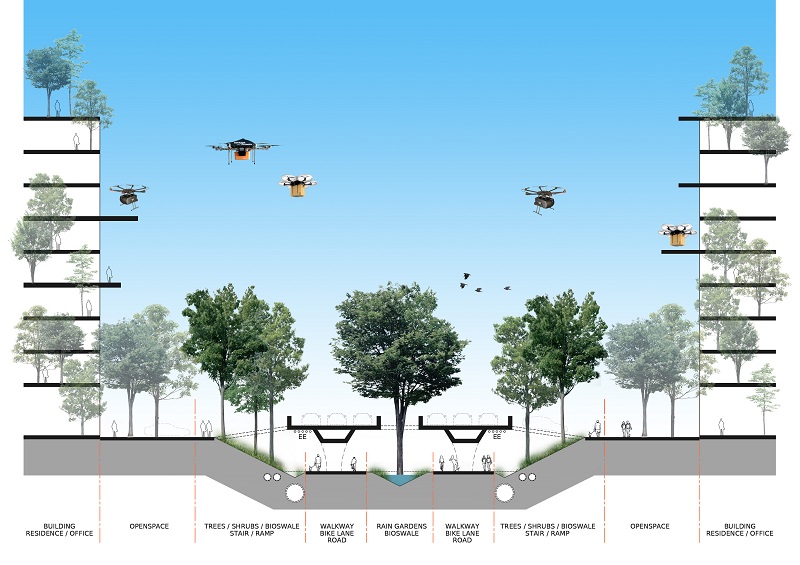
For example, the idea of expanding small public parks (pocket parks) to be more widely distributed in urban areas and sufficient for pedestrian access. Japan is known as one of the leaders in pocket parks globally. In addition to large parks, Singapore and the United States also have several pocket parks. Another interesting concept is a park network, where multiple parks are interconnected, allowing people to walk, run, or bike without crossing roads. These ideas can all be realized through thoughtful design.
S – Synchronization of Multi-Functions: Designing buildings, spaces, or cities to meet diverse usage scenarios.
This aligns with the mixed-use characteristics of cities in the Eastern Hemisphere, where design allows for the mode of buildings, spaces, or cities to adapt to the situations occurring at that time. For instance, during the COVID outbreak, many condominiums have limited elevator usage or restricted the number of users per elevator. In the future, designs will be able to incorporate additional functions to enhance comfort for everyone during the COVID era, such as lockers for food or item deliveries where recipients and senders do not need to meet, and designing spaces within common areas using equipment to enhance privacy for residents, reducing anxiety about shared spaces.
At the city level, one might think of Monaco or Singapore, which have city modes for car racing that generate significant revenue. Thailand also has modes for flood prevention but can further design cities to adapt to other modes, such as COVID monitoring or hosting major events like Songkran.
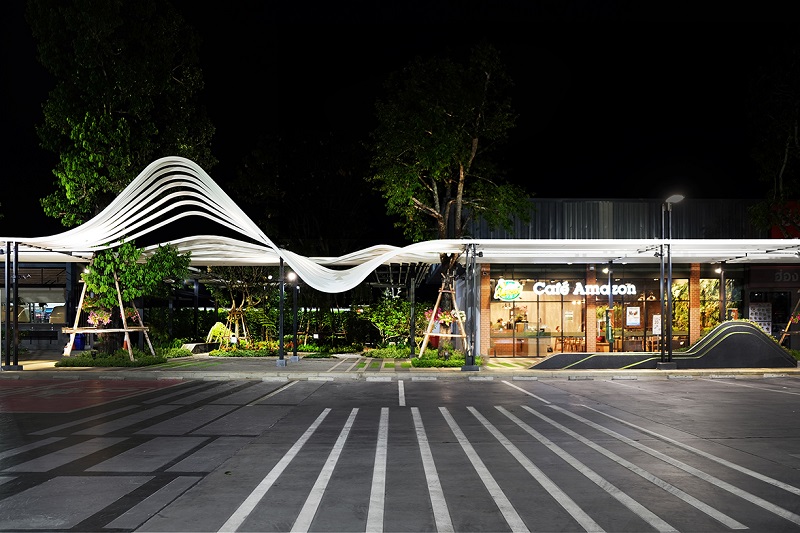
E - Explorations of Innovations: Inventing, developing, and creating innovations in living that enhance the quality of life.
For example, many condominiums now utilize private elevator lobbies, which not only serve as a safety solution during COVID but also meet the investment needs of condominium buyers. Separate elevators do not disturb the actual residents living in those condominiums.
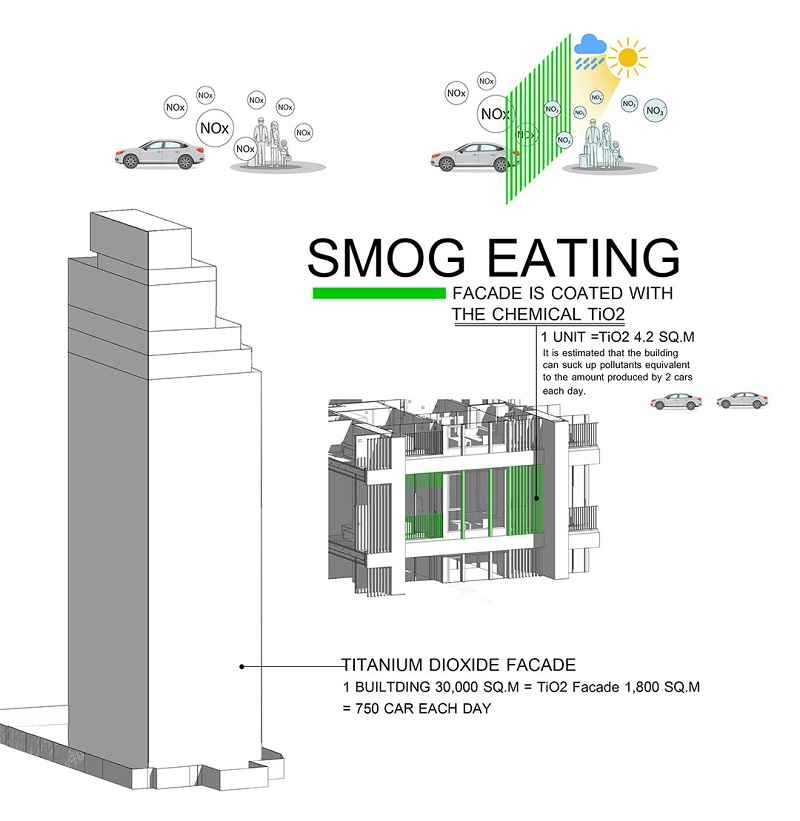
Currently, various types of elevators are being developed for diverse living arrangements, such as horizontal-moving elevators [double-deck lifts], among others. Additionally, new innovations that effectively address COVID challenges include double-layer doors equipped with screening devices and sterilization equipment, office or co-working space designs that reduce the risk of disease transmission, and smog-eating surfaces that can absorb pathogens and toxic dust. Furthermore, innovations in transportation will enhance the City of the Future, as urban living requires people to travel, communicate, and exchange goods. City designs can thus accommodate new transportation concepts that may emerge in the future, such as Hyperloop and drone transport.
All of these are new solutions that will address current situations and prepare for the future. The founder of OPENBOX added that these concepts are designed with a human-centered approach, aiming to enhance the quality of life for people, focusing on both health and mental well-being. Most importantly, the City of the Future must comprehensively address social and economic needs to truly be a sustainable city.
Thank you for the information from OPENBOX GROUP.