"Cashless Society" and Possible Trends in Thai Society
Today, technology is advancing so rapidly that it's hard to keep up, especially in the realm of electronic financial transactions, where we can purchase almost everything through computers and telecommunications. This has become increasingly tangible in just a few years.
The concept of a cashless society has been around in Thailand for quite some time, but due to various limitations, it hasn't been fully realized like in other countries. The majority of those who do not use cash for transactions are individuals who have easy access to the internet, such as teenagers, working adults, and the middle class. In the past, there was also limited technology to support online financial transactions, and security was still a concern.
However, nowadays, digital accessibility has improved significantly. Everyone can easily access the internet with just a mobile phone, and telecommunications providers have adapted accordingly, while social media usage has exponentially increased internet engagement.
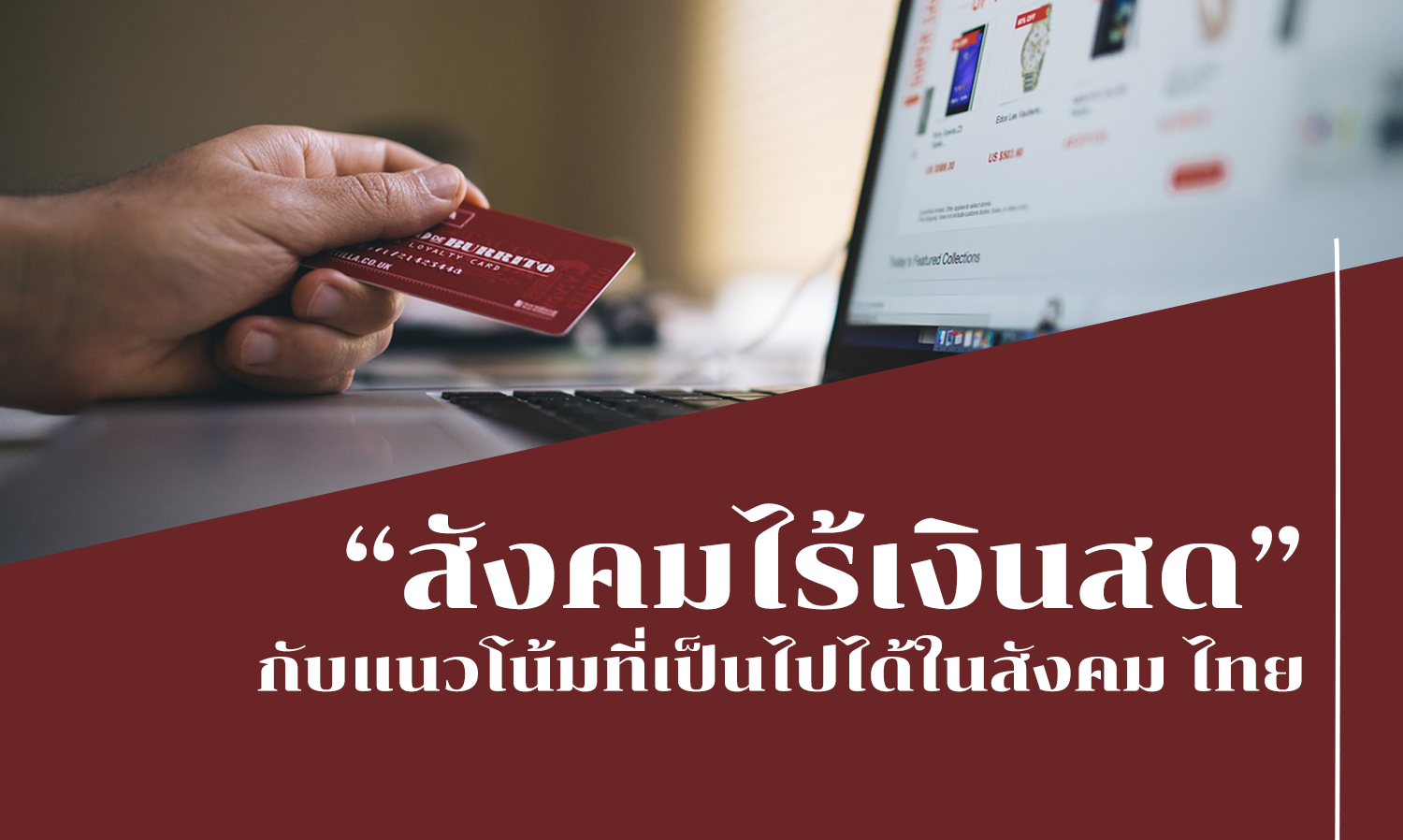
The government has developed the National e-Payment Master Plan to support the Thailand 4.0 policy, aiming to promote a cashless society in Thailand. People now have access to various online wallets, including mobile banking, credit cards, debit cards, public transport cards, and many other cards from different stores and organizations. The government also provides welfare cards and has enacted laws to support online transactions, encouraging citizens to move away from cash and towards safer and easier online spending.
Additionally, COVID-19 has accelerated the trend of online spending in Thailand, as people have avoided cash due to its potential to harbor germs, opting instead to carry cards. Many vendors in markets have also begun accepting card payments, providing QR codes or bank account numbers for customers to scan and pay directly.
Even for the cheapest bus fare of 8 baht, payments can now be made via card, as only the passenger and the bus conductor handle the card, unlike cash which is exchanged among many hands. This shows that people are trying to minimize contact with cash as much as possible.
The advantages of not using cash include ease of use, time savings, budget efficiency, stimulation of spending and the economy, and the ability to track expenses. Therefore, Thai society is likely to transition into a fully cashless society soon. However, the ease of spending may lead to unnecessary extravagance, and there are concerns regarding privacy and security when personal information is linked to systems. There is also the risk of losing cards or mobile devices, which could result in losing access to funds if someone else gains access to financial transaction information through a mobile device.
Nevertheless, overall, cashless spending is still safer than carrying cash, which poses significant risks of theft or fraud that cannot be traced back. Online transactions have identity verification methods in place, and systems are being developed to enhance security further by reducing reliance on passwords and using other personal identification methods, such as fingerprints, iris scans, voice recognition, or OTP (One Time Password) to increase transaction security.
It is evident that the likelihood of Thai society becoming a fully cashless society is indeed increasing, reflecting a necessary adaptation to a world where everyone must keep pace!
SOURCE : www.tonkit360.com