Retail Trends 2020 and the Role of Driving Growth in 'Retail Tech'
The wave of digital disruption that has hit the Thai retail market recently has raised many questions about how to cope with the new landscape of the market, particularly regarding the use of new technologies to drive business. The developments in the retail sector in 2020 will have various aspects. For instance, the e-commerce market clearly shows that competition is no longer solely about price but focuses on creating engagement and new shopping experiences to attract shoppers to spend more time on their platforms. This means that the opportunities for purchases also increase, as it is important to remember that Thai shopping behavior often involves impulse buying rather than pre-planned purchases, driven by various promotional strategies.
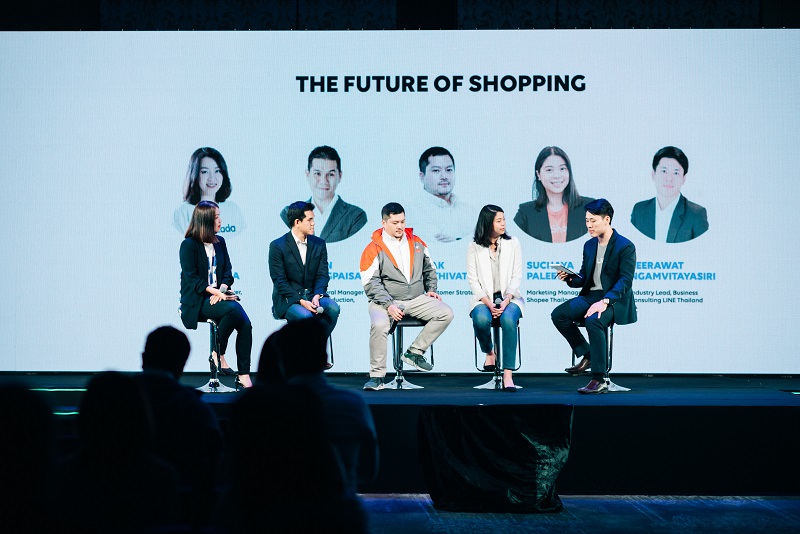
Thanida Suwattana, CEO of Lazada Thailand, stated that the key to successful marketing lies in how to keep customers engaged on the platform for longer periods. Lazada's main strategy is 'Shoppertainment,' which continuously blends entertainment with shopping to keep customers engaged.
“E-commerce marketing must be customized to meet the needs of each customer. Connecting with them is crucial, which requires understanding the strengths of each social media platform to maximize effectiveness,” she added.
Jirasak Jirathiwat, Director of Customer Relations at JD Central, views that competition in the e-commerce market in 2020 will intensify, not just through selling cheaper products but by implementing effective overall strategies, including digital marketing and engagement creation. Interestingly, media platforms like LINE are now focusing on e-commerce, developing various tools specifically for marketing, including CRM systems that effectively enhance engagement.
Similarly, Suchaya Palivong, Marketing Manager at Shopee Thailand, believes that e-commerce has become an integral part of Thai shopping lifestyles. The changing direction of e-commerce platforms is not just about sales but also about creating engagement. Customers visiting e-commerce platforms today are not only looking to play games or watch live streams; presenting quality content has become another crucial factor in marketing.
Kittinun Uiwongpaisarn, Assistant General Manager of Marketing & Production at 24Shopping, offers an interesting perspective that understanding customer needs is paramount. 24Shopping, which is part of the omni-channel strategy for 7-Eleven stores, collects data and finds that customer needs vary throughout the day. For instance, in the morning, customers are in a hurry and need convenience and quick solutions, while in the evening, during leisure time, driving purchases may require using coupons to stimulate buying.
“Data will be crucial as it helps understand what customers like, dislike, or their shopping lifestyles at different times,”
“LINE OA Plus E Commerce” - The Emergence of a New E-commerce Paradigm
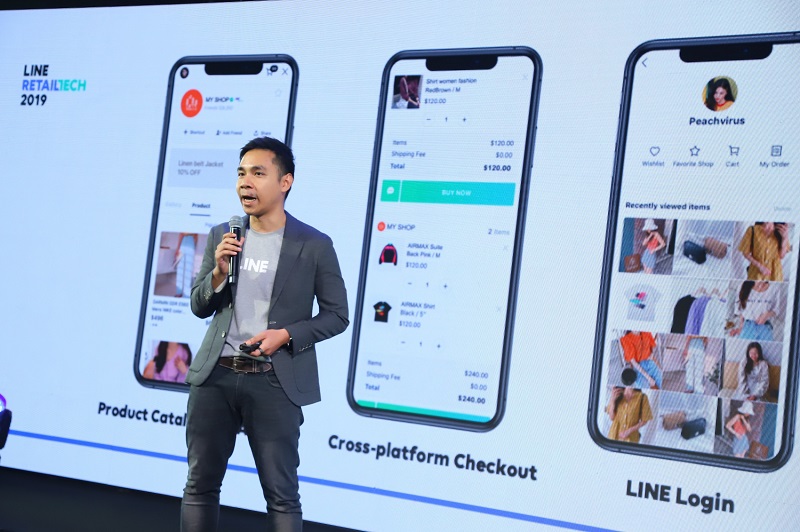
When looking closely at the e-commerce marketing strategies of the four operators, it is evident that besides creating engagement, leading platforms like LINE have developed tools such as LINE Official Account (LINE OA) to facilitate this. Additionally, developing partnerships with corporate clients and SMEs is equally important, as these customers will play a role in driving market growth as product owners.
With the trend of e-commerce becoming part of the daily lives of Thais, LINE has developed a new platform called LINE OA Plus, which offers various solutions to enhance the use of LINE OA according to different business models and brands. This is led by the LINE OA Plus E-Commerce project, a collaboration between the e-commerce team and LINE OA team at LINE, aimed at promoting e-commerce operators in Thailand and addressing the convenience needs of the 44 million LINE users under the vision of Life on LINE. This is also the first introduction of the LINE OA Plus E-Commerce project to the retail business community at this event.
Currently, LINE has around 3 million accounts using LINE OA, utilizing it as a tool to communicate with over 44 million LINE users in Thailand. LINE OA Plus E-Commerce will provide a new solution group for e-commerce operators, ready to enhance brands' online presence, significantly improving shopping convenience for each brand's customers.
When examining the Customer Journey, it is evident that brand customers often start by adding LINE to communicate with brands when they are interested or seeking more information. Brands or business owners can develop APIs to connect their LINE OA with business functions such as product searches, stock checks, product information, or recommendations linked to their database systems. Some brands may have development teams that can create APIs to connect with LINE OA, while others may have agency teams to provide advice and develop systems together. However, for some brands, especially SMEs that may not have high costs in terms of teams and time, LINE offers the LINE OA Plus E-Commerce platform to support this, providing ready-to-use solutions specifically designed for businesses wanting to engage in e-commerce through LINE.
Connecting APIs with LINE OA will enhance user experience design capabilities and allow for better customer data analysis to understand customers more effectively. Additionally, API connections can help analyze and select customer segments suitable for promotions, which will not only reduce messaging costs for engagement but also improve promotional effectiveness.
Moreover, LINE OA Plus E-Commerce serves as a channel to present products for customers to see and understand, while also enabling brands to design a more comprehensive Conversational Experience using LIFF (which pulls website data to create a mini-screen within LINE OA for users to view products and shop all in one place without leaving the LINE OA). This, combined with chatbot usage, will facilitate easier sales closure for brands.

Furthermore, the integration of LINE OA with e-commerce also aids in CRM, allowing for a better understanding and access to each customer's shopping lifestyle. This enables brands to design and offer benefits tailored to each customer, which not only serves as an effective loyalty program to encourage repeat purchases but also helps analyze customers to create new sales opportunities.
The increasing competition in our e-commerce market will lead to significant market expansion, pushing e-commerce channels to capture a larger share of the overall retail market valued at over 3 trillion baht per year, from the current e-commerce proportion of about 5% of the total retail market.
Undoubtedly, the highlight of the competition will focus on understanding customer needs to engage them for long-term purchases. Having good tools is essential, and LINE OA Plus E-Commerce is likely to be a valuable aid for many brands in the upcoming significant growth competition.
Not just “online” or “offline,” but retail must be Omni Channel
What is noteworthy is that the retail trend in 2020 will involve a blend of Omni Channel to provide a seamless shopping experience for shoppers. Certainly, modern technology and tools will significantly assist in this. Pannika Chotinuchit, Senior Marketing Manager of CRM & Loyalty Card at The Mall Group, expressed an interesting perspective that the offline retail marketing approach must change by incorporating technology to connect. This connection must be twofold: connecting with customers and connecting with stores that can offer both online and offline experiences.
Connecting with customers will involve tools such as the M Card mobile application and through LINE, which has become a key partner for The Mall Group. The Mall Group itself utilizes tools like LINE OA (Official Account) to assist in CRM and big data. The chatbots developed will be managed by The Mall's team to respond to inquiries, as customers still prefer interaction with people. The LINE Official Account channel is popular and familiar, making it a suitable platform for presenting products, services, and various promotions.
Simultaneously, it also facilitates additional CRM efforts, whether through point accumulation or offering various discount coupons, which are convenient and familiar to LINE users, a chat app with a user base of 44 million. Having good big data not only allows brands to offer personalized benefits in terms of product purchases and other services but also enables brands to analyze and predict future purchases that can stimulate buying.
From the perspective of Dr. Piyawan Piyapong, Assistant Vice President of Service and E-commerce Business at Big C Supercenter Public Company Limited, he observes that in the past 4-5 years, Big C has adapted significantly due to changing consumer behaviors driven by technology. They have revamped their store formats and developed their online retail platform, which allows them to cater effectively to different customer segments and extend their reach to online customers.
Big C's marketing strategy adjustment involves collaborating with several partners, one of which is LINE, which has an ecosystem that can enhance Big C's marketing efforts. For instance, Big C Food Place's on-demand service will collaborate with LINE MAN for future product deliveries.
Moreover, Big C has leveraged the LINE OA platform for marketing, particularly in creating engagement with a diverse and varied customer base today, utilizing chatbots that require direct expertise to enhance service efficiency. This represents another enhancement from LINE Thailand that contributes to the completeness of retail business operations, from CRM to engagement creation and product delivery services.
“Big C will focus on providing fresh food services, with the key being how to maintain product freshness as if customers were selecting items at the store. Big C primarily targets three segments: general retail, B2B, where they are creating a digital platform for SMEs to join the ecosystem being built, and the third segment is tourists, for whom they will develop a cross-border e-commerce sales platform in collaboration with LINE soon,” he stated.
The adaptation of these three retailers represents a significant move to cope with the wave of “digital disruption” through different strategies. However, the core of this adaptation lies in understanding the true needs of consumers through big data, using data analysis to create engagement and provide a better shopping experience for customers who seem to be able to shop anytime, anywhere.
Certainly, having good marketing tools as “Digital Tools” will help seamlessly integrate the online and offline shopping worlds. Remember, retail marketing today is not just about sales or being product-centric; it must also focus on creating a good shopping experience for customers. If this can be achieved, the impact of “digital disruption” can be mitigated.