Understanding the Consumer Decision Process to Become a Winner
Have you ever experienced this? When choosing to buy clothes or a pair of shoes at a department store, it often takes a considerable amount of time. Sometimes, after walking around the entire mall, you still can't find the perfect pair. Then you sit down to gather information, look at pictures, read reviews, ask friends, or purchase products online. This process is known as the consumer decision-making process.
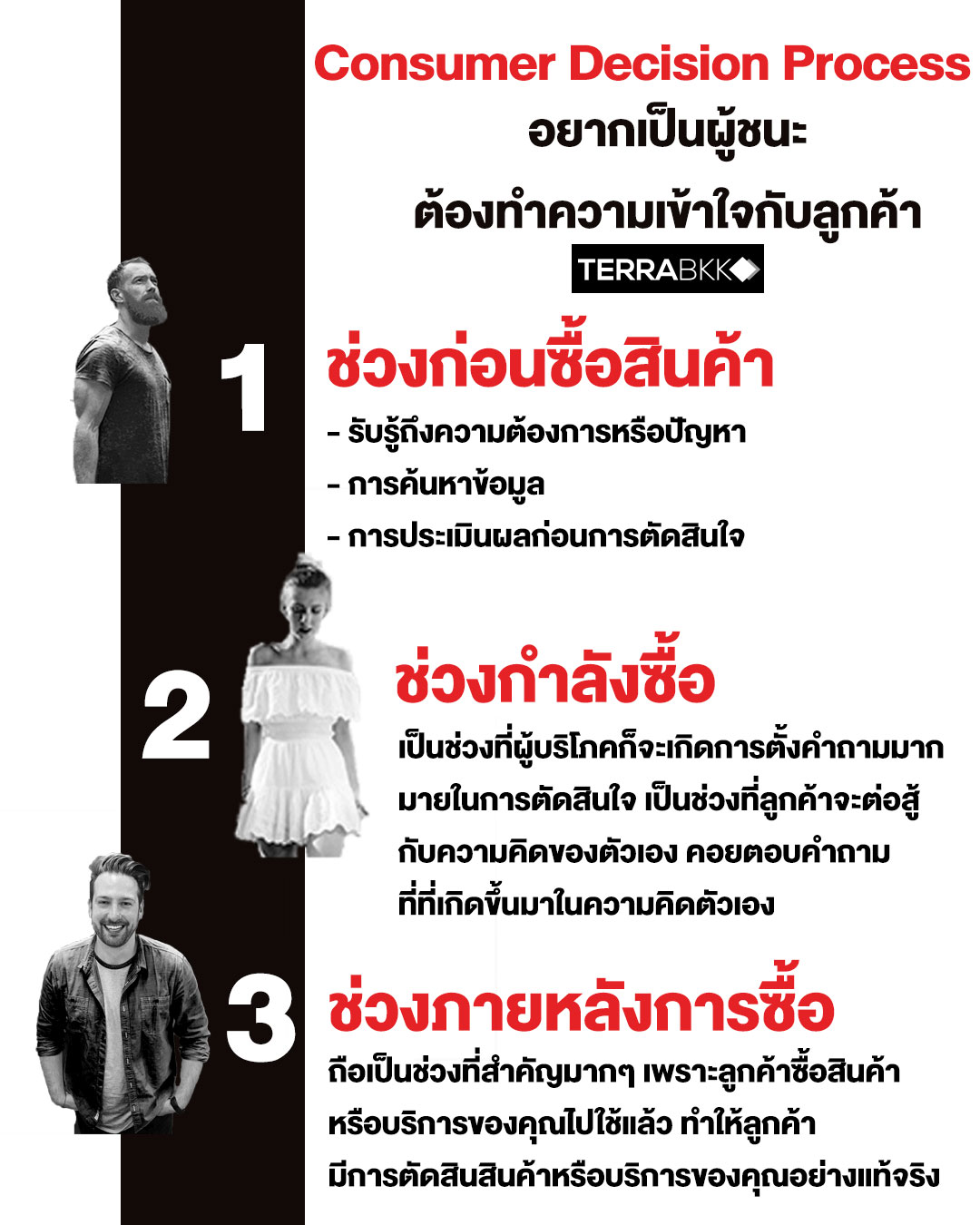
The consumer decision-making process is a strategy to understand the behavior at each step that customers go through when purchasing products. What is the process, and how can your business become the number one choice in the customer's purchasing decision? The consumer decision-making process can be divided into three stages.

Stage 1: Pre-Purchase Stage
- Recognizing needs or problems occurs when consumers realize the gap between what they have and what they want. This need can arise from both external and internal factors, such as past experiences or stimuli from those around them. These triggers compel consumers to respond emotionally, prompting you or various businesses to create stimuli that influence consumers to understand their needs.
- Information search Once consumers recognize their needs or problems, they will begin to search for information, methods, and processes to address their needs or issues. If you can understand how consumers search for information, you can provide relevant information to the customers that aligns with your target audience.
- Evaluation before decision-making After gathering various information, when consumers feel confident about the options that can meet their needs or solve their problems, they will evaluate the choices of those products or services. Consumers will consider various reasons and feelings in their decision-making, such as price, quality, features, durability, luxury, brand reputation, design, and color.

Stage 2: Purchase Stage
This is the stage of decision-making. During this stage, consumers will have many questions regarding their decision, such as whether to buy or not, which brand to choose, and where to buy. This involves reevaluating the information once more. It is a time when customers wrestle with their thoughts, answering the questions that arise in their minds. At this stage, external influences significantly impact the purchase decision, such as the attitudes of people around the consumer, financial factors, and negative product information.

Stage 3: Post-Purchase Stage
This stage is very important because customers have purchased your products or services, leading them to genuinely evaluate your offerings. In this stage, purchasing behavior can be categorized into four types:
- Delight because the product is good, of high quality, and exceeds expectations.
- Satisfaction when the product quality meets expectations.
- Dissatisfaction when the product or service quality is below expectations.
- Confusion when customers are unsure if the product or service is worth the money spent.
It is evident that consumer behavior is highly diverse, and you and your business must pay attention to and gather information to understand consumers as much as possible. The result of deeply understanding consumers will allow your products or services to meet their needs and truly resonate with them.