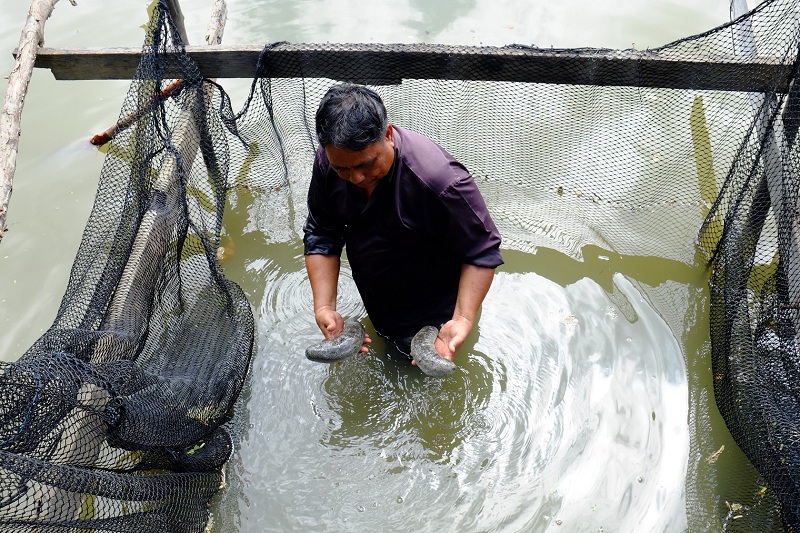
Innovative White Sea Cucumber Farming Helps Fishermen Restore Coastal Balance
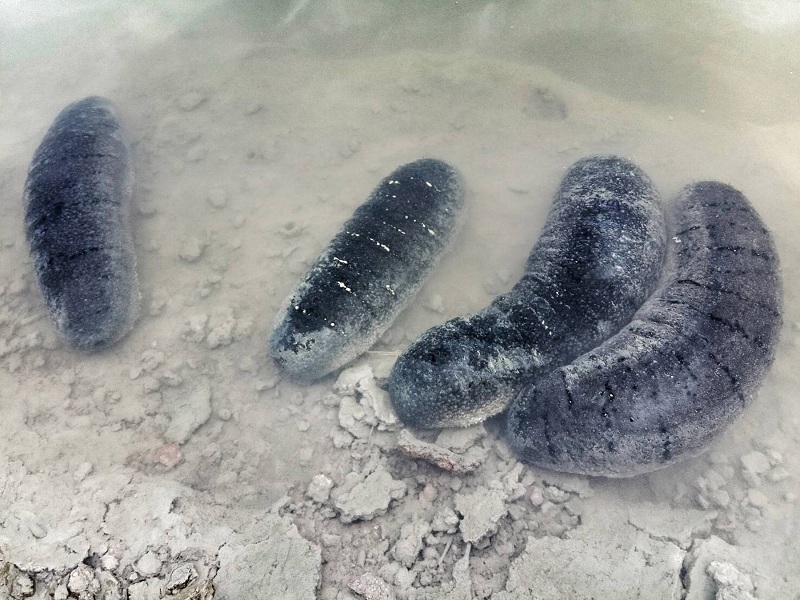
"White Sea Cucumber" is an important fishery resource in the provinces of Satun, Phang Nga, Ranong, and Trang. Currently, its population has been continuously declining, reaching a critical state, which affects local fishermen. The catch has decreased by approximately 90% compared to the past. The white sea cucumber is in high demand among foreign consumers, such as those from China, South Korea, Hong Kong, and Taiwan, who believe it can cure certain diseases and enhance sexual performance, with over 100,000 tons traded annually at a price of 2,500 baht per kilogram.
The main reason for the decline in white sea cucumbers is uncontrolled harvesting, especially by foreign markets with high demand. Since 2017, both domestic and international markets have been purchasing up to 100,000 tons of white sea cucumbers per year. The popularity of white sea cucumbers abroad is attributed to the protein in their flesh, which contains mucoproteins with Chondroitin sulfate, a key component of cartilage, tendons, and synovial fluid. There is also a belief that they can cure certain diseases and enhance sexual performance in traditional Chinese medicine. Additionally, a significant factor is that most fishermen do not practice conservation of white sea cucumbers and lack appropriate breeding methods, leading to a rapid decline in their population.
Therefore, to support the breeding and cultivation of white sea cucumbers, The National Innovation Agency (Public Organization) or NIA has initiated a closed system project for breeding and raising white sea cucumber larvae on land, under the Open Innovation project, with a budget of over 2 million baht allocated to the Pracharat Rak Samakkee Trang Company (Social Enterprise) in Ko Libong, Kantang District, Trang Province. This aims to increase the population of white sea cucumbers, which has decreased in the waters of Trang and nearby areas, while restoring balance to the coastal ecosystem and providing sustainable income for local fishermen. This project involves developing a closed system for breeding and raising white sea cucumber larvae on land by simulating natural environmental conditions to stimulate the breeding of parent white sea cucumbers.
Factors set to stimulate breeding include water salinity, temperature, light, food, and lunar cycles, which affect the breeding rate of parent stock. The land-based farming system aims to increase the survival rate of white sea cucumber larvae to about 50% compared to the natural survival rate of 0.01%-0.05% in marine environments. The project utilizes a Microscreen system, biological filters, DO2 degassing, and protein skimmers to control water quality in the breeding and raising system for white sea cucumbers on land.
Supporting such activities promotes the conservation of natural resources and increases the population of white sea cucumbers in the sea, while also enhancing the local fishing industry’s efficiency. Furthermore, it is expected to stimulate economic growth in Trang Province and neighboring areas, leading to increased job opportunities in the future.