Why Should We Avoid Eating Salty Foods?
Delicious food should have a balanced flavor, including sweet, salty, sour, and spicy. But do you know how many types and spoons of seasonings are added to achieve that flavor? And besides the taste we get from eating, what else does our body receive?
Have you ever wondered why some people can't eat without adding seasonings? They might add a spoonful of sugar or a tablespoon and a half of fish sauce without even tasting the dish first to see how it is seasoned. This is because the human tongue has many small taste receptors called papillae, which come in four types: sweet, bitter, sour, and salty. These taste perceptions stimulate the brain to process and recognize flavors, leading to a preference for certain foods, which can be described as the brain becoming addicted to certain tastes.
As we age, our taste perception declines, similar to other organs in the body. This loss of taste is particularly common among the elderly. So, it’s not surprising if the delicious food your grandparents made for you as a child tastes overly salty when you try it again as an adult. This is because they perceive that as the right flavor due to their diminished taste sensitivity.
“As we enter old age, not only does our taste perception decline, but various organs in our body also begin to deteriorate. If we neglect our diet, it accelerates the decline of other organs. Eating foods that are overly salty and high in sodium puts additional strain on the kidneys,” said Professor Sanga Damapong, a senior advisor at the Thai Health Promotion Foundation and a nutrition consultant at the Department of Health, Ministry of Public Health.
Professor Sanga further explained that kidney disease significantly diminishes the quality of life. Those suffering from this condition not only incur substantial costs for dialysis but also lose time and mental well-being, often feeling like a burden to their families. Therefore, anyone who wants to avoid kidney disease, whether elderly, working-age, young adults, or children, should take care of their health with simple principles: 1. Avoid high-sodium foods. High-sodium foods are not just salt and fish sauce; they also include shrimp paste, fermented fish, monosodium glutamate, soy sauce, bouillon cubes, baking powder in various baked goods, and preservatives in processed foods like sausages, ham, bacon, and pork rolls. 2. Eat enough fruits and vegetables, at least 400 grams a day, to help reduce risks. 3. Consume low-calorie foods, and 4. Exercise regularly, aiming for at least 150 minutes of physical activity per week.
First, it’s important to understand that kidney disease is not solely caused by consuming salt but also by excessive sodium intake beyond the body's requirements. The World Health Organization (WHO) recommends that individuals should not consume more than one teaspoon or 2,000 milligrams of sodium per day. However, Thai adults consume sodium at twice the recommended level. Today, the Thai Health Promotion Foundation team has compiled useful information for kidney health.
Reducing salt... can prevent many diseases.
Associate Professor Surasak Kantachuwesiri, from the Nephrology Department at Ramathibodi Hospital and chairman of the salt reduction network, stated in a video titled 'Reducing Salt to Prevent Many Diseases' published on the RAMA CHANNEL YouTube channel that “reducing salt intake helps prevent diseases related to excessive sodium consumption, such as hypertension, heart disease, kidney disease, and strokes. Reducing salt intake can improve symptoms of these diseases and prevent long-term complications. Most dishes that are only seasoned with salt are not tasty; they need a balance of flavors, which often leads to adding sugar, resulting in excessive salt and sugar intake, contributing to diabetes and obesity. Experience shows that diabetic patients who consume a lot of salt are at a higher risk of kidney disease than those who do not consume salt. Therefore, avoiding salt can help prevent many diseases.”

How to effectively reduce salt intake?
People tend to enjoy salty and sweet foods due to habit. Therefore, it’s essential to gradually reduce salt intake. Associate Professor Surasak recommends that to effectively reduce salt, you should 'reduce by 10%' initially, and then reduce another 10% after about two weeks or a month. After another month, reduce it by another 10%. This method allows you to decrease salt intake by 30% over three months while still enjoying your meals, as your body adjusts to lower salt levels.

6:1:1 Tips for Healthy Eating from Professor Sanga, Nutrition Expert
Professor Sanga has shared dietary tips for the elderly to stay healthy: Older adults should eat natural foods with minimal seasoning, choose brown rice over white rice for more nutrients, consume fish 3-4 times a week for quality protein, and can eat one egg daily, focusing on boiled or steamed eggs (diabetics and those with high cholesterol should limit to 3-4 eggs per week). Include dry beans, drink plain or low-fat milk (one box or glass per day), and regularly consume fruits and vegetables. Importantly, follow the '6:1:1' formula: consume no more than 6 teaspoons of sugar, 6 teaspoons of oil, and 1 teaspoon of salt per day to significantly reduce the risk of chronic non-communicable diseases. This formula is effective for all age groups.
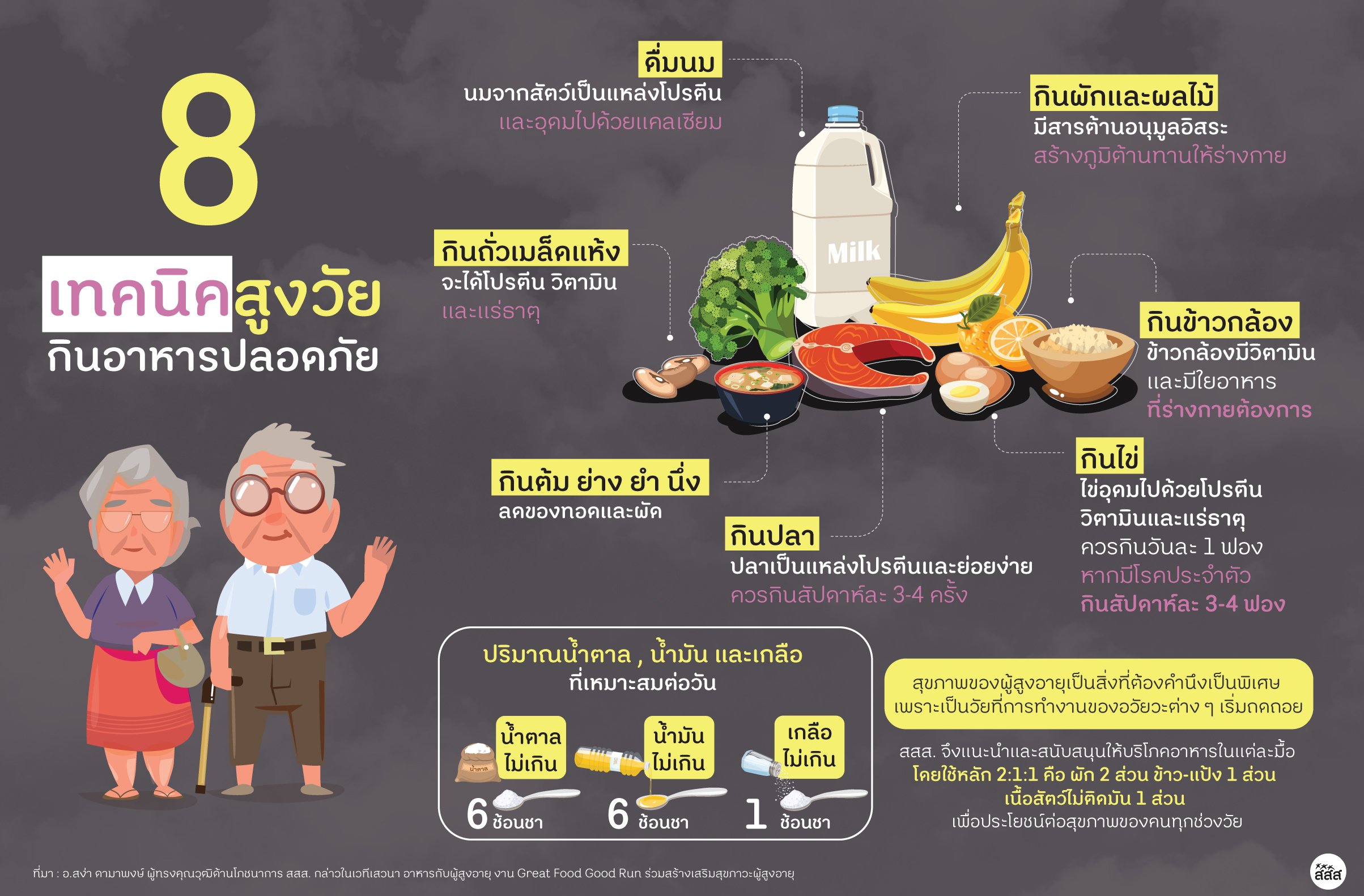
Download the infographic '8 Techniques for Safe Eating in Old Age' at https://bit.ly/2D7243w
Therefore, whether you are sick or healthy, it is essential to pay special attention to your diet. Besides ensuring complete nutrition, seasoning is another crucial aspect that people often overlook. During the Songkran Festival 2019 or this Thai New Year, the Thai Health Promotion Foundation invites you to start reducing salt intake by 10% for your health and for the well-being of the elderly loved ones in your home, so they can enjoy a healthier life.
Thank you for the information from www.thaihealth.or.th