'Samrong-Puchao-Samingphrai-Erawan': What Changes Occur When the 'Green Line Bearing-Samut Prakan' Starts Operations?
‘Samrong-Puchao-Samingphrai-Erawan’
What Changes Occur When the ‘Green Line Bearing-Samut Prakan’ Starts Operations?
In Bangkok, the ‘Skytrain’ and ‘Urban Growth’ are intertwined. Reflecting back to 1999, the era when Bangkokians were excited about the launch of the first skytrain line, over the past 20 years, any area the skytrain passes through has seen significant growth.
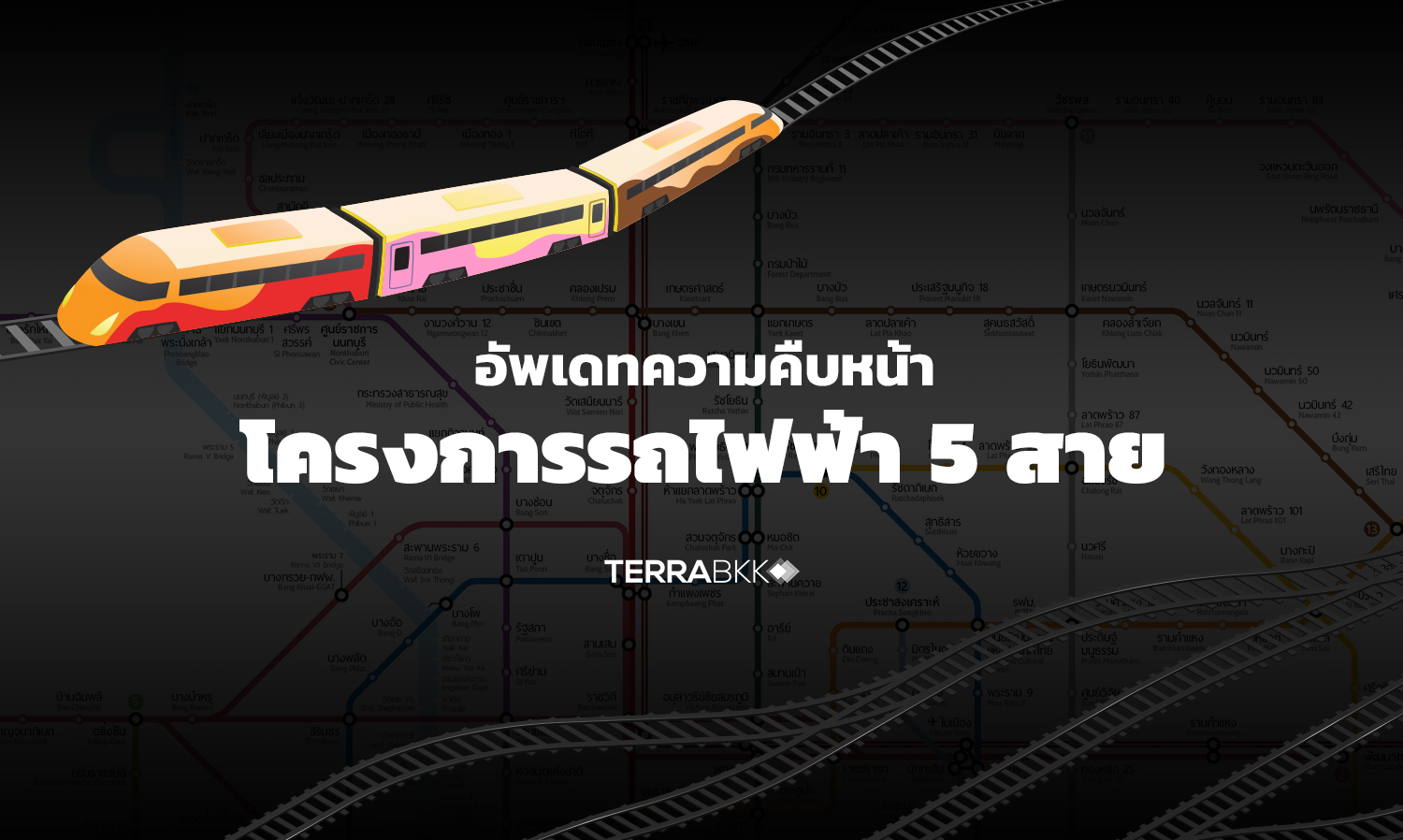
However, we are currently discussing a situation where only 5 lines with 87 stations are operational, not the future where there will be 11 lines and 282 stations!
This means that in the future, if all 11 skytrain lines become operational as per the roadmap, our Bangkok will have train routes penetrating every area like major arteries. The excitement of having a train route passing by one’s home will no longer be unique.
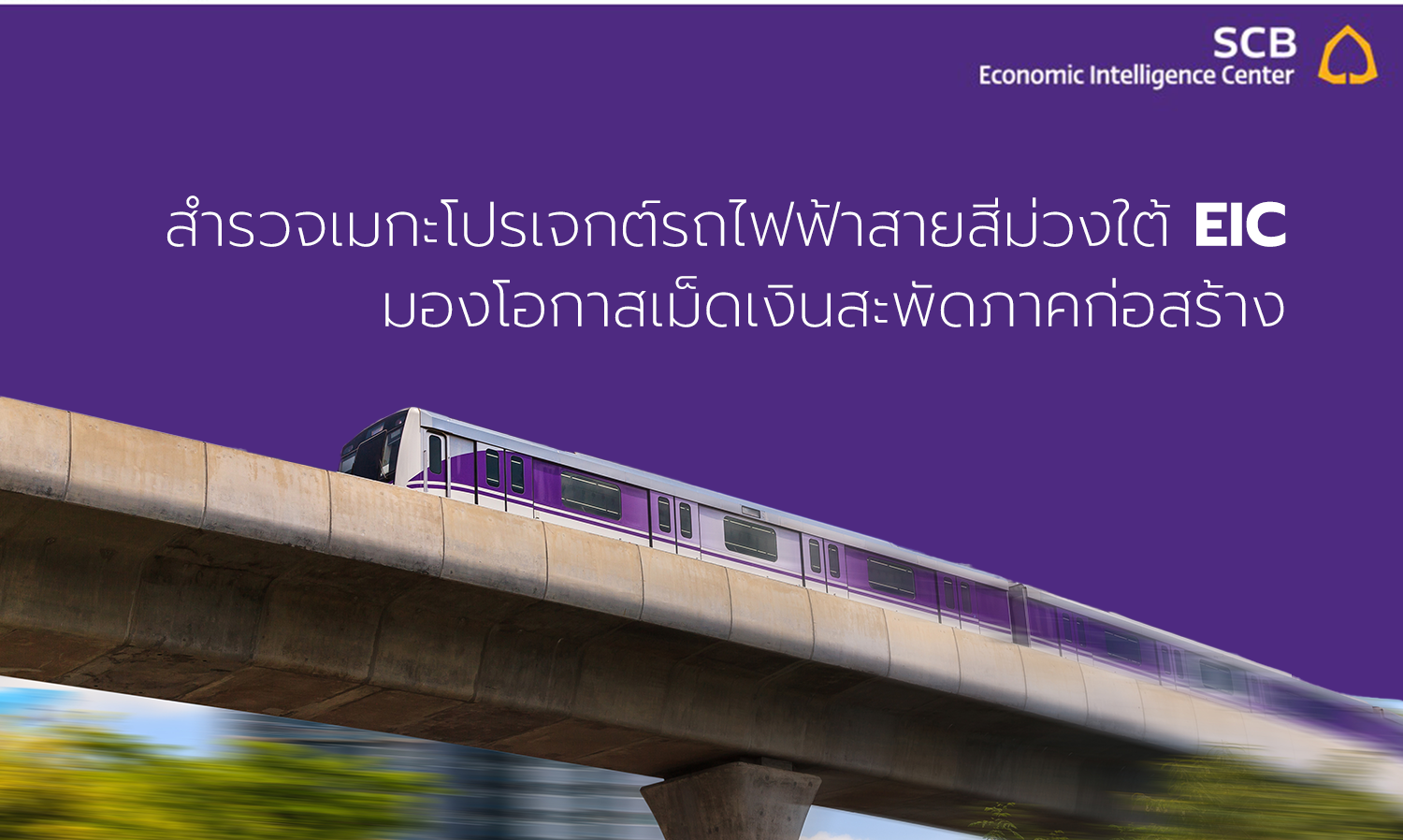
What we are saying is that in the future, having a skytrain in an area will not be unusual, and it does not necessarily mean that area will be the most high-potential location that always sells well. This is evidenced by the oversupply of condominiums along the Purple Line (which does not directly pass through the CBD) a few years ago. However, high-potential locations along the skytrain will arise only if that particular line has true potential, which must be a line that runs directly to the CBD, and we are talking about the ‘Green Line’.
The Green Line Extension Enhances Area Potential Significantly
TerraBKK Research views the Dark Green Line as the most high-potential skytrain route. This is because the route of the Dark Green Line runs long, north-south through Bangkok, effectively covering the inner CBD area. The city’s expansion largely follows the Dark Green Line to the south. Notably, the areas along the Light Green Line extension have shown clear urban growth, including Phra Khanong, On Nut, Bang Na, and most recently, Samrong-Puchao-Samingphrai-Erawan, which is considered another rising area worth watching. TerraBKK Research outlines three reasons for this:
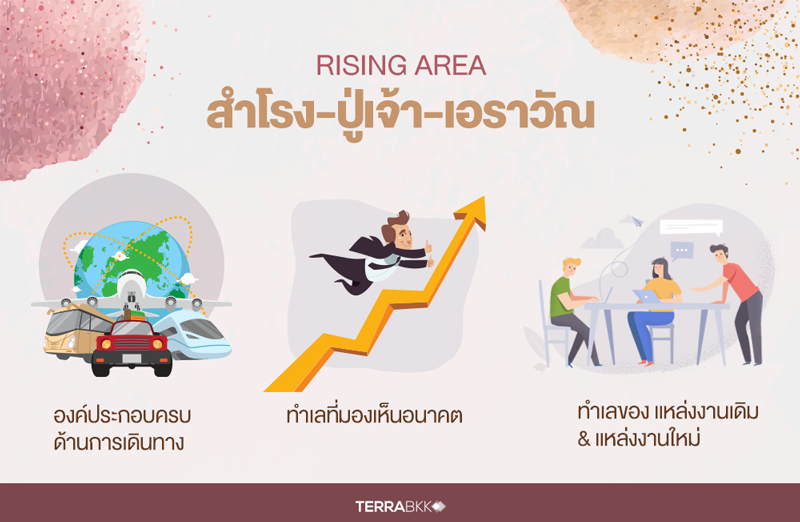
Reason 1: Comprehensive Transportation Components
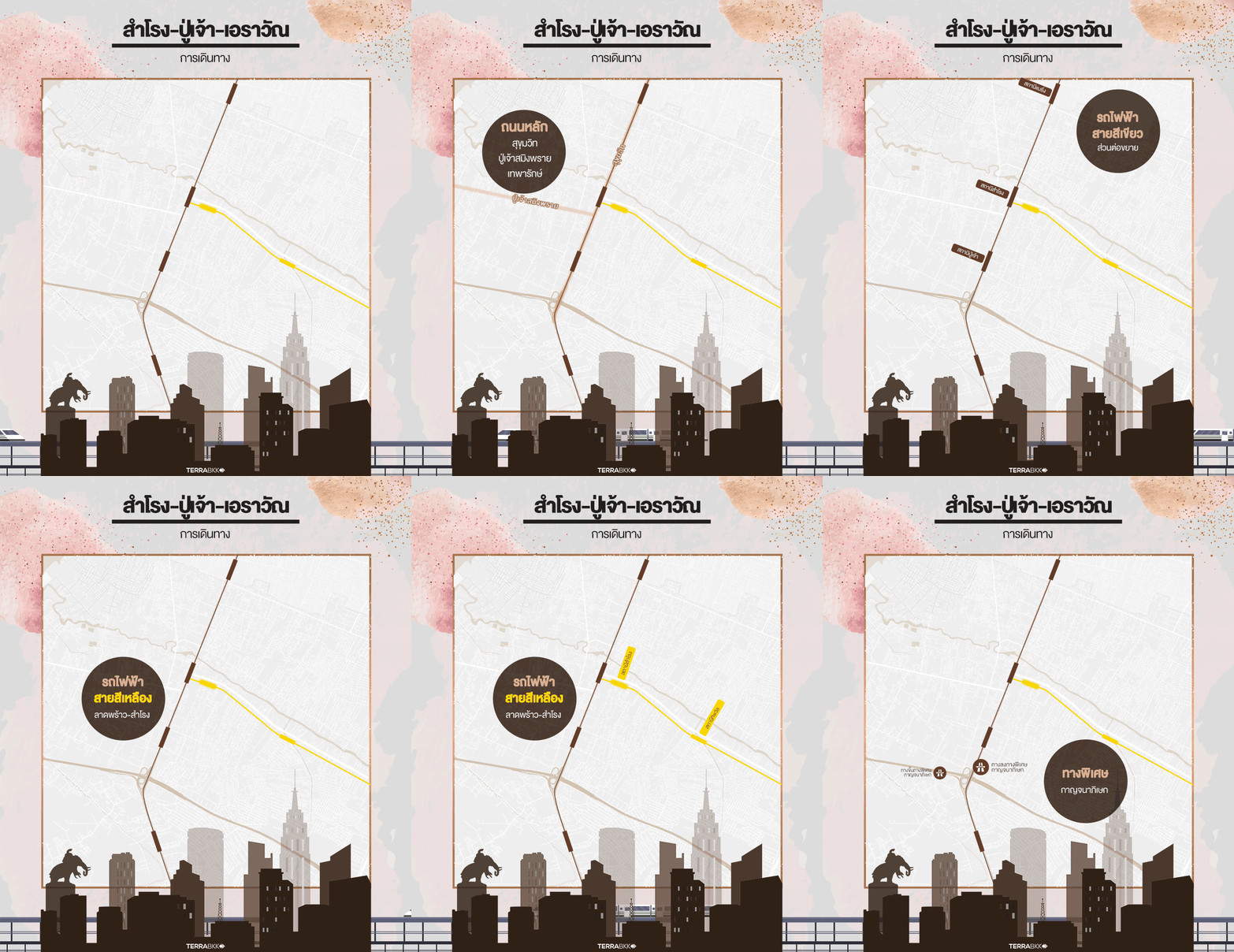
The Samrong-Puchao-Erawan area connects the suburbs of Bangkok and Samut Prakan. Previously, the main road used for transit between these areas was Sukhumvit Road, which leads directly into the inner city of Bangkok. Additionally, there are the Kanchanaphisek Expressway and the Burapha Withi Expressway that provide convenient access, serving as another route connecting the area to inner Bangkok, as well as Thepharak Road for access to Suvarnabhumi International Airport.
Most importantly, aside from the arrival of the Light Green Line extension, which completes the connection between Bangkok and Samut Prakan, in the future, there will also be the Yellow Line from Lat Phrao to Samrong and the Light Rail from Bang Na to Suvarnabhumi coming to the area.
Reason 2: A Location with a Vision for the Future
Southern Bangkok, from Bang Na to Samrong-Puchao-Erawan, is no longer just a suburb of Bangkok. It is clear that this area has developed into a Central Area, with amenities comparable to inner Bangkok. Residents in this area no longer need to travel to inner Bangkok to seek lifestyle centers.
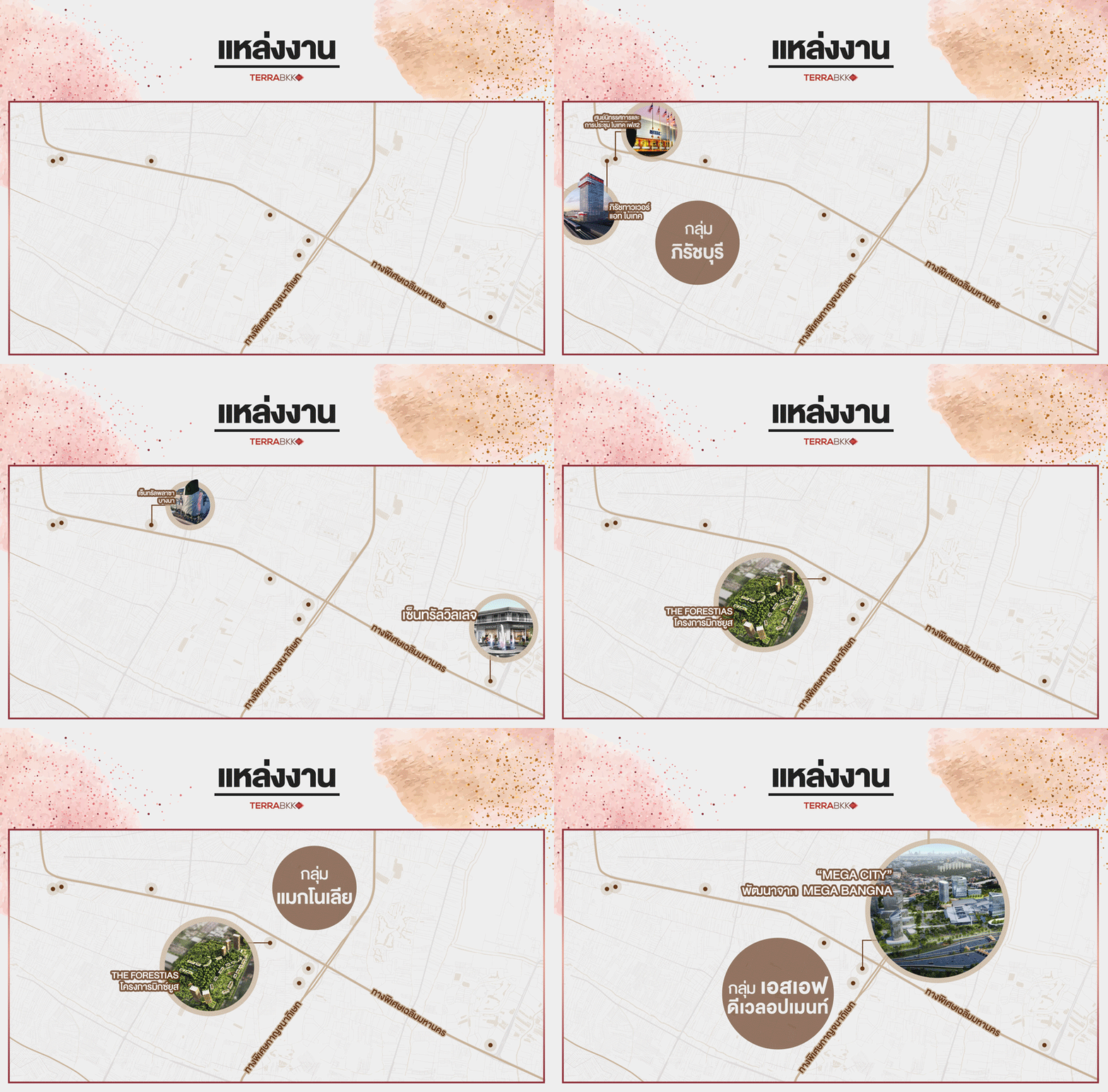
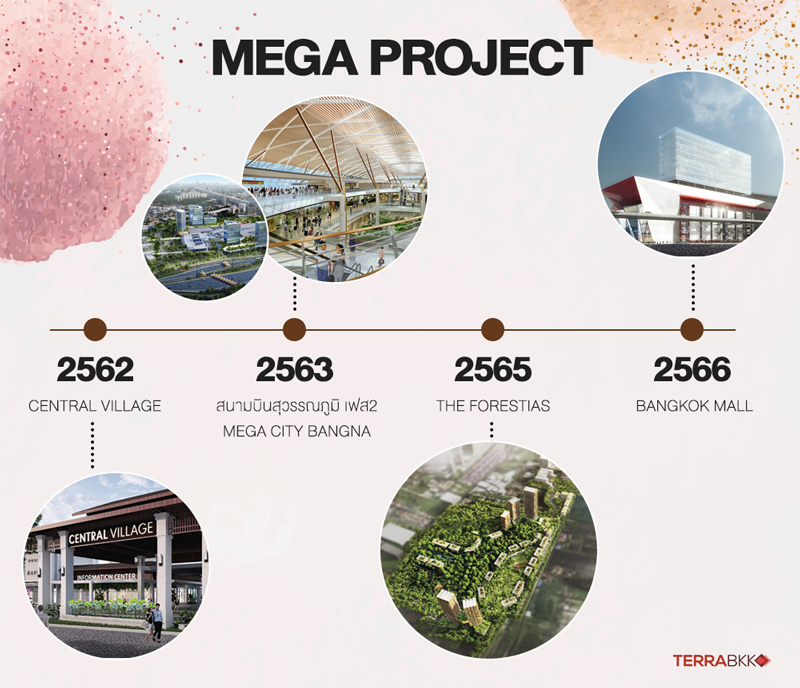
In addition to the existing amenities, there are also several mega-projects underway in this area, such as Bangkok Mall, The Forestias, and Central Village, all of which are projects that believe in the area’s potential, enhancing its completeness and creating growth opportunities.
Reason 3: ‘Samrong-Puchao-Erawan’ as a Hub for Existing and New Jobs
The Samrong-Puchao-Erawan area overlaps with Thepharak Road, which is a hub for traditional job sources in the area, including factories, warehouses, and various industries, making it an important traditional job source for the western part of Bangkok and Samut Prakan. Coupled with the emergence of new job sources in Bang Na, with several new office buildings opening in the area, such as Central City Bang Na, Pirath Tower, and BITEC Bang Na, it gives Samrong-Puchao-Erawan a complete dimension in terms of infrastructure, amenities, and job sources.
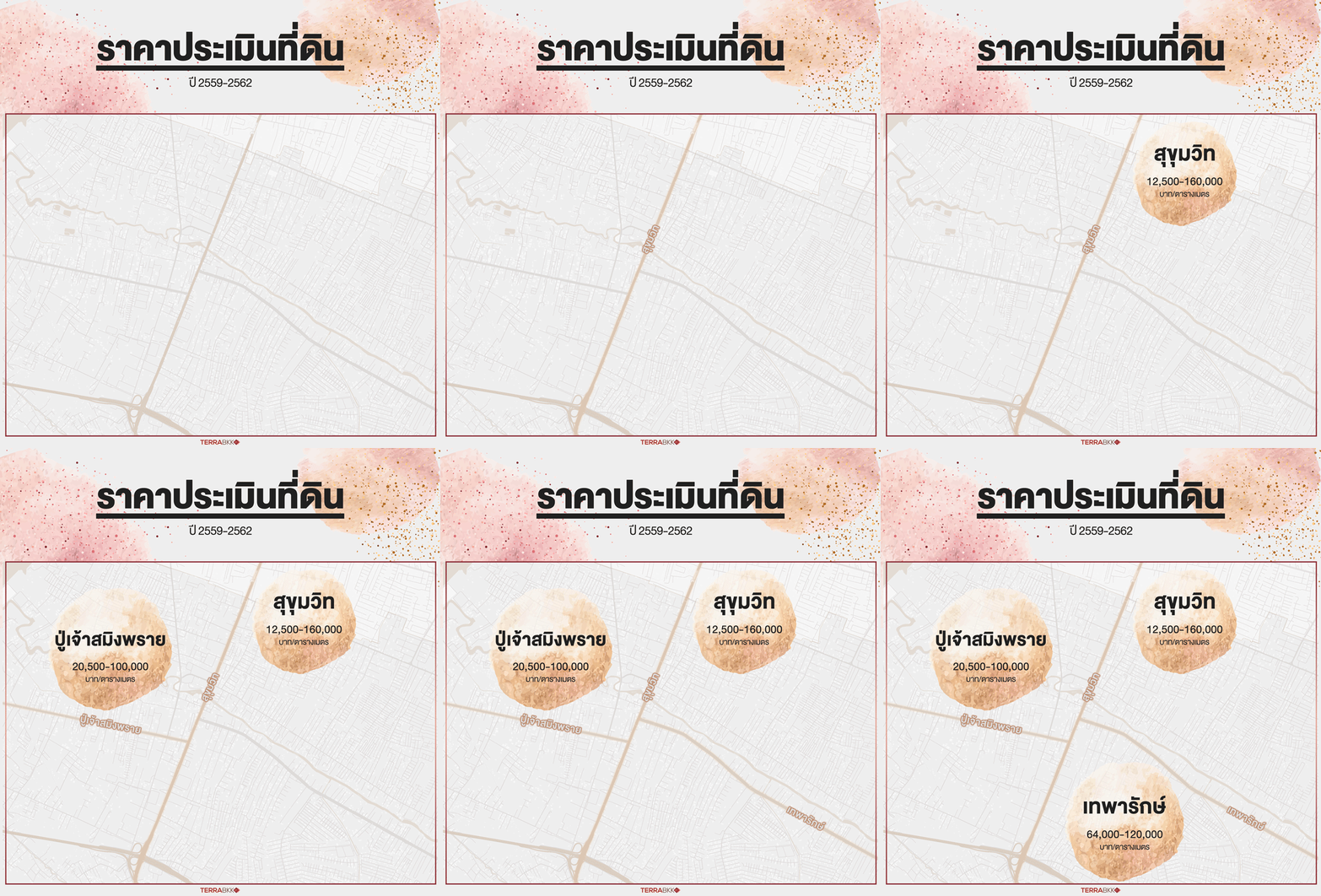
Land Valuation from 2012-2019 Grew an Average of 20%, Reflecting Area Prosperity
With the area serving as a transport infrastructure hub, the extension of the Green Line (Bearing-Samut Prakan) enhances access to the city center and connects with the Yellow Line in the future. It is not surprising to see changes in the real estate sector for the area benefiting from the “Samrong-Puchao-Erawan” area over the years, where land prices have increased by an average of over 20% from the previous year. The details are as follows:
Land valuation for the Green Line extension (Bearing-Samut Prakan) is located in Samut Prakan province. The connecting stations, such as Samrong Station or Puchao Station, are surrounded by three main roads: “Sukhumvit Road”, with land valuation ranging from 12,500-160,000 THB per square meter (2016-2019), up from 10,000-140,000 THB per square meter (2012-2015). Meanwhile, “Thepharak Road” has a land valuation of 64,000-120,000 THB per square meter (2016-2019), up from 50,000-100,000 THB per square meter (2012-2015). Similarly, “Puchao Samingphrai Road” has already seen prices touch the hundred-thousand mark, with land valuation at 20,500-100,000 THB per square meter (2016-2019), up from 74,000-80,000 THB per square meter (2012-2015). Overall, the land valuation in this area has seen an average growth of about 20% per valuation period.
Condominium Situation in the Samrong-Puchao-Erawan Area
One noticeable trend is that the development of condominiums in the area of the Green Line extension often starts from areas near the city and gradually expands outward. Condominiums in the Bearing Station area have been densely developed since 2012, then expanding to the Samrong-Puchao-Erawan area with an average launch price of 45,000-55,000 THB per square meter, with the number of units varying by project size, ranging from hundreds to thousands of units per project, such as B Loft Sukhumvit 109, The Cabana Condo, etc. The activity in this area began to increase in 2015, with total units launched exceeding 5,000 units that year, reflecting that both small and large developers see the potential of this area, such as Supalai Veranda Sukhumvit 117, The Metropolis Samrong Interchange, etc. Currently, the average launch price for condominiums in this area is around 65,000-75,000 THB/square meter. The latest condominium project launched in 2019 is Niche Mono Sukhumvit-Puchao by Sena Development, which has been developing condominium projects continuously since 2017.
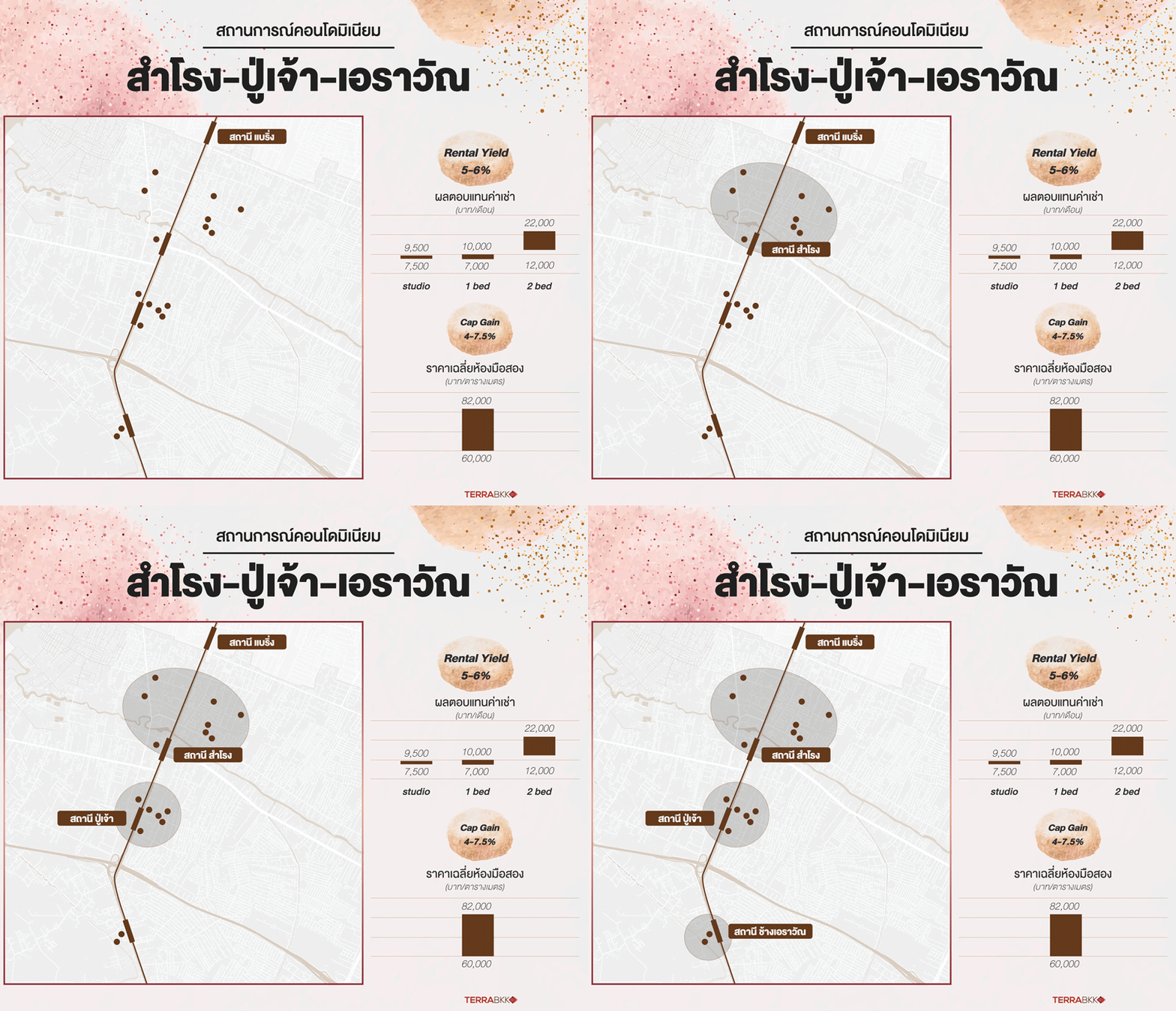
The return on investment from condominiums in the Samrong-Puchao-Erawan area can yield an average Rental Yield of 5%-6% per year. Rental prices vary by room type, with studio apartments averaging 7,500-9,500 THB per month, one-bedroom apartments averaging 7,000-10,000 THB per month, and two-bedroom apartments averaging 12,000-22,000 THB per month. Meanwhile, long-term ownership of condominiums shows an overall Cap Gain of 4% - 7.5% per year, with average market prices around 60,000-82,000 THB per square meter.
All of this reflects the changes that will occur when the “Green Line Extension (Bearing-Samut Prakan)” opens for service, bringing opportunities for growth in transportation connectivity, followed by the emergence of a Central Area linking diverse job sources. The distinctiveness of the extension “Samrong-Puchao-Samingphrai-Erawan” is becoming “a location worth watching” in the near future.