How Will Bangkok Change in 2020?
Have you ever observed your daily life? In a week, we spend 5 days primarily in 2 locations: "home" and "work", connected by a "transportation system". A thought-provoking question is, what will living in Bangkok be like? In 2020, Thailand began to see progress in becoming the transportation hub of ASEAN, both in aviation and rail systems, while the private sector invested in mixed-use projects throughout Bangkok. New office spaces in the city center will become part of these mixed-use developments, increasing opportunities for foreigners to relocate and work in Bangkok. The lifestyle of city dwellers is changing. Ultimately, condominiums will become essential for workers in Bangkok. TerraBKK presents a vision of Bangkok in 2020, focusing on changes in transportation, job opportunities, and housing for Bangkok residents. Details are as follows:
In 2020, Bangkok's transportation system will change.
In 2020, we will officially see various electric train lines in operation. The transformation will be significant as the electric trains will no longer be confined to the central areas of Bangkok. Suburban residents and those from surrounding provinces will increasingly utilize the electric train services, reducing travel time. Meanwhile, Thailand's flagship project to become a regional aviation hub, such as the Suvarnabhumi Airport (Phase 2), will also become clearer.
The Blue Line: The Backbone of Bangkok's Rail System
In 2020, the Blue Line will become the backbone of transportation for Bangkok workers. This is because the Blue Line will feature the first circular route in Thailand, connecting residential areas on the western side of Bangkok to the eastern side of the Chao Phraya River, which are all significant job hubs in Bangkok.
In 2020, the Blue Line will also have the most connections to various colored electric trains, accommodating residents from northern Bangkok and surrounding provinces like Nonthaburi and Pathum Thani. The transformation began in 2017 when the Purple Line opened, serving over 59,431 passengers daily from Nonthaburi, while the Green Line extended beyond Mo Chit-Samut Prakan to serve northern Bangkok residents. The Red Line (Bang Sue-Rangsit) will run along Vibhavadi-Rangsit Road for 26.3 kilometers, passing Don Mueang Airport, enhancing travel convenience for tourists to the heart of Bangkok, with an expected capacity of over 300,000 passengers per day from Rangsit to Bang Sue.
(1. GIF. Progress of various electric train projects)
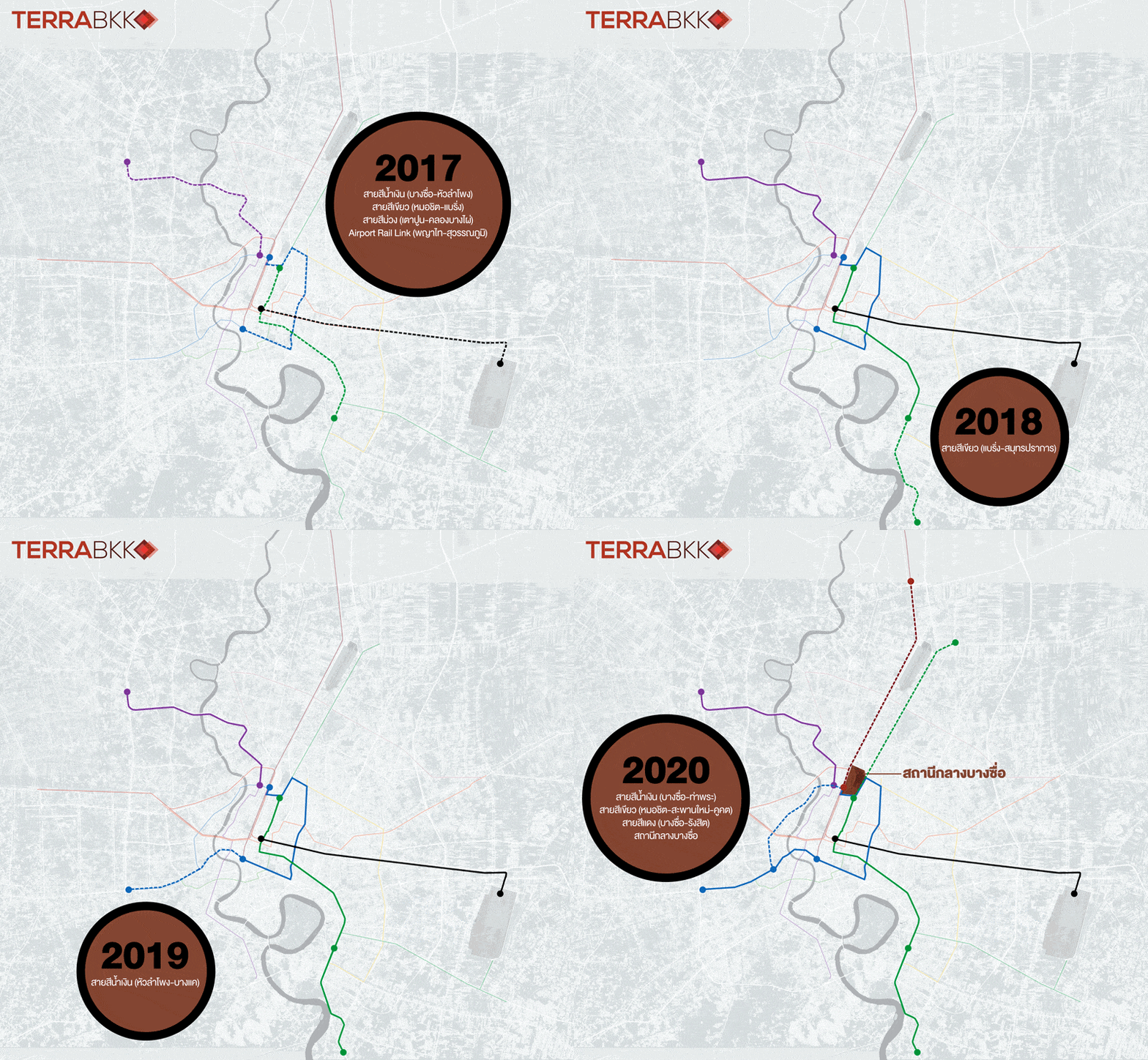
"Bang Sue Central Station" will be a multimodal transport center covering 2,325 rai, the largest railway station in ASEAN. It is expected to open in 2020, with construction already over 60% complete. Meanwhile, the development of the surrounding area (TOD: Transit Oriented Development) is currently studying development models, aiming to become a "smart city" and adjusting land use from 4 zones to 9 zones in a long-term master plan of 15 years. The development plan includes 5 key areas: the station area, commercial development, Chatuchak market development, park area development, and the connection between old and new Mo Chit stations.
In terms of real estate investment in 2020, with the interconnected rail transport system, locations connecting two electric train lines will benefit from the commuters traveling between both lines. New locations that connect between the main electric train lines through significant job hubs in Bangkok, such as the Blue Line and Green Line, present excellent opportunities. For example, "Lat Phrao Intersection Station" will be another station connecting the Blue Line and Green Line when the Green Line extension (Mo Chit-Kud) opens in 2020.
Suvarnabhumi Airport (Phase 2)
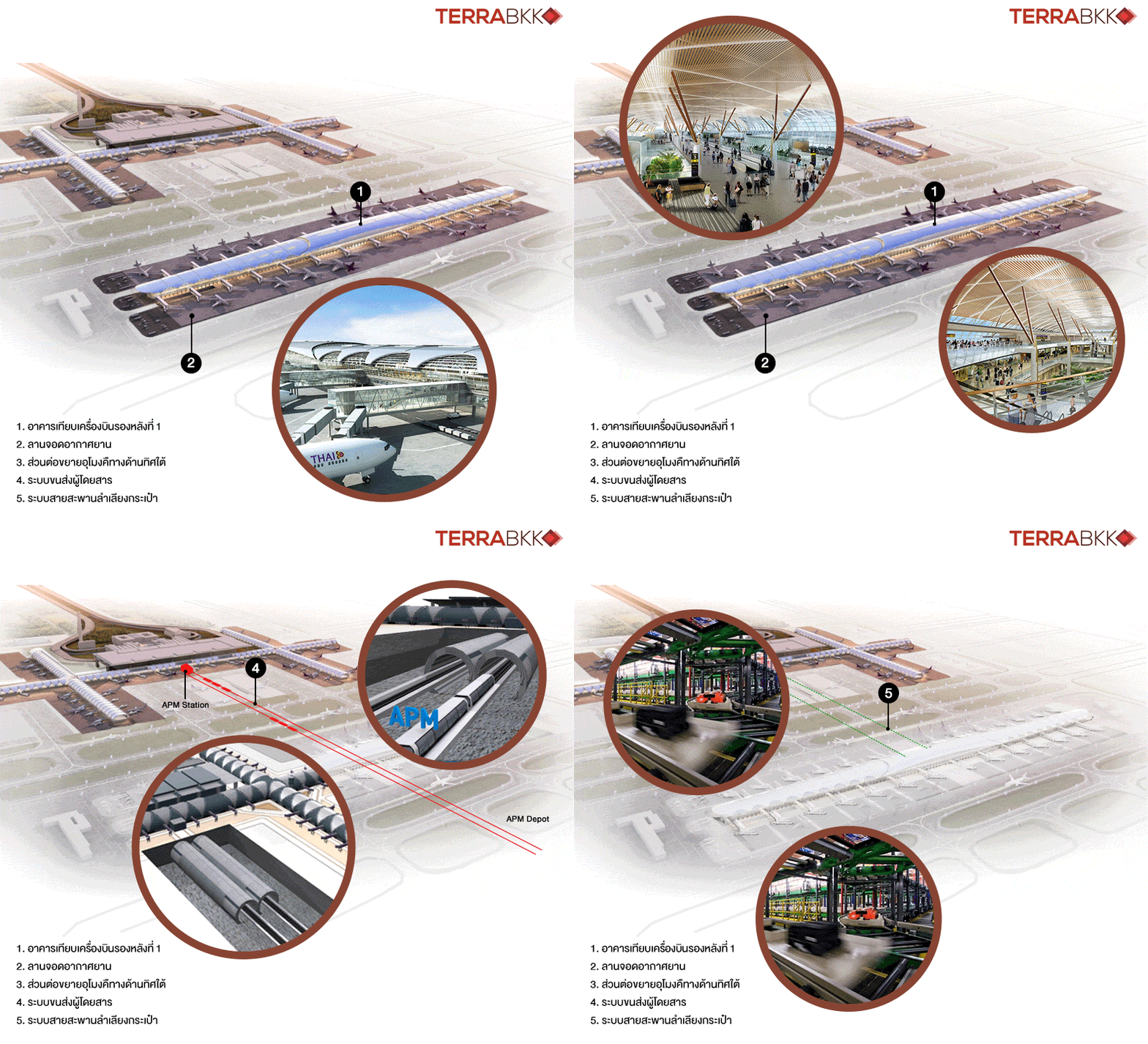
The eastern side of Bangkok is bustling again, especially the Ramkhamhaeng-Minburi-Bang Na area, due to the government mega project "Suvarnabhumi Airport (Phase 2)", expected to be completed in 2020 to increase passenger capacity to 60 million per year from the previous 45 million. This phase includes a 4-story aircraft terminal building of 213,000 square meters, 28 aircraft parking bays, a southern tunnel connection, and a 700-meter automated passenger transport system (APM), as well as an expansion of the east passenger terminal of 60,000 square meters. As of 2018, 6 contracts have been finalized, including 1 control contract worth 789 million baht, from September 2016 to November 2019, and 5 construction contracts including:
(2. GIF. Progress of Airport Phase 2 project)
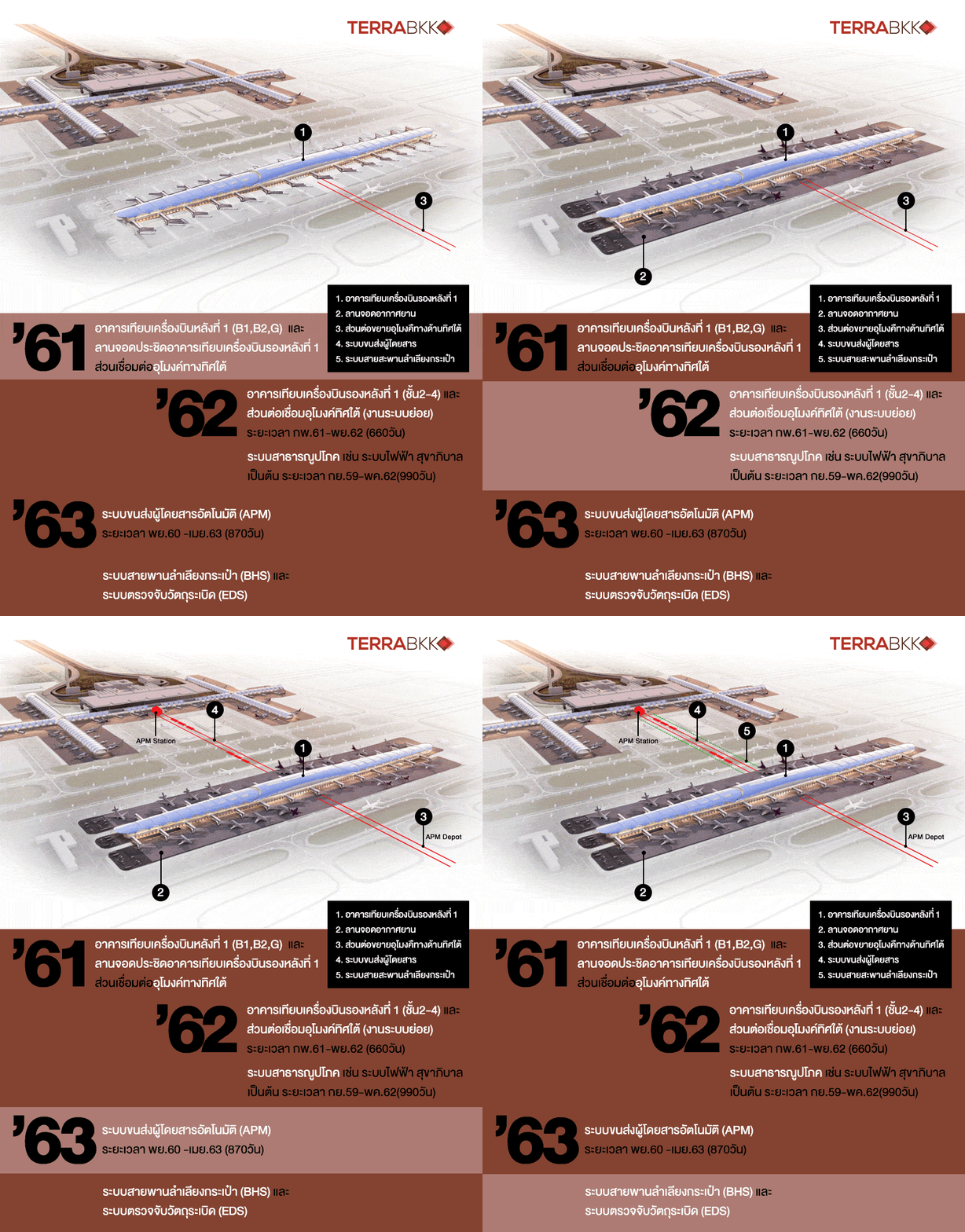
- Aircraft Terminal Building 1 (B1, B2, G) and the parking area adjacent to Terminal Building 1, southern tunnel connection by Italian-Thai Development Public Company Limited, worth 12.05 billion baht, from September 2016 to November 2018.
- Terminal Building 1 (2nd-4th floors) and southern tunnel connection (subsystem work) by PCS Joint Venture, worth 14.235 billion baht, from February 2018 to November 2020 (660 days).
- Public utilities such as electrical systems, sanitation systems, etc., by SG and Interlink Joint Venture, worth 1.98 billion baht, from September 2016 to May 2019 (990 days).
- Automated Passenger Transport System (APM) by IRTV Joint Venture, worth 2.99 billion baht, from November 2017 to April 2020 (870 days).
- Baggage Handling System (BHS) and Explosive Detection System (EDS) by Loxley-LPS Joint Venture, worth 3.79 billion baht, finalized in January 2018.
(3. GIF. Airport Phase 2 project)
If we look at the changes in housing in 2020, the eastern side of Bangkok will primarily remain a key area for low-rise housing for Bangkok residents, as there is still a significant amount of undeveloped land available. The persistent problem in this area remains traffic congestion, leading to the belief that when the Orange Line electric train system in this area becomes operational (in 2023), condominiums near the electric train in the Rama 9-Ramkhamhaeng area will become increasingly necessary and appealing for working individuals, as they can travel directly to the Ratchada area, the new CBD of Bangkok. Potential condominium locations should be in promising future areas, such as near private mixed-use investment projects, as well as condominiums located at the starting stations connecting to the MRT electric train, which is the main route for Bangkok workers.
In 2020, office buildings will become part of mixed-use projects.
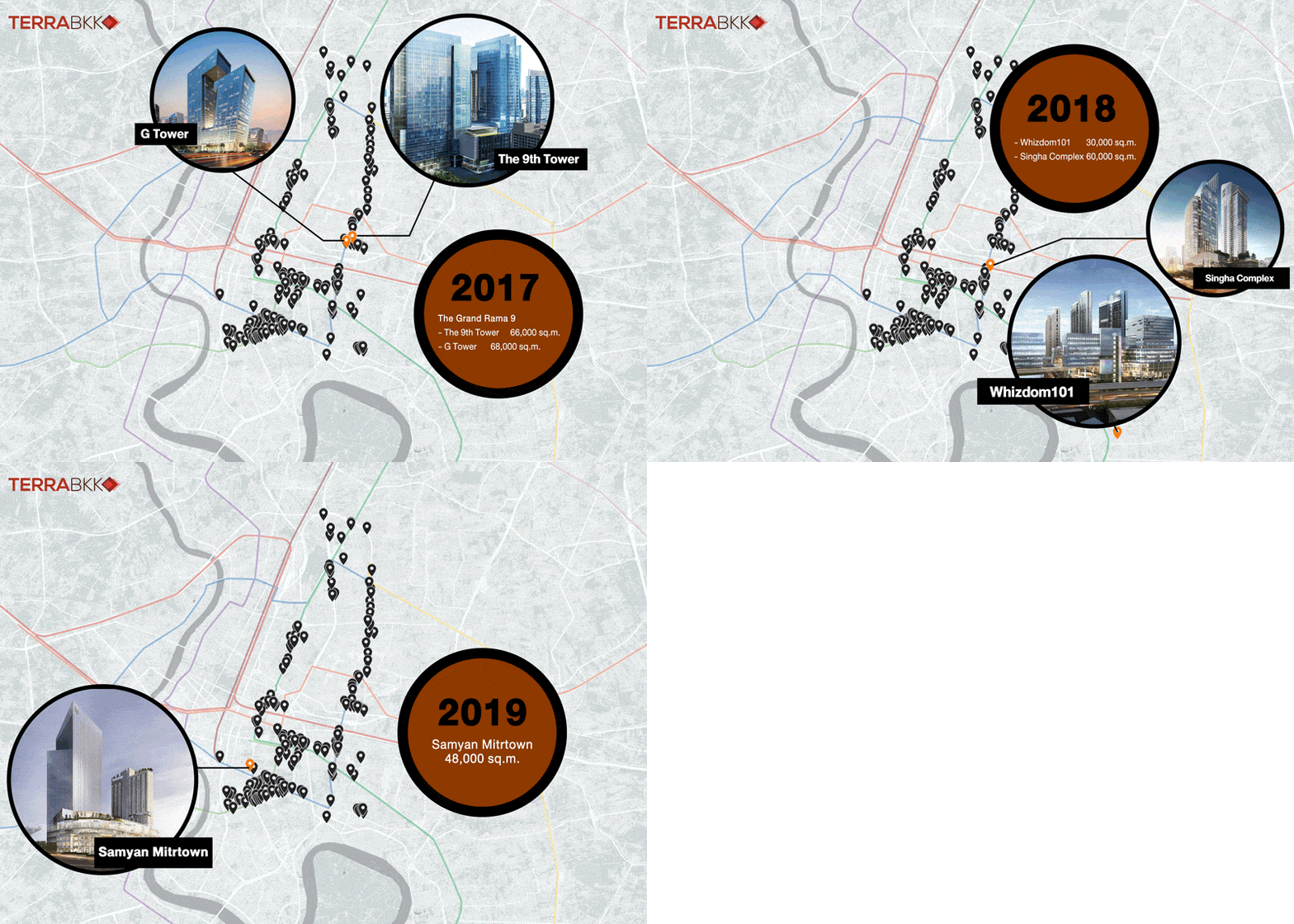
As we know, electric trains are crucial for the commuting of Bangkok workers. Currently, there are over 170 office buildings for rent, with a total area exceeding 3.56 million square meters. However, due to the high land prices in central Bangkok, developing high-priced rental office buildings is becoming outdated and unworthy of investment. The changing lifestyle in the city has made "mixed-use projects" exciting and valuable investments. In addition to retail and residential areas, by 2020, mixed-use projects will also add over 242,000 square meters of office rental space, mainly in the Rama 9 - Asoke area, catering to both Thai and foreign residents, such as The Grand Rama 9, Sinha Complex, and Whizdom 101 in Sukhumvit, and Samyan Mitrtown in Samyan.
(4. GIF. Office building job sources)
In addition to tourists, over the past 10 years, the number of foreigners authorized to work in Bangkok has continuously increased, although there may have been some fluctuations, such as in 2009 when it decreased by 24.5% from 2008 due to the political situation at that time. As of 2017, the number reached 55,007, the highest in the past decade.
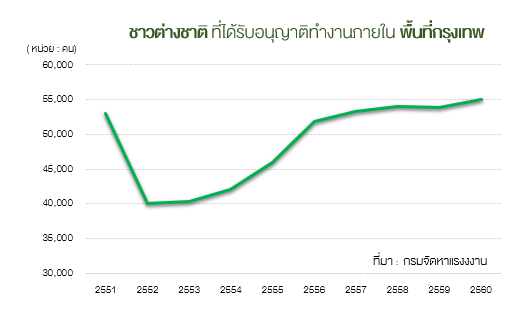
If Bangkok residents in 2020 continue to enjoy leisure activities at shopping malls, cinemas, and community malls, these mixed-use projects will also cater to the lifestyle of Bangkok residents. Therefore, it is not surprising to say that in a week, Bangkok residents spend 5 days living between their homes and workplaces, and 2 days enjoying lifestyle venues and residences. As job sources and lifestyle venues increase, most of which are located near electric train stations, the next thing to watch will be the demand for housing. Condominiums will be a crucial choice for the commuting lifestyle of Bangkok residents.
In 2020, condominiums will be essential housing for Bangkok workers.
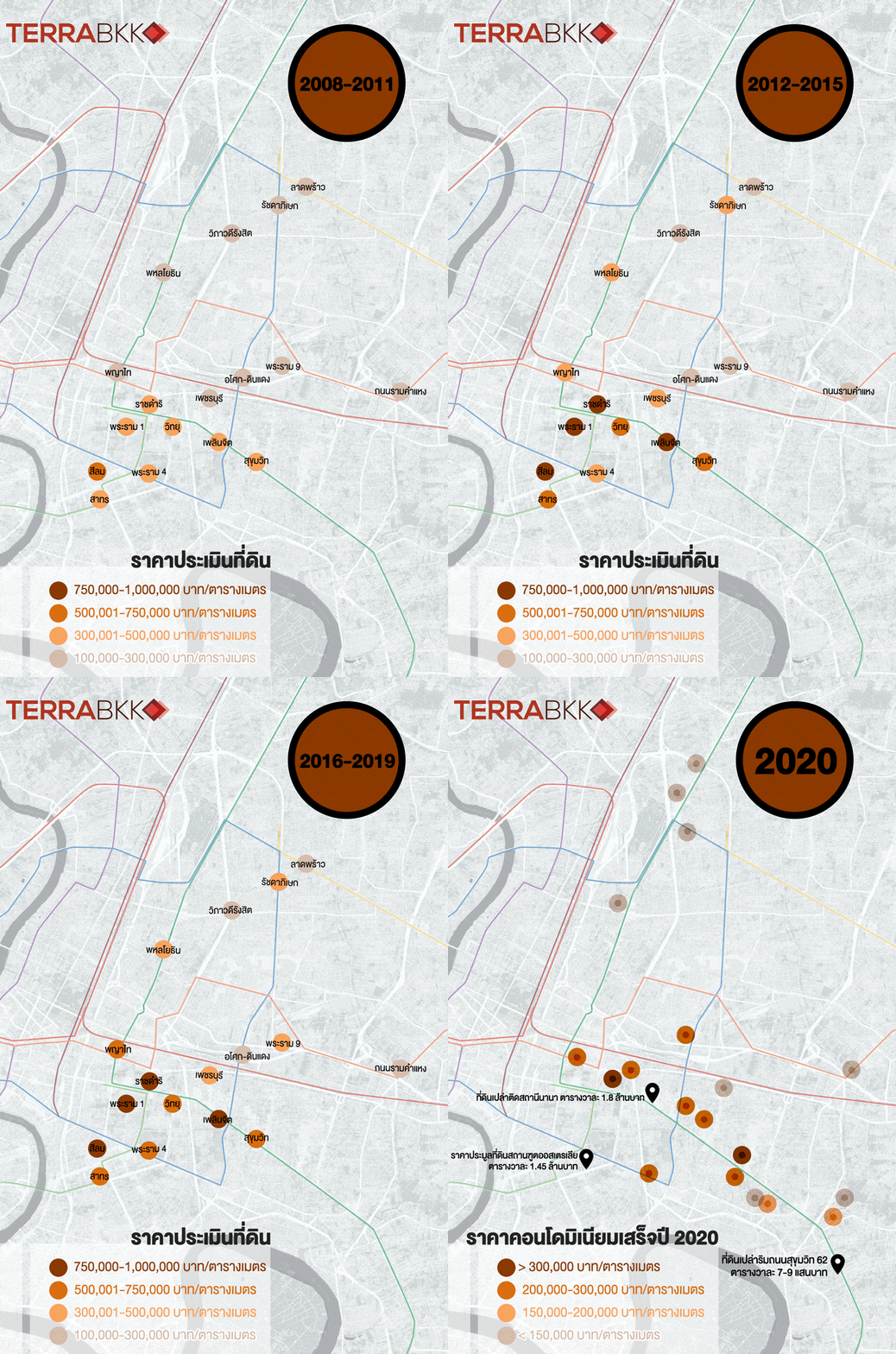
Another reason why "condominiums" may become a necessity for Bangkok workers is due to high land prices. It is increasingly difficult for real estate developers to develop land in the city for low-rise projects at prices affordable for salaried workers. The assessed land prices along 17 major roads in Bangkok from 2008 to 2019 have increased by an average of 6.5-32.5% per assessment year. Actual market sale prices often exceed assessed values, such as in 2016-2017 when LPN purchased vacant land near BTS Nana station, 3 rai at 1.8 million baht per square wah, AP bought land along Sukhumvit 62 near Bang Chak station, 2-3 rai at 700,000-900,000 baht per square wah, and Supalai won a bid for land at the Australian Embassy on Suan Plu Road, over 7 rai at 1.45 million baht per square wah. When comparing the latest assessed land prices from 2016-2019 with the average price per square meter of condominiums completed in 2020, we can see which locations Bangkok residents can afford.
- Central locations along the Green Line, such as Ploenchit Road, Rajdamri Road, and the beginning of Sukhumvit Road, have assessed land prices reaching 650K - 1,000K baht per square wah. Completed condominium projects in 2020, such as THE ESSE SUKHUMVIT 36, have an average price of 205 - 300K baht per square meter, with starting prices averaging 5.75 - 10 million baht. Buyers at this level must have an income of over 105,000 baht per month.
- Locations supporting urban expansion, such as Ratchadapisek Road, Phaholyothin Road, Phetchaburi Road, and Rama 9 Road, have average assessed land prices of 300K - 500K baht per square wah. Completed condominium projects in 2020, such as ASHTON Asoke – Rama9, have an average price of 130K - 200K baht per square meter, with starting prices averaging 3.5 - 6.5 million baht. Buyers should have an income of around 62,000 baht per month.
- Residential areas, such as Lat Phrao Road, Vibhavadi-Rangsit Road, and Ramkhamhaeng Road, have average assessed land prices of 170K - 250K baht per square wah. Completed condominium projects in 2020, such as Metris Rama 9 - Ramkamhang, Metris Ladprao, have an average price of 100K - 130K baht per square meter, with starting prices averaging 2.5 – 3.5 million baht. Buyers will typically have an income of 44,000 baht per month or more, making these locations accessible for a large group of Bangkok workers, with the potential for profit from price differences as condominium prices increase with urban development in the future.
(4. GIF. Assessed land prices and prices of completed condominiums in 2020)
All of the above indicates the changes in the lives between "home" and "work" connected by the "electric train" that will occur in 2020. As condominiums become the housing choice for Bangkok workers that is hard to avoid, in the future, if the development in the central city becomes saturated, the urban expansion will reach new areas. The attractive locations for condominiums in 2020 may no longer be limited to the central areas like Silom-Ploenchit. As urban expansion areas see mega projects, such as locations near "Bang Sue Central Station" connecting multiple electric train lines, or the Rama 9-Ramkhamhaeng area with "future Orange Line electric train connections" leading to the new CBD of Ratchada, the new job hub for Bangkok residents, all of these factors will drive assessed land prices higher. Important locations for housing for a large group of Bangkok workers may be condominiums in residential areas with starting prices of 120,000 baht per square meter, reaching up to 160,000 baht per square meter, with condominium prices of 2.5-3.5 million baht being accessible for Bangkok workers earning 35,000-50,000 baht per month. Ultimately, condominiums that understand Bangkok workers, not only in terms of location in expanding CBDs, proximity to electric trains for convenient travel, and near future mega projects, but also those that comprehend the changing lifestyles of the new generation, such as the condominium METRIS by Major Development expected to be completed in 2020, may be a crucial solution for the housing needs of Bangkok workers.
TerraBKK: Find good, valuable, and affordable homes