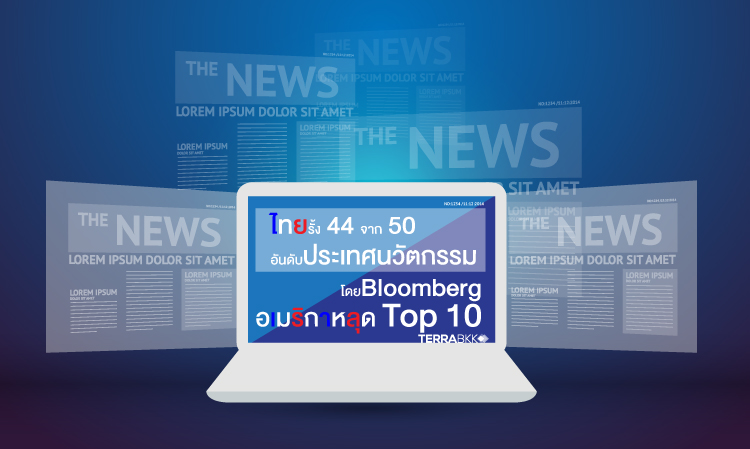
Thailand Ranked 44th Among 50 Innovative Countries by Bloomberg
It’s not just Thailand that aspires to approach the concept of 4.0; many countries around the world are competing in technology development in the digital age. The leading global website, Bloomberg, ranked countries based on innovation in 2018 using seven criteria:
- R&D Intensity: The percentage of investment in research and development of technology.
- Manufacturing Value-Added: Measured by MVA/GDP and PPP.
- Productivity: GDP and GNI per capita of the labor force aged over 15 years and working for more than 3 years.
- High-Tech Density: The number of public technology companies, such as biotech, heavy industry, light industry, internet software, and technology services.
- Tertiary Efficiency: The number of students and personnel in science and technology.
- Researcher Concentration: The ratio of personnel with doctoral degrees to the number of technology research and development activities.
- Patent Activity: The number of patent applications per capita.
These seven criteria primarily measure the intensity of investment, research, and development in innovation from leading public companies that are advancing technology in each country.
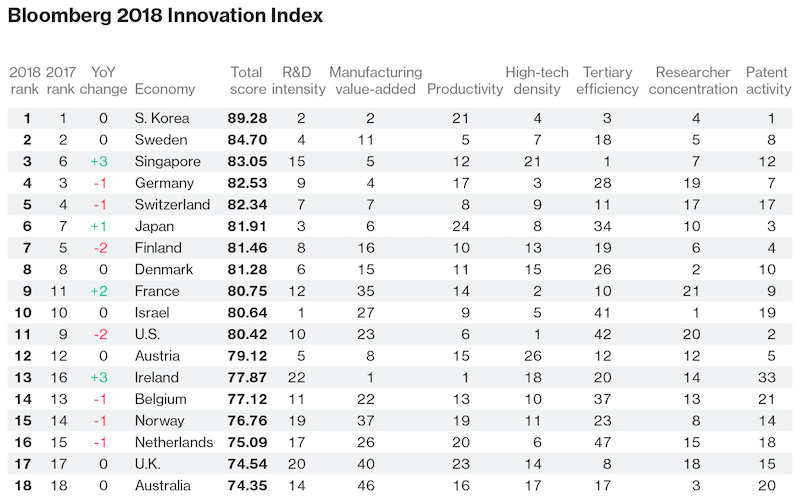
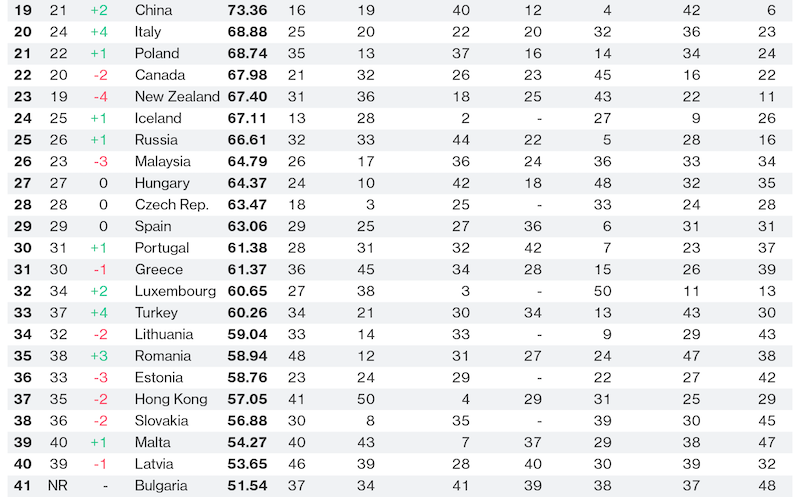
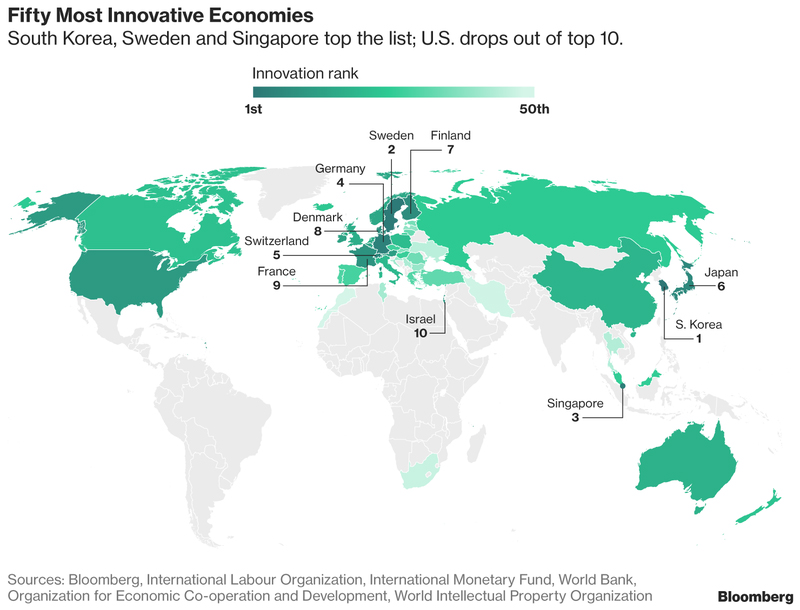
Surprisingly, the superpower United States dropped out of the Top Ten from 9th place in 2017 to 11th place with a total score of 80.42, losing to Israel, which has maintained its 10th position since 2017 by just 0.22 points. France took the place of the United States, rising from 11th to 9th with a score of 80.75. The reason for the U.S. falling from the Top Ten is primarily due to the declining quality of the workforce graduating from high school to university and a decrease in graduates in science and technology in the manufacturing sector, resulting in a loss of rank #terrabkk.
The most interesting aspect that TerraBKK observes is the rankings from 1 to 5, starting with South Korea, which has maintained the top position for five consecutive years with a high score of 89.28, led by Samsung, due to its increasing market capitalization. In terms of measurement, South Korea has developed 21 innovative technology production processes.
Singapore, ranked 3rd, has climbed from 6th place in 2017 and is recognized as the most efficient country in development, emphasizing education in science, engineering, and mathematics, and has seriously invested in research and innovation development.
Mainland China has moved up to 19th place from 17th in 2017, gaining points from the number of graduates in science and engineering and an increase in patent innovations, exemplified by companies like Huawei.
The countries that have seen the most significant decline are New Zealand and Ukraine, both dropping four places, primarily due to educational issues.
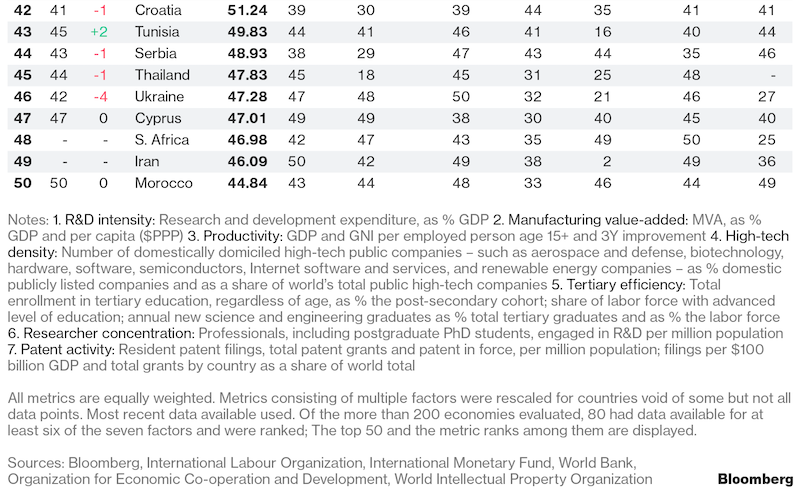
As for Thailand, we also made it to the list of 50, dropping one position from 2017 to 44th place, the last of the six Asian countries in the top 50 for innovation, with Malaysia at 26th, China at 19th, Japan at 6th, Singapore at 3rd, and South Korea at 1st - เทอร์ร่า บีเคเค.
Article by: TerraBKK Knowledge Base
TerraBKK: Find quality homes at affordable prices