In 20 Years, China Will Be Number One in the World! Thailand's Government May Be Right to Befriend China
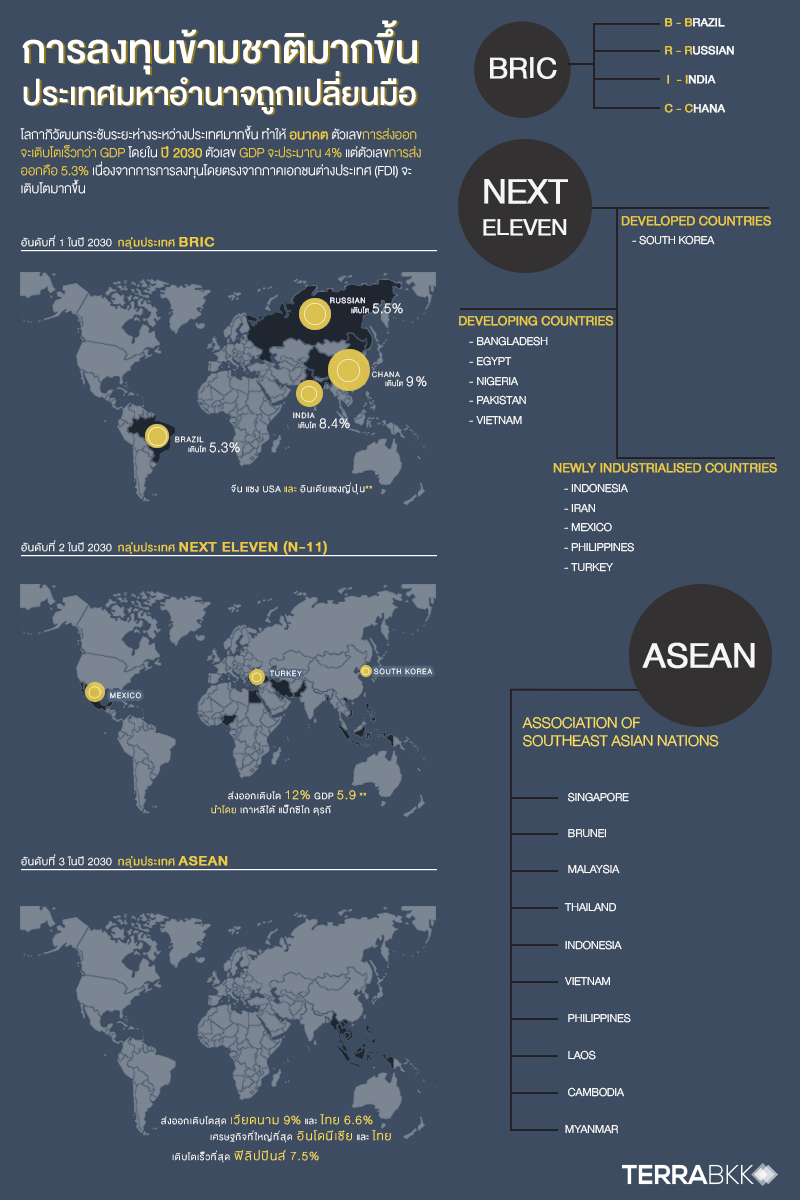
Globalization is narrowing the gap between countries, leading to a future where export figures will grow even faster than GDP. By 2030, GDP is expected to be around 4%, while export figures are projected at 5.3%. This growth is driven by an increase in foreign direct investment (FDI), with China and India being the primary destinations for such investments. This will position China as the country with the highest GDP growth in the world (9%), followed by India (8.4%), Brazil (5.5%), and Russia (5.3%). These countries are collectively referred to as BRIC, and they are set to become the largest international investment markets globally, with China leading in export volume.
Forecasts suggest that by 2026 (just 10 years from now), the world's strongest economy will shift from the United States to China, and India is expected to surpass Japan by 2030. By then, we might find ourselves grateful to this government for establishing a friendship with China early on.
Increased Cross-Border Investment: A Shift in Global Power
Do not underestimate them, as after BRIC leads the way, there are also emerging countries that the world is watching closely, known as Next Eleven (Bangladesh, Egypt, Indonesia, Iran, Mexico, Nigeria, Pakistan, the Philippines, South Korea, Turkey, and Vietnam). These countries are expected to see the highest export growth (12%) and a GDP growth of 5.9%, with South Korea, Mexico, and Turkey being the key players in the Next Eleven.
Our ASEAN region is also benefiting from the growth of BRIC, as being a top trading partner positions ASEAN as another group expected to grow significantly, second only to the Next Eleven. The largest economies in ASEAN will be Indonesia and Thailand (which gives us some hope). Meanwhile, the fastest-growing country will be the Philippines (growing at 7.5%). In terms of export figures, Vietnam is expected to lead (9%), pushing Thailand to second place (6.6%) as Vietnam enters a serious urban development phase.
What Happens When China Becomes Number One?
Even though the government's announcement of M.44 approving the high-speed train project with China has faced widespread opposition, who knows? This government might be making the right decision. If China truly ascends to the top, it could elevate our economy as well. Let's first examine the relationship between Thailand and China.
China Tightens Its Grip on the World
Many may already know that China has the One Belt One Road (OBOR) initiative, which connects China's economy with 64 countries worldwide, both overland and by sea. China is investing $8 trillion, covering a population of 4.4 billion people, which is half of the world's population. The economic policies relevant to Thailand include the China-Myanmar Economic Corridor, the Greater Mekong Subregion, and the high-speed train project (Thailand-China), which will benefit China significantly if completed, while Thailand will gain slightly as a transit route connecting with other countries along China's economic corridor.
China Surpasses Japan as Thailand's Top Trading Partner
In 2013, China became Thailand's number one trading partner, surpassing Japan, which had held the position for over 22 years. Not only that! There are 193 countries in the world, and China's investments span 160 countries, accounting for 83% of the globe. China ranks second in overseas investment, following the United States, with an investment value of $183 billion. It is no surprise that the Thai government is now looking to align itself with China, as 60% of China's investments abroad are in the Asia-Pacific region. In 2016, we had a trade value with China of 65 billion baht.
Why Do We Believe China Will Continue to Grow? The reason lies in the rapid expansion of large businesses in China, which are diversifying overseas to build brand recognition through local acquisitions and increasing market share. For example, brands like Haier and TCL are now as popular in America as those from South Korea and Japan. In the future, China is expected to become a major player in the global home appliance market.
China Leads the World in Real Estate Investments
With a population of 1.3 billion, consider how many wealthy individuals are looking to diversify their investment portfolios. According to CBRE, in 2016, the value of Chinese overseas real estate investments reached 980 billion baht.
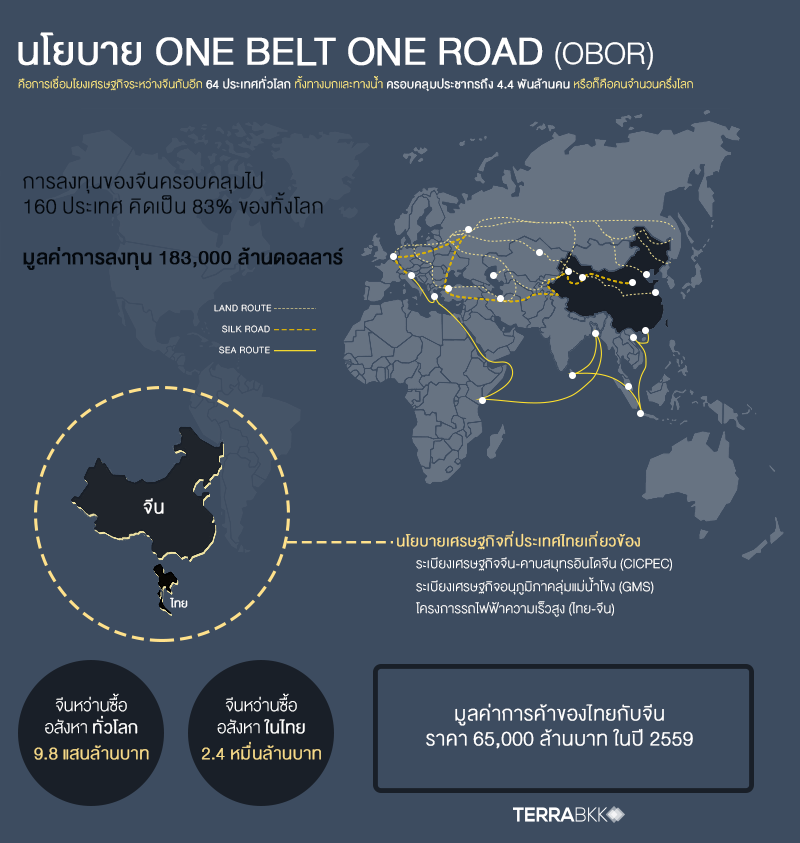
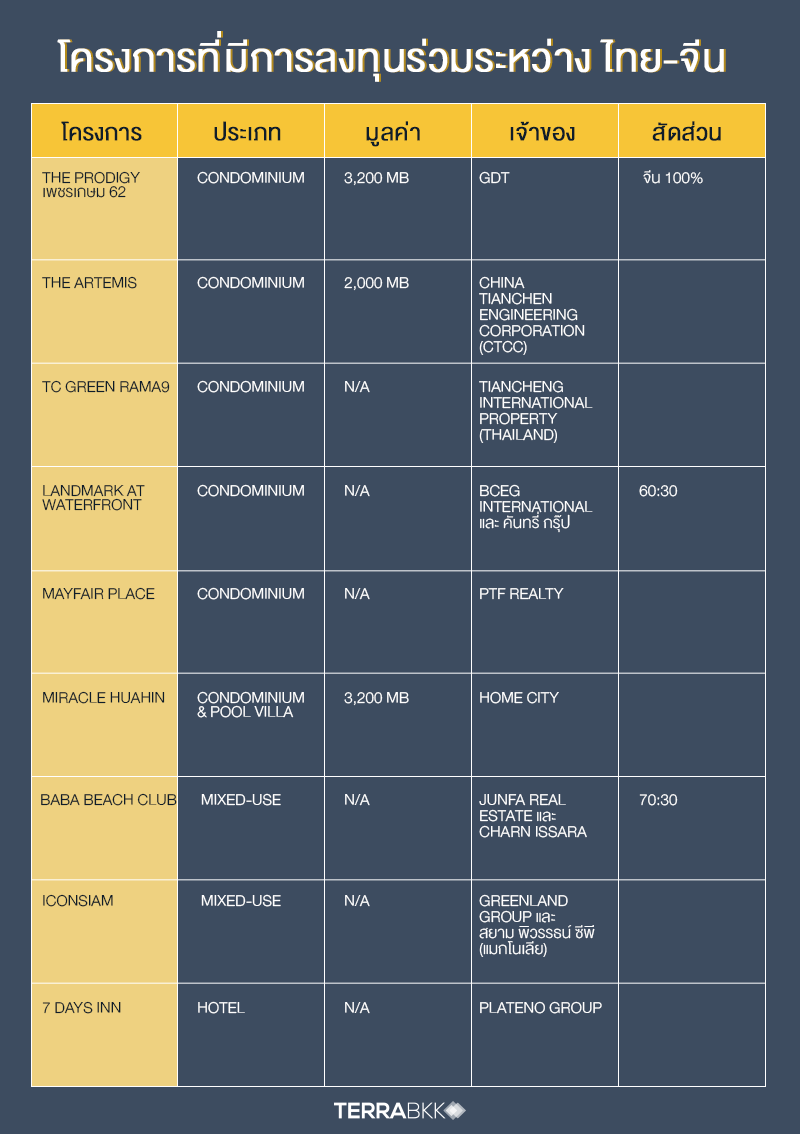
In Thailand, in 2016, Chinese buyers topped the list of foreign real estate investors in Thailand, with an investment of over 24 billion baht, with 51.8% of purchases made for investment purposes. Chinese investors view Thailand as a better option due to land prices being approximately 20% lower than in China, and real estate investments in Thailand can yield profits. Additionally, there has been significant joint investment in condominium and hotel projects. However, in 2016, data showed that Chinese investors were most active in hotels and industrial real estate. We may see increased investment in industrial sectors such as the EEC (Chonburi, Chachoengsao, Rayong) with more Chinese capital.
The growth and international economic policies of China represent a Mega Trend that could transform the world, as it encompasses over half of the global population. Moreover, it's not just China; India, BRIC, the Next Eleven, and ASEAN are also expected to grow. Although Thailand has the slowest economic growth rate in ASEAN, there is still a glimmer of hope that our situation will improve in the future.
Article by: TerraBKK Investment Tips
TerraBKK: Find Good, Affordable Homes