How Will We Live in 20 Years? If More Than Half of the Population Moves to Cities - Mega Trend EP.1
About 120 years ago, Lord Kelvin, the head of the British royal family, famously stated, “How can something heavier than air possibly fly? It’s impossible!” If Lord Kelvin were to come back to life today, he would be utterly astonished, as there are countless airplanes filling the skies. But we can't blame him, as who can accurately predict the future? Even fortune tellers have their flops; remember when one predicted that Obama would only serve one term as President of the United States?
Many organizations and agencies around the world continuously forecast future changes. However, the world is spinning so fast today that we are witnessing rapid and significant growth, leading to predictions about the world in the next 20 years based on the concept of Mega Trend, or waves of change that will directly impact people globally. In this article, we will analyze the future population.
Declining birth rates, increasing elderly population, and more urban areas
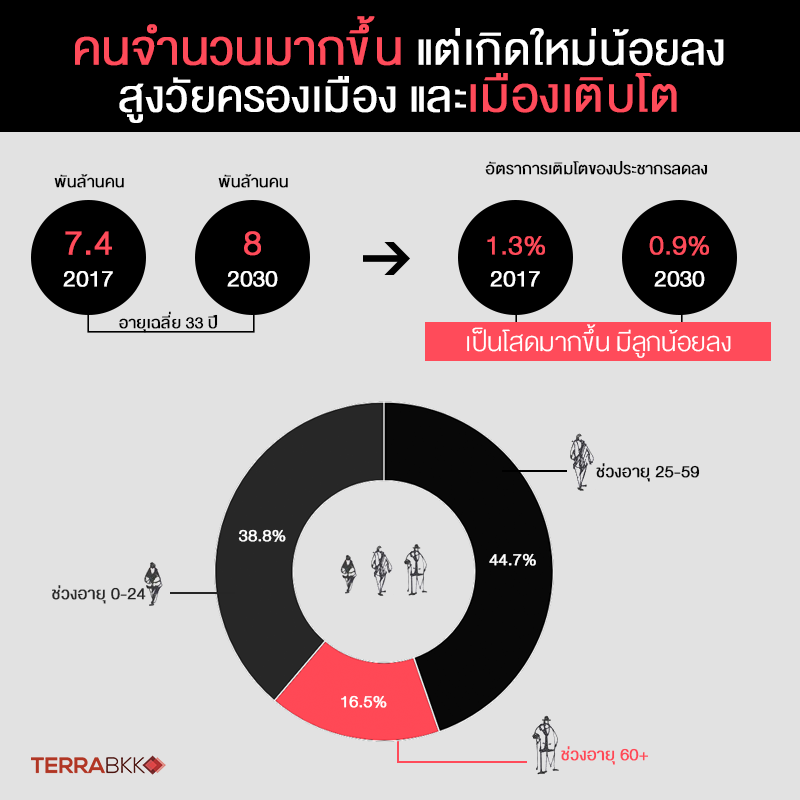
The World Bank is another agency that has forecasted future populations, which is a crucial factor in global change. In 20 years, our world will have more than 8 billion people, up from the current 7.4 billion. This increase is not substantial, as the growth rate is expected to decline from 1.3% per year to just 0.9% by 2030. In summary, there will be fewer newborns in the future, possibly because more people will choose to remain single or have fewer children. Additionally, over 60% of the global population is expected to live in urban areas.
Now, let's take a look at the population characteristics in 20 years. The average age of the population is currently 31 years, but by 2030, it is projected to rise to 33 years. This data roughly indicates that the population's age is expected to increase each year. Furthermore, there will be a shift in the population ratio, with the elderly population surpassing that of children, compared to the current roughly equal ratio.
What does this phenomenon hint at?
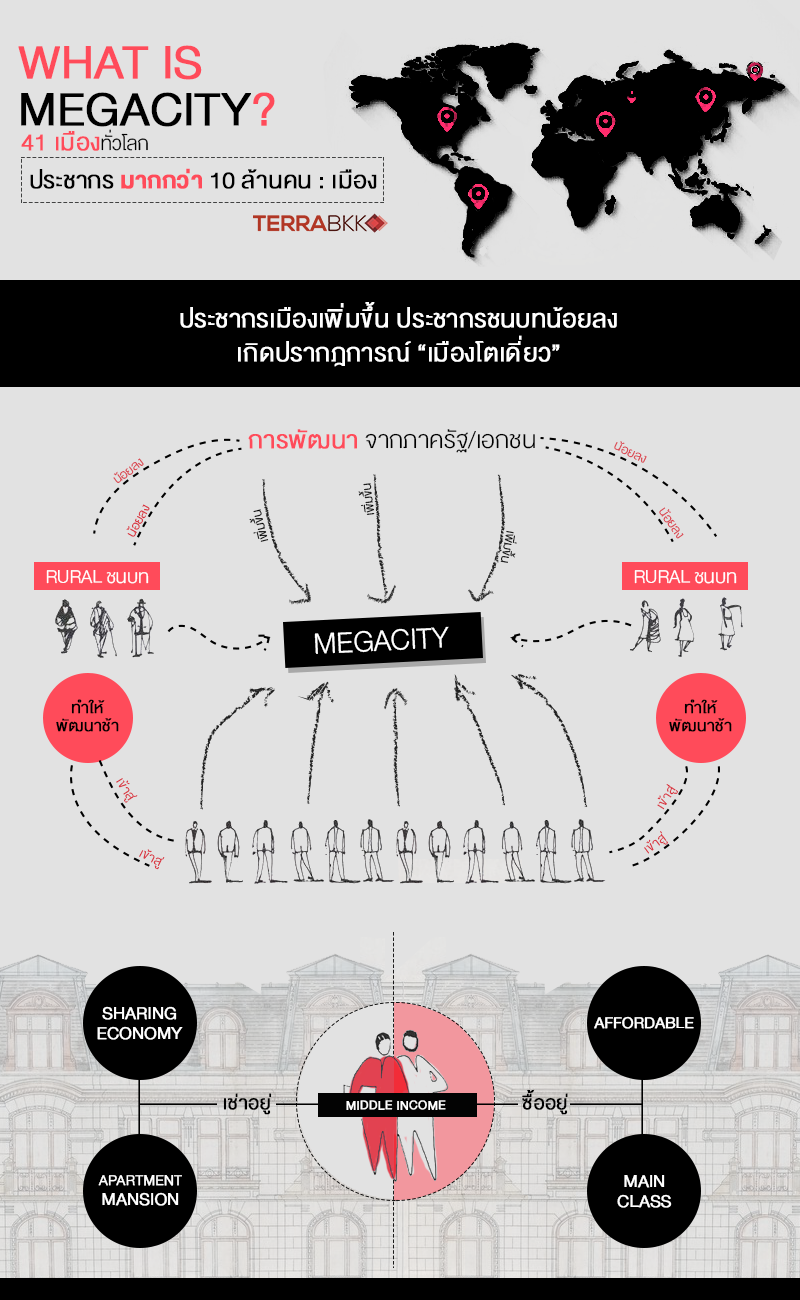
TerraBKK begins with a key point of global interest: the rapid growth of urban areas (urbanization) will lead to 41 mega cities worldwide with populations exceeding 10 million, with Tokyo projected to have a population of 34 million, making it the most populous city in the world.
Vanessa Houlder playfully compares the growth of these mega cities, noting that it took London 130 years for its population to grow from 1 million to 8 million, while Bangkok achieved this in just 45 years. The growth rate of cities is three times faster than that of England, which is a common phenomenon in developing countries.
As urban populations increase, rural areas will see a decline in population as well.
The trend of promoting urban development in terms of budget, infrastructure, transportation, education, healthcare, and more will continue to focus on major cities as it has in the past. This will cause already growing cities to expand even further, leading to the emergence of single mega cities. The gap between urban and rural areas will widen due to unequal development, but travel times between cities will shorten as intercity transportation systems have largely been developed.
As development is not evenly distributed, it creates factors that continuously attract populations to major cities. With the ongoing increase in urban populations, development will remain concentrated in these large cities, resembling a snake eating its tail.
As the population increases while urban space does not expand, high-rise housing will continue to be a developed real estate option for a long time. Housing prices will stabilize because expensive properties cannot be sold, as the majority of urban residents will be middle-income individuals who often cannot afford properties above the Main Class level. Importantly, there is a trend towards renting rather than buying homes, with over 50% likely to rent, possibly in the form of a sharing economy where workers in similar fields live together.
Consequently, there will be an increase in Affordable Housing aimed at supporting the middle-income workforce, particularly in developed countries like Europe and America. The likelihood of development is that the government will encourage private sectors to develop Affordable Housing projects through incentives such as increasing FAR or waiving certain regulations.
The concentration of large populations in cities will also lead to the emergence of slums. The income divide will become more pronounced, leading to employment discrimination and poverty issues clustering in urban areas.
Even though the rise of Mega Cities or even single mega cities seems unavoidable and not particularly appealing, there are still advantages to this situation. Public services and infrastructure in large cities will improve significantly. Additionally, per capita income will increase, as most people work in the country's urban centers, which is evident from the rising GDP estimates worldwide, especially in developing countries where GDP growth rates exceed those of developed nations.
This is a rough forecast of the future, focusing solely on the impacts of population in the future. There are still other Mega Trends that will significantly change the world, and TerraBKK will take on the role of a forecaster, breaking down data to provide readers with clearer insights and analyze the probabilities of future trends across all topics - เทอร์ร่า บีเคเค
Article by: TerraBKK Investment Tips
TerraBKK Finding Good, Value, Affordable Homes