Exploring Thailand's Readiness for a Fully Aged Society
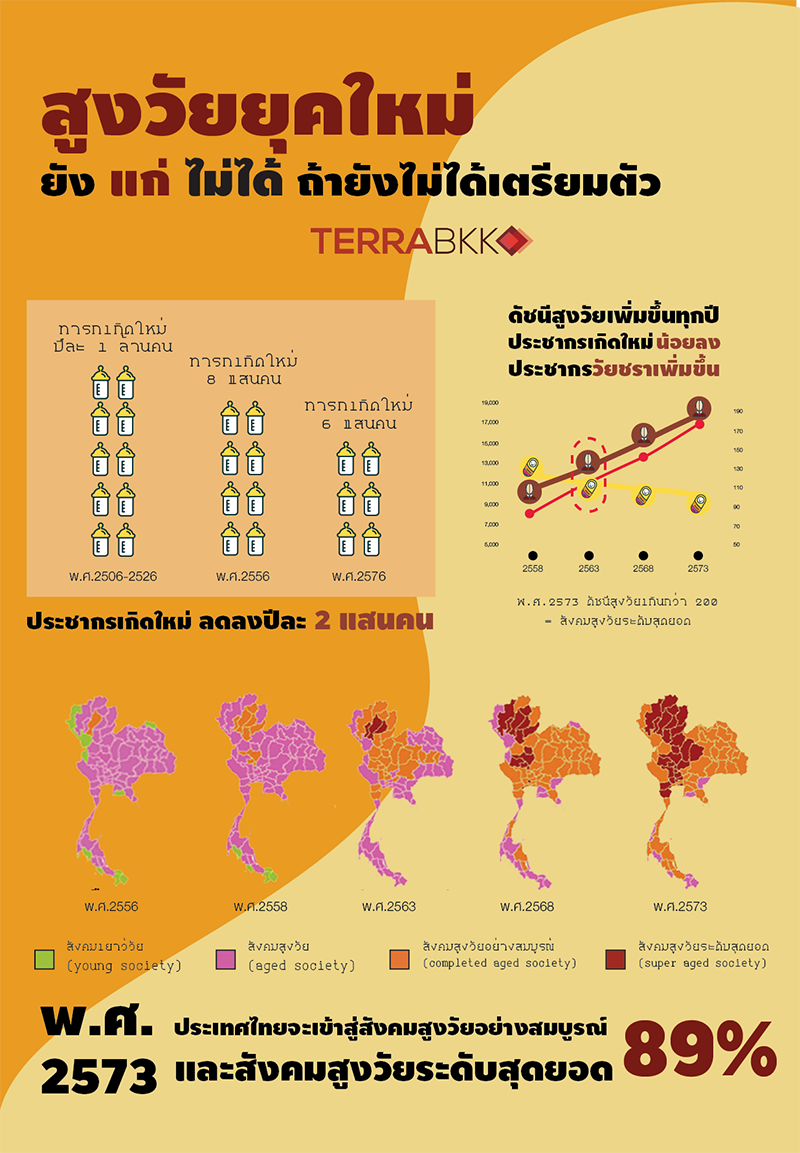
" In the past 34 years, the number of newborns in Thailand has decreased by over 200,000 each year "
Thailand has been transitioning into an aging society since 2004, and the number of elderly individuals is expected to continue rising. By 2031, Thailand will reach a super-aged society, with those aged 65 and older making up 20% of the total population. This situation mirrors that of the United States, where the elderly population is also significantly increasing, leading to continuous growth in the senior housing market.
The Senior Housing Market in Thailand
According to an overview of the senior housing market, TerraBKK Research identifies five categories of property development, which are expected to grow significantly in the next 5-10 years. This report aims to present these categories distinctly to help assess the suitability of different living arrangements.
1. Residential Homes
These have been around for a long time, with over 40 facilities across the country, operated by government agencies. They provide accommodation for elderly individuals who can care for themselves but lack caregivers and are financially disadvantaged, requiring minimal professional nursing care.
2. Nursing Homes
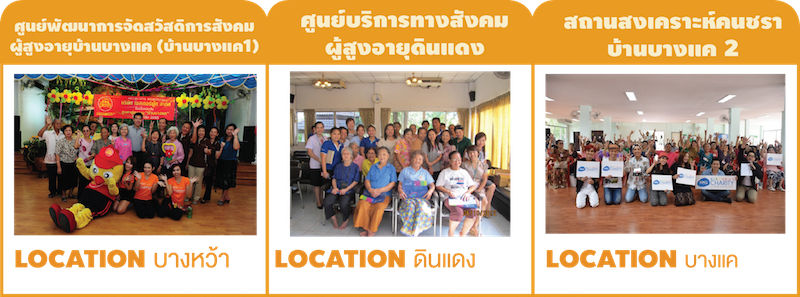
This type of housing for the elderly has seen significant growth, with over 60 facilities currently available, primarily located in major cities near healthcare services. They offer medical, health, and care services for elderly individuals who are not severely ill but cannot live alone at home, with skilled nursing staff available 24/7.

The Nim Care Home - Similar to a small hospital, it offers close care from doctors and professional nurses, along with staff assistance.
Perfect Nursing Home - A large facility dedicated to elderly care, staffed with doctors, nurses, and personnel available 24 hours a day.
AEC Healthy Center and Nursing Home - A center providing both temporary and permanent care for the elderly, including physiotherapy services with a swimming pool, and staff available 24/7.
3. Serviced Apartments
These are typically operated by hospitals and are located adjacent to healthcare facilities, catering to elderly individuals requiring long-term accommodation and ongoing medical treatment. The primary clientele includes both Thai and foreign nationals, such as Japanese seniors who are fully entering the aging society and prefer to receive care in Thailand.
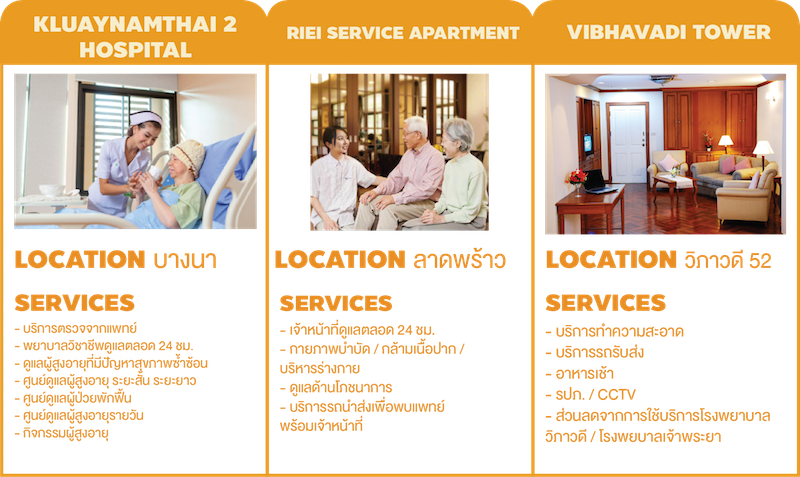
Kuay Nam Thai 2 Hospital - This elderly care center is part of the hospital's services, offering both temporary and permanent accommodation options.
Rirei Serviced Apartment - A Japanese healthcare and medical service company providing serviced apartments with 24-hour staff assistance.
Vibhavadi Tower - A serviced apartment affiliated with Vibhavadi Hospital, offering hotel-like services for relatives and elderly individuals who wish to stay close to medical facilities.
4. Detached Houses
The market for detached houses for the elderly is still growing slowly, primarily in community formats. Most developments are premium projects due to the larger land area required compared to standard housing projects, with specific designs in materials, interior and exterior layouts, and appliance placements. Detached houses for the elderly are often adaptations of existing structures to create retirement homes or large family homes accommodating elderly members, suitable for families with caregivers present.

Wellness City - A health community in Ayutthaya with healthcare centers and other medical services, currently in its third phase of development.
Nusa My Ozone - A luxury detached house located in one of Thailand's best air quality areas (Khao Yai), offering comprehensive health services under PANACEE MEDICAL CENTER.
Villa Mee Suk - A high-quality detached house for the elderly located in Mae Rim, a globally recognized relaxation area for seniors.
5. Condominiums for the Elderly
This type of housing is expected to grow the most in the future, as evidenced by the rapid booking of condominiums for individuals aged 55 and older. There are several reasons why elderly individuals should consider living in condominiums, as they offer compact living spaces with comprehensive amenities, including location, services, and safety. Most condominiums are designed with level floors according to Universal Design, making them safe and aligned with elderly housing design principles. Common areas often include gardens for relaxation and other facilities that cater to seniors more effectively than standard condominiums. For instance, maintenance staff are available for repairs, and the strategic location of condominiums is often close to essential services, particularly hospitals. Therefore, condominiums are suitable for elderly individuals without families who do not live in large households, wish to be near their children in urban areas, and can manage basic self-care. When selecting a condominium specifically for the elderly, it is advisable to choose one with nursing staff available around the clock to assist in emergencies and provide various activities to foster community engagement, preventing loneliness that can lead to depression.
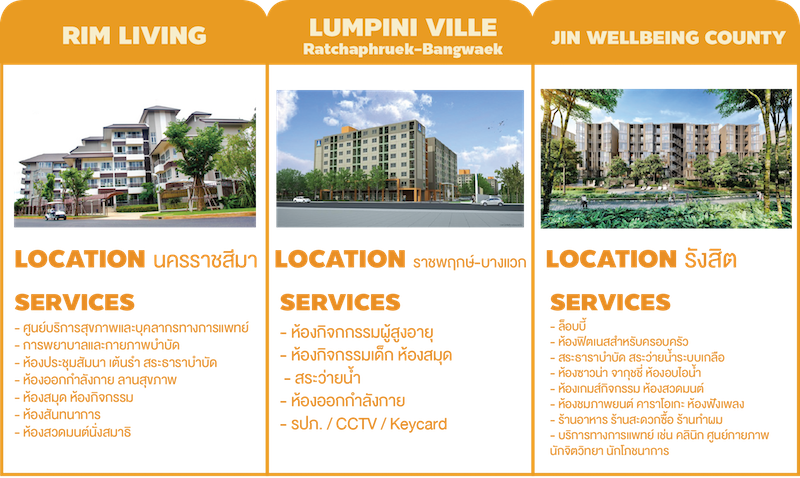
Rim Living - A condominium located in Nakhon Ratchasima (Korat) designed with amenities that support health and elderly care.
Lumpini Ville Ratchaphruek-Bang Waek - Units for the elderly are located on floors 4-6, designed for coexistence between elderly residents and the general population.
Jin Wellbeing County - A condominium that provides comprehensive facilities and common areas conducive to activities for the elderly, including intergenerational activities. Additionally, the project's location is convenient for families whose children work in the city, allowing easy visits to their parents. The project consists of three main components: Active Living for residential purposes, Aged Care Center for those needing special care, including a day care center and nursing home, general medical clinic, and physiotherapy center, and Clubhouse & Wellness Center with complete facilities such as a spa, fitness center, swimming pool, and medical services for prevention, treatment, and rehabilitation. Jin Wellbeing County is the latest project currently attracting interest from the Thai public, having just launched in May.
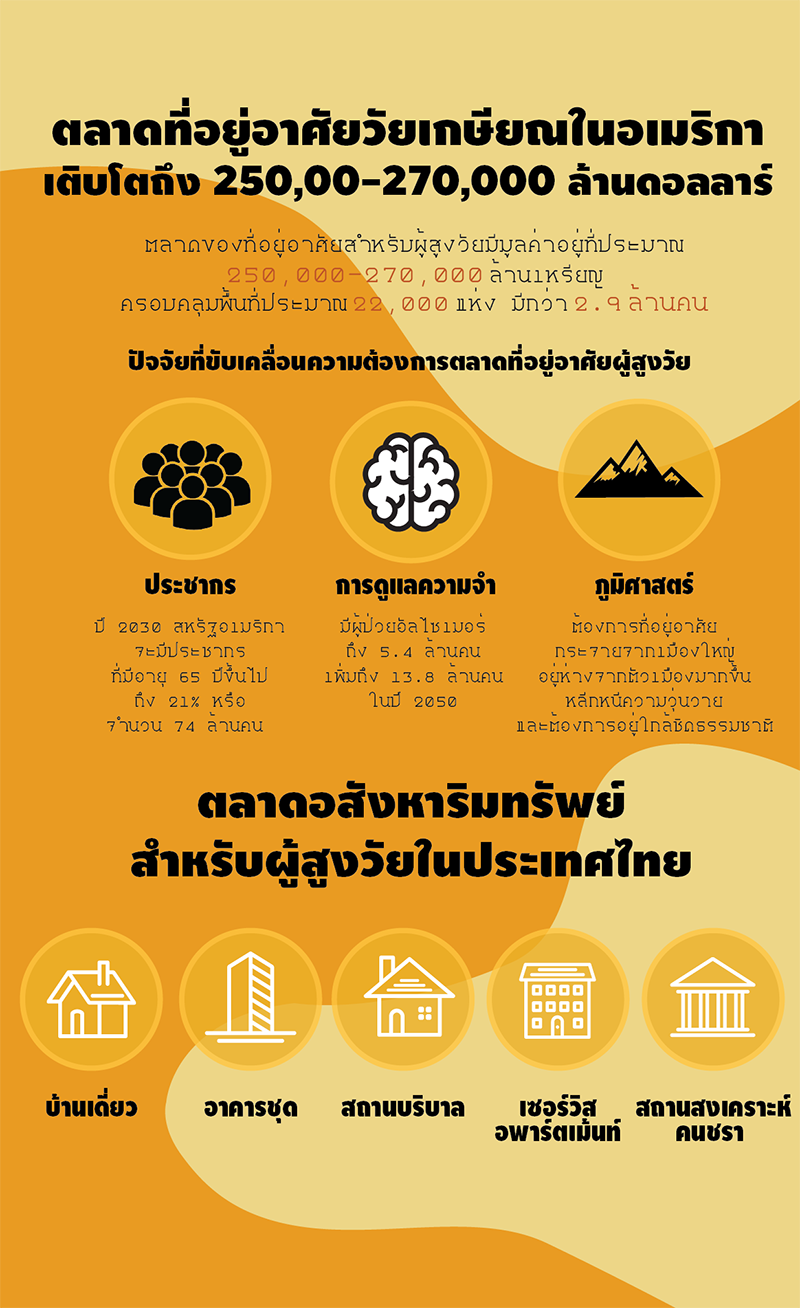
The retirement housing market in America has grown to 250,000-270,000 million dollars
In recent years, senior housing has gained increasing attention due to the anticipated growth of the elderly population. Simultaneously, it has been observed that senior housing tends to be more resilient and less affected by economic downturns. According to the National Investment Center of the Senior Housing & Care Industry (NIC), the market for senior housing is valued at approximately 250,000-270,000 million dollars, covering around 22,000 locations and serving over 2.9 million individuals. The demand for senior housing is driven by three main factors:
- Population - It is projected that by 2030, the United States will have 21% of its population aged 65 and older, totaling 74 million people, which is not significantly different from the projected elderly population in Thailand.
- Memory Care - The aging population will prioritize brain and memory care, with current statistics indicating 4 million Alzheimer's patients, expected to rise to 13.8 million by 2050.
- Geographic Housing Preferences - Elderly individuals tend to prefer housing options that are moving away from major urban centers, seeking tranquility and proximity to nature.
In the past 34 years, the number of newborns in Thailand has decreased by over 200,000 each year
One indicator of an aging society is the “Aging Index,” which compares the structure of the population between the increase of those aged 60 and older and the population of children under 15 years old. This reflects the replacement growth rate, meaning that as the child population grows, it compensates for the loss of the elderly population. The interpretation of the index is as follows: When the index value is below 100, it indicates that there are fewer elderly individuals than children. If the index exceeds 100, it means there are more elderly individuals than children. The levels of aging society can be categorized as follows:
- Young Society - Aging index below 50
- Aged Society - Aging index between 50-119.9
- Completed Aged Society - Aging index between 120-199.9
- Super Aged Society - Aging index of 200 and above
Thailand is classified as an aged society. According to population projections for Thailand from 2010 to 2033, or the next 30 years, by the Department of Provincial Administration, the statistics on birth rates and fertility rates indicate that in the past, from 1963 to 1983, there were over 1 million births annually. However, in 2013, the number of births dropped to only 800,000, and in the next 20 years, it is expected to decrease to just 600,000. This means there will be fewer working-age individuals, while the elderly population will continue to increase.
In 13 years, 69 provinces in Thailand will transition to a fully aged and super-aged society
As of 2013, most provinces in Thailand have already entered the aging society phase, with only 9 provinces remaining in the young society category. In just 2 years, the number of provinces in the young society category has decreased to only 5, while 6 more provinces have transitioned to a fully aged society, totaling 7 provinces. This number will continue to rise each year, and by 2030, or in just 12 years, 42 provinces will have entered a fully aged society, and 27 provinces will have reached a super-aged society. In summary, Thailand has already transitioned to a fully aged and super-aged society in 89% of its provinces.
#AreWeReady? Housing Policies for an Aging Society (Ageing Society)
#Download Free Senior House Designs
#8 Ideas for Senior Products
#6 Standards for Senior Housing
Article by: TerraBKK Real Estate News
TerraBKK: Find Good, Affordable Homes