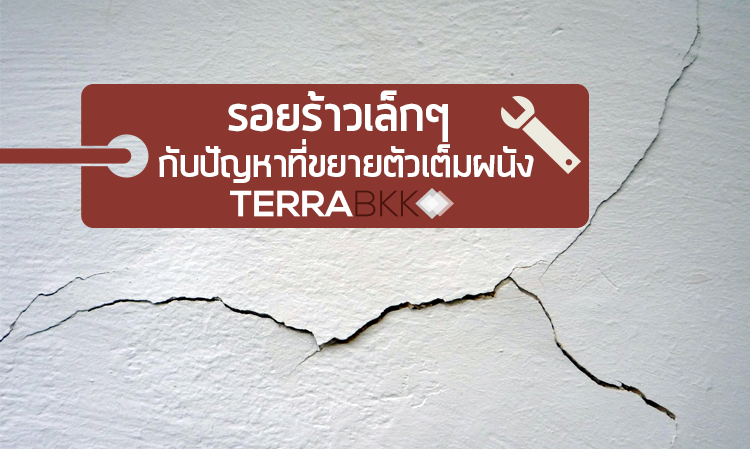
Small Cracks and Expanding Problems
The structure of a house, including columns, beams, ceilings, and floors, is essential. Repairing these components can easily lead to significant expenses, as they are the foundation of the home. Therefore, regular inspection and maintenance should not be overlooked. Cracks come in various types, occur in different locations, and affect the house differently. Which types are dangerous?
1. Diagonal cracks at door frame corners These cracks often arise from plastering because door and window frames are mostly made of wood, which expands and contracts with temperature and humidity changes. This type of crack is not dangerous.
Repair method: For small cracks, flexible materials like silicone or acrylic can be injected. However, for larger cracks, non-shrink, non-expanding cement should be used to fill and re-plaster. Ordinary sand cement should be avoided as it may shrink.
2. Hairline cracks on walls These occur due to improper mixing of plaster or prolonged contraction of the wall with temperature changes, causing the plaster to crack. This type of crack is not dangerous.
Repair method: First, identify the cause by tapping the wall in that area.
A hollow sound indicates that the plaster is not adhering well to the wall and may fall off in the future. Remove the old plaster surface and re-plaster. Avoid mixing thin cement layers as they may eventually fall off.
A solid but dull sound means the plaster is still well adhered to the wall; just repaint.
3. Vertical cracks on walls These are caused by sagging floors and beams that bear excessive weight. If such cracks are found, heavy items should be moved away immediately, as this type of crack is considered dangerous.
4. Diagonal cracks on walls These result from settling foundations or columns in that area, indicating structural weakness. This type of crack is very dangerous.
5. Cross-shaped cracks and cracks in the floor These occur due to the floor's inability to bear weight and are on the verge of collapse. Very dangerous; keep away.
Cracks of types 3-5 are very dangerous and cannot be repaired with cement. Consulting an engineer to reinforce the structure is advisable.
8 Warning Signs of Dangerous Cracks You Can Observe Yourself
2. Cracks wider than 0.5 mm
3. Cracks that continue to widen and lengthen
4. Doors and windows start to misalign
5. Chunks of plaster falling from beams and floors
6. Plumbing systems starting to break or become damaged
7. The building appears to be leaning
8. Occasional creaking sounds from the building, especially at night.
 Characteristics of non-dangerous cracks inside the house
Examples of cracks that occur and are not dangerous, though they may affect the aesthetics of your home. 1. Cracks at the corners of door and window frames may occur due to insufficient reinforcement or excessive plastering.
Characteristics of non-dangerous cracks inside the house
Examples of cracks that occur and are not dangerous, though they may affect the aesthetics of your home. 1. Cracks at the corners of door and window frames may occur due to insufficient reinforcement or excessive plastering.