Unlocking Wellness Strategies in the Thai Real Estate Business: Key Insights from the TerraHint Brand Series 2025
In the digital age, people are increasingly seeking happiness and better health. This awareness has become even more pronounced following the COVID-19 crisis, which served as a wake-up call, prompting everyone to reassess and prioritize their health like never before.
This is one reason why the TerraHint Brand Series 2025, now in its eighth year, is being held under the theme The Wellness Blueprint #LiveWellWithFormula. Organized by TerraBkk, the event aims to ignite knowledge among developers, investors, and entrepreneurs, elevating the real estate business.
The Awakening of Wellness as a Business Connection
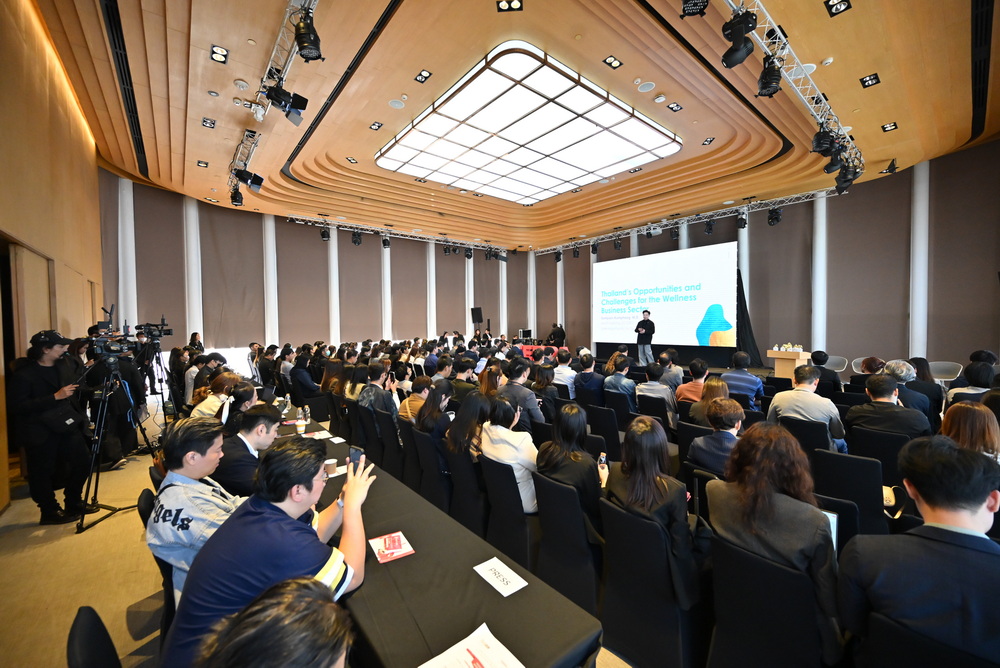
One of the key topics that garnered significant interest was the lecture titled “Thailand Opportunities and Challenges for Wellness Business: Exploring the Potential and Challenges of the Thai Wellness Industry.” Presented by Dr. Somporn Khamphong, Chief Executive Officer of AACI Asia-Pacific, an expert in international wellness standards and a consultant for healthcare organizations in Thailand, it highlighted that wellness today is no longer confined to traditional medicine or health sectors; it has become a matter for "everyone" and a business opportunity that can sustainably add value to the real estate sector.
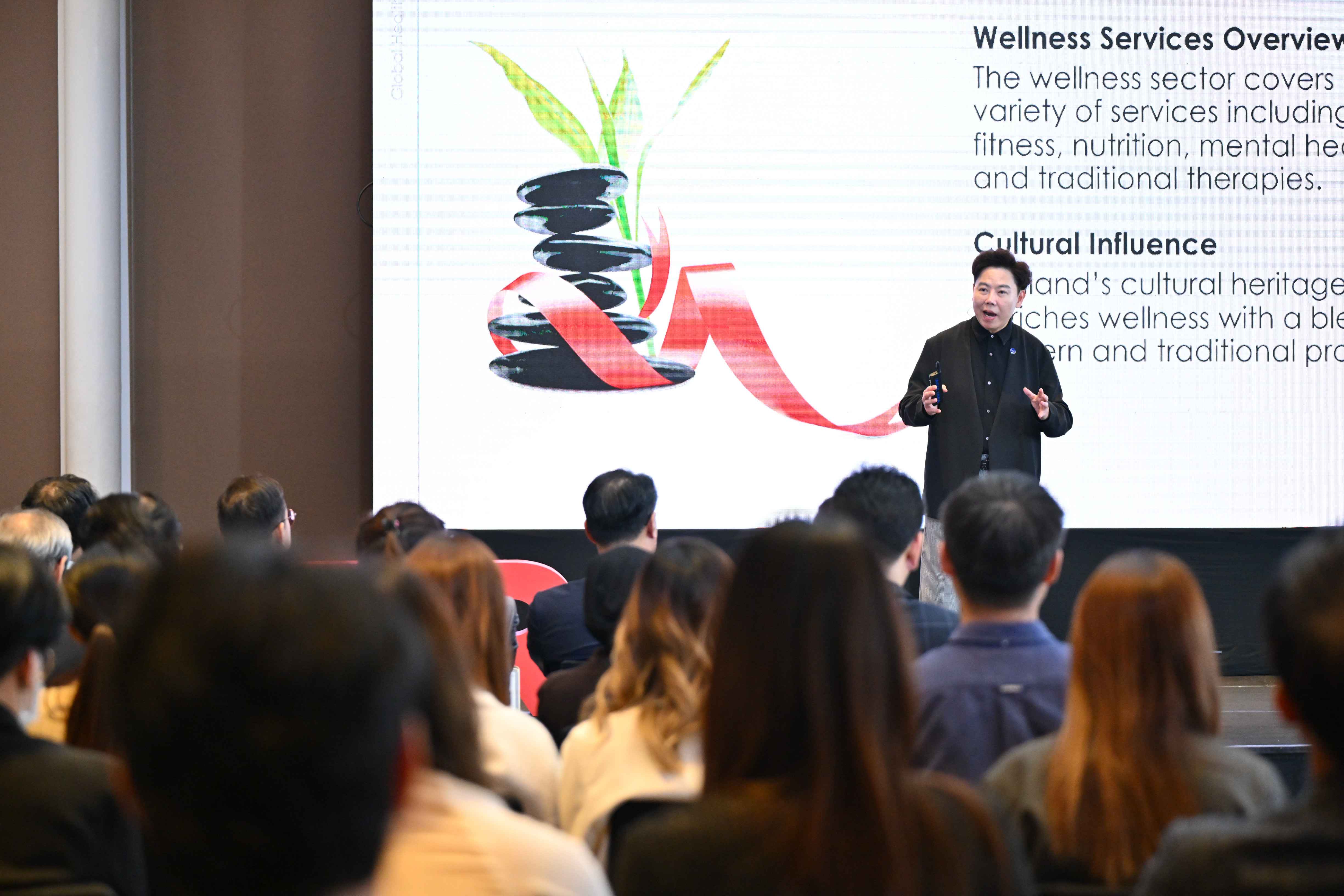
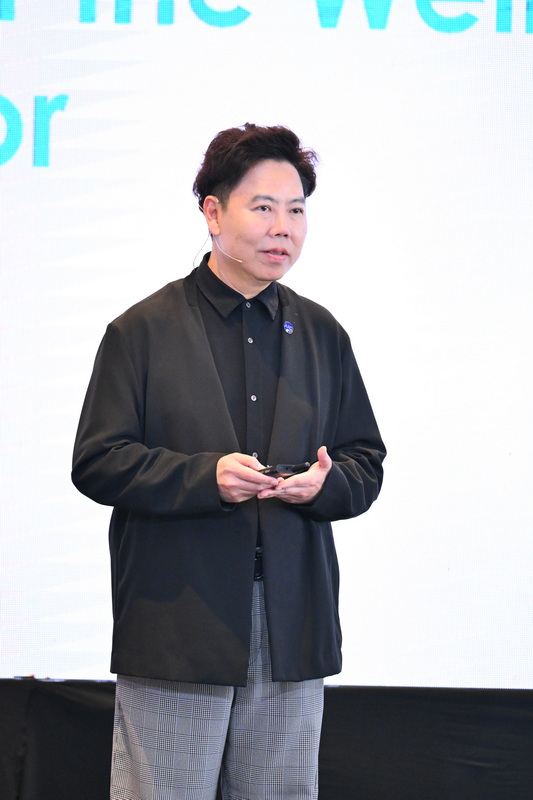
“Wellness or Wellbeing emerged from the COVID-19 period, where everyone witnessed tragedies and heartbreaking situations. Humanity began to reflect on the causes, known as the 'Four Noble Truths' of medicine, because humans cannot separate happiness from suffering, whether in illness or health.”
The awareness of the continuity of spirit and body when facing both joy and sorrow, illness and health (Illness and Wellness) at all times has created a demand for preventive healthcare and a pursuit of a better lifestyle, which is essential for the real estate business to integrate into project development.
Thainess: The Ultimate Soft Power Advantage on the Global Stage
For the Thai wellness business to move forward with direction, it is crucial to view the situation from an external perspective to understand how the world perceives Thailand and how Thailand can leverage its strengths to create differentiation and expand opportunities.
In the past, foreigners have recognized Thailand's clear strengths in various aspects of the wellness business, such as Thai spas and massages, fitness, mental health, and traditional therapies. However, the unique "single card" that cannot be replicated is "Thainess," which encompasses cultural dimensions and outstanding hospitality, expressed through the concept of "Soft Power" characterized by humility, generosity, and the often "overly considerate" nature that is widely acknowledged and appreciated by foreigners.
The Thai spirit of service and the ability to create a Holistic Experience that integrates wellness activities, lifestyle, and cultural experiences have positioned Thailand as a leading wellness destination in the region, akin to Japan's prominence in high technologies, South Korea's aesthetic surgery, and Europe's/America's medical expertise.
Key Challenges and Obstacles that Need Urgent Resolution
Thailand cannot deny that tourism is a crucial driver creating demand among international customers. The initial step is to attract tourists to utilize medical/wellness services in Thailand and then expand through cross-selling various services such as long-term accommodations, arts activities for mental health, or retreat programs to create added value and sustainability for the industry.
Despite high opportunities, the Thai wellness business faces urgent challenges that need to be addressed, particularly concerning legal issues and management.
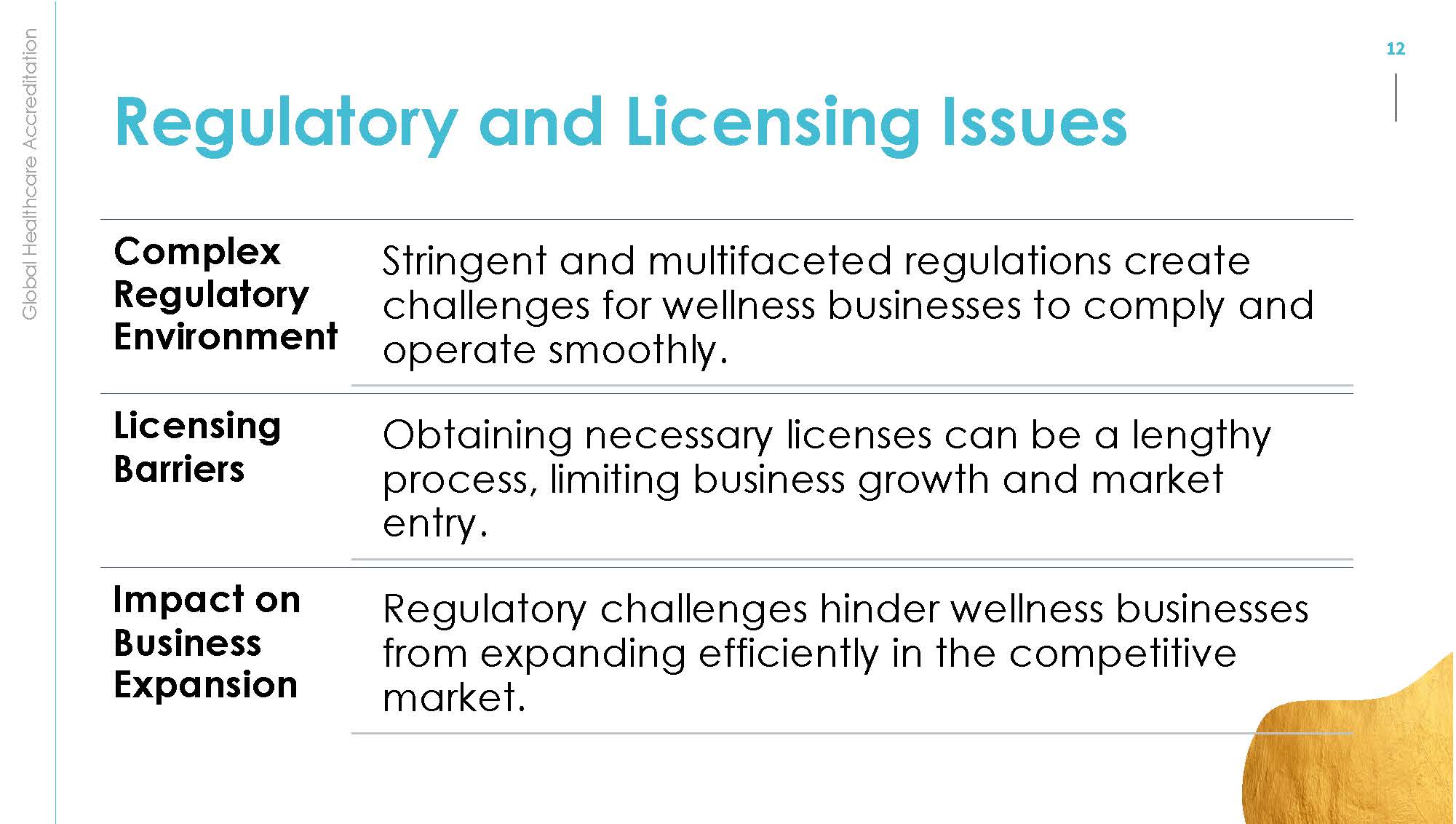
1. Legal Barriers and Business Costs: The laws and regulations concerning wellness business operations are complex. Obtaining licenses related to healthcare facilities makes it difficult and costly to expand wellness services to other areas such as hotels or residential centers, leading many operators to view it as unprofitable.
2. High Competition and Skill Shortage: The competition in the wellness business in the Asia-Pacific region is fierce, with Malaysia being clearly supported by the government as a Medical Tourism Hub and the emergence of large wellness centers in neighboring countries. Thailand's challenge lies in creating differentiation and addressing the skill shortage, particularly in wellness management and coaching personnel with systematic quality.
3. Lack of Innovation and Collaboration: Many countries use innovation and digital technology to measure, analyze, and manage wellness services to enhance transparency and consumer engagement, while Thailand still focuses on traditional services. Additionally, Thai operators lack collaborative efforts and concrete partnerships.
4 Strategies for Developing Well-being
To meet customer demands in an era that seeks ‘completeness’ and ‘personalized service’ (Personalization), businesses should adapt as follows:
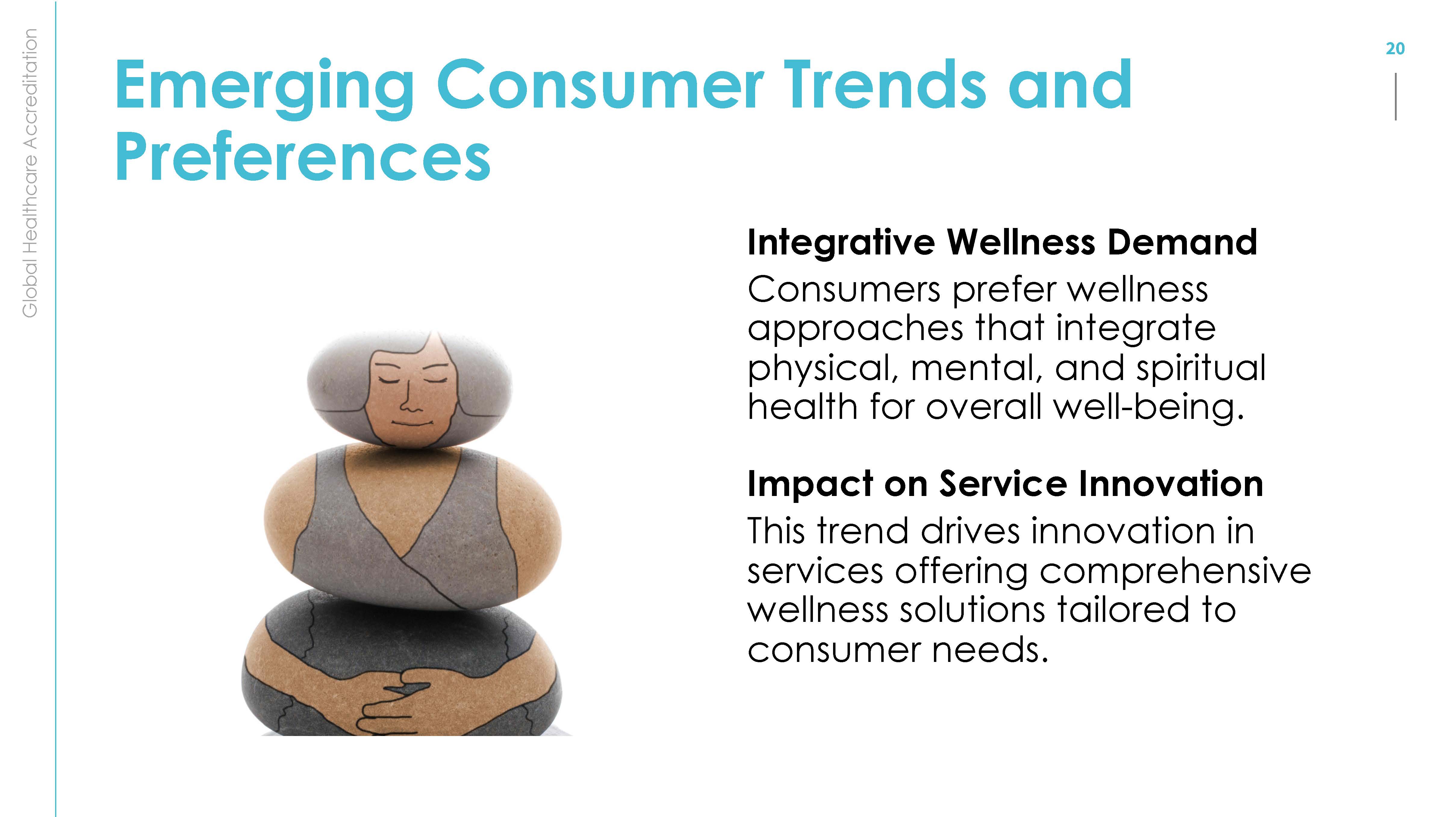
- Holistic Integration: Develop services that encompass both physical and mental dimensions, as "the mind is the master, and the body is the servant"; thus, coming to Thailand for wellness must provide a truly integrated experience.
- Embrace Thainess: Emphasize the uniqueness of Thai culture in every activity and touchpoint, as this is a value that cannot be found in other countries.
- Start & Scale: The principle of "the chicken and the egg" is about starting by investing in what you are skilled at and gradually expanding by finding partners with "shared values" to fill in the gaps.
- Government Facilitation: Support and advocate for the government to play a role in facilitating, creating tax incentives, and infrastructure to promote Thailand as a true Global Presence or regional wellness hub.
Creating a New Dimension to Elevate Well-being Standards
The opportunities for the Thai wellness business are immense, but it must move beyond merely viewing wellness processes to focusing on the outcomes of well-being, which is what the global community values and serves as a tool for establishing higher standards. Dr. Somporn presented the concept of categorizing wellness services in hotels, emphasizing guest experience and visibility, divided into several levels.
Basic: Service characteristics include only general amenities, healthy lifestyle promotion, and basic fitness.
Advanced: Service characteristics include diverse programs, holistic experience creation, and sustainability (waste reduction).
Gold: Service characteristics include personalized wellness programs, holistic exclusive experiences, spa treatments, and wellness retreats.
Platinum: Service characteristics utilize digital technology/innovation, with experts (nutrition, exercise specialists) involved in care.
Diamond (highest): Includes wellness innovation, community involvement, and meaningful programs (accreditation).
Positioning oneself at a higher level will create differentiation and meet the demands of international markets seeking precision and quality.
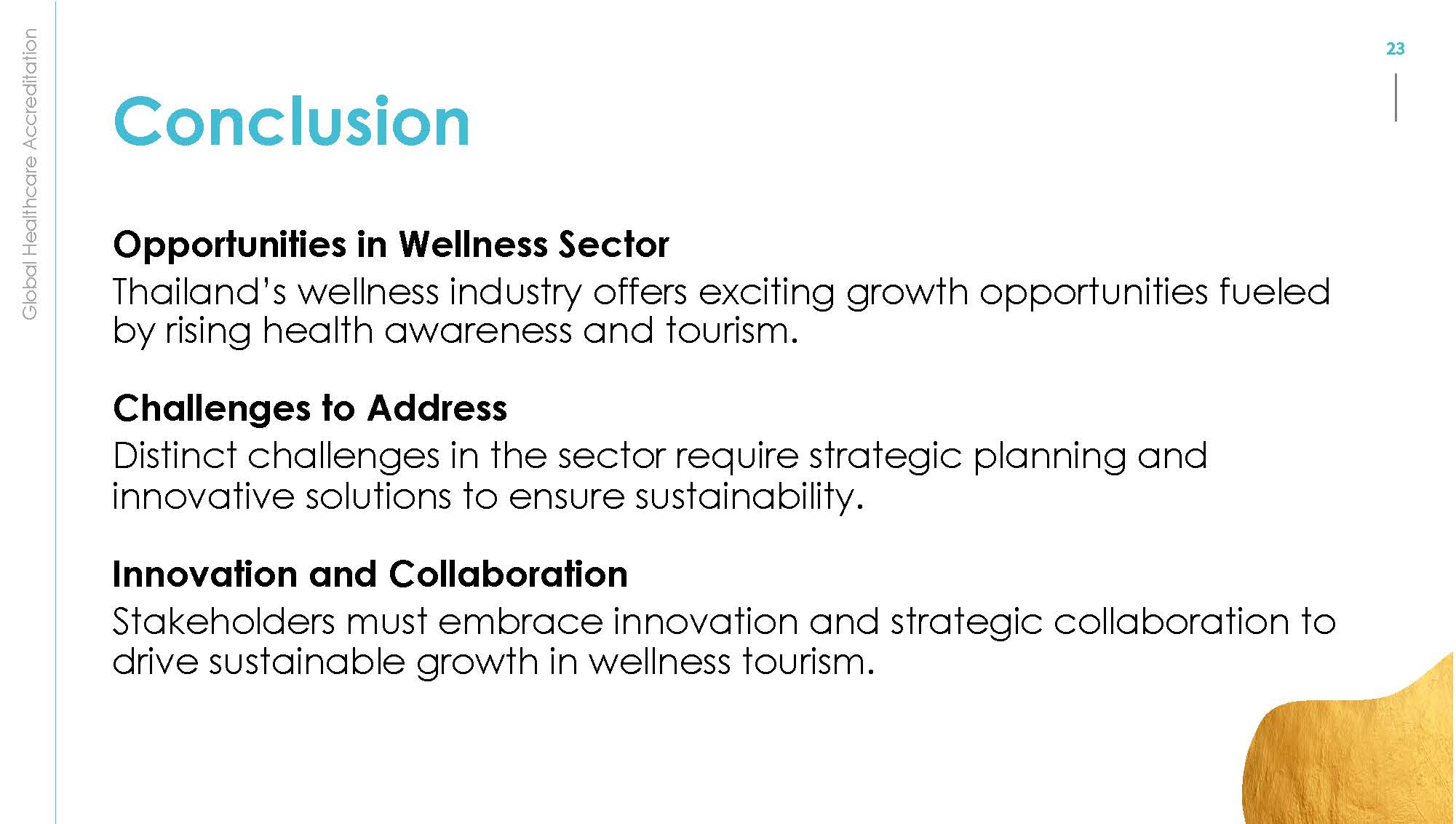
Thailand has strong advantages in becoming a core player in brand creation. The journey to becoming a Regional Wellness Hub can only happen if all stakeholders, especially in real estate, tourism, and health, acknowledge the existing challenges and unite to integrate services, create innovations, and collaborate.
This is the "formula for success" that will enable the Thai wellness business to turn every crisis into a new opportunity on the global stage.