Modern Homes and Functions Adapted for Thailand's Climate
Modern Homes and Functions Adapted for Thailand's Climate
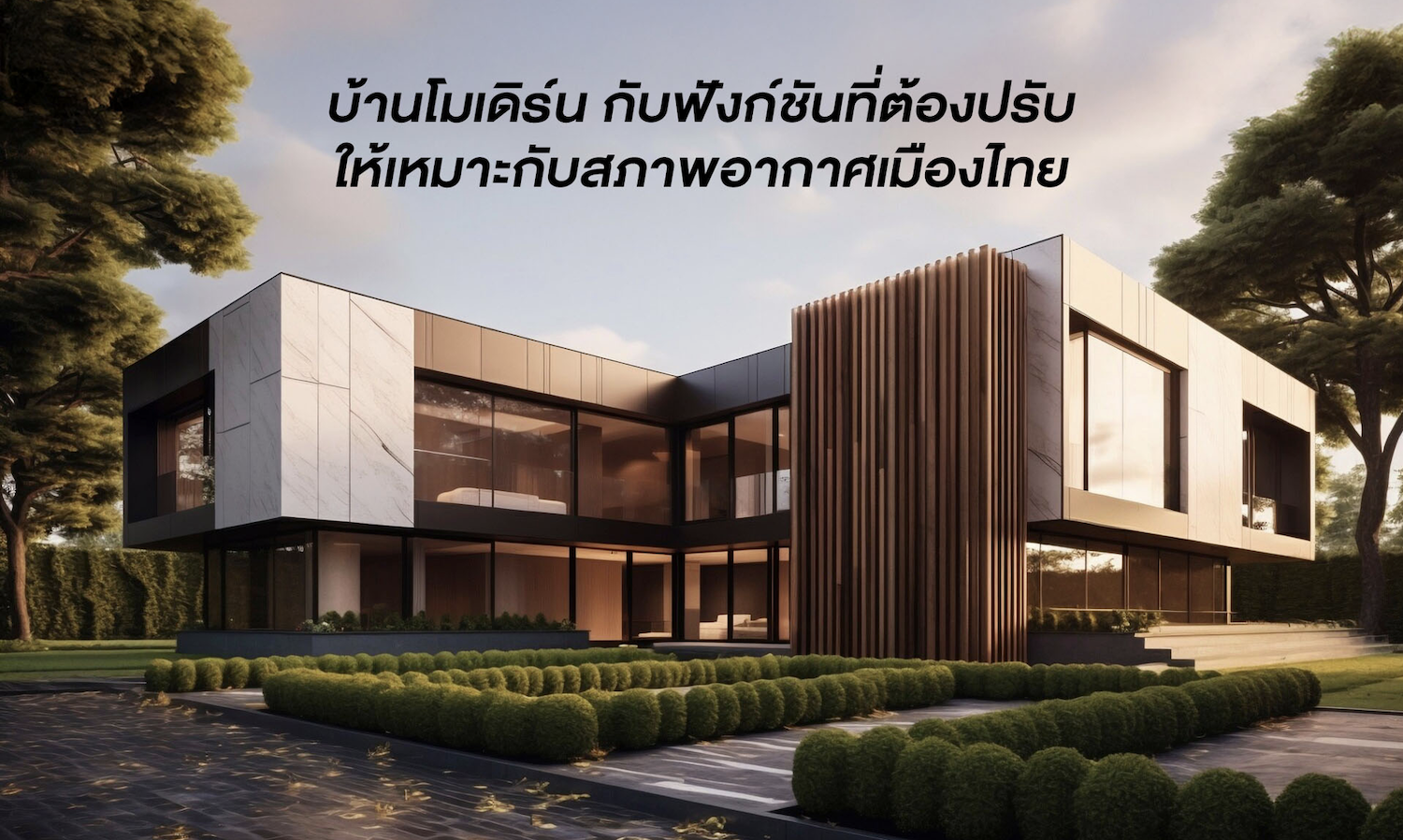
“Modern Homes” are a popular style known for their beauty, featuring sleek designs, straightforward functions, and a sense of openness and comfort. They come with a clear character, but despite their appealing appearance, these homes are often designed for cooler climates rather than the tropical conditions we experience in Thailand.
Therefore, if anyone is considering building a modern-style home in Thailand, it’s worth taking a moment to think about how to design it in a way that maintains the desired style without having to endure excessive heat or incur endless electricity bills. This article will explore what functions need to be adjusted for a modern home to be livable in the context of Thailand's hot climate, along with design ideas that enhance both aesthetics and comfort. Let’s dive in!
Why Building a Modern Home in Thailand Requires Careful Consideration
While modern homes appear sleek and simple, they are fundamentally rooted in architecture suited for cooler climates, such as Europe or Japan, which is quite different from our hot and humid weather. If these designs are applied in Thailand without any modifications, they can easily become beautiful yet uncomfortable living spaces. Let’s look at what adjustments are necessary when building a modern home in a country with long summers.
Beautiful Structures but Stifling Heat
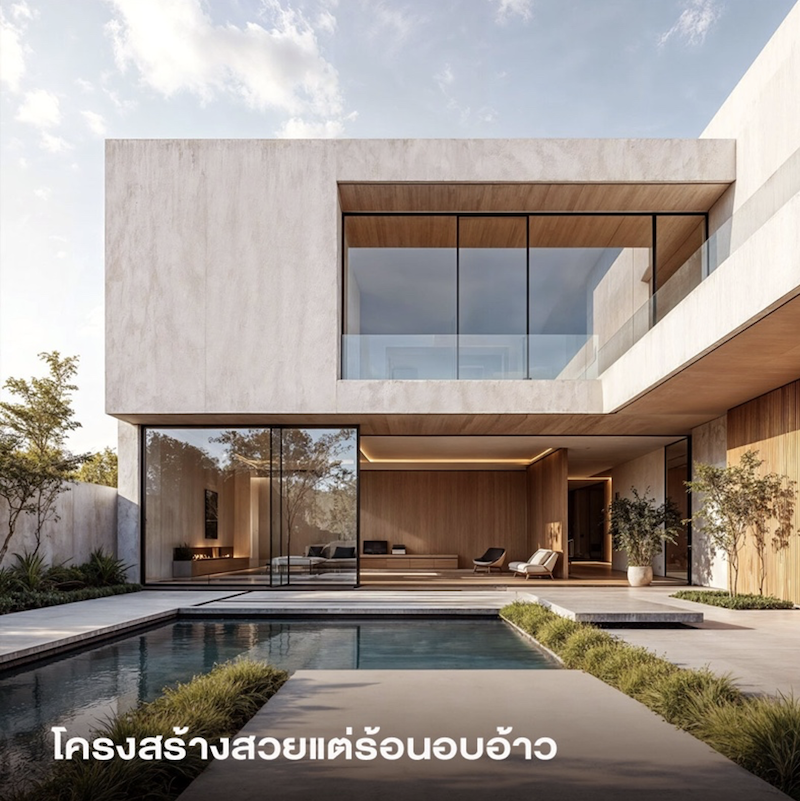
Modern homes typically emphasize boxy designs, flat roofs, and smooth walls that allow plenty of light in. While this looks great in photos, when exposed to the intense Thai sun without eaves or awnings for shade, the intended minimalism can turn into a full-blown heat trap.
Homes with flat roofs may appear stylish, but they absorb sunlight directly without any sloped surfaces to help dissipate heat. If materials that look good but do not reflect heat, such as concrete or glass, are used, the home can become even more stifling.
Common Issues When Home Designs Aren't Suited for Thailand
In addition to heat, another frequent issue is rainwater drainage. Thailand experiences not only hot seasons but also heavy rains during monsoon periods. Many modern homes lack sufficient roof slope or drainage systems, leading to problems like leaks, seepage, or water pooling, especially on rooftops or areas not designed with a slope.
Another common issue is the orientation of the house, which often does not consider the specific sunlight, wind, and rain patterns of the region. For example, placing windows on the side that faces direct morning sunlight or having an open western wall may look airy but can lead to increased air conditioning use.
Essential Functions for Comfortable Living in a Modern Home
As we know, the sun in Thailand is extremely hot, especially during the summer when it can feel stifling with no breeze. Therefore, the functions within the home must be thoughtfully designed, not just for aesthetic appeal as seen online, but also to address temperature, light, airflow, and practical daily use.
Design the Home Layout for Effective Airflow
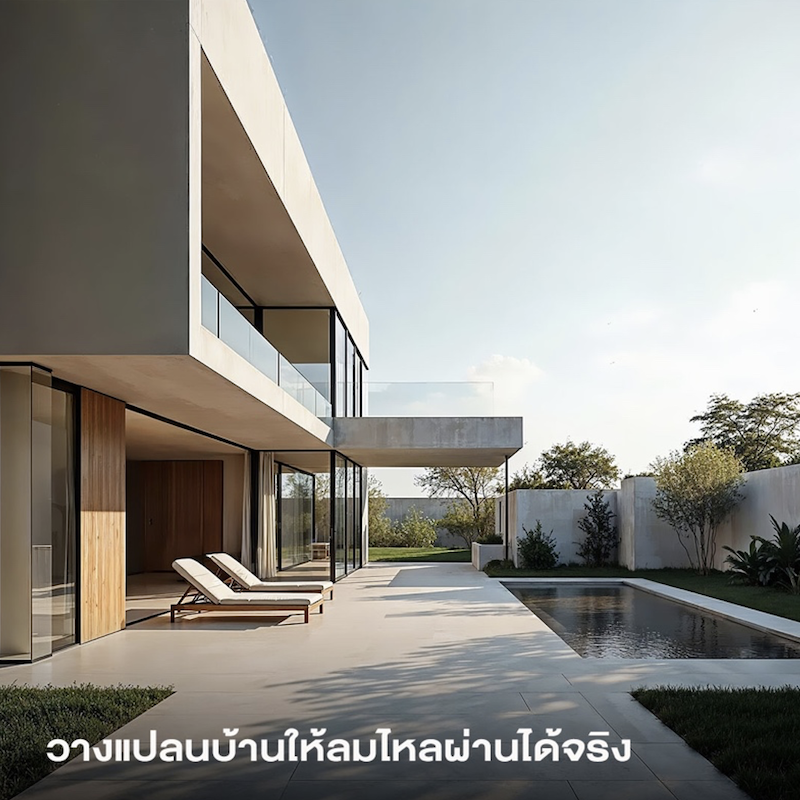
In Thailand, aligning the house's orientation with the natural wind direction is crucial, especially the southeast winds that often blow during the summer. By strategically placing windows, doors, or openings to connect with each other, cross ventilation can be achieved. Some may consider using louvered windows, ventilation openings, or a central courtyard to enhance airflow without needing to run the air conditioning all day.
Insulate Against Heat with Materials and Designs Suitable for Thailand's Sun
For flat or slab roofs, it is advisable to use premium insulation or heat-reflective sheets. For walls, materials that do not retain heat, such as lightweight concrete, double-layered walls, or small ventilation openings, can help regulate temperature.
Another tip is to use sun screens or plant large trees to create shade around the house, which can significantly reduce heat entering the home. This design works well for both aesthetics and functionality.
Beautifully Designed Light Openings That Don't Overheat
Large windows or light openings are another hallmark of modern homes, as they make the space feel airy, bright, and luxurious. However, if the position or materials are not chosen wisely, they can lead to excessive sunlight flooding the home from morning until evening.
A simple solution is to use green-tinted or reflective glass that reduces heat from sunlight without compromising brightness, or to add thin UV-blocking curtains to maintain the home's openness.
Examples of Adjusting Modern Home Designs for the Climate
Making a modern home livable in Thailand doesn’t mean abandoning stylish designs altogether; it means adapting them to withstand the sun, rain, wind, and heat we face in every season. There are many homes and projects in Thailand that have successfully achieved this balance, looking modern while being functional. Let’s explore these ideas for inspiration to enhance your dream home.
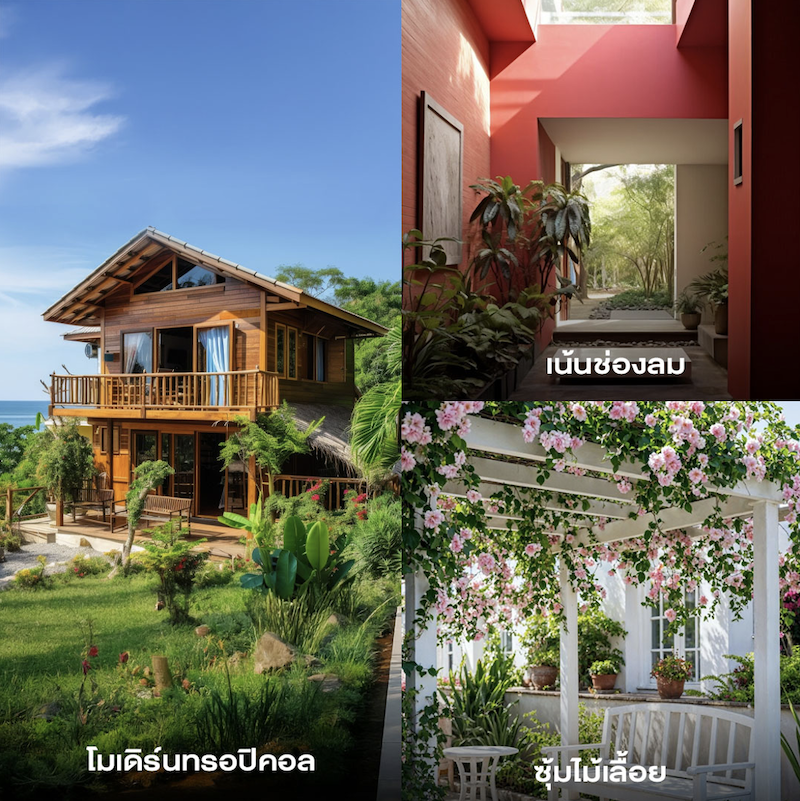
Modern Tropical
The Modern Tropical style combines the sleekness of modern design with the details suited for tropical living, addressing sunlight, airflow, and rain. It is essentially designed for living in Thailand.
The hallmark of Modern Tropical is the use of simple lines typical of modern design, combined with functions that cater to Thai living, such as sloped roofs that protect against rain and wide eaves that effectively block sunlight. Incorporating a central courtyard allows for comfortable airflow while maintaining the minimalist essence of modern design.
Materials often include wooden slats, loft-style walls, or exposed concrete mixed with natural elements, creating a raw yet harmonious feel with the surrounding nature.
Ideas for Modern Homes That Are Comfortable and Cool
- Modern homes that opt for gabled roofs instead of flat roofs for better heat dissipation while maintaining a modern structural appearance.
- Homes that emphasize vertical ventilation openings with precisely placed openings to allow airflow without being overly exposed.
- Homes that use Low-E glass and position windows to avoid direct sunlight without needing heavy curtains, significantly reducing indoor temperatures.
- Some homes incorporate trellises or vertical green walls to add natural shade and a subtle resort-like ambiance.
Conclusion
Building a modern home in Thailand is no longer a daunting task. By understanding the natural environment and climate of each area and designing accordingly from the outset—whether by planning for airflow, choosing heat-resistant materials, or designing light openings to suit the sun—every small function contributes to a more comfortable living space without losing the unique identity of modern-style homes.