Office Market Trends in Thailand: Changes and Future Opportunities
The office market in Thailand continues to face significant challenges due to the increasing supply of office space and the ongoing trend of hybrid work-from-home arrangements stemming from the COVID-19 pandemic, which has led to a decrease in demand for office spaces. Companies are beginning to downsize their office spaces and are increasingly turning to co-working spaces or short-term rentals, placing greater emphasis on flexibility in office usage, such as implementing hot-desking arrangements without fixed seating.
Demand for traditional office spaces is declining, particularly in central business district (CBD) areas, due to rising rental costs, with many organizations opting for smaller spaces. The development of offices as part of mixed-use projects that combine retail, hotels, and amenities, as well as Smart Offices, will be in demand and will help attract tenants. This will support the expansion of co-working spaces and flex offices, especially in areas outside the CBD, catering to startups and medium-sized enterprises. The economic conditions and rising real estate costs are pressuring businesses to consider more cost-effective options.
Investment in green offices is on the rise as tenants increasingly prioritize ESG (Environmental, Social, and Governance) and sustainability. This trend necessitates that older office buildings without certifications or sustainability plans undergo improvements to meet the evolving demands of tenants. Environmentally friendly office buildings that meet various standards, such as TGBI, LEED, and WELL, will attract more interest, leading to growth opportunities for Grade A offices and co-working spaces. Offices equipped with modern technology, clean air systems, and amenities that support health and well-being will become more popular among the new generation of employees.
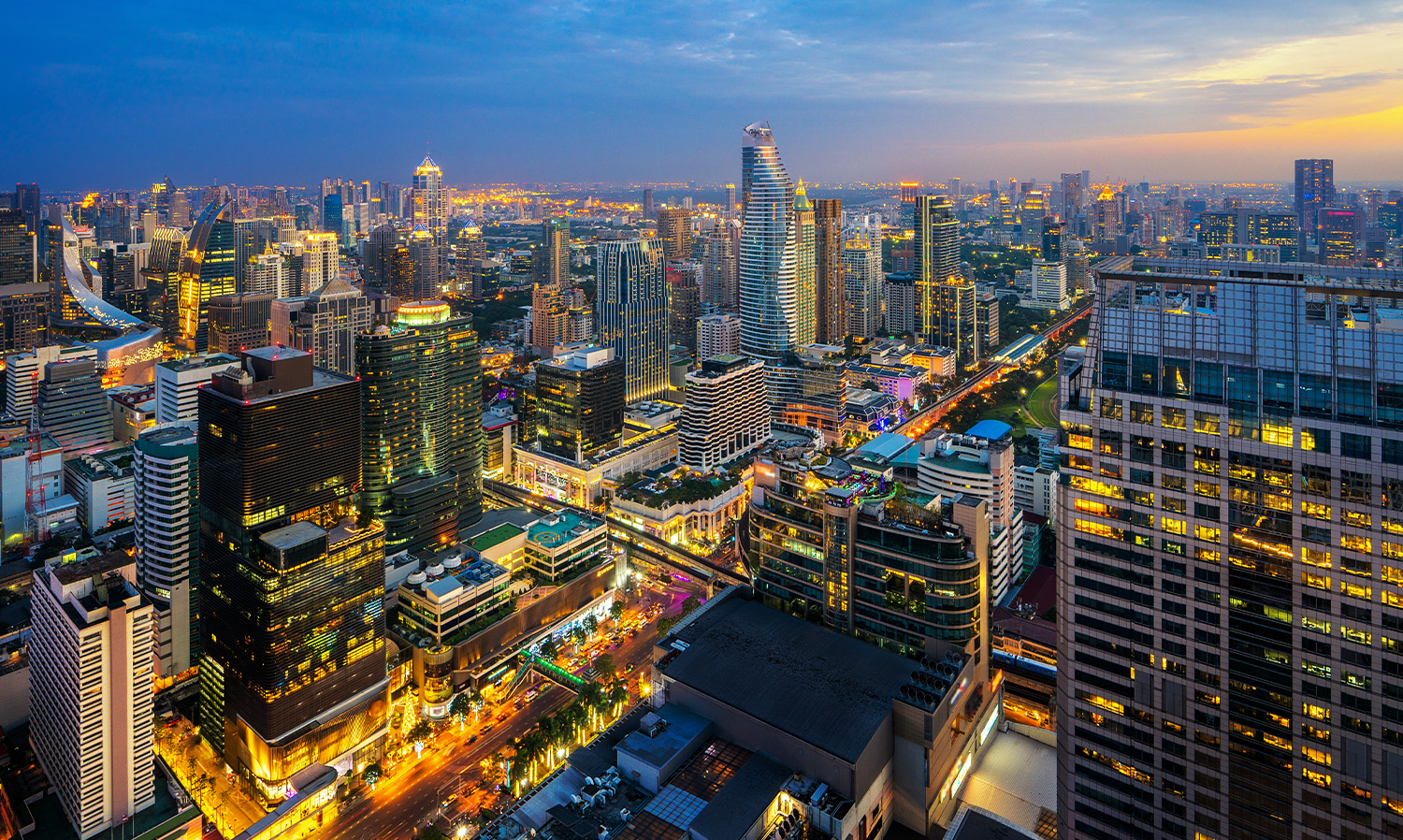
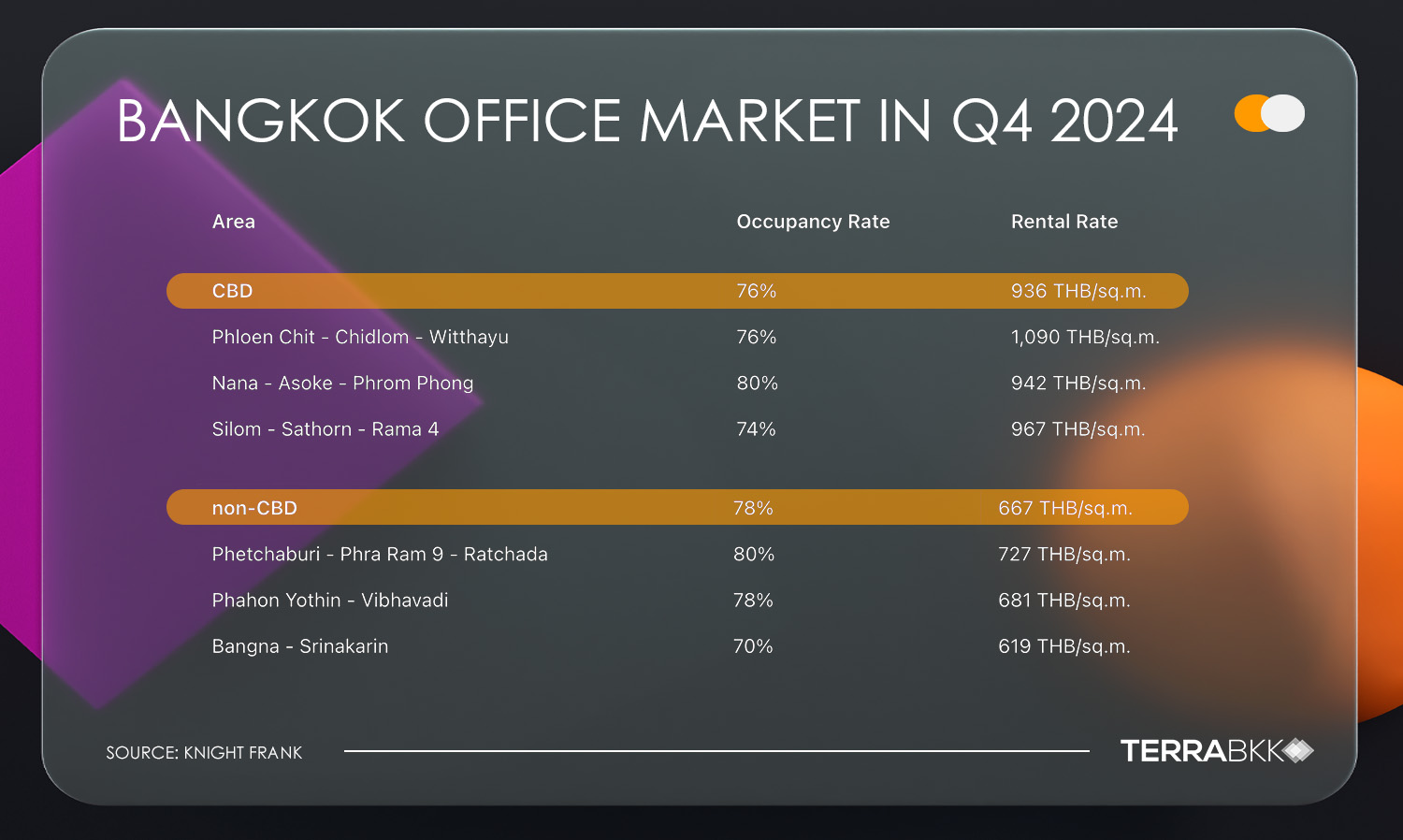
Regarding the office market, data from Knight Frank reports on the office market conditions in Bangkok for Q4 2023. In the CBD area, rental prices have slightly increased, with the average rent rising by 0.1% quarter-on-quarter to 963 THB/sq.m/month, and the occupancy rate has increased to 76%, up by 0.7% quarter-on-quarter.
The Ploenchit-Chidlom-Witthayu area has maintained its rental price at 1,090 THB/sq.m, with a rental rate increase of 0.2% quarter-on-quarter to 76%.
The Nana-Asoke-Phrom Phong area saw a rental price increase of 0.4% quarter-on-quarter to 942 THB/sq.m, with a slight rental rate increase of 1.0% quarter-on-quarter to 80%.
The Silom-Sathorn-Rama 4 area experienced a slight rental decrease of 0.2% quarter-on-quarter to 967 THB/sq.m, but the rental rate increased by 1.0% quarter-on-quarter to 74%.
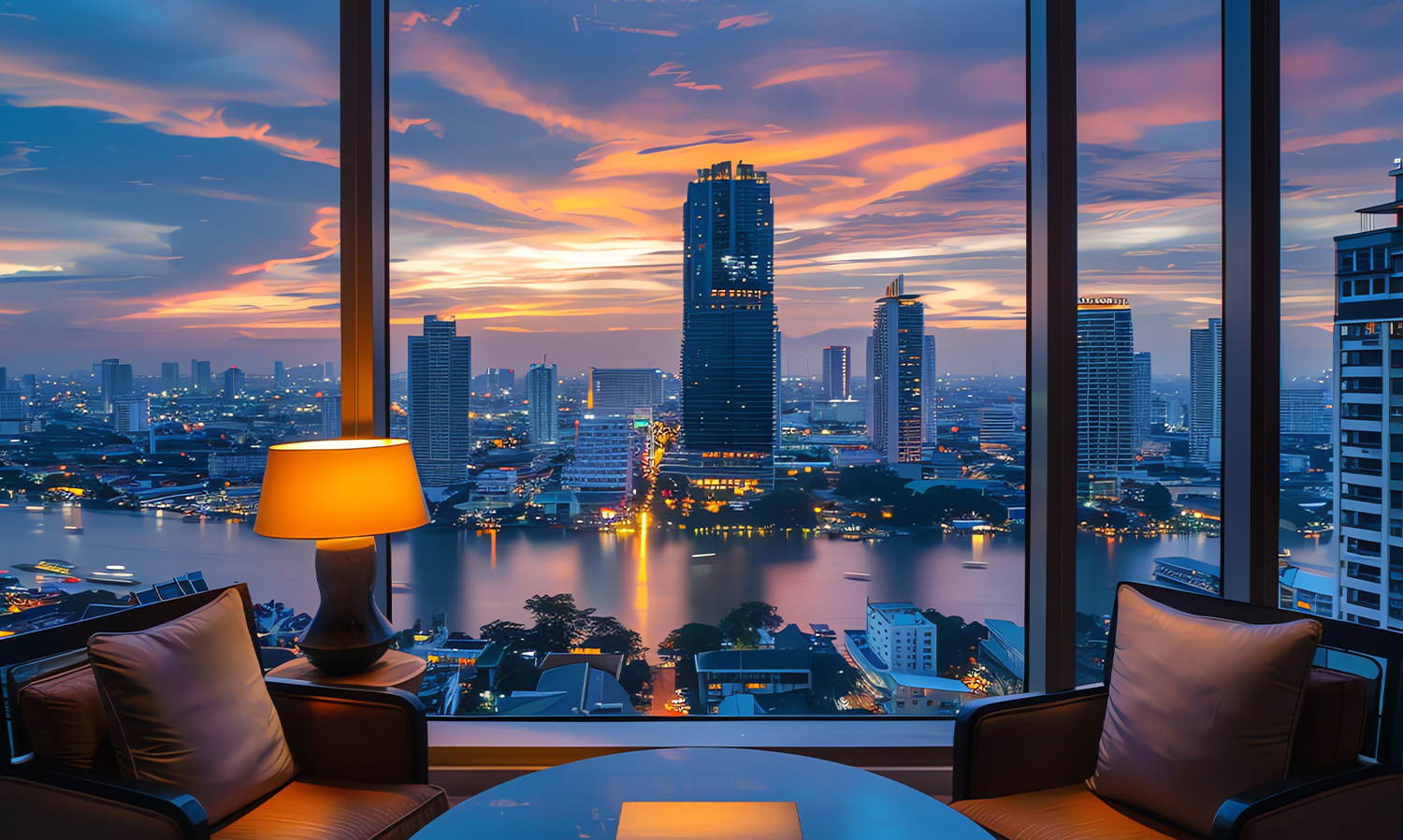
In non-CBD areas, rental prices have slightly increased, with the average rent rising by 0.1% quarter-on-quarter to 667 THB/sq.m/month, and the occupancy rate has increased to 78%, up by 0.8% quarter-on-quarter.
The Phetchaburi-Rama 9-Ratchada area has an occupancy rate of 80%, with a rental price increase of 0.7% quarter-on-quarter to 727 THB/sq.m.
The Phahonyothin-Vibhavadi area saw a rental decrease of 0.5% quarter-on-quarter to 681 THB/sq.m, while the occupancy rate increased by 2.6% quarter-on-quarter to 78%.
The Bangna-Srinakarin area experienced a rental rate increase of 1.2% quarter-on-quarter to 70%, while the rental price slightly increased by 0.2% quarter-on-quarter to 619 THB/sq.m.