Decoding the Concept of Merging Luxury vs. Sustainability Through the Insights of a Singaporean Real Estate Guru
When it comes to luxury, most people often associate it with extravagance, which is the traditional form of luxury that has been prevalent since the past. However, as we move into a modern era with heightened awareness of sustainability, reducing resource consumption, and environmental preservation, traditional luxury seems to be at odds with sustainability. This raises the question of whether luxury and sustainability can coexist and how they might do so.
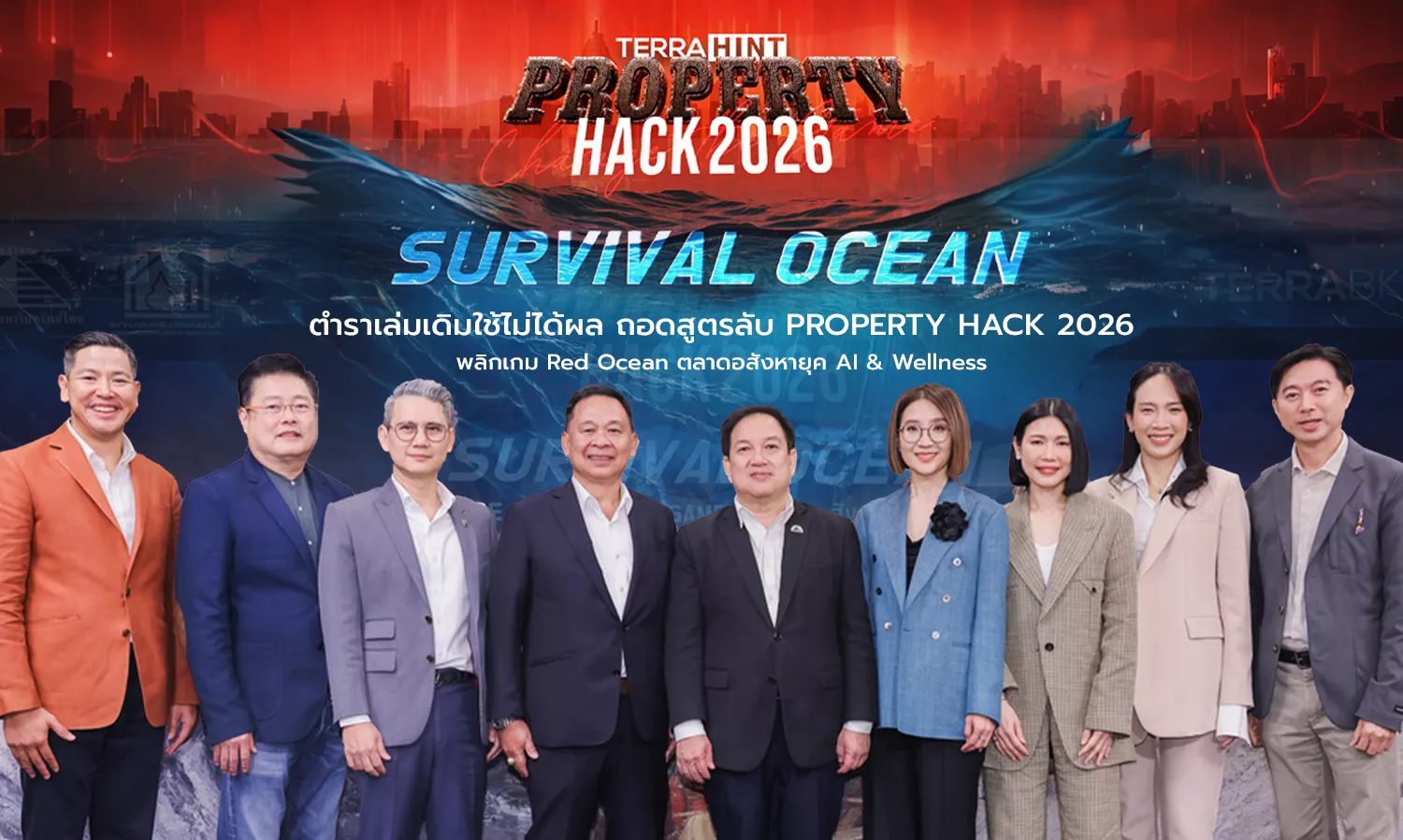
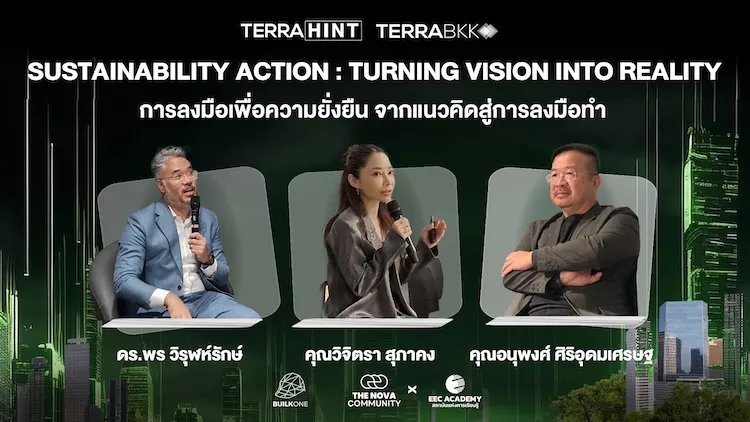
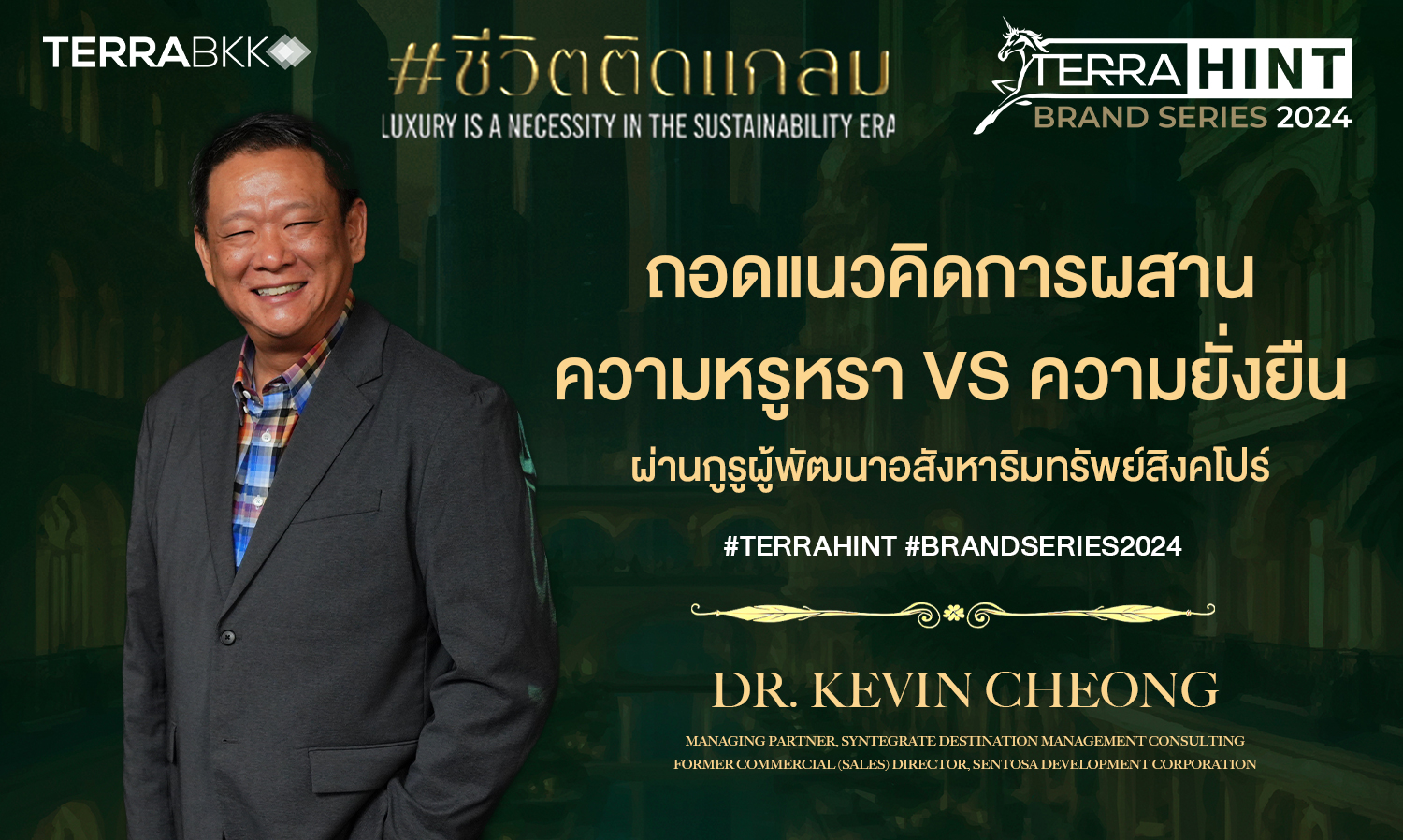
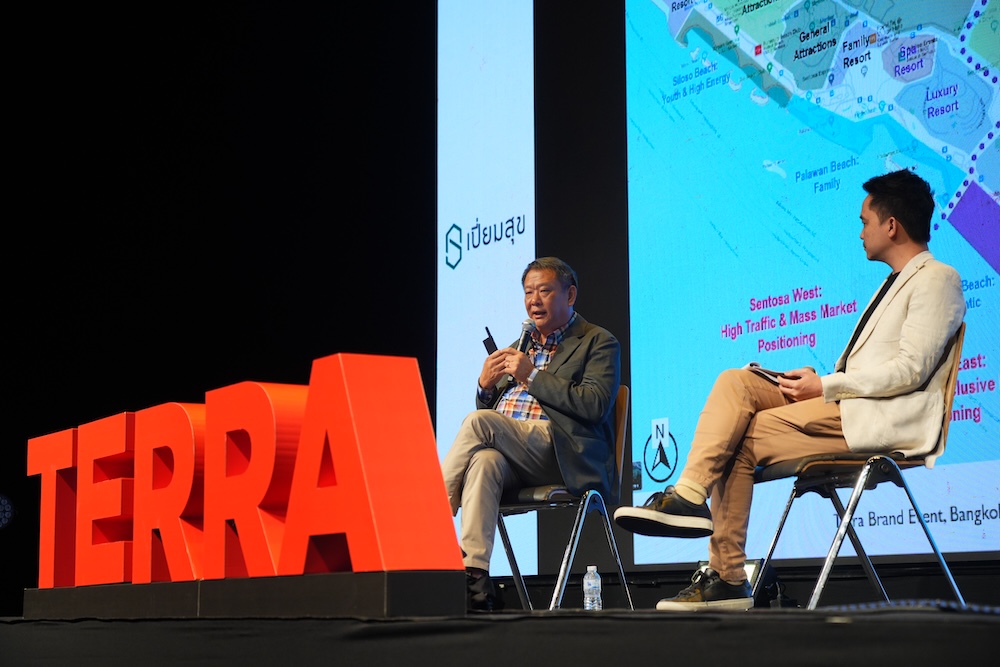
At the TERRAHINT Brand Series 2024 seminar, themed "Luxury is a necessity in the sustainability era. #LifeInGlam," strategies for brand development towards luxury were discussed to inspire the real estate business sector to navigate economic storms sustainably. A special lecture titled "Transitioning towards sustainability and the global market" was delivered by Dr. Kevin Cheong, Managing Partner of Syntegrate Destination Management Consulting and former Commercial (Sales) Director of Sentosa Development Corporation. With extensive experience in real estate and tourism development across various countries, he played a significant role in transforming Sentosa Island in Singapore into a world-class tourist destination that caters to all demographics while leading in sustainability. He shared insights on how to tangibly merge luxury and sustainability.
The Luxury of the Modern Era
Dr. Kevin agrees that luxury and sustainability can coexist, but it requires a reinterpretation of luxury. In the past, luxury was defined by branded goods, luxury cars, and first-class travel. However, now and in the future, luxury is not just about branded products; it is also about "time," which is something that wealth cannot buy. Therefore, in Dr. Kevin's view, the new form of luxury will revolve around "time."
Humans will seek ways to fully embrace experiences within the limited time they have. This limitation is not only felt by the wealthy but by everyone, who will come to see "having time" as a luxury everyone desires.
People Are More Aware of the Impact of Consumption
Regarding sustainability, Dr. Kevin has spoken on this topic many times. He emphasizes that sustainability is not just about trees, animals, seas, or insects, but fundamentally about human behavior. Trees, animals, and insects are merely victims of human actions and decisions. When viewing sustainability through the lens of human actions, it becomes clear that people are increasingly considering the impact of their consumption choices, becoming aware of what their consumption may destroy or what it may cost, and thinking more about future generations.
Merging Luxury and Sustainability Must Start from Planning
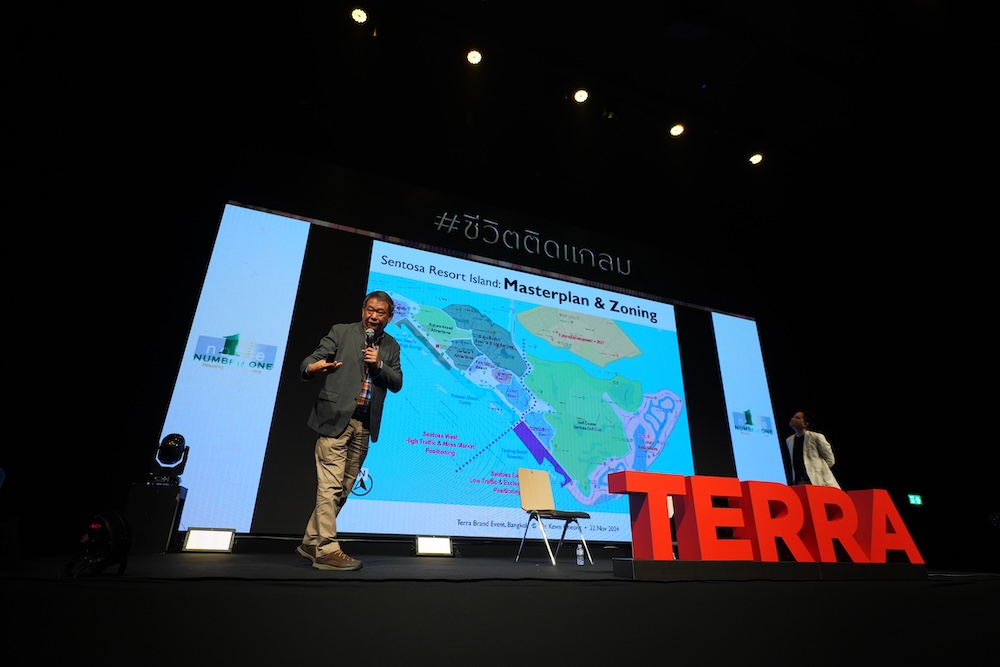
Dr. Kevin illustrated the merging of luxury and sustainability through his experience in developing Sentosa Island. When considering the entire island to balance luxury and sustainability, one must ask, "How can I provide the fullest enjoyment for visitors in a short amount of time?"
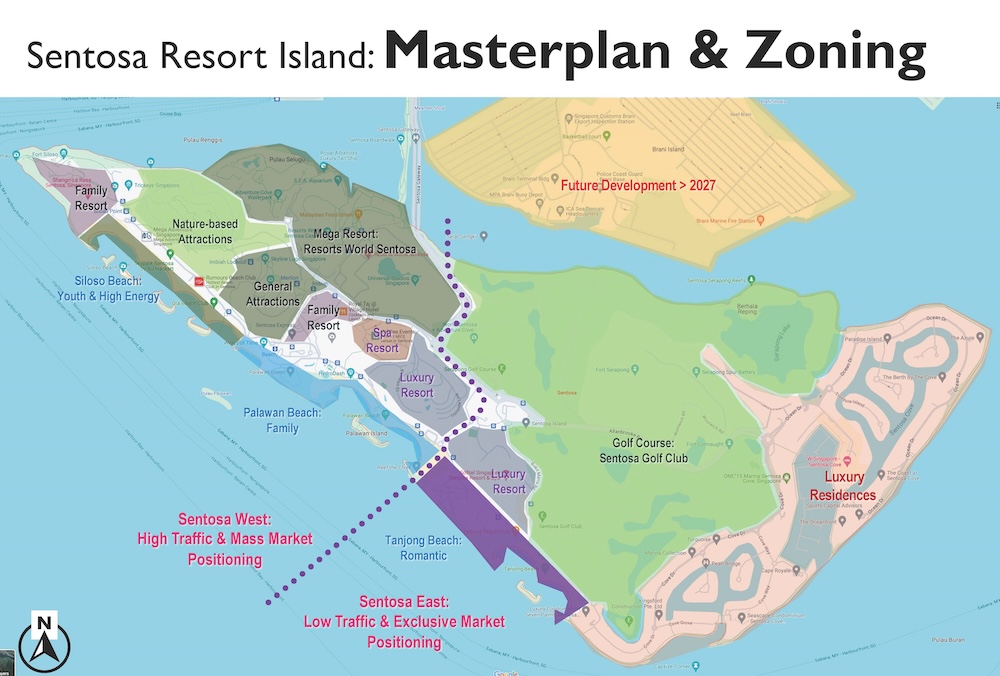
One method is to bring things closer together by dividing Sentosa into two parts: the western part of the island, which caters to the mass market with high traffic and density, featuring Universal Studios Singapore, Resortworld hotels, beaches, and nature-based attractions; and the eastern part, which is more luxurious, with lower traffic and density, separated by a golf course that serves as a sound barrier from the activities on the western side. The coastal area has been developed into Sentosa Cove, a residential area for about 6,000 people, featuring waterfront residences and yacht berths.
Green Spaces Are the "Lungs" That Must Be Strictly Preserved
The sustainability of Sentosa comes from its Green Lung, meaning that 70% of the trees on the island must be preserved, with 59% classified as Heritage Trees, which are over 50 years old and have a diameter greater than 50 centimeters. These trees are protected by law on Sentosa Island, meaning that any resorts built on the island's beaches must be constructed around these trees without cutting them down.
Making the Fusion of Luxury and Sustainability Tangible
Sentosa Island features a 3.2-kilometer beach divided into zones to cater to various activities for different types of people, including romantic couples, families, and young adults. Observing the beach from west to east, one can see the transition from high-density areas to low-density areas. The luxury of Sentosa that everyone can experience is that no matter where you are on the island, you are close to everything, including the beach, attractions, activities, and your yacht.
In terms of sustainability, this includes coastal preservation, coral reefs, and the restoration of water bodies, such as in the Labrador Nature Reserve. All of this represents the fusion of luxury, sustainability, and fun into an experience that can be felt.
Sustainability Must Not Overlook Biodiversity
Another aspect of sustainability is biodiversity. Dr. Kevin recounted that over 20 years ago, before the sustainability movement gained momentum, Sentosa Island had a policy that peacocks and monkeys were present on the island before humans arrived, thus requiring their protection. They tagged the peacocks and monkeys and monitored their well-being every six months, placing signs for tourists to respect and care for the "homes" of these animals to preserve the island's biodiversity.
Urban Development Must Integrate Live, Work, Play, and Study
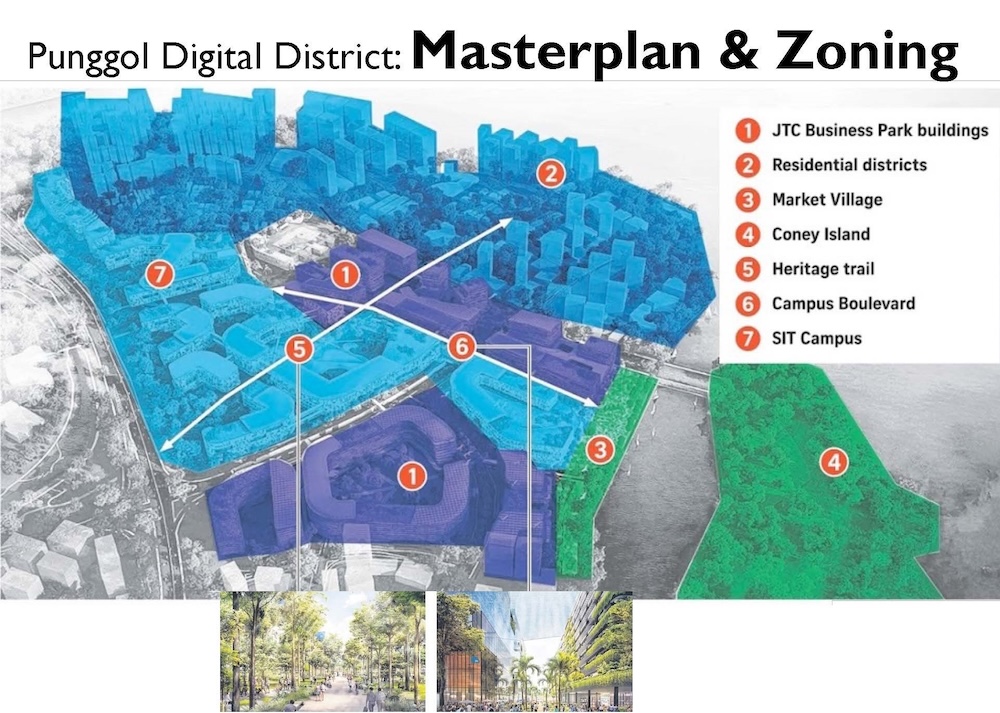
Additionally, Dr. Kevin provided a case study of another project in Singapore, the Punggol Digital District, which was developed with the concept of living (Live), working (Work), playing (Play), and learning (Study) in the same area. However, these areas must differ because living, working, and playing in the same atmosphere can become monotonous. Thus, Punggol is divided into two zones: a high-rise area and a university zone. The development must not forget about conservation and recreation, so more trees were planted in Punggol, and a heritage trail was created for relaxation and exercise, with no surface parking, only underground, to integrate Live, Work, Play, and Study into one cohesive space. There are 2-3 cities in Singapore developed in this manner, and Punggol is one of them.
One of the challenges in Punggol is the coastal area, which was originally hot and flooded. The government elevated this area by 20-25 meters, inspired by San Antonio, Texas, where the city’s canals are below ground level by 2-3 levels. Additionally, Punggol has created shaded areas around the canals to allow cool air to flow into the city and to mitigate the issue of rising sea levels.
Real Estate Development Should Center on 'People'
Dr. Kevin believes that successful real estate development should center around "people," creating homes rather than just houses. It should be designed with "heart-ware" to foster live, work, and play, creating a community that fosters a sense of belonging and ownership that goes beyond just a house to become a home. Consideration should be given to living conditions, including shade, light, and coexistence with nature, remembering that animals were here before us.
Therefore, sustainability should consider: 1. Respect for others, including animals, insects, nature, and trees; 2. Thoughtfulness regarding the comforts of humans and what must be sacrificed for them, and whether those sacrifices are worthwhile; 3. Mindfulness of future generations. With these factors, it is possible to develop a city that harmoniously integrates luxury, quality of life, and sustainability.