Condominiums Near Universities: A Golden Investment Opportunity for International Students
Currently, the education sector in Thailand, both public and private, is increasingly popular among Chinese students. According to data from the Chinese embassy, it is estimated that around 50,000 Chinese students are studying at various levels in Thailand, primarily from Yunnan and Guangxi provinces in southern China. This trend has made Thailand a favored destination for families sending their children abroad for education, thanks to its affordability and diverse course offerings, with average annual expenses starting from 30,000 yuan.

In 2021, the Asian Studies Institute reported that Chinese students living in Thailand have an average annual expense of 224,268 baht, which includes accommodation costs averaging between 10,000 to 15,000 baht per month and tuition fees of approximately 90,000 baht per year, with the remainder allocated for personal expenses.
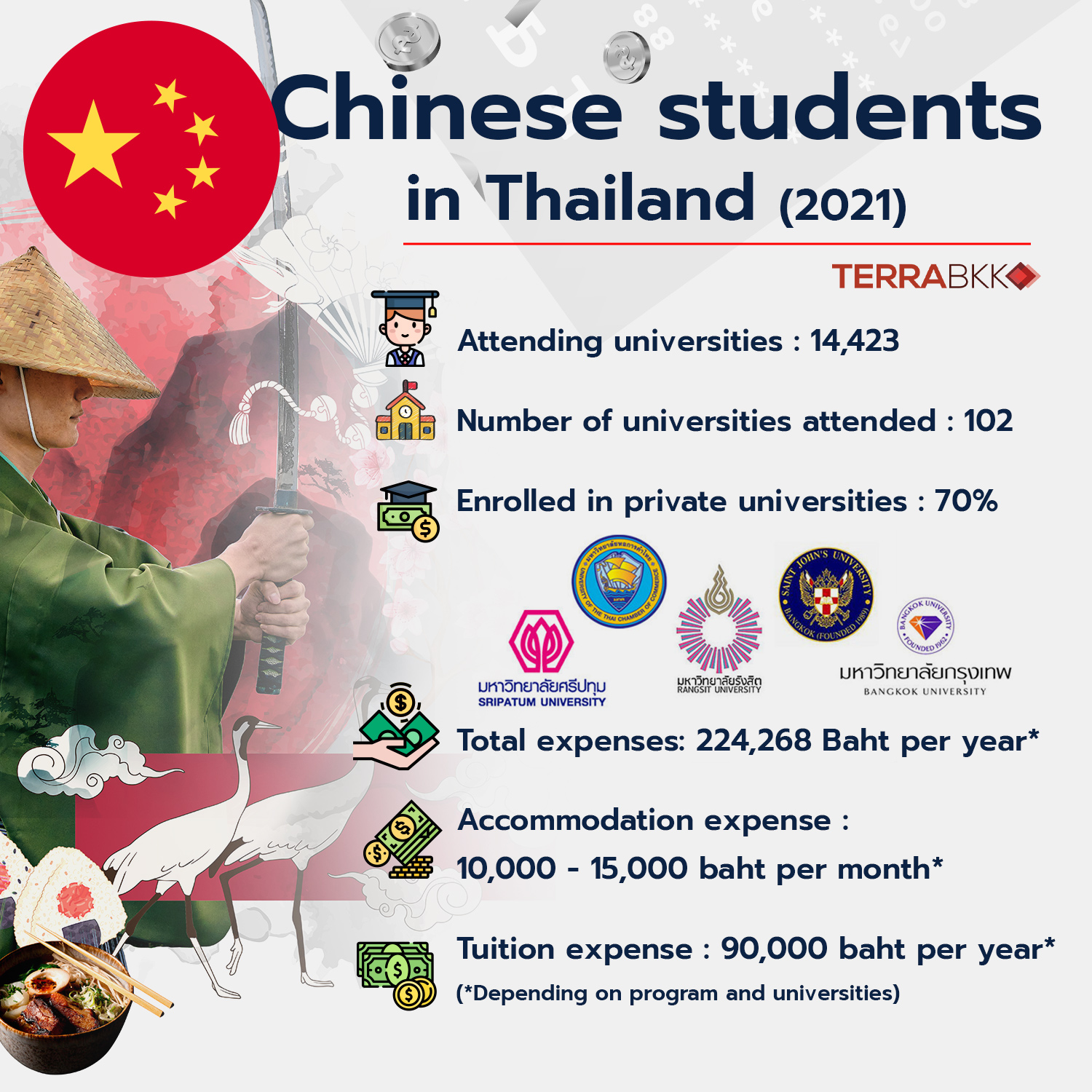
Data from the Ministry of Higher Education indicates that in 2020, there were 14,423 Chinese students enrolled in higher education across 102 universities in Thailand. Bangkok had around 50 institutions, while the northern region had 19, the northeastern region had 12, the central region had 7, the eastern region had 5, and the southern region had 5. Notably, over 70% of these students are enrolled in private universities, with the most popular institutions being Dhurakij Pundit University, Assumption University (ABAC), Krirk University, Chiang Mai University, Stamford International University, Bangkok University, and Sripatum University.
It is evident that the influx of Chinese students is driving demand for housing around universities. The Krungthai COMPASS research center has reported a noticeable increase in gross rental yields for condominiums near universities. For instance, condominiums near Kasetsart-Sripatum University saw a 5% increase, while those near the Ari-Ladprao-Kasetsart area rose by 4.7%, and those near Srinakharinwirot University increased by 5.2%. In Chiang Mai, the rental market has also become vibrant, with rental yields for condominiums reaching 4.8% to 5%.

Beyond Bangkok, the condominium market around universities in Pathumthani, Samutprakarn, and Nakhon Pathom is equally appealing. These areas are promising for investment in rental properties aimed at students, such as the Rangsit area, which hosts several leading public and private universities like Bangkok University, Rangsit University, and Thammasat University; the Bang Khen area, home to Kasetsart University and Sripatum University; and the Salaya area, which includes Mahidol University and Silpakorn University.