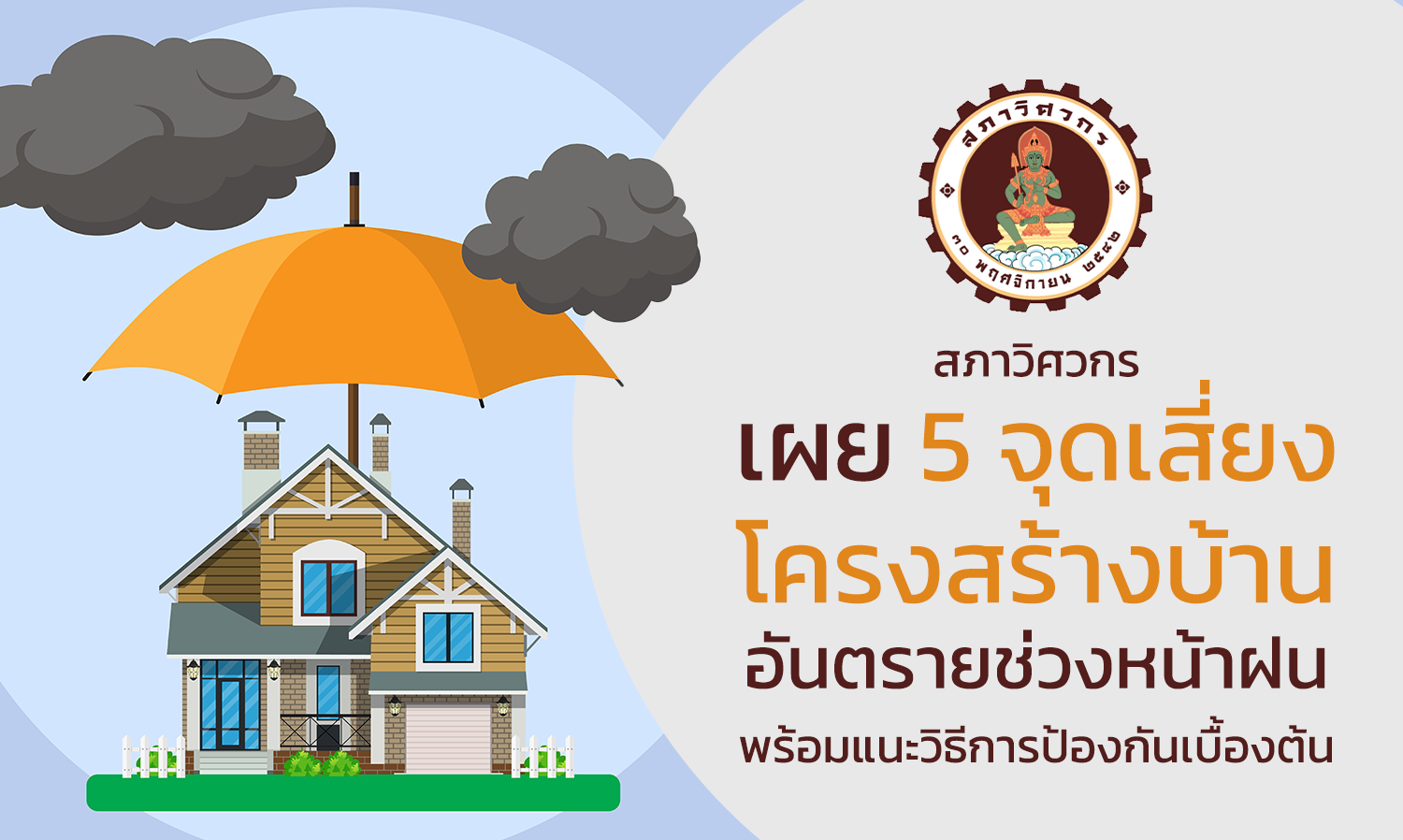
Engineering Council Reveals 5 Risk Areas for Home Structures During the Rainy Season, Along with Basic Prevention Tips
The Engineering Council has identified 5 risk areas in home structures that can be dangerous during the rainy season, along with basic prevention tips. These include the roof, which is the first point of contact for raindrops. It is important to regularly check for leaks and seal them using joint covers or waterproof tape. Drainage pipes should be checked for blockages to ensure timely drainage. Electrical systems/electrical devices should be inspected for the condition of wiring and devices; any damage must be repaired immediately. In cases of severely damaged or hanging wires, report to authorities promptly. The fence can be temporarily repaired using soil or packed sandbags, and if it shows signs of leaning, use wooden supports. Lastly, the foundation of the house should be checked for strength; if there is a risk of subsidence, urgent repairs are necessary.
Professor Dr. Suchatchavee Suwansawat, President of the Engineering Council, stated that over the next 1-2 months, Thailand will face heavy continuous rainfall in some areas, leading to a risk of flooding and structural impacts on buildings, including public buildings, homes, schools, hospitals, and markets. To reduce risks to both life and property, the Engineering Council offers suggestions for observing these 5 risk areas in structures, along with self-inspection and prevention methods as follows:

- The roof is the first point that must withstand heavy rain. Continuous heavy rainfall increases the risk of roof deterioration or damage from falling branches. Therefore, during dry spells, regularly check for roof leaks and use joint covers or waterproof tape as a preliminary measure.

- Drainage pipes must be prepared to prevent water from pooling around the house. Residents should ensure that drainage pipes are clear and check for any blockages from mud and debris. Blockages can lead to water accumulation around the house or hinder timely drainage.

- Electrical systems/electrical devices should be regularly inspected to ensure they are safe. If any electrical devices are found to be damaged, they must be repaired immediately. For potential electrical leakage, a screwdriver can be used to test for safety. If wires on power poles are hanging, do not approach and contact local electrical authorities immediately.

- The fence should be checked for stability. If it is unstable or leaning, it can be temporarily repaired with soil or packed sandbags. If the fence is leaning, temporary supports can be used until a professional can reinforce it.

- The foundation of the house is another critical area that should not be overlooked. Regular checks for strength are necessary. If the soil around the house is loose or has low density, there is a risk of subsidence. If the foundation was built without piles, erosion from water can undermine its support over time, requiring urgent repairs.
Additionally, residents should keep an eye on large trees near their homes to assess the risk of them falling and causing damage to the house or electrical lines. If there is a high risk, it is advisable to arrange for relevant authorities to trim the trees to prevent potential future damage. For those with questions about home repairs or electrical safety inspections, they can contact the Engineering Council at 1303, Professor Dr. Suchatchavee concluded.
Stay updated on news and activities from the Engineering Council at www.facebook.com/coethailand, www.coe.or.th, Line ID @coethai, or inquire for more information at hotline 1303.
#EngineeringCouncil #COE #COEThailand #5RiskAreasHomeStructure #RainySeason #Engineering #ThaiEngineersAreSecondToNone #JCCOTH