Digital Nomad: The Rising Trend
Key Highlights
- Following the COVID-19 pandemic and advancements in technology, people's work lifestyles have changed significantly. This has led to a remarkable increase in the global Digital Nomad community, growing from 15.2 million in 2019 to 35 million in 2022, representing over 130% growth, with the potential to reach 60 million by 2030.
- The standout feature of Digital Nomads is their average stay of up to 6 months, resulting in spending that exceeds that of typical tourists by over 56%. Unlike mass tourists, they do not have a defined travel season, allowing them to travel year-round.
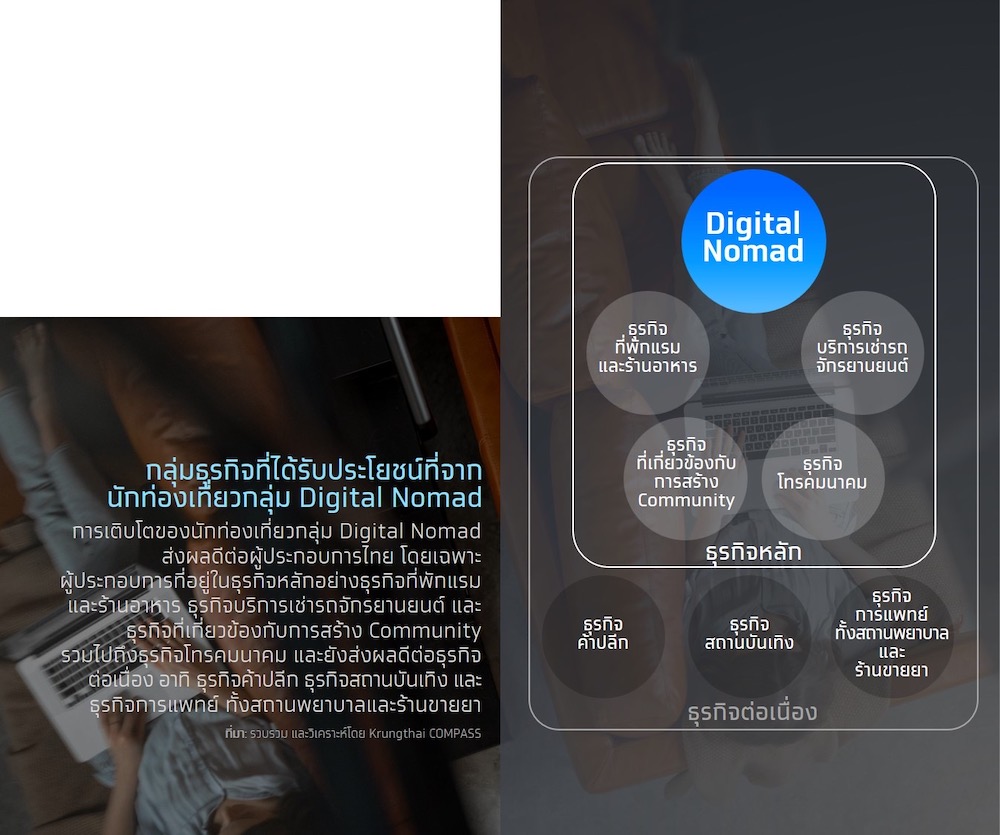
- Businesses that directly benefit from Digital Nomads include: 1) Accommodation and dining services, 2) Motorcycle rental services, 3) Community-building activities such as group tours and events, and 4) Telecommunications. Additionally, there are positive impacts on related sectors such as 1) Retail, 2) Entertainment, and 3) Healthcare, including hospitals and pharmacies.
Thana Tulayakijwat, Sujittra Anno, Kanit Amaskul
Krungthai COMPASS
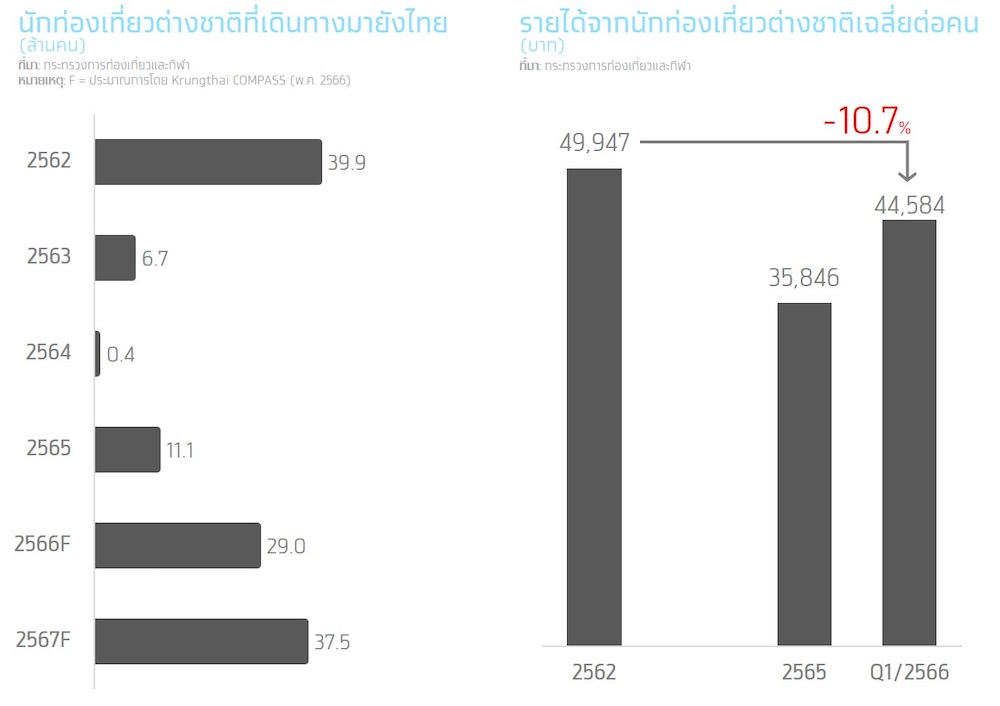
Although Thailand's tourism sector has been gradually recovering since the full reopening measures in the latter half of 2022, the primary tourists visiting Thailand remain from nearby countries such as Malaysia, China, South Korea, and India. These tourists typically have shorter stays and lower spending per trip, resulting in an average income from foreign tourists in Q1 2023 of approximately 44,585 THB, which is still below the 49,947 THB average in 2019, a decrease of about 10.7%. The number of foreign tourists visiting Thailand increased from 0.4 million in 2021 to 11.2 million in 2022, continuing into Q1 2023 with over 6.5 million foreign tourists. However, the overall number of foreign tourists in 2023-2024 remains below pre-COVID-19 levels (2019), when Thailand welcomed up to 39.9 million foreign tourists. These two factors are crucial reasons why Thailand's overall income from foreign tourists has not yet returned to pre-COVID-19 levels.
Furthermore, the COVID-19 crisis has been a significant lesson for the tourism sector, which was heavily impacted by reliance on typical tourists. This necessitates a swift search for new potential tourist groups that can stimulate tourism in the future, beyond high-value tourists such as medical tourists, which the government has consistently promoted. The Digital Nomad group is another interesting target, as it is a global megatrend that many countries are recognizing as an opportunity to stimulate local and national economies. With an average stay duration higher than typical tourists, this article aims to explore who Digital Nomads are, what factors influence their choice of countries to travel and work in, their travel behaviors, and their significance to the tourism sector.
Opening the Door to Digital Nomads
The term "Digital Nomad" has been around for a long time but was not widely recognized until recently. It first appeared in 1997 in the book "A Brief History Of Digital Nomading" by Tsugio Makimoto and David Manners. Generally, this group chooses to work for companies in countries with high wage rates while living in countries with lower living costs, yet still possessing natural beauty and a certain level of economic and social development.
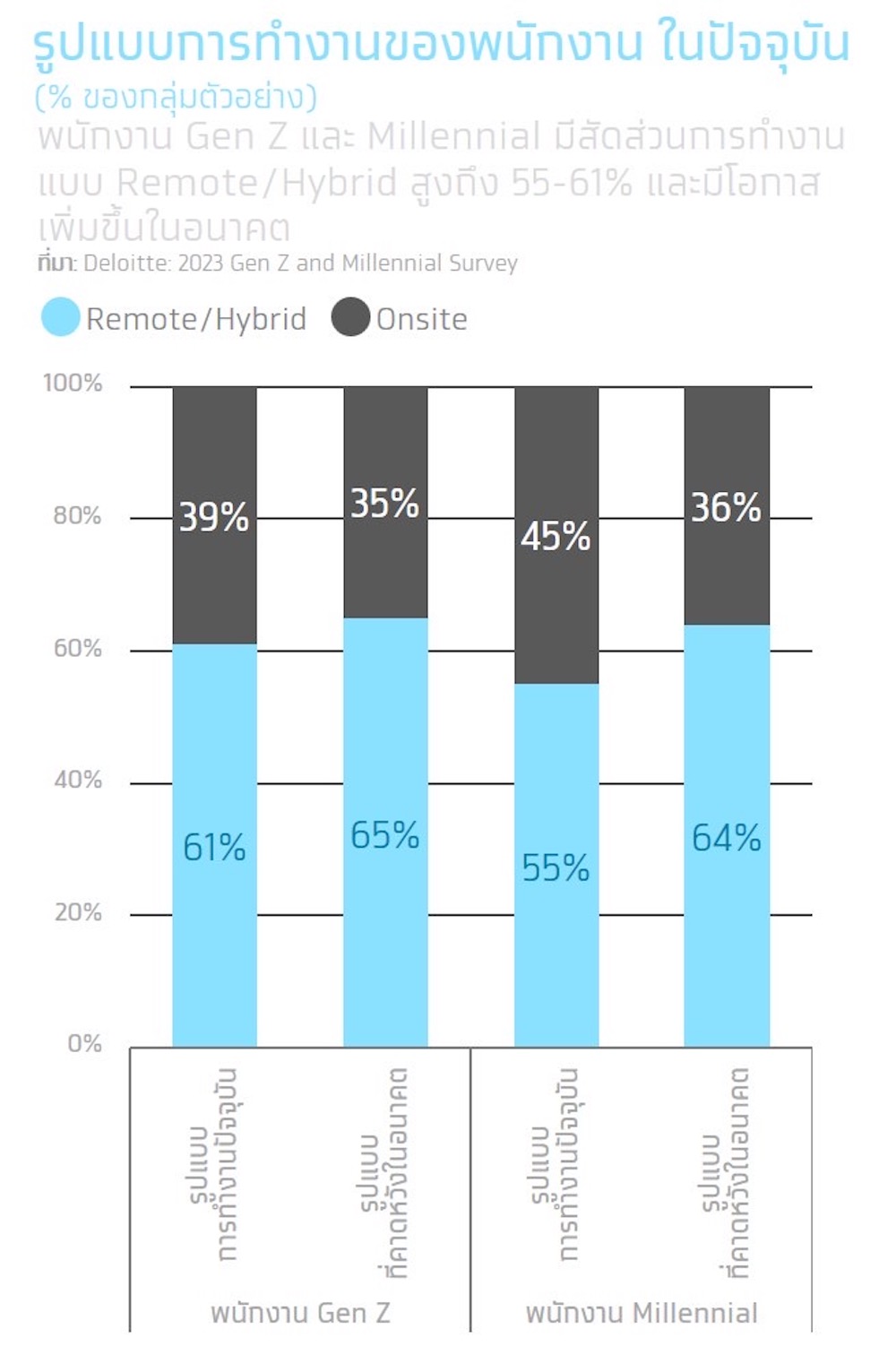
With the COVID-19 pandemic and significant advancements in technology and borderless communication, the Digital Nomad lifestyle has become a global megatrend. Digital Nomads work online from various locations worldwide according to their desired lifestyles while traveling simultaneously. They typically stay temporarily in each location before moving on to others, aligning with the post-COVID work model where many organizations continue to allow remote work policies, enabling employees to work from anywhere without needing to be in an office. Some companies adopt a hybrid work model, combining remote work with office attendance. Notable companies using remote/hybrid work systems include Google, Apple, Microsoft, Facebook, and Twitter. A survey by Deloitte of over 22,000 employees across 44 countries found that 55-61% of employees currently work in remote/hybrid formats, with potential for further increases based on future employee preferences.
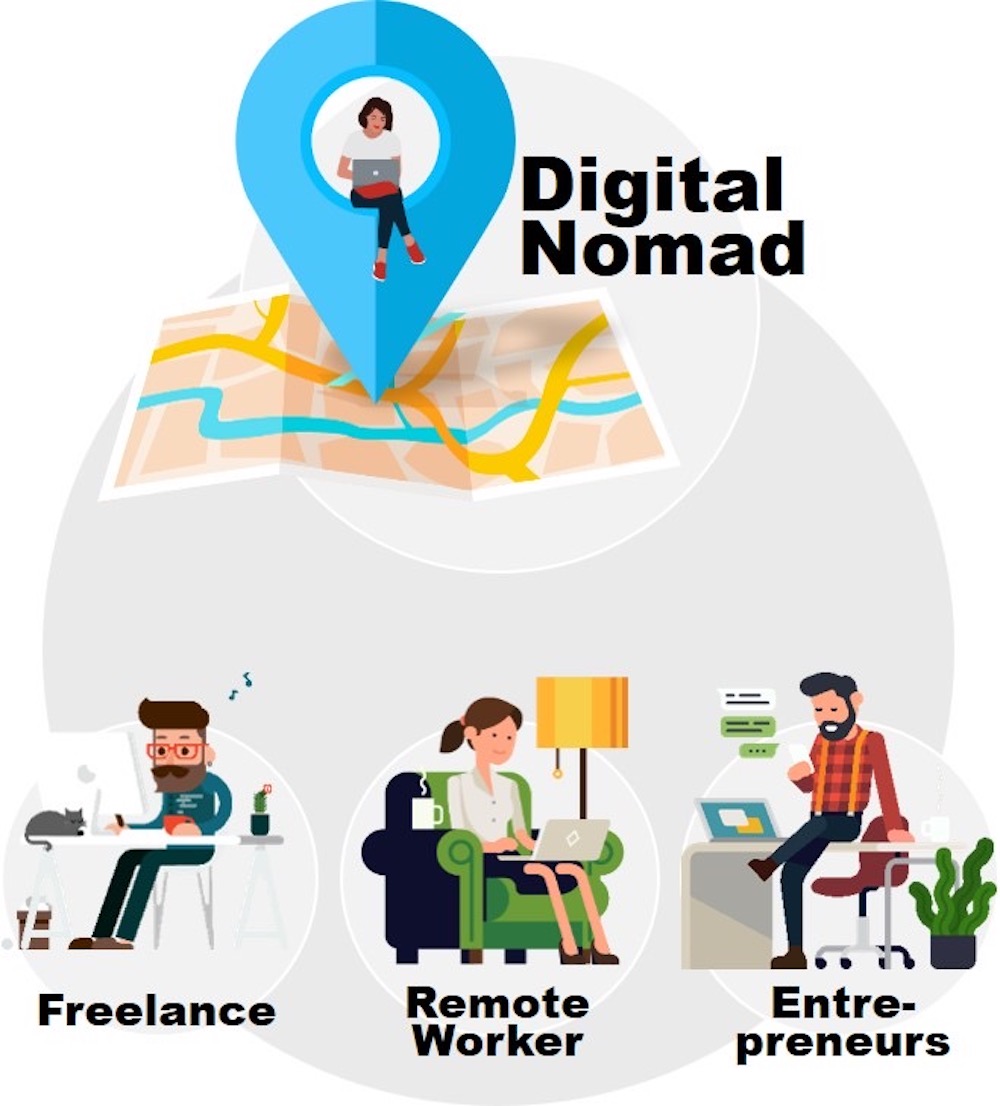
Currently, Digital Nomads consist of three main groups: 1) Freelancers, who work independently without being tied to any organization and take on projects as they come, 2) Remote Workers, who are permanent employees of companies working outside the office using technology, and 3) Entrepreneurs, who are business owners.
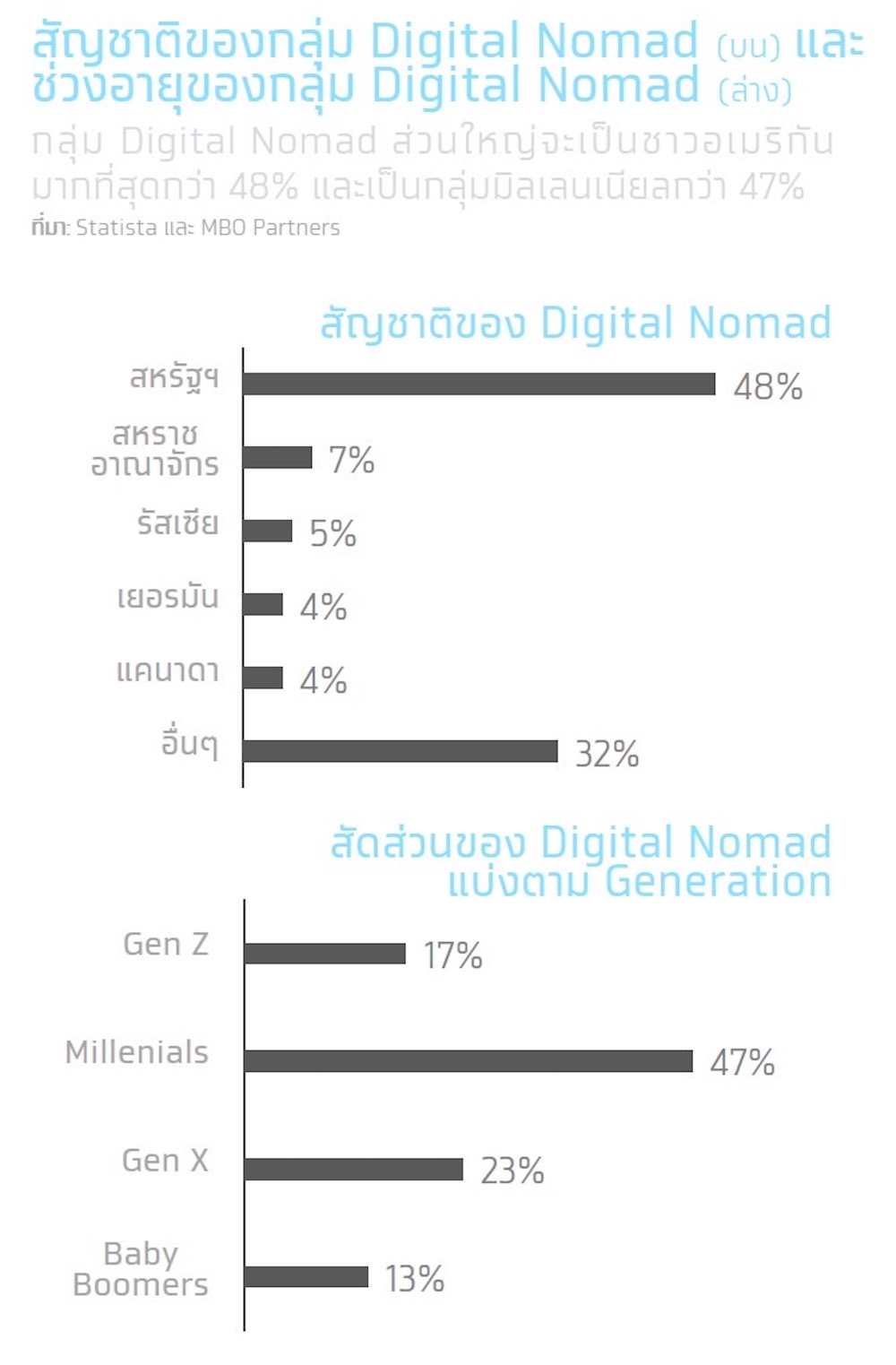
The profile of Digital Nomads shows that the majority are Americans, accounting for 48% of the total Digital Nomad population, followed by the UK (7%), Russia (5%), Canada (4%), and Germany (4%). Most are Millennials (Gen Y), with over 83% working independently. The most common professions include IT/computer work, marketing, design, writing, and e-commerce. Popular work locations are divided into two main groups: 1) Those seeking noise and a natural atmosphere for concentration typically choose co-working spaces, and 2) Those preferring quiet environments usually work from their accommodations. The average living expenses for Digital Nomads are around $1,875 per month, or approximately 62,000 THB, with an average stay of about 6 months before relocating to a new city or country for work.
According to a survey by ABrotherAbroad.com, the top five factors influencing Digital Nomads' choice of destination are: 1) Low cost of living and high-speed internet (56%), 2) Safety (15%), 3) Natural attractions (11%), 4) Suitable visas (9%), and 5) Coffee shops/co-working spaces (3%). Cost of living and high-speed internet are the most critical factors as they directly affect purchasing power and work efficiency, while safety, including crime and environmental safety, is also important.
Riding the Digital Nomad Trend: A New Hope for the Global Tourism Industry
The COVID-19 pandemic has been a significant catalyst for the rapid growth of the Digital Nomad lifestyle. Even as the pandemic subsides, the Digital Nomad trend continues to thrive and is expected to grow further. According to an Ipsos survey conducted in 2021, 66% of 12,500 global workers expressed a desire for more flexible work arrangements post-pandemic, and 30% would change jobs if required to return to the office. The Global Digital Nomad Study by ABrotherAbroad.com estimates that the global Digital Nomad community generates an economic value of $787 billion annually, or approximately 26.8 trillion THB. In 2022, the number of Digital Nomads worldwide surged to 35 million, a 2.3-fold increase from 15.2 million in 2019, with the potential to reach 60 million by 2033. Notably, the number of American Digital Nomads increased dramatically from 7.3 million in 2019 to 16.9 million in 2022.
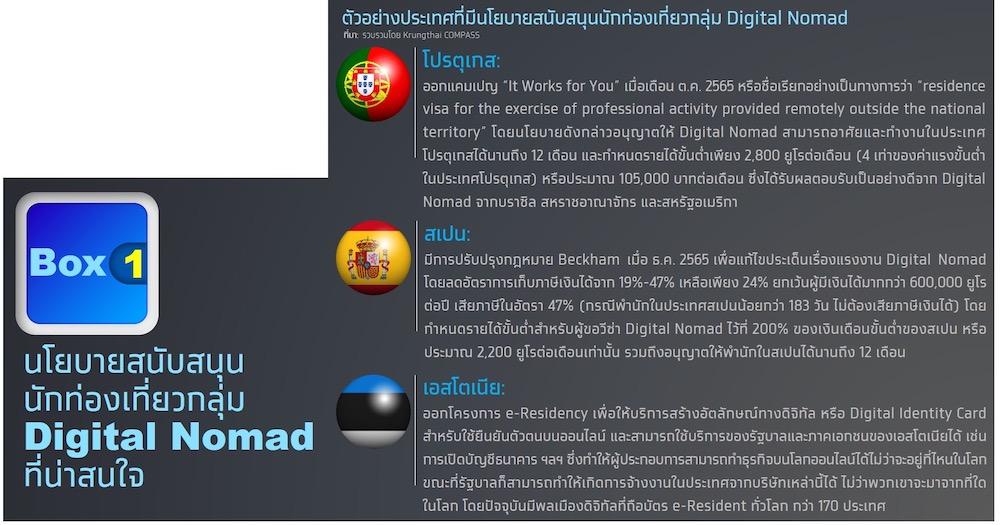
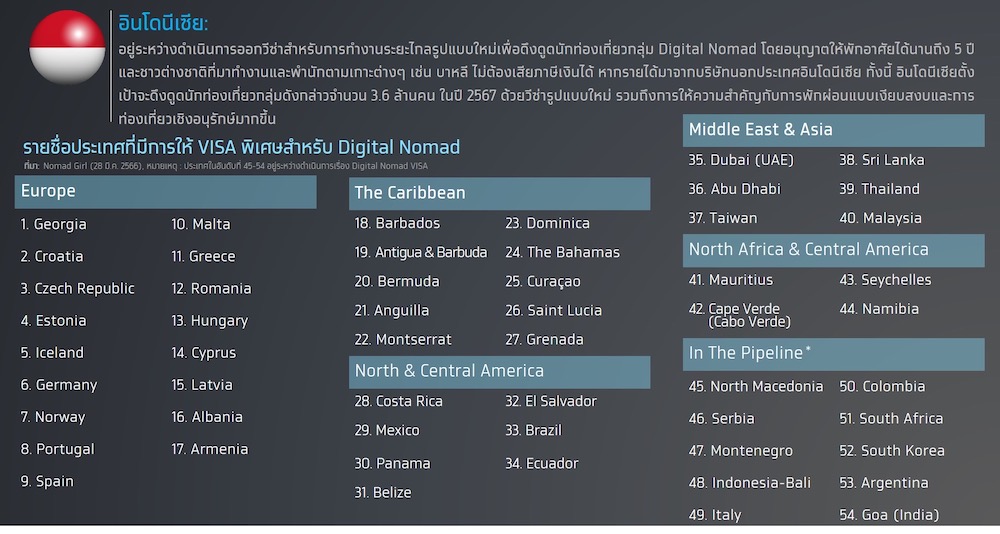
As the Digital Nomad community continues to grow, many countries see opportunities to stimulate their economies and tourism sectors to generate revenue. They have implemented policies to attract Digital Nomads, particularly through special visas for this group. Currently, over 44 countries have issued Digital Nomad visas, including 17 in Europe, 10 in the Caribbean, 7 in North and Central America, 2 in the Middle East, 4 in Asia, and 4 in Africa, with an additional 10 countries in the process of establishing similar programs.
In addition to special visas, other policies have been introduced, such as tax incentives, either through reductions or exemptions, the issuance of e-residency permits, and the creation of platforms specifically for Digital Nomads to provide information and assistance.
Thailand Must Accelerate to Capitalize on the Digital Nomad Trend
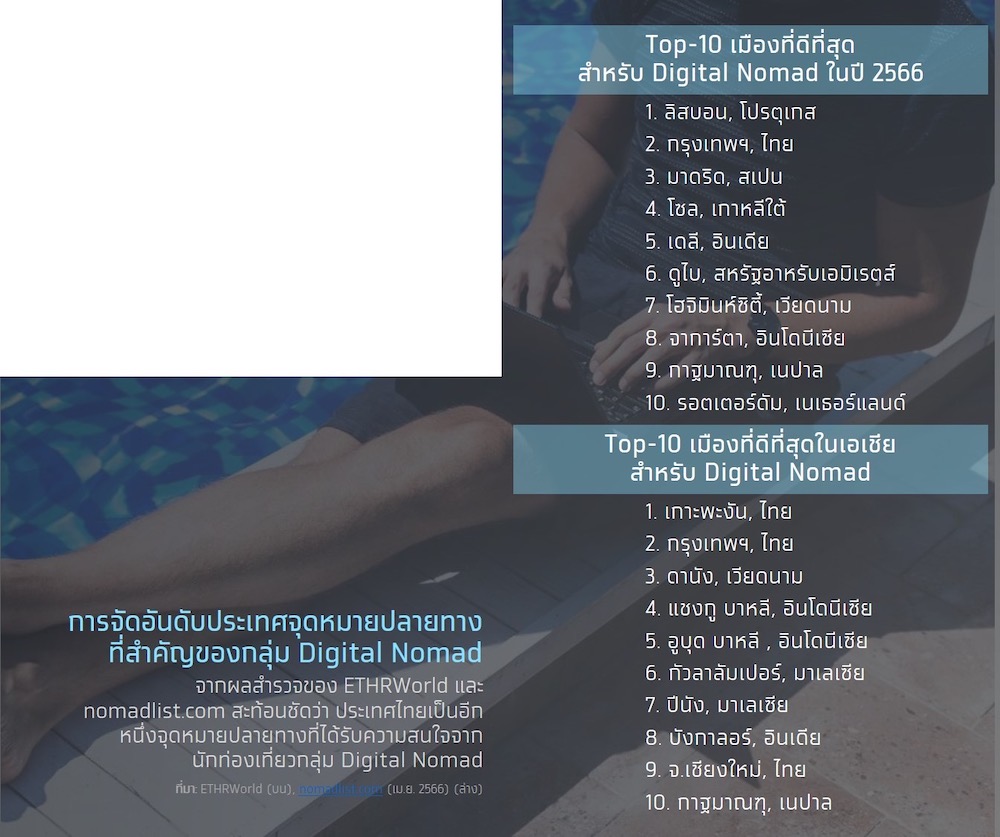
Thailand is a highly attractive destination for Digital Nomads, as evidenced by Bangkok ranking second in the 2023 ETHRWorld list of the best work locations for Digital Nomads, following Lisbon, Portugal. Additionally, nomadlist.com ranked three locations in Thailand among the top ten cities for Digital Nomads: 1. Koh Phangan (1st), 2. Bangkok (2nd), and 3. Chiang Mai (9th). This is a positive sign for Thailand to promote tourism in this sector to seize opportunities from the growing Digital Nomad community, which is expected to expand in the future. This group of tourists has the potential for longer stays in Thailand, leading to significantly higher spending per trip compared to the average tourist.
According to the article "Revitalising Thailand’s tourism sector" by BOT and VISA, business tourists, including investors and professional staff, as well as the Work from Anywhere group, have high spending potential and typically stay longer than 14 days, with an average spending of over 75,000 THB per trip, which is over 56% higher than the overall average of about 48,000 THB per trip.
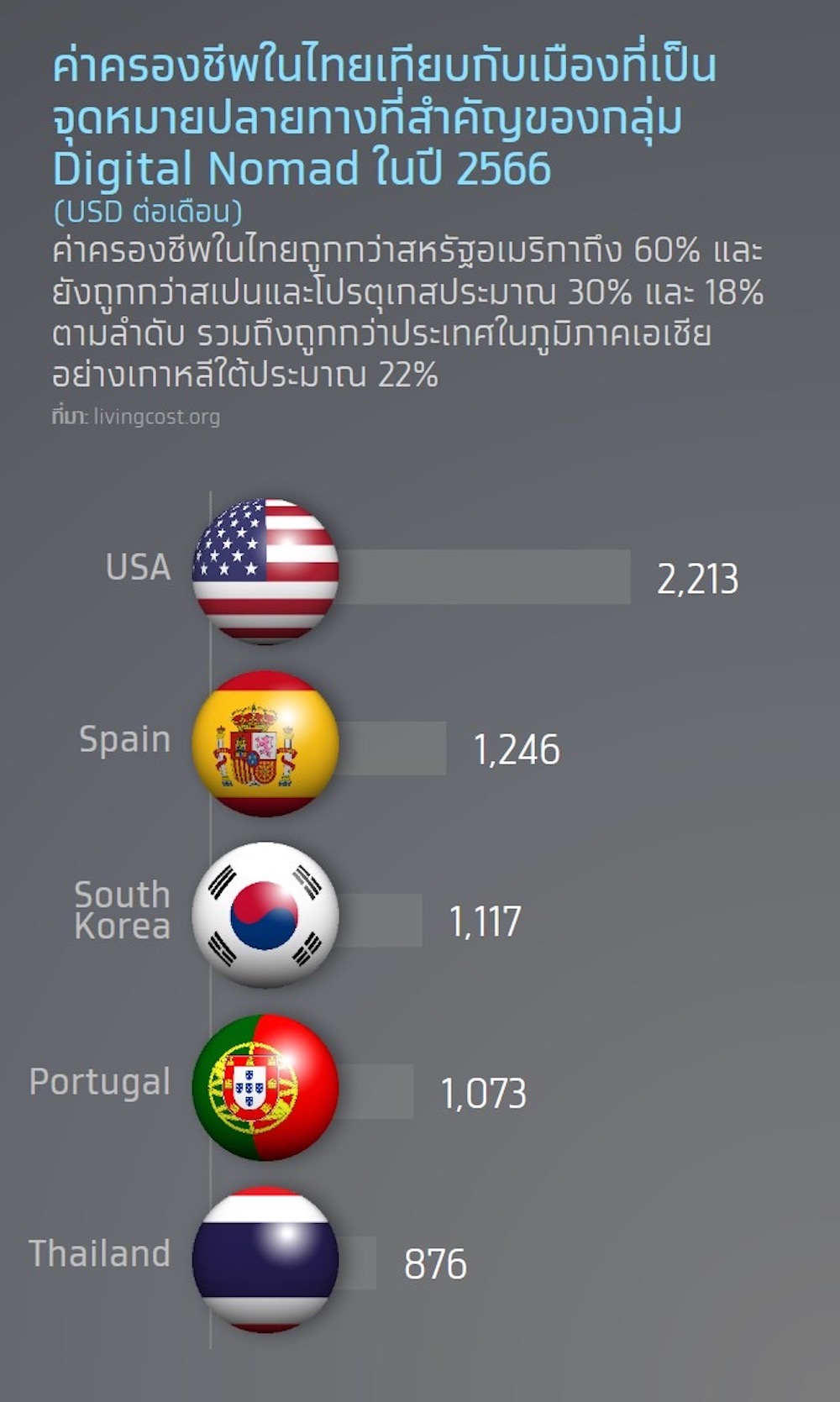
Thailand boasts several strengths, including beautiful natural attractions, efficient high-speed internet networks, numerous suitable co-working spaces, diverse public transportation options, affordable accommodations across various price ranges, delicious and unique cuisine, and friendly locals who are welcoming to foreigners without issues of racial discrimination, all under reasonable living costs. When comparing the cost of living in Thailand to the United States, where many Digital Nomads originate, Thailand is about 60% cheaper. It is also approximately 30% and 18% cheaper than major European destinations like Spain and Portugal, respectively, and about 22% cheaper than South Korea.
The Thai government has recognized the importance of enhancing high-value tourism and aims to attract high-potential foreigners through the Long-Term Resident Visa (LTR), which allows residency in Thailand for up to 10 years along with a work permit (for more details, visit https://ltr.boi.go.th/documents/LTRbrochure_TH.pdf). The Digital Nomad group is one of four target groups for this LTR, alongside wealthy global citizens, foreign retirees, and skilled professionals. However, it is noted that Thailand's LTR Visa has stricter conditions than other countries, particularly regarding the minimum income requirement for Work-From-Thailand Professionals, set at $80,000 per year or approximately 230,000 THB per month, which is relatively high compared to competing countries seeking to attract Digital Nomads. For example, Portugal requires a minimum income of about 2,800 euros per month (four times the minimum wage in Portugal) or approximately 105,000 THB per month, while Spain requires 200% of the minimum wage, about 2,200 euros per month (approximately 82,000-83,000 THB per month). Mexico requires a minimum income of $1,620 per month or about 55,000-57,000 THB per month. Therefore, if the government introduces new measures that align more closely with the Digital Nomad group, such as relaxing minimum income requirements and reducing employer income thresholds, Thailand could enhance its ability to attract Digital Nomads.
Krungthai COMPASS believes that if the government implements concrete policies to attract Digital Nomads and can address weaknesses while enhancing strengths, the number of Digital Nomads in Thailand could reach 250,000 by 2030, generating approximately 15-16 billion THB in revenue for the country.
Which Businesses Benefit from Digital Nomads?
Krungthai COMPASS estimates that the growth of Digital Nomads will not only benefit core businesses directly related to them but also:
1) Accommodation and dining businesses as they represent the primary living expenses, including co-living spaces, serviced apartments, hostels, hotels, and co-working spaces that provide food and beverages. According to a survey by The Adventure Travel Trade Association (ATTA), accommodation and food expenses account for over 90% of the overall spending of Digital Nomads. Initially, businesses located in popular tourist cities favored by Digital Nomads, such as Bangkok, Chiang Mai, and Koh Phangan, may benefit more significantly. However, the government can promote this type of tourism to spread to other tourist cities and secondary cities to distribute tourism revenue more widely across the country, emphasizing the lower costs and living expenses compared to major tourist cities while providing closer access to nature, culture, and communities.
2) Motorcycle rental services as this is the primary mode of transportation for Digital Nomads. Research by Research Intelligence Co., Ltd. and TAT found that approximately 50-80% of Digital Nomads traveling to Thailand rent motorcycles for self-transportation.
3) Community-building businesses such as organizing group tours for activities like hiking, climbing, diving, and fitness classes like yoga and Muay Thai, as these are popular activities among Digital Nomads. Additionally, Digital Nomads often travel alone, creating a desire to socialize with other Digital Nomads.
And 4) Telecommunications businesses as high-speed and efficient internet is crucial for this group of tourists. Therefore, mobile operators have opportunities to offer internet packages that cater to their needs.
Moreover, related or indirect businesses also stand to benefit, including 1) Retail businesses such as convenience stores, hypermarkets, and shopping malls, 2) Entertainment businesses as surveys indicate that loneliness is the biggest challenge for Digital Nomads due to being away from family and friends. Thus, entertainment venues may provide a way for Digital Nomads to relieve stress from work and loneliness while traveling alone abroad, and 3) Medical businesses, including healthcare facilities and pharmacies, as living abroad in unfamiliar environments and climates for extended periods may lead to health issues requiring medical attention. Most in this group tend to purchase travel health insurance.
How Should Businesses Adapt to Cater to Digital Nomads?
Digital Nomads not only stay longer than typical tourists but can also travel year-round without a defined tourist season like mass tourists, allowing businesses to generate income from Digital Nomads throughout the year and increase revenue during the low season of regular tourism. Therefore, businesses interested in targeting this tourist group should adapt their strategies to align with the behaviors of Digital Nomads as follows:
- Provide 24-hour high-speed internet that is stable and secure from cyber attacks as this is a primary factor in Digital Nomads' decision-making, directly affecting their work efficiency. Thailand's infrastructure and internet speed are significant selling points, with a recent report from Ookla, LLC indicating that Thailand ranks 4th globally for fixed internet speed, averaging 205.63 Mbps, just behind Chile, China, and Singapore. Businesses may also have backup networks in case the primary network fails, and offer VPN services for Digital Nomads to connect to their organizational networks.
- Offer co-living spaces that facilitate both private and group work. Research conducted by Research Intelligence Co., Ltd. and TAT surveyed Digital Nomads visiting six key provinces in Thailand: Bangkok, Chiang Mai, Khon Kaen, Chonburi, Surat Thani, and Phuket, finding that co-living spaces are crucial and have the potential to attract Digital Nomads as they provide convenience for working, especially at night.
The core of co-living spaces is to design areas that encourage interaction among residents, creating a sense of a second home. Operators may extend co-working space hours to 24 hours, as Digital Nomads sometimes need to meet with colleagues in different time zones or invite experts to give talks on technology and other beneficial topics. Additionally, hostel operators may develop their accommodations into co-living spaces, as many already have suitable physical characteristics, such as communal areas, lounges, and shared kitchens. Transitioning from a hostel to a co-living space can attract more Gen X and Gen Y customers. For example, Hub53 Coworking and Coliving Space in Chiang Mai started as a bed and breakfast but has transformed into a popular co-living space for Digital Nomads.
Encourage the creation of a community for Digital Nomads. Surveys by The Adventure Travel Trade Association (ATTA) indicate that Digital Nomads often experience loneliness when living alone. Therefore, operators may organize activities that allow Digital Nomads to socialize more, such as parties in co-working spaces, live music events, or open spaces for members to showcase their talents. Bringing members together in a relaxed environment fosters smooth conversations and a sense of community. For instance, Punspace, a co-working space operator in Chiang Mai, has organized events to share knowledge about digital technology, facilitating connections among software developers, designers, digital marketers, founders, venture capitalists, and others working in the same space, resulting in a professional digital community that benefits their careers and helps Digital Nomads meet new friends.
Conclusion
The COVID-19 pandemic, along with technological advancements, has been a significant catalyst for changing work lifestyles, leading to the emergence of remote work and hybrid work models, allowing individuals to work from anywhere. This trend positions Digital Nomads as an important group for future tourism, representing a target demographic for many countries worldwide due to their average stay of 6 months, resulting in higher spending than typical tourists. They can travel year-round without a defined tourist season like mass tourists. Currently, over 44 countries have issued Digital Nomad visas, with 10 more in the process. The global Digital Nomad community generates an economic value of $787 billion annually, or approximately 26.8 trillion THB. In 2022, the number of Digital Nomads worldwide surged to 35 million, a 2.3-fold increase from 15.2 million in 2019, with the potential to reach 60 million by 2033. Thailand remains a popular destination for Digital Nomads due to its high-quality high-speed internet, reasonable living costs, numerous suitable work locations, and friendly locals without issues of racial discrimination.
Digital Nomads will increasingly contribute to generating revenue for Thai businesses both directly and indirectly. Businesses that directly benefit from Digital Nomads include: 1) Accommodation and dining services, 2) Motorcycle rental services, 3) Community-building activities such as organizing group tours for activities like hiking, climbing, diving, and fitness classes like yoga and Muay Thai, and 4) Telecommunications. Additionally, related or indirect businesses also stand to benefit, including 1) Retail businesses such as convenience stores, hypermarkets, and shopping malls, 2) Entertainment businesses, and 3) Medical services, including healthcare facilities and pharmacies.
Businesses interested in targeting Digital Nomads should provide 1) 24-hour high-speed internet that is stable and secure from cyber attacks, 2) co-living spaces that facilitate both private and group work, and 3) promote community-building activities for Digital Nomads to cater to their lifestyle. Meanwhile, the government should implement measures that align more closely with the Digital Nomad group, such as relaxing minimum income requirements for the LTR Visa and reducing employer income thresholds, which would enhance Thailand's ability to attract Digital Nomads.