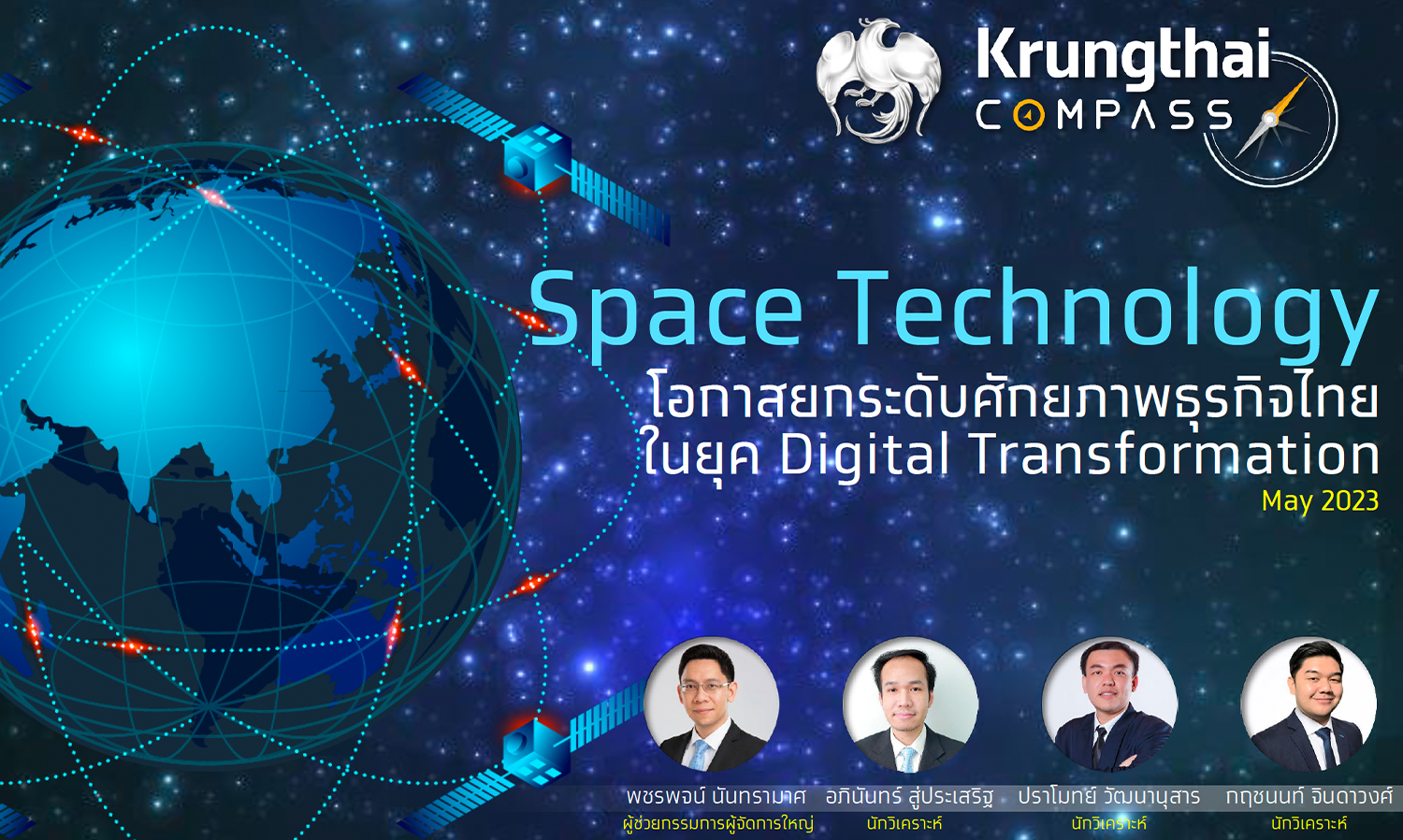
Krungthai Research Center Highlights Space Technology's Role in Enhancing Thai Business Potential
The Krungthai COMPASS Research Center reveals that Space Technology is enhancing the competitive potential of Thai businesses, providing opportunities for three main sectors: agriculture, transportation, and construction. It recommends that the government support the application of this technology in the business sector.
Dr. Pacharaporn Nantaramas, Assistant Managing Director and Chief Economist at Krungthai Bank, stated that the global trend of Digital Transformation is continuously growing post-COVID-19, driving businesses to adopt Space Technology to address significant global risks such as Climate Change, food security issues, and the risks of disruptions in the supply chain.
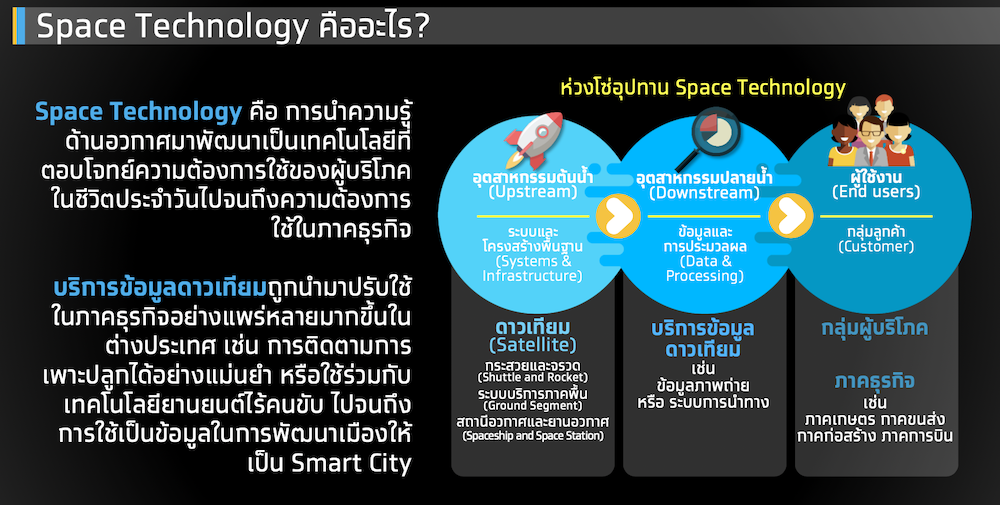
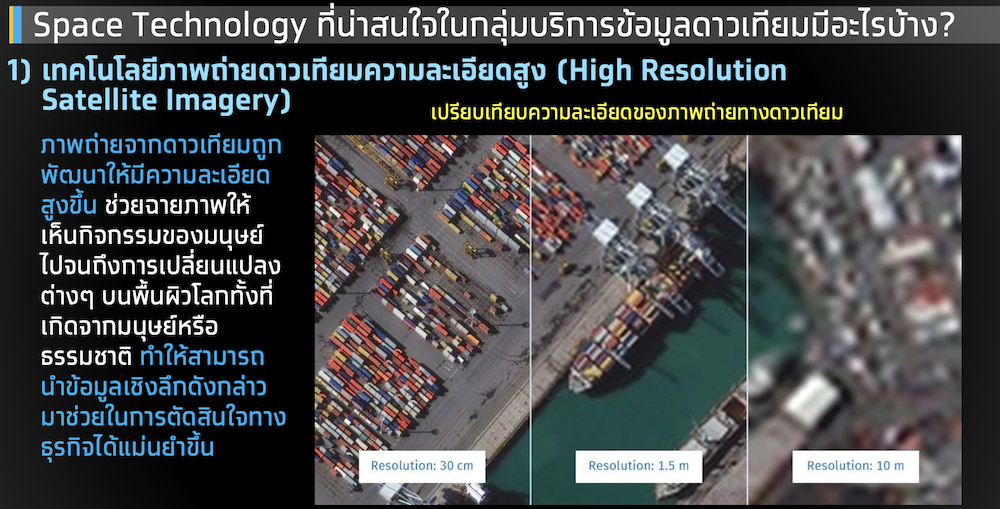
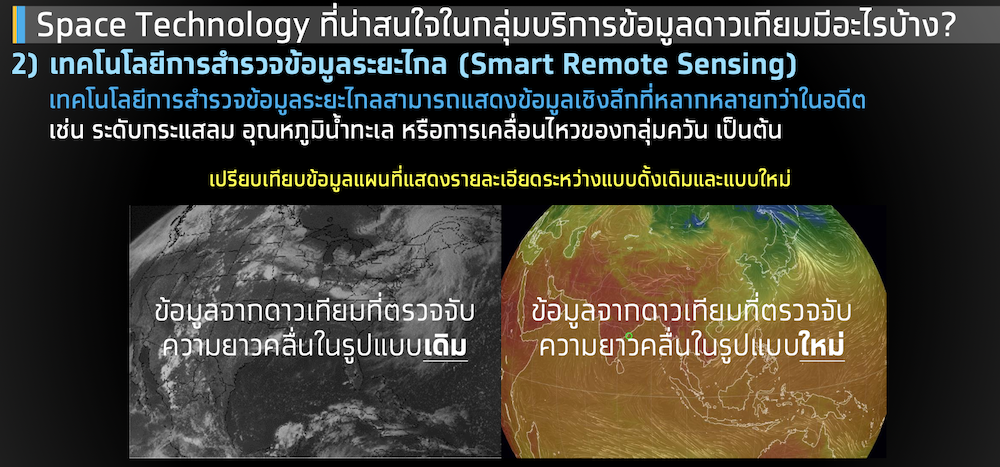
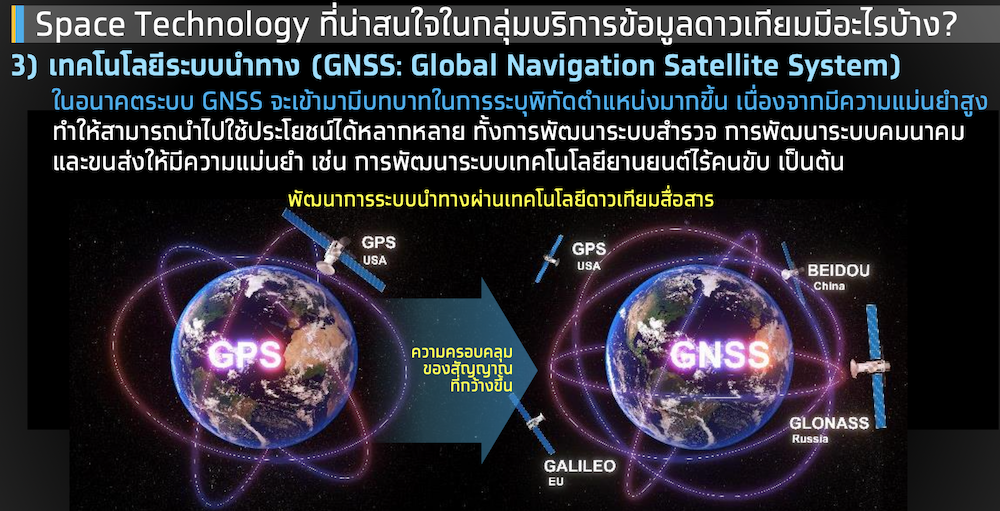
“Space Technology will be one of the mega-trends of the future, enhancing the competitive capabilities of businesses by developing space knowledge into technologies that meet the needs of both consumers and businesses. Thailand is already using satellite mapping to assess flood situations and detect wildfires, while many countries worldwide are increasingly developing and applying Space Technology in various industries. This includes using remote sensing data from satellites for efficient crop planning, employing satellite navigation systems in commercial autonomous vehicles, and utilizing satellite data for developing smart cities, as well as advancing space transportation for space tourism,” he added.
Mr. Apinun Supasert, an analyst at Krungthai COMPASS, noted that advanced Space Technology meets the diverse needs of various industries, helping reduce operational costs for businesses, mitigate the impacts of climate change, and effectively manage greenhouse gas emissions throughout the production chain, while also enhancing data transparency and consumer confidence.
“Space Technology will create opportunities for Thai entrepreneurs in three main sectors: agriculture, transportation, and construction. In agriculture, using satellite imagery technology can reduce the impact of climate change on rice production by approximately 2.354 billion baht per year. In transportation, employing satellite navigation technology can decrease damage to exported produce, particularly vegetables and fruits, by about 3 billion baht annually. Meanwhile, in construction, remote sensing technology can be integrated with drone technology for efficient surveying and land preparation before construction, potentially reducing construction costs by 10-20%,” he explained.
Mr. Pramote Watananusorn, another analyst at Krungthai COMPASS, emphasized that for Thai businesses to fully leverage Space Technology, the government must play a crucial role in raising awareness of its benefits and supporting businesses in its application, as well as fostering collaboration among relevant agencies, particularly experts in Space Technology, such as the Geo-Informatics and Space Technology Development Agency (GISTDA) and specialized startups.
“Space Technology is a new concept for Thailand, where the country is more of a user than a leader in investment. However, the government must invest in this technology to promote and support the growth of the business sector and accommodate the expansion of industries related to the digital economy, which will lead to job creation and positively impact the country's long-term economic growth. It is estimated that if Thailand aims to advance to a mid-level country in Space Technology, it will require an investment of no less than 200 billion baht over the next 10 years, averaging 20 billion baht per year,” he concluded.
Marketing Strategy Team