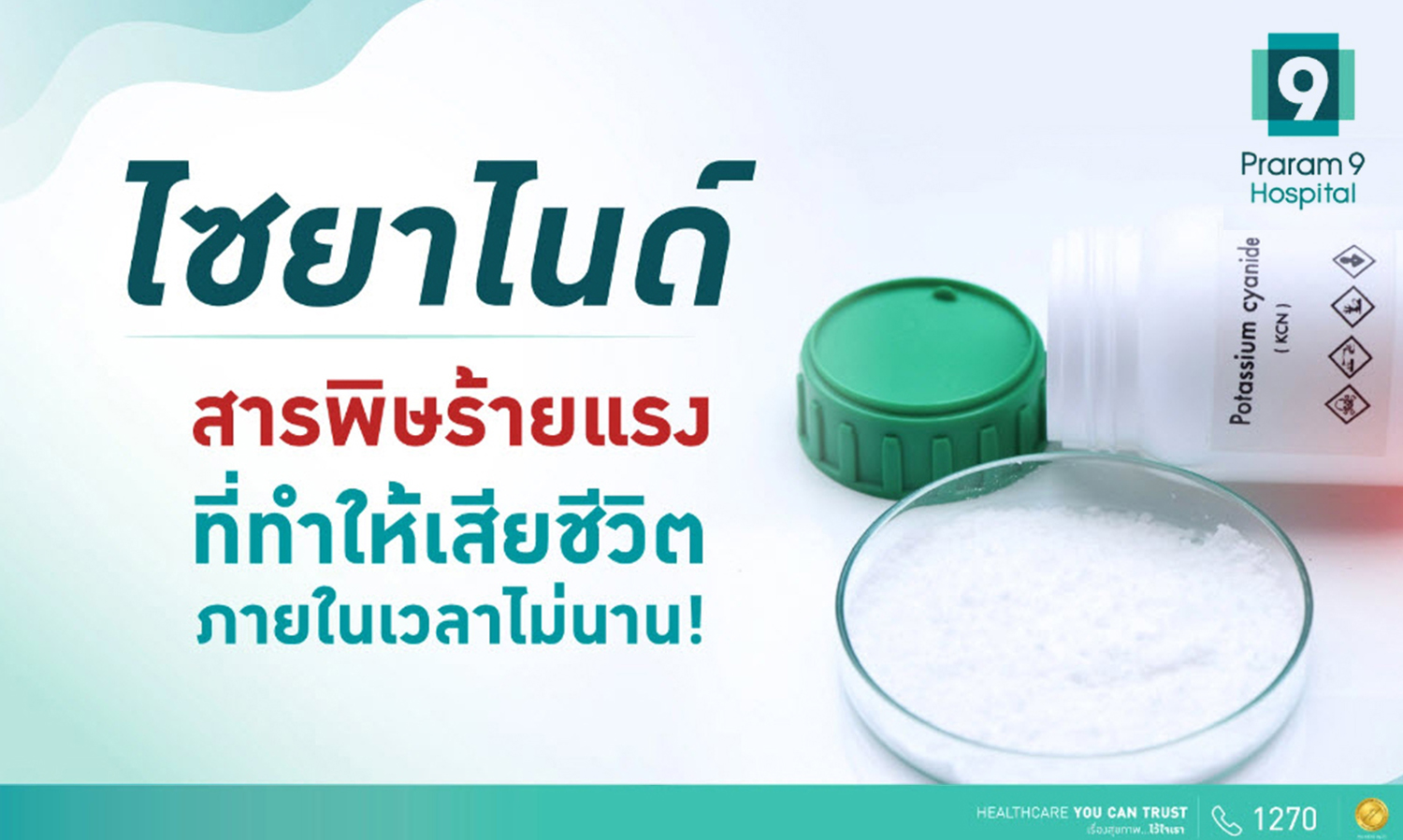
Understanding Cyanide and How Antidotes Save Lives from Poisoning
Cyanide is a highly toxic chemical that exists in various forms, both solid and liquid. It is commonly used in the production of paper, textiles, and plastics, as well as in house fires, vehicle fires, and the combustion of materials containing carbon and nitrogen, such as plastics, melamine resin, nylon, silk, wool, and synthetic rubber. It can contaminate air, soil, water, and food, and can also occur naturally in certain plants, such as apples, raw foods like cassava, and bitter almonds. Sweet almonds, which are commonly consumed, do not contain cyanide. Additionally, cyanide can be produced through metabolic processes in the human body. However, the small amounts of cyanide found in plants and metabolic processes are not harmful to living organisms.

Dr. Natthakan Mayurasakorn, an endocrinologist and metabolic specialist at Rama 9 Hospital, stated, "Cyanide poisoning is a severe toxin that can lead to death within minutes to hours. If diagnosed promptly, it can be treated with a specific antidote, as it can be absorbed through breathing, skin, mucous membranes, and the digestive tract. Once in the body, it spreads rapidly. Symptoms appear within seconds if inhaled, while ingestion or skin contact may show symptoms within minutes to no more than an hour."
The toxicity of cyanide inhibits the use of oxygen by cells in the body, leading to symptoms similar to oxygen deprivation in various organs. Anaerobic metabolism produces toxins that acidify the blood, affecting organs such as the brain and causing rapid cardiovascular failure, leading to death. Most individuals exposed to cyanide experience symptoms starting with:
- Palpitations and anxiety
- Confusion and headaches
- Lethargy or seizures
- Initially high blood pressure, followed by a slow heart rate and hypotension
- Rapid breathing that slows down until breathing stops
- Therefore, those exposed should seek medical attention as soon as possible.
Individuals affected by cyanide poisoning may exhibit distinctive symptoms, such as cherry-red skin due to high oxygen levels in the blood or cyanosis. If you suspect accidental exposure to cyanide or encounter someone who has been poisoned, you can provide initial assistance as follows:
- If exposure occurred through contact, quickly remove contaminated clothing. If inhaling cyanide-laden air, evacuate the area as quickly as possible.
- If there was skin contact, wash the affected area with soap and water, ensuring that the helper wears protective clothing and a mask for their own safety.
- If the eyes are affected, rinse them with clean water for at least 10 minutes.
- “Do not use mouth-to-mouth resuscitation,” instead perform CPR to prevent the rescuer from being poisoned.
- Do not induce vomiting as cyanide is rapidly absorbed.
- Quickly transport the patient to the hospital.
Dr. Natthakan continued, "To treat cyanide poisoning, doctors will administer thiosulfate, which the body converts into thiocyanate, a non-toxic substance excreted through urine. Alternatively, they may provide hydrocobalamin, a precursor of vitamin B12, which is converted into cyanocobalamin and also excreted through urine, with some expelled through breathing, sweating, and urination. Therefore, assisting someone with cyanide poisoning should not involve mouth-to-mouth breathing, as it may expose the rescuer to the toxin."
Moreover, the effects of cyanide poisoning can have lasting consequences. Survivors may experience symptoms similar to Parkinson's disease due to permanent damage to the basal ganglia in the brain,” Dr. Natthakan concluded.
You can follow health articles or seek further health advice at Website: www.praram9.com / Line: lin.ee/vR9xrQs or @praram9hospital and on Facebook: Praram9 Hospital. Call 1270 for Rama 9 Hospital. HEALTHCARE YOU CAN TRUST. Trust us with your health… #Praram9Hospital