October Inflation Rate Slows to 5.98% Driven by Energy and Fresh Food Prices
Key Highlights
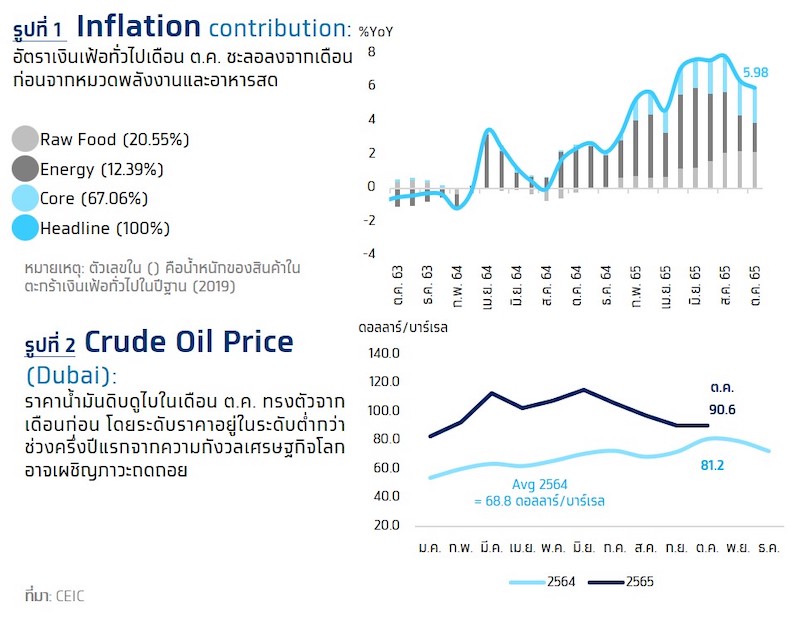
- The general inflation rate for October has slowed to 5.98% (YoY) due to a decrease in energy prices influenced by last year's high base effects, as well as a slowdown in fresh food prices driven by meat and fruit prices. Additionally, the previous year's high base effect has also contributed to this trend. However, when comparing the general inflation rate to the previous month, there was an increase of 0.33% (MoM) attributed to rising fresh food and retail oil prices. The core inflation rate stands at 3.17% (YoY), slightly up from the previous month due to higher prices of prepared foods and non-alcoholic beverages.
- Although the general inflation rate shows signs of slowing down and has passed its peak, it is expected that the Bank of Thailand (BOT) will continue to raise interest rates to control inflation, which remains above the target range of 1-3%, until mid-2023. This move is also aimed at increasing policy space to cope with potential global economic downturns in the near future.
Chanomnit Chaisinthong
Krungthai COMPASS
The general inflation rate for October is at 5.98% (YoY), down from 6.41% (YoY) in the previous month, which aligns with analysts' expectations of 6.0% [1] due to a decrease in energy prices to 13.07% (YoY) compared to 16.10% (YoY) in September, influenced by last year's high base effects, and a slight decrease in fresh food prices to 10.48% (YoY) from 10.97% (YoY) in September, driven by lower meat and fruit prices. However, when considering inflation compared to the previous month, the general inflation rate increased by 0.33% (MoM) due to rising fresh food prices, particularly vegetables affected by flooding, and a slight increase in retail oil prices.
The core inflation rate (excluding fresh food and energy) has slightly increased from the previous month to 3.17% (YoY) from 3.12% (YoY) due to higher prices of prepared foods and non-alcoholic beverages. The average general inflation rate for the first ten months of the year is 6.15%, while the core inflation rate is at 2.35%.
Implication:
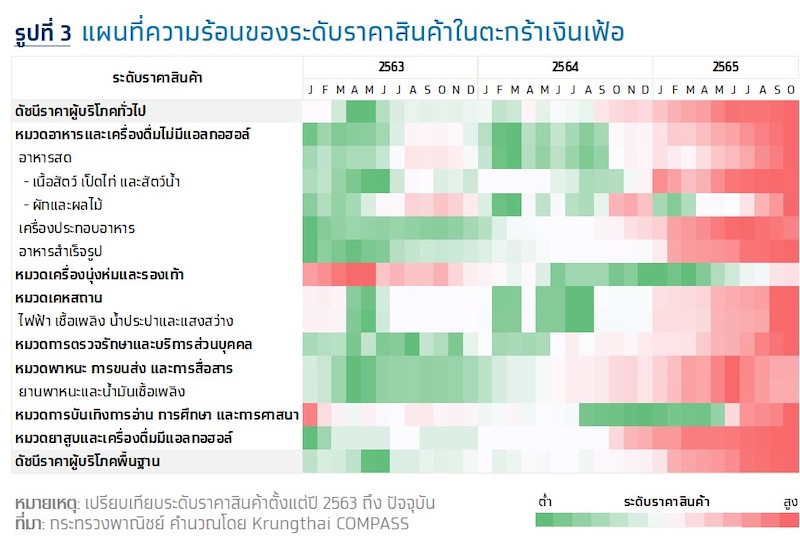
- It is expected that the BOT will continue to raise interest rates, even though the general inflation rate shows signs of slowing down and has passed its peak. Inflation remains above the target range of 1-3%, and when considering the core inflation rate (excluding fresh food and energy, which are volatile), it also remains above the target range due to the ongoing pass-through of high production costs to the prices of goods and services. Krungthai COMPASS estimates that the general inflation rate will likely remain above the target range until mid-2023, thus it is anticipated that the BOT will continue to raise interest rates to control inflation and increase policy space to address potential global economic downturns in the near future.
[1] Referenced from Reuter Polls (as of Nov 22)