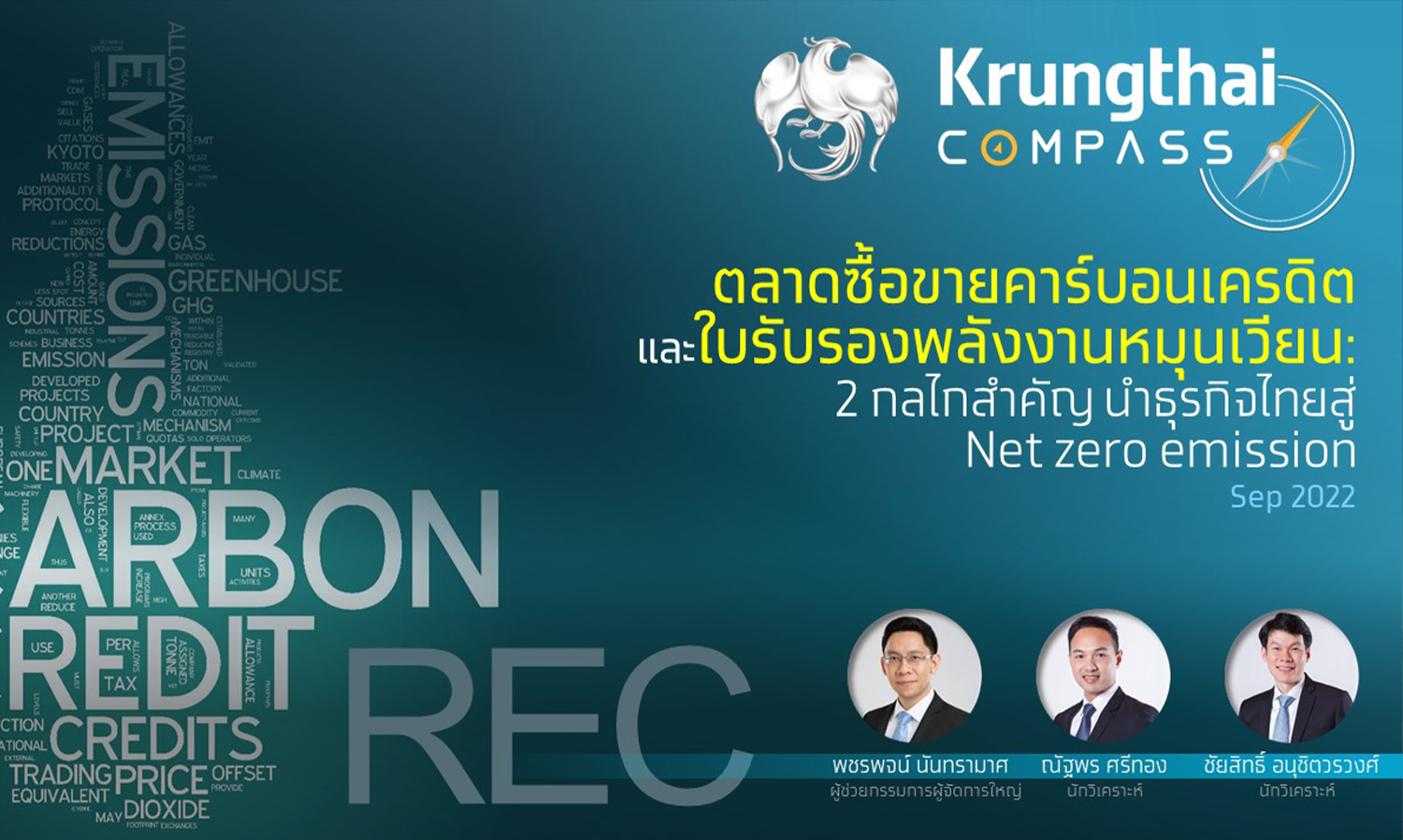
Krungthai Highlights Carbon Credit Trading and Renewable Energy Certificates as Key Tools for Businesses to Achieve Net Zero Emission
The Krungthai COMPASS Research Center indicates that leading ESG businesses are utilizing carbon credit trading and renewable energy certificates (REC) as essential tools in their journey towards achieving Net Zero Emission and a goal of 100% renewable energy usage. The global and Thai markets are expected to experience significant growth, prompting operators to prepare accordingly, while the government should implement continuous supportive measures.

Dr. Pacharaporn Nantharamat, Assistant Managing Director and Chief Economist of Krungthai Bank, revealed that having a market for carbon credit trading and renewable energy certificates (REC) will assist the country and businesses in reaching their net greenhouse gas emissions target of Net Zero Emission and clean energy goals. It also provides a competitive edge in attracting customers and investors who prioritize ESG, as well as incentivizing project developers to reduce greenhouse gas emissions through carbon credit sales and renewable energy producers through REC sales. This also presents business opportunities for intermediaries and innovators in trading.

“One of the factors necessitating Thailand to promote these tools is the growing awareness among leading global companies aiming for Net Zero Emission, including the goal of 100% renewable energy usage (RE100). This is evident from the continuous increase in companies joining the RE100 group, rising from just 261 in 2019 to 378 currently, representing an average annual growth of 13%. Notably, over 50 multinational companies operating in Thailand are contributing to the increased demand for REC in the country,” he added.
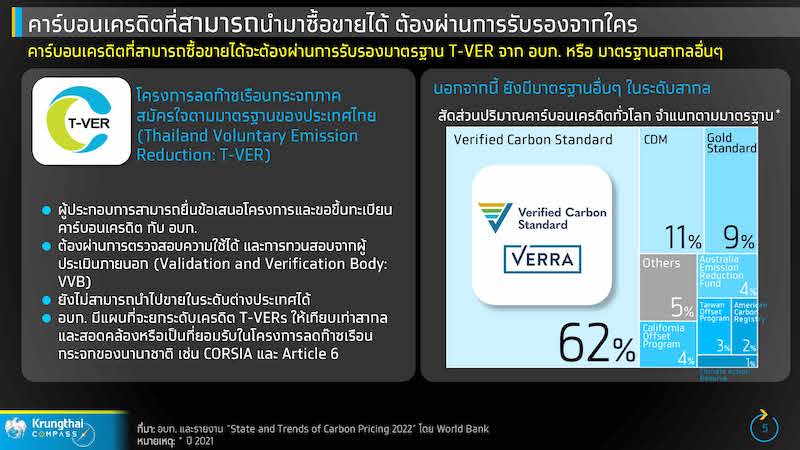
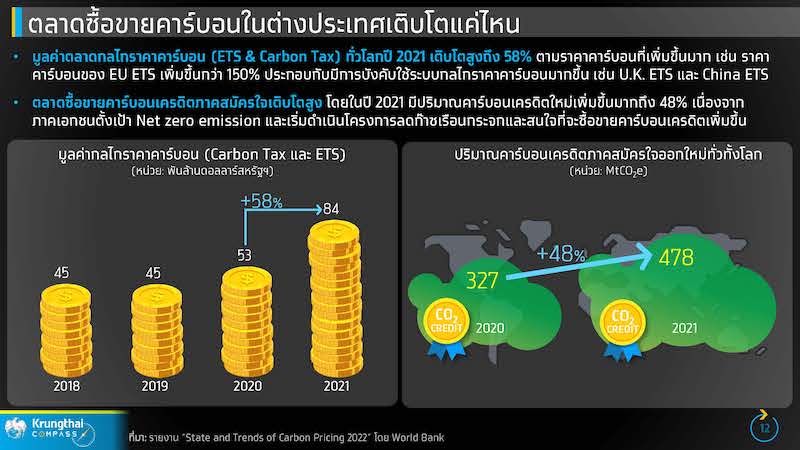
Mr. Natthaporn Sritong, an analyst at the Krungthai COMPASS Research Center, stated that the global carbon credit trading market is projected to grow by 15 times over the next decade and by 100 times by 2050. The market consists of two forms: 1) Compliance, known as the “Emission Trading Scheme (ETS)” and 2) Voluntary, where operators seeking to reduce greenhouse gases purchase carbon credits instead of reducing emissions themselves. Sellers are other organizations that implement greenhouse gas reduction projects according to standards such as Verified Carbon Standard (VCS/VERRA) and Gold Standard, which are global standards, or Thailand's own standard (Thailand Voluntary Emission Reduction: T-VER). The price of carbon credits varies across markets or standards; currently, the global carbon credit price is approximately $25 per ton, while the average price of Thai carbon credits in 2022 was 107 baht, or about $3 per ton.
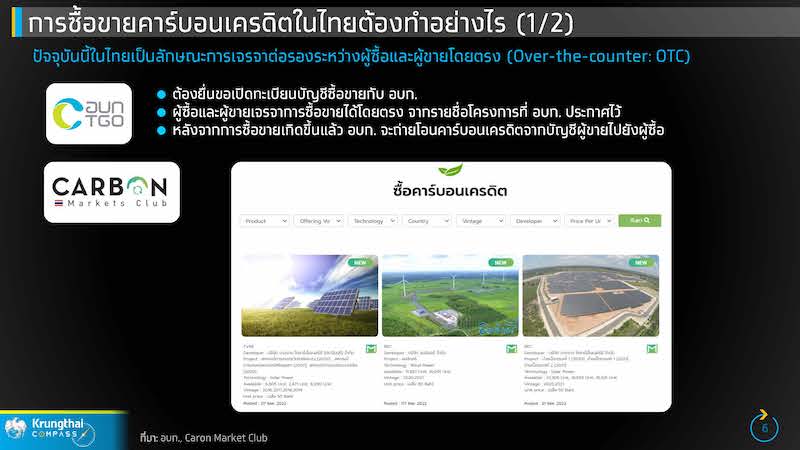
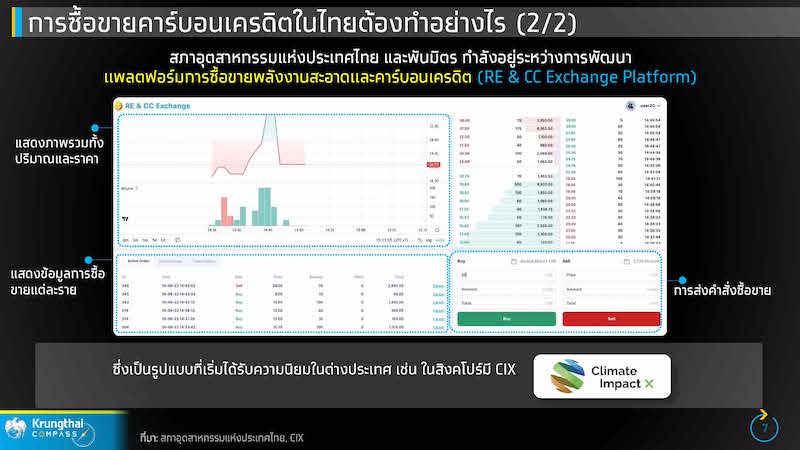
Dr. Chaisit Anuchitvorawong, an analyst at the Krungthai COMPASS Research Center, added that trading renewable energy certificates (REC) is a growing tool alongside carbon credit trading. Sellers are producers of various types of renewable energy, such as solar and biomass, who have received certification. Buyers can claim the use of electricity generated from renewable energy, making it a method to help RE100 operators achieve their renewable energy usage goals. Over the past year, global REC trading has seen significant growth, with certificates under the International REC Standard (I-REC), widely used in over 30 countries, including Thailand, experiencing a 103% increase in claims, while Thailand saw a remarkable 135% growth, with further expansion expected in the future.
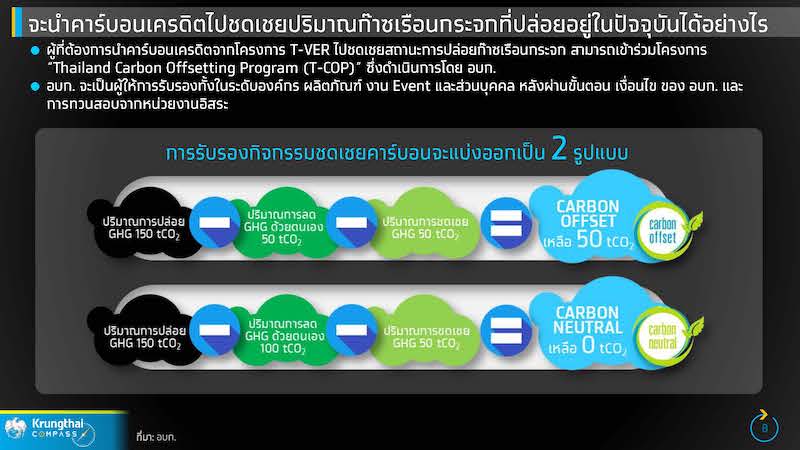
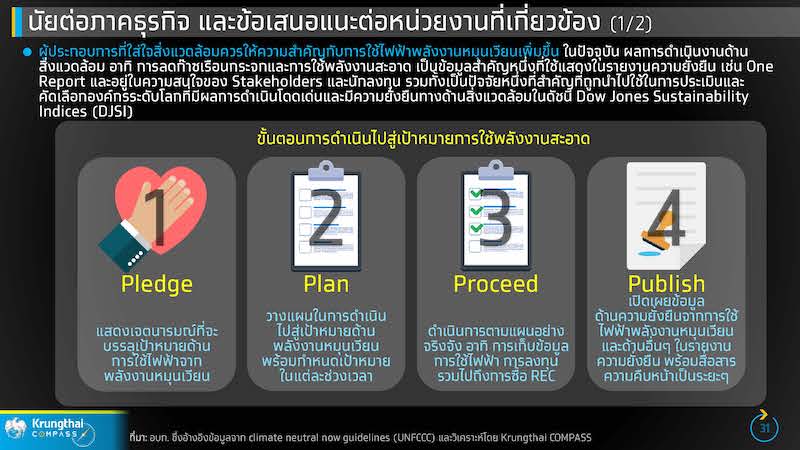
“Operators should prepare and study the understanding of carbon credit and REC trading in advance, especially those exporting goods to the EU and the US, which are likely to implement carbon border tax measures (CBAM) and increased environmental regulations. Additionally, operators wishing to showcase these efforts in sustainability reports, such as One Report, and for evaluations in the Dow Jones Sustainability Indices (DJSI), should also be proactive. The government should support projects leading to high-quality carbon credits that meet international standards, as different types of projects will receive varying levels of recognition, and the value of carbon credits will differ. Furthermore, support should be given to the development of trading platforms, such as applying blockchain technology and enhancing infrastructure, particularly in comprehensive data connectivity,” he concluded.