Highlights from the Seminar "Economic Vaccine: Stimulating Real Estate in the Final Quarter of 2021"
At the seminar <\/strong><\/span>“Economic Vaccine: Stimulating Real Estate in the Final Quarter of 2021”<\/strong><\/span> organized by <\/strong><\/span>TerraBKK website<\/strong><\/span> <\/strong><\/span> Experts from government agencies, housing loan associations, commercial banks, and leading real estate developers presented key issues beneficial for the development of the real estate business during the COVID-19 crisis, summarized as follows: <\/strong><\/span><\/p>
The government accelerates economic growth through stimulus policies <\/strong><\/span><\/p>
Dr. Phisit Phuapan, Director of the Macroeconomic Policy Bureau, Fiscal Policy Office (FPO), Ministry of Finance<\/strong><\/span> stated that the Thai economy would be heavily impacted in the second quarter, with a GDP contraction of 12.1%. However, in the second half of the year, as the COVID situation is controlled, we will see a rapid economic recovery. It must be acknowledged that last year, the main reason for the negative GDP was the loss of international tourism, as Thailand relies on tourism for 12% of its GDP, resulting in tourism revenue accounting for about 18% of GDP.<\/span><\/p>
In early 2020, the COVID outbreak forced Thailand to close its borders, leading to a significant drop in travel by the end of last year. Although the long-stay visa was introduced, the number of tourists remained at tens of thousands per month, resulting in only 6.7 million tourists in 2020 compared to over 40 million before COVID. This caused tourism revenue to plummet from 2 trillion baht to just 300 million baht, a loss of 1.7 trillion baht.<\/p>
It is estimated that the economy will be affected by the lockdown from July to August, but recovery began in September after the lockdown was eased on September 1, leading to improved economic activities. Currently, the government is planning to start reopening the country, with various provinces gradually increasing economic activities, starting with Phuket as a pilot area, followed by Phang Nga, Krabi, and areas around Koh Samui, with plans to expand to other provinces such as Chiang Mai, Phetchaburi, Chonburi, Bangkok, and Buriram.<\/span><\/strong> Therefore, from now until the end of the year and early 2022, we will see plans for reopening Thailand to international travel, and tourism is expected to return to a more normal state.<\/strong><\/span> Certainly, the service sector, manufacturing, exports, hotels, and restaurants have been directly affected by COVID. Since the beginning of the year until the third quarter, the government’s economic agencies estimate that the Thai economy will grow by about 0.7-1.3%.<\/span> For 2022, it is expected that the Thai economy will grow by about 4% due to four main factors: the global economy positively impacting exports, and the continuation of government policies with a comprehensive economic stimulus budget from the 1 trillion baht loan decree last year, most of which has been disbursed.<\/p>
However, we must be cautious of risk factors from the uncertainty of the COVID-19 outbreak, which is gradually improving with increased vaccination rates, helping to build immunity. Additionally, household and business debts during the economic recovery period will take time before the Thai economy fully recovers, as tourism, economic activities, and travel return to normal.<\/p>
The government aims to vaccinate 70% of the population, which is a crucial factor for reopening the country. The additional borrowing of 50 trillion baht in the 2022 budget will be a deficit budget, both in the budget and in the loan act. Measures from the Bank of Thailand and state banks can drive continuous economic growth. The key challenge in the next 2-3 years will be promoting investment, especially in private and public sectors. The real estate sector currently plays a significant role as an investment that enhances the country's competitiveness, preparing to welcome foreign tourists and investors until early next year.<\/p>
In summary, in the short term, the government will manage vaccination and control the outbreak to appropriately open the country until early next year. In the medium term, it will focus on accelerating private sector investment, developing special economic zones (EEC), and developing smart cities.<\/strong><\/span> “COVID-19 Vaccine” as a Confidence Booster for Investors<\/strong><\/span> Dr. Piyasak Manasan, Senior Director of Investment Research at SCB Securities<\/span><\/strong> stated that during the COVID-19 outbreak, a turning point in confidence occurred. However, as the outbreak began to decline, clearer signs of spending and economic reopening emerged. Although some activities remain closed, there are early signs of increased interest from investors in buying and selling in the market.<\/p>
In the short term, increased vaccination rates are another confidence booster returning to Thailand, along with fiscal economic policies <\/strong><\/span> that have a significant impact on investor confidence. The Ministry of Finance has injected economic stimulus funds, particularly through various policies such as “We Won't Leave Anyone Behind,” “We Win,” “The More You Use, The More You Get,” and the state welfare card, which will effectively stimulate spending. Additionally, the government has recently adjusted the public debt ceiling, which is expected to help boost confidence to some extent.<\/p>
On the financial side, last year saw significant interest rate cuts and various assistance measures. This year, interest rates remain low, and there are soft loan initiatives, indicating that confidence will improve to some extent. The final point is that favorable policies for investment in various sectors are anticipated, particularly regarding foreign investors.<\/strong><\/span> Although TerraBKK has data indicating that last year, foreign buyers in the real estate sector were not significant, partly due to issues with transactions as foreign clients could not travel to Thailand. It is agreed that the government should address the benefits for foreign investors or foreigners wishing to reside in Thailand, which will encourage capable investors to work or retire in Thailand, leading to increased capital inflow into the country.<\/p>
The Housing Loan Association Proposes the Establishment of <\/strong>“Housing Promotion and Subsidy Fund” to Support Customer Purchasing Power<\/strong><\/span> Mr. Kitti Patanapongpipat, President of the Housing Loan Association<\/strong><\/span> stated that monetary and credit policies are crucial for the real estate business. We need to stimulate both the real estate sector and stabilize the homebuyer system, especially for the economy-level customer group. Thus, I propose that Thailand should have a fund to support savings before borrowing, called the “Housing Promotion and Subsidy Fund”<\/strong><\/span> to support entrepreneurs and the public. I suggest that we should have something called “Bonus FAR,” which I have previously proposed to Bangkok, allowing developers to increase construction area for greater profitability.<\/p>
This would enable better business operations. In the past, discussions with Bangkok resulted in about 40% approval, but only 20% was granted. Currently, if we look at the city plan, if we can assist low-income individuals, they could receive an additional “Bonus FAR” of 20%, and Bangkok has also increased “Bonus FAR” for other developers by 20%. If there are green spaces or restroom areas, the proposals to assist low and middle-income individuals have not garnered interest.<\/p>
Therefore, I believe we should have a system to grant a “Bonus FAR” of 20% to developers, allowing them to increase FAR by more than 20%, potentially up to 40%, enabling greater returns for businesses.<\/strong><\/span> The condition is to allocate part of the increased returns to the housing subsidy fund. This fund will receive contributions from developers who receive “Bonus FAR.” For instance, if there is land near a subway station, they may receive higher FAR, or in densely commercial areas, they can build higher. The excess above the normal will be considered “Bonus FAR,” which increases returns for developers. This fund will seek to allocate part of the higher profits into the housing fund, which will be used to support down payment savings.<\/strong><\/span> Those who save for down payments within the specified period will receive a saving bonus, encouraging buyers to save more for down payments on housing. We may offer returns on down payment savings ranging from 25% to 50% based on income levels, as proposed to the National Housing Policy Committee, helping both entrepreneurs and low to middle-income homebuyers expand their purchasing power.<\/strong><\/span> Individuals with savings in the system will find it easier to obtain bank loans. Higher down payments lead to easier borrowing, and savings can be accumulated over a period of 1 or 2 years while developers construct housing. This will also reduce loan rejection rates. The Thai Real Estate Association supports this and is ready to cooperate, creating a system that strengthens the real estate business and the purchasing power of the public in the long term.<\/p>
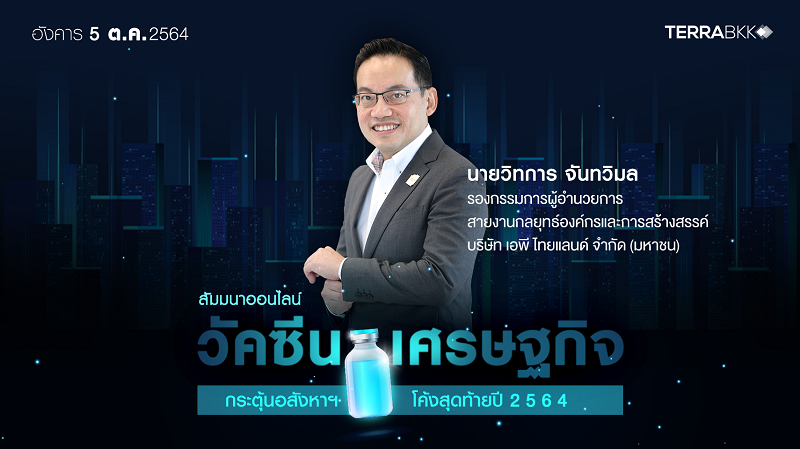
“AP Thailand” Implements 3 Immunity Strategies, Adapting Quickly to Achieve Success Amid COVID-19 Challenges<\/strong><\/span> Mr. Witak Chanthawimol, Deputy Managing Director of Corporate Strategy and Innovation at AP Thailand Public Company Limited<\/strong><\/span> stated that AP's success strategy during the crisis has been continuous adaptation. Over the past 30 years, AP has navigated through crises, adjusting work styles accordingly. For the past 3-4 years, we have followed market trends towards decentralization, meaning management decisions must be made by those closest to the customers. We call this independent responsible leadership.<\/strong><\/span> We create independent leaders at all levels of work, who are ready to solve problems and respond to changing customer needs, suggestions, and accountability. We believe that independent responsible leaders will drive the organization quickly, especially during the uncertainty brought by COVID. Additionally, we must focus on building an organizational culture that allows everyone to innovate, enhancing the efficiency of our operations. Over the past 2-3 years, we have adjusted processes by incorporating new innovations, both technological and non-technological, continuously through our Gen Y and Gen Z employees, who are given opportunities to think and experiment.<\/strong><\/span> Finally, the last strategy is Everything Digital.<\/strong><\/span> In the past 3-4 years, we have aimed to utilize all systems through digital means, such as land purchasing processes viewed via Google Maps, allowing analysis of land potential. This extends to the land acquisition process and the delivery of products to customers, incorporating Building Information Modeling to reduce costs while delivering quality products to customers, as well as understanding the needs or features that people are looking for. In terms of marketing, we link to digital marketing, allowing for more precise advertising through Facebook and Google. Finally, our backend systems connect all data, including vendor management and payment processes, enabling billing directly through the system.<\/span> With these three strategies, we and our partners and ecosystem can adapt immediately, allowing all parties to work comfortably, and AP has received positive feedback for incorporating digital solutions. As for Repair for the World, we aim to create three immunities for AP: the immunity of cash flow, which is essential for sustaining employees, partners, and business growth. We manage our debt-to-equity ratio to not exceed 1, ensuring that if we have a high proportion of transfers, it will improve our situation, providing opportunities to seize during national crises, recognizing that we can capitalize on this when we are financially strong.<\/strong><\/span> The second immunity relates to the prevention of serious diseases, requiring diverse tools to cope with various situations. This involves balancing our portfolio according to different circumstances, believing that demand will change with different situations. This means that if we have a prepared portfolio and management, we can see that since last year, AP has launched many single-family homes and townhomes. Lastly, the immunity to adapt to changing environments involves the disruption of technology, meaning we must keep pace with it. We need to have Gen Y-Z individuals in the organization to leverage their knowledge and skills to adapt to technological disruptions. At AP, over 84% of our workforce belongs to Gen Y, who possess the ability to learn and adapt to upcoming disruptions. However, we must also value experienced individuals. Balancing both groups, which have significantly different thoughts and working methods, is essential for effective collaboration. We strive to adjust our working methods to accommodate both sides through Design Thinking processes, ensuring everyone understands that this is the AP way of working.<\/strong><\/span> We believe that within every crisis lies an opportunity, as every generation seeks new homes or homes that cater to an aging society. Entrepreneurs must build confidence among customers and partners, which is essential, and be ready to embrace waves of change at all times.<\/strong><\/span>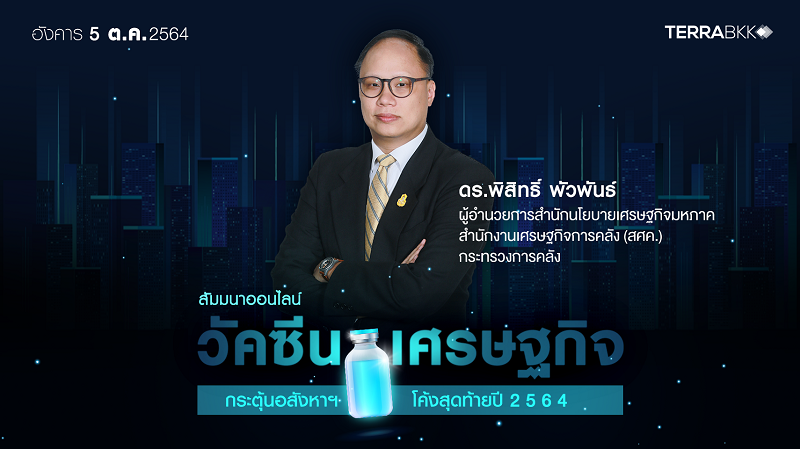 <\/p>
<\/p>
 <\/p>
<\/p>
 <\/p>
<\/p>
 <\/p>
<\/p>