Consumer Confidence in Real Estate Purchases During COVID-19
TerraBKK conducted a survey on “Consumer Confidence in Real Estate Purchases During COVID-19” through an online questionnaire with a sample of 430 respondents. The findings revealed that during the fourth wave of COVID-19, the severe outbreak led to consumer concerns and a lack of confidence, significantly impacting their real estate purchasing behavior.
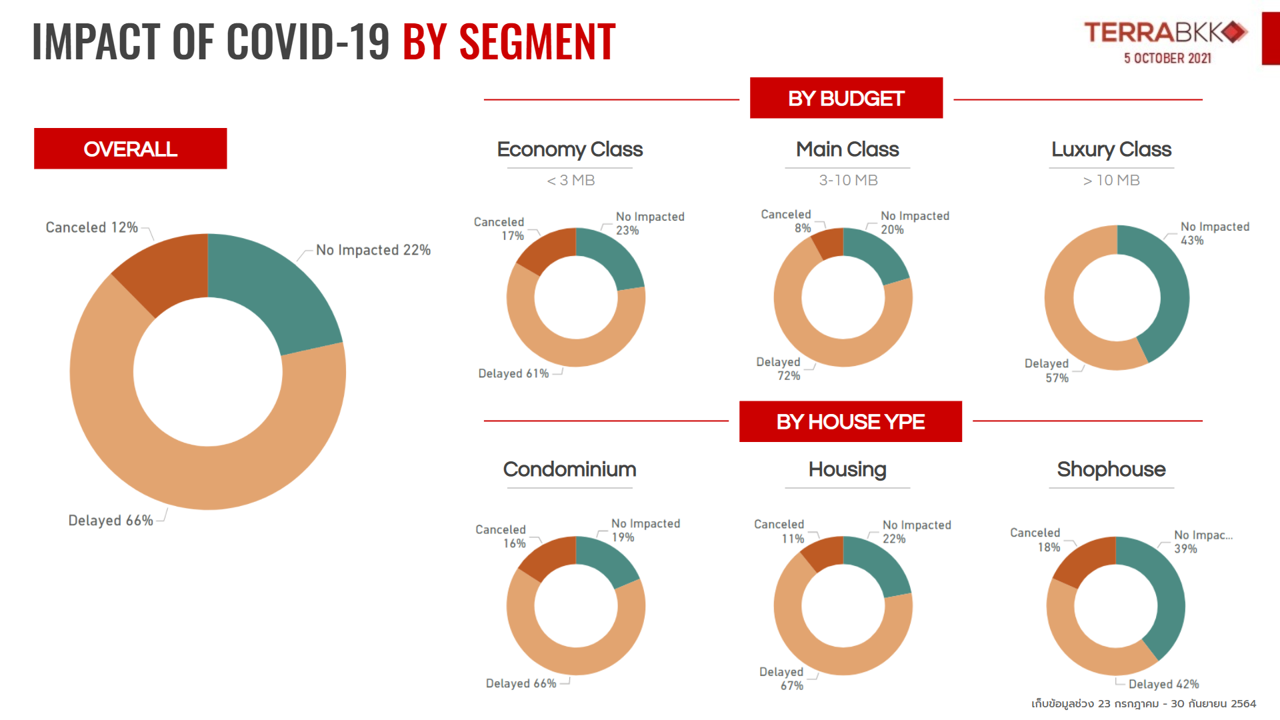
More than 66% of respondents indicated that this wave of COVID-19 affected their decision to purchase real estate, necessitating a delay or postponement of their buying decisions. Another 12% stated that COVID-19 had a significant impact, leading them to decide against purchasing real estate altogether. Only 22% felt that COVID-19 had no effect and continued to make purchasing decisions.
When categorized by budget, it was found that over 43% of customers in the Luxury Class with a budget over 10 million still decided to purchase real estate, indicating that the luxury market can still thrive in such economic conditions. In contrast, nearly 70% of customers in the Main Class with a budget of 3-10 million and the Economy Class with a budget under 3 million indicated that they needed to delay or postpone their purchasing decisions.
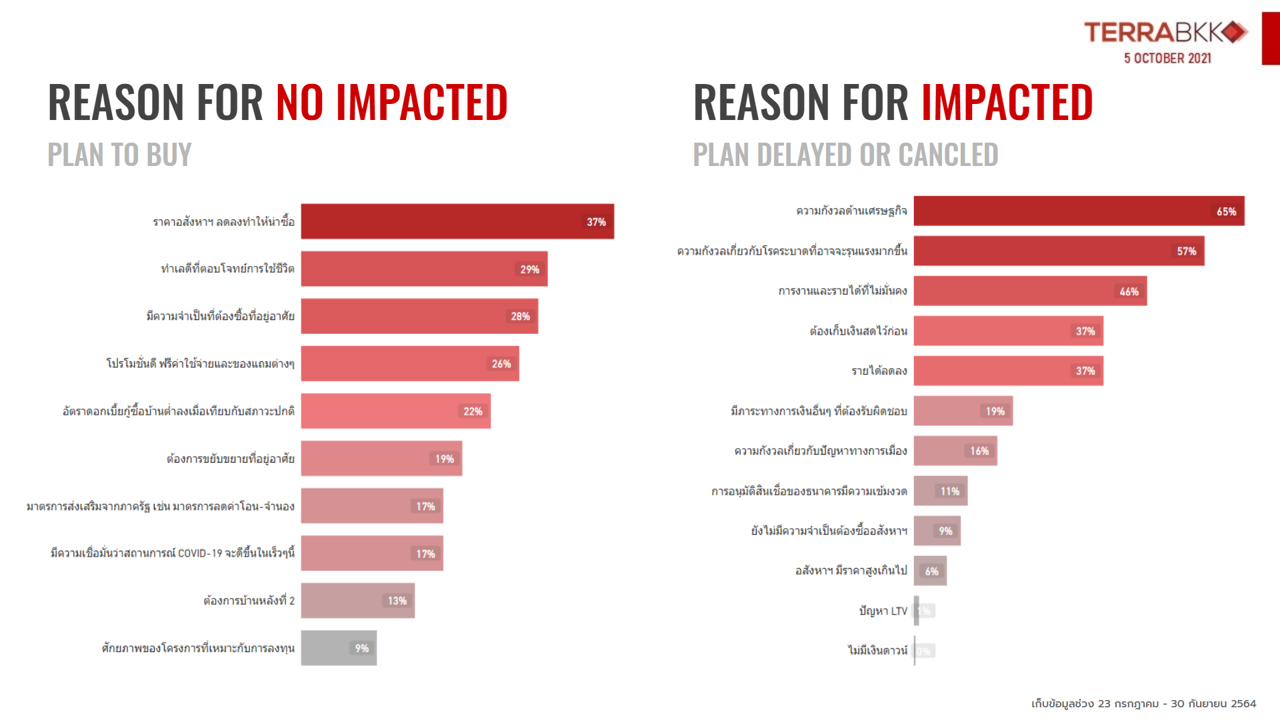
When asked about their confidence in purchasing real estate, respondents who felt that COVID-19 had no impact believed that this was a good opportunity due to several positive factors, such as reduced property prices making them attractive, good locations that meet lifestyle needs, a necessity to purchase housing, attractive promotions, free expenses and various bonuses, and low mortgage interest rates compared to normal times.
On the other hand, respondents who thought COVID-19 affected real estate purchases expressed ongoing concerns about the economy, worries about the potential worsening of the pandemic, job and income instability, the need to save cash, and reduced income.
Has COVID-19 changed consumer home buying behavior? If so, how?
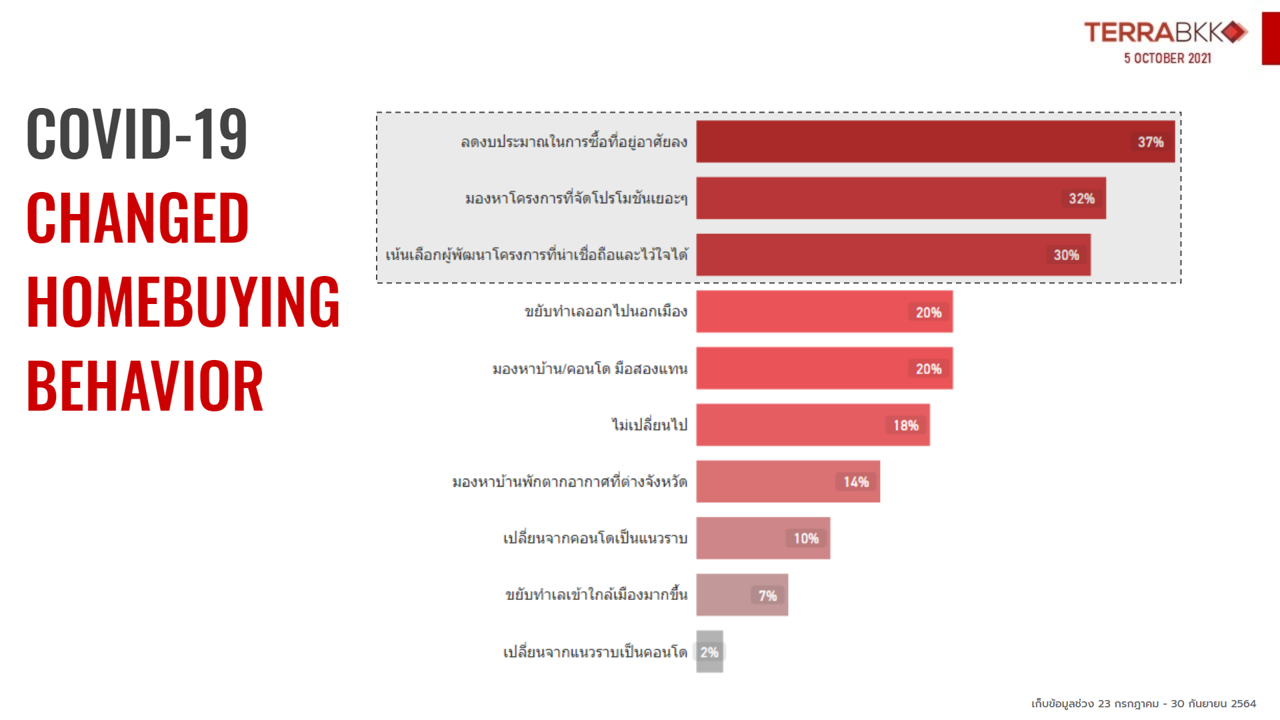
It is clear that the COVID-19 outbreak has inevitably affected consumer real estate purchasing behavior. Most agree that there is a need to reduce the budget for home purchases and look for projects with many promotions. Additionally, they are choosing projects from reputable and trustworthy developers. COVID-19 has also changed people's living behaviors, leading to a greater demand for living space, prompting many to move further out of the city to find larger homes within the same or reduced budget.
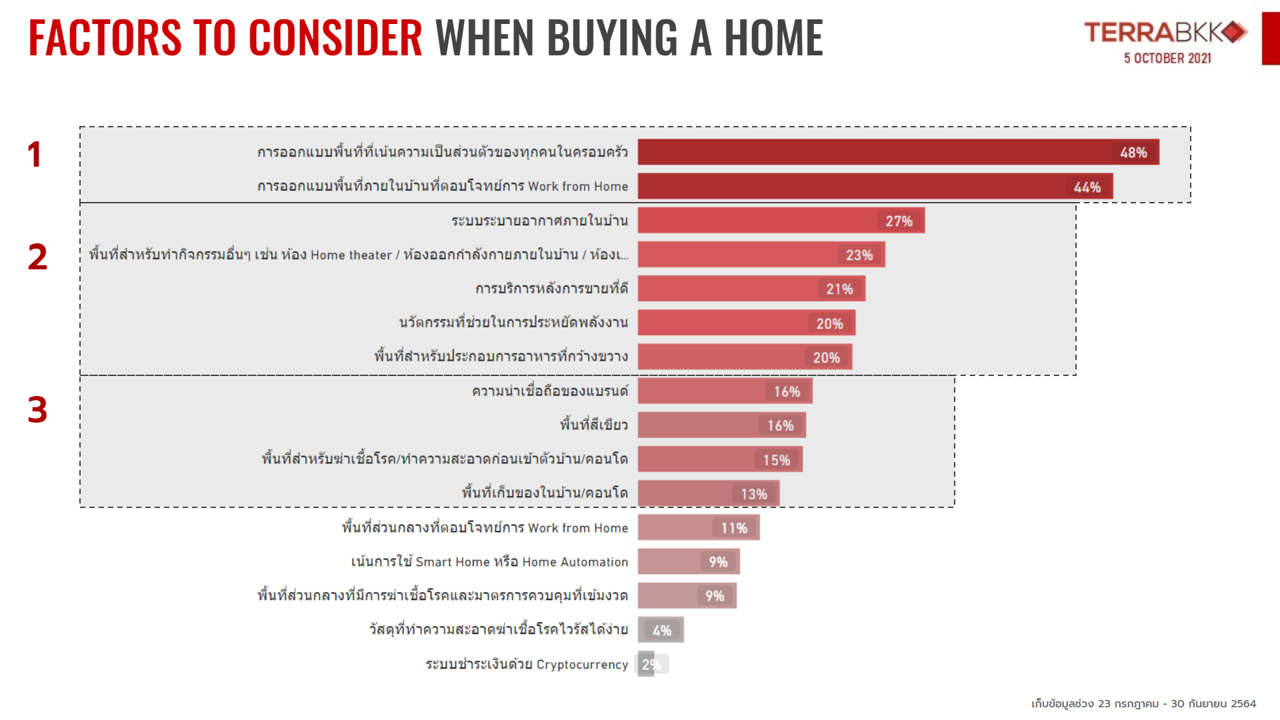
Among the key factors influencing real estate purchases during this time, most believe that the design of spaces that emphasize privacy for all family members is essential. They can adapt the interior space of the home to create private areas for family members within the available space. Furthermore, they are looking for projects designed to accommodate WFH (work from home) needs and require space for other activities, such as home theaters, home gyms, study rooms, etc. Additionally, people are seeking projects with good ventilation systems, green spaces, innovations or home automation systems, and importantly, projects that offer good after-sales service from trusted brands.
Consumers remain skeptical about the economic situation and believe that now is not the right time to purchase real estate
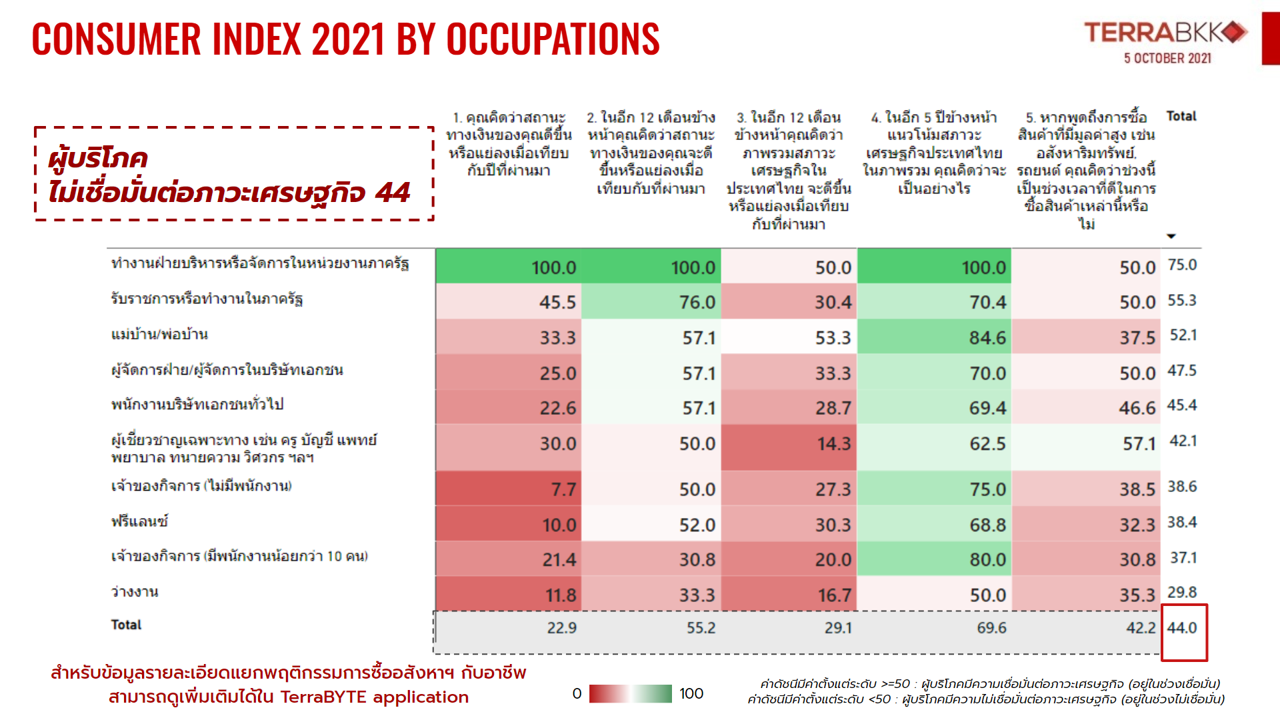
TerraBKK surveyed the Consumer Confidence Index (July-September 2021) and found that consumer confidence in the economic situation is at 44.0. Currently, almost every profession perceives their financial status as worse compared to the previous year, but they believe that their financial situation will improve somewhat in the next 12 months. However, when asked about the overall economic situation in Thailand, consumers across all groups expressed skepticism and believe that the economic situation may not improve in the next 12 months. When discussing confidence in purchasing high-value items, it is evident that stable-income professions, such as government employees and specialists, view this as a time to purchase high-value items. In contrast, those with unstable incomes, such as freelancers, the unemployed, and business owners, feel that this is not a suitable time for high-value purchases.
Overview of the Housing Market in the First Half of 2021
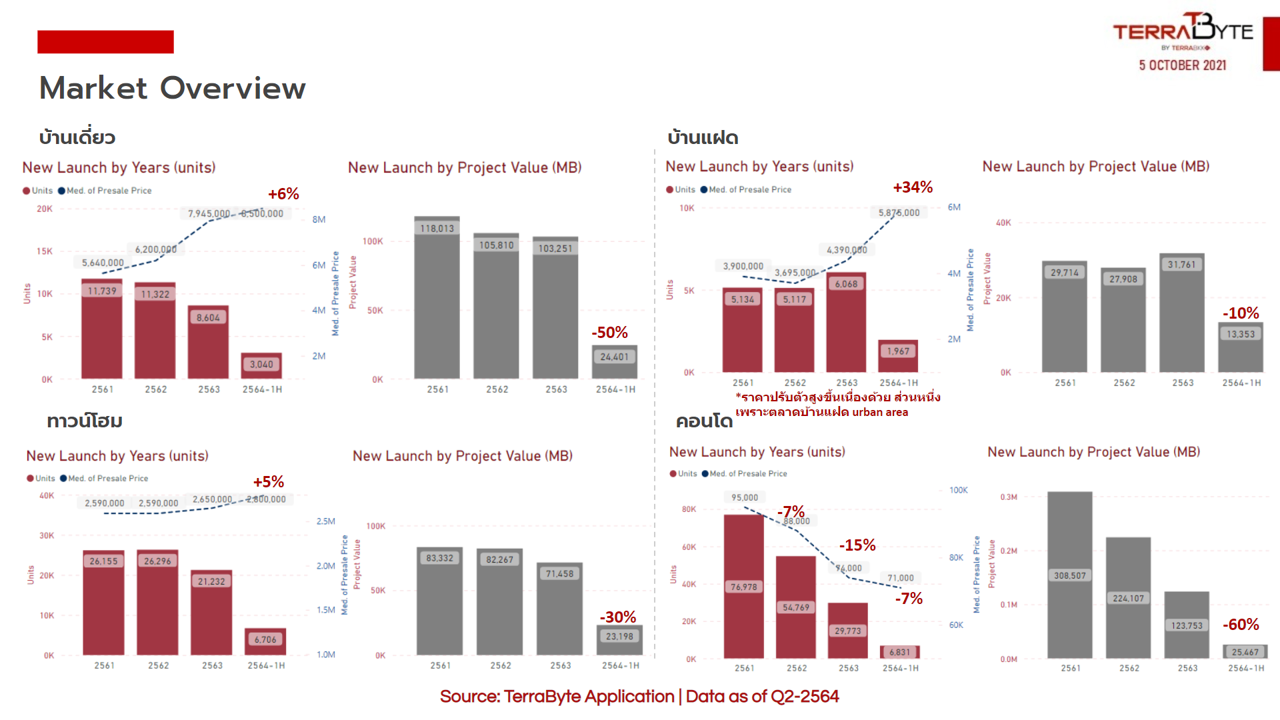
Regarding the overall housing market in the first half of 2021 (data from TerraByte: TerraBKK), it is evident that there has been a decrease in supply across all types. However, looking at the overall prices, the median price of newly launched projects has slightly increased in the low-rise housing sector, indicating that even in such a situation and with such confidence, consumers still desire low-rise housing.
Conversely, in the condominium market, the median price of newly launched projects has decreased to align with consumer purchasing power during this COVID era. This year, many developers have launched condominiums priced below 100,000 THB per square meter, which effectively meets consumer purchasing power. Sales have been strong in several projects that provide value for residents within their budget, such as The Muve by Sansiri, The Origin by Origin, Aspire condominiums by AP, Kave and Atmoz by Asset Wise, and the Sena Kith condominiums priced under 1 million THB by Sena.
Ultimately, TerraBKK believes that the NEXT TREND for the real estate market will stem from changing housing purchase trends according to evolving consumer behaviors, including creating a Blending Environment that integrates housing with ecosystems or nature, Fresh Air Technology for Common Areas, and Well-being for All Generations, which focuses on creating housing that promotes physical and mental health for all age groups.
For the full report, subscribe for updates

TERRABYTE REPORT (by quarterly) 10,000 THB/Report
MARKET REPORT (by semiannual) 40,000 THB/Report
Discussion
Follow breaking news Investment property articles on Facebook, click here.