6 Checklist Points for Self-Inspecting Your Bathroom Before Moving In!
As a first-time property owner, it's natural to feel excited on the day of your inspection before taking ownership. Thankfully, nowadays we can easily ask for advice online about how to prepare for the inspection, what to check, and where to look. A whole house has many points to consider, while a small room or compact condo might be a bit easier. However, it's still a good idea to list the key areas to check in each space to help make the inspection process smoother and more organized.
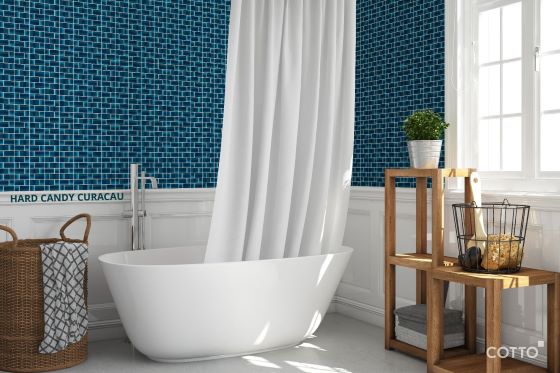
The bathroom is a crucial part of any living space. Even though it may not be large, any deficiencies in the bathroom can cause significant headaches for the owner. Consider this: if the kitchen has issues, you can always buy ready-to-eat meals. If there are problems in the bedroom, you can temporarily use another space. But if the bathroom is unusable or not functioning properly, where else in the house can you substitute? It's that important! COTTO, a specialist in sanitary ware and flooring tiles,
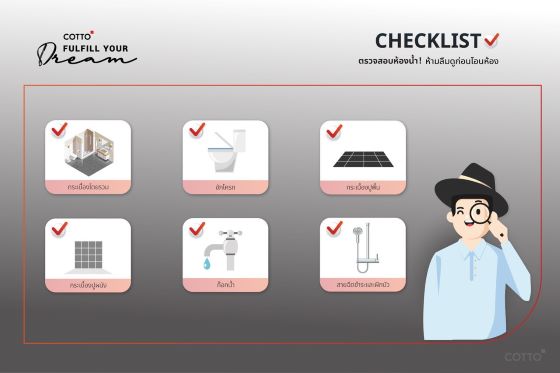
Here are 6 checklist points for easily inspecting your bathroom before signing off on construction work or taking ownership. There are several elements that should not be overlooked, so let's start with the first point:
1. Overall Tiles
Tap the tiles to ensure there are no hollow sounds from inside. They should be laid flat, without bulging or lifting. The grout should fill the gaps completely, and also check if the tile specifications match what was agreed upon.
2. Floor Tiles
Make sure the contractor has chosen the correct tiles for both dry and wet areas. The tiles for wet areas should have a Slip Resistance rating to reduce the risk of slipping accidents. This rating, ranging from R9 to R13, indicates the surface's slip resistance; the higher the number, the better the slip resistance. For bathrooms, tiles with an R11 rating are recommended, as they provide a balance between grip and smoothness. COTTO uses a special coating technique to enhance the slip resistance of the tiles while keeping the surface comfortable for the feet.
3. Wall Tiles
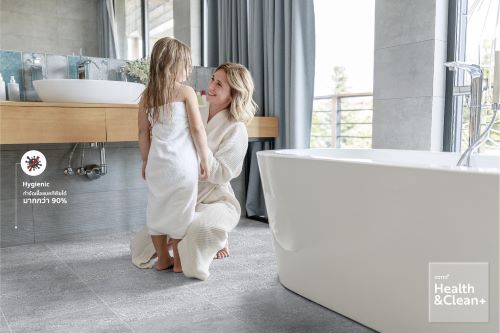
Good wall tiles should be easy to clean and reduce the accumulation of bacteria from moisture in the bathroom. Consider using Hygienic tiles that inhibit bacterial growth and minimize dirt buildup. There are various designs available to suit your style, which you can explore further at https://www.cotto.com/search/(HYG)&products.
4. Toilet
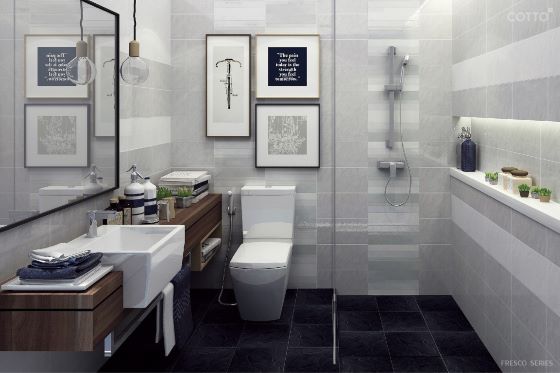
Ensure the flush works effectively and that the grout at the base is intact without air bubbles during use. If it's an automatic toilet controlled by a remote, test all systems to ensure they operate efficiently and that no dirt is trapped in hard-to-clean areas of the toilet.
5. Faucet
Check that the faucet opens and closes smoothly without any leaks. If it's an automatic faucet, verify that the sensor works correctly, allowing water to flow when hands are placed underneath and stopping completely when hands are removed.
6. Bidet and Showerhead
Ensure they function normally without clogs and that there are no leaks at the joints. The holder should be sturdy, and the water flow from the bidet and showerhead should be normal.
COTTO, by SCG Ceramics Public Company Limited, aims to fulfill your dream of having a perfect bathroom. Explore products and ideas for your home at WEBSITE: COTTO >> https://bit.ly/3mFRAMv.
SHOPPING: COTTO Life >> https://bit.ly/2WD8DUU
Line Official Account: @COTTOlife >> http://bit.ly/2D5BeJd
DESIGN SERVICE: https://bit.ly/3fyLha6